
OBITUARY
Charles L Lanier
5 May, 1925 – 15 September, 2011
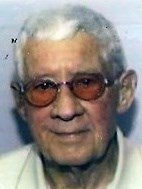
During WWII he served with the 276th Engineer Combat Battalion. After serving courageously and being seriously wounded, he was awarded a Purple Heart.
Mr. Lanier worked for many years and retired from the Tennessee Valley Authority as an electrical engineer. He was a member of the IBEW Union for over 60 years.
Mr. Lanier was a private pilot. He and his wife, Polly, shared many wonderful years with grandchildren and friends at their home in Rum Cay, Bahamas.
Mr. Lanier is survived by his children: Charlene Kaserman (John) and David M. Lanier (Arlene) of Jacksonville, FL; grandchildren: Michael Lanier, Matthew Lanier, Mark Lanier all of Jacksonville, FL; Michael Kaserman and Joel Kaserman; great grandchildren Miles Lanier and Mason Lanier of Summerville, SC.
A memorial service to celebrate his life will be held by friends and family on a later date in Rum Car, Bahamas. In lieu of flowers please make a donation to the charity of your choice. Arrangements by National Cremation and Burial Society, Jacksonville, FL 904-346-3331. Please sign the guestbook at www.mem.com.
When the Ludendorff bridge over the Rhine collapsed last March 17, one of the army engineers working on it was Cpl. Charles Lanier, 20, son of Mr. and Mrs. Louis Lanier, Roanoke, Avenue, Chattanooga. Cpl. Lanier is now a patient at McGuire General Hospital in Richmond, VA.
The crash seriously injured his spinal cord, paralyzing both legs.
But now, thanks to the amazing strides of army medical treatment, he is able to get around without the aid of braces or crutches. As a matter of fact he walks just about as well as ever.
A member of the 276th Engineers Combat Battalion, Col. Lanier was working on the last span toward Germany when the crash occurred.
"I heard a terrific rumble and looked up," he said. "The bridge was falling - and fast - from the opposite and just like a house of cards. The next I knew I was in a hospital and couldn't move."
He was removed by plane to this great $9,000,000 army medical installation, arriving here a few days after the accident.
The chief credit at the outset for saving lives of spinal cord casualties goes to penicillin and the sulfa drugs. These helped remove the danger of infection of the bladder and kidneys.
Lanier himself made the next important step toward recovery several months ago when he was able to get out of bed. Doctors say this is half the battle as victims of spinal injuries have a tendency to cling to their beds.
"I didn't believe it at first, but the doctors finally convinced me that I could get out of bed," Lanier said. "And now I'm getting along so well that I expect to be discharged from McGuire within a few days."
The second half of Lanier's battle along the road to complete recovery consisted chiefly of reconditioning exercises and therapy. This prevented his joints from getting stiff, and at the same time built up muscle tone. He was given specialized exercises to augment and expedite the return of functions.
Another important factor in treating Lanier was nutrition. Most spinal cord victims find their appetites impaired. Therefore, they are served tasty and attractive food with high vitamin content.
Then comes the training for a job that the man can do. Some of the patients are slower than others in responding to treatment. consequently, jobs for them at the outset must consist of work that can be done principally with the head and hands alone.
Lanier was able to participate in a number of the various classes in the reconditioning program which is used to teach men to drive with braces on their legs.
While benefiting from these classes, Lanier has so fully recovered that he plans to go to work with the Charleston Shipbuilding and Dry Dock Company when h is released from the army and joins his wife, Polly, at their home, 45 H, Dutch Harbor, Charleston.
Show your support
Add a Memory
Share Obituary
Get Reminders
Services
SHARE OBITUARYSHARE
- GET REMINDERS
v.1.18.0