
OBITUARY
Louis C Wagner Jr.
January 24, 1932 – January 24, 2025
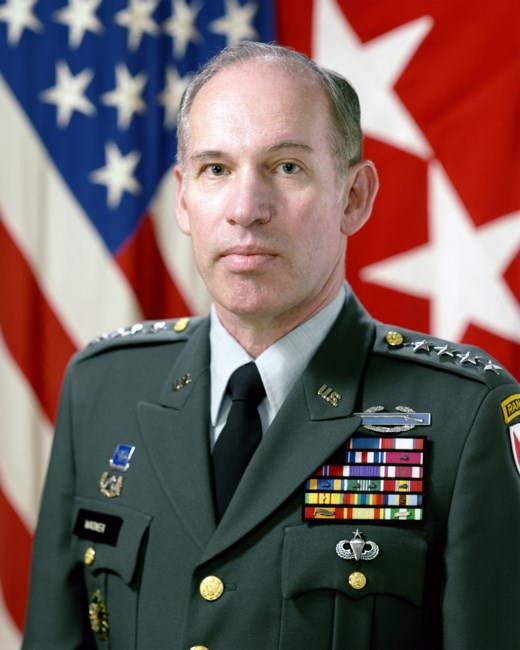
General Louis Carson Wagner, Jr., a highly decorated Vietnam War veteran, passionate supporter of the U.S. Army and its soldiers, and devoted family man, passed away peacefully on his 93rd birthday on January 24, 2025, at The Fairfax in Fort Belvoir, Virginia, joining his dearest wife Mary Judith Wagner (Judy), who preceded him in death.
General Wagner (Lou) exemplified our nation’s greatest commitment, leadership and patriotism throughout his distinguished 35-year Army career, while never forgetting his Midwest roots where he was high school valedictorian, Eagle Scout, and first cultivated his mechanical aptitude derived from his father and grandfather, a renowned gunsmith.
Born January 24, 1932, in Jackson, Missouri, to Louis Carson Wagner and Margaret Marie (Macke) Wagner, Lou received an appointment to the United States Military Academy at West Point whereupon graduation he was commissioned in 1954 as a Second Lieutenant of Armor. He later received a Master of Science in Theoretical and Applied Mechanics from the University of Illinois, Urbana-Champaign.
One of his memorable experiences as a cadet occurred when President Truman visited West Point. President Truman requested that Lou (as a fellow Missourian) sit at his table for dinner. It was quite an honor for a freshman “plebe” to dine not only with the President, but also with first-class cadets (seniors).
His military legacy was marked by extraordinary heroism in Vietnam during the Easter Offensive and culminated when he received his fourth star and appointment as Commander of The U.S. Army Materiel Command. This command consisted of over 113,000 military and civilian personnel at 351 locations worldwide, and 63 installations, with an annual budget of approximately $30 billion at the time.
Wagner served two combat tours in Vietnam as an Infantry and Armor adviser. As a field advisor, he lived and fought alongside his Vietnamese counterparts while assigned in the I Corps of Vietnam, which comprised the northern-most provinces in the heaviest fighting in Vietnam during that period. Most of his operations were in the Quê Son Valley, which became a major operational area of the U.S. Marines after they entered Vietnam in 1965. The Regiment that Lou advised lost nearly 50-percent of their troops, killed or wounded there, frequently fighting against well-equipped Main Force Vietcong and North Vietnamese Battalions.
He was awarded the Distinguished Service Cross, the nation’s second-highest award for valor, for actions between April 29 and May 2, 1972, during his second tour, when he refused to be evacuated and declined medical attention for his fractured vertebrae.
The Association of the United States Army (AUSA), where Lou was an Emeritus Senior Fellow and which awarded him its Gen. Creighton W. Abrams Medal for exceptional service to the Army, wrote:
“Then-Lt. Col. Wagner was serving as senior adviser to the Army of the Republic of Vietnam’s 1st Armor Brigade when the brigade was ordered to protect Quang Tri City at all costs against three North Vietnamese divisions supported by two tank regiments. ‘As the enemy overwhelmed and shattered the brigade, [Wagner] maintained his position at the point of severest contact and was injured when his command personnel carrier was forced to cross a bridge destroyed by enemy artillery. Refusing aid, he assisted in evacuation of his counterpart who had been wounded,’ according to his award citation.
Wagner, his wounds still untreated, ‘exposed himself continuously to enemy machine gun and antitank rocket fire while directing air strikes’ as the North Vietnamese forces encircled the brigade, the citation says.
Knowing that large elements of the North Vietnamese divisions would isolate his position, Wagner chose to remain with his counterpart. Under heavy attack from enemy artillery and tanks, Wagner led the brigade through the enemy encirclement to friendly lines.
‘Lieutenant Colonel Wagner's calm and fearless leadership was singularly responsible for preventing the 1st Armor Brigade's complete decimation and saved the lives of many of his South Vietnamese comrades,’ the citation says.”
General Wagner’s service also included commanding the 1st Armored Division’s 1st Brigade in Germany and as Commanding General of the United States Army Armor Center and School, Fort Knox, Kentucky.
He instructed at his beloved United States Military Academy and served in a series of research, development and acquisition assignments, including as Deputy Chief of Staff for Research, Development and Acquisition, Department of the Army, Washington, D.C.
Wagner fondly recalled amongst his most memorable experiences as leading dedicated young Americans ranging in size from a platoon of 25 men to an organization of over 100,000; instructing future officers at West Point; and playing a major role in the development, procurement, and fielding of the major weapons systems that performed so magnificently during Desert Storm. These included the Abrams M1 Tank, Bradley M2, and M3 Fighting Vehicles, Apache Attack Helicopter, Blackhawk Helicopter, PATRIOT Anti-Missile System, Multiple Launch Rocket System, and many others.
General Wagner notably received these additional decorations: two awards of the Army Distinguished Service Medal, Silver Star, two awards of the Legion of Merit, Bronze Star Medal, Purple Heart, Meritorious Service Medal, two awards of the Air Medal, three awards of the Army Commendation Medal, Combat Infantryman Badge, Senior Parachutist Badge, Ranger Tab, numerous service and campaign medals, and various foreign decorations.
After retiring from the Army, Lou dedicated his life to defense consulting where he always found time to support the United States Army.
Possessing a caring heart, Lou supported numerous charitable causes ranging from medical research, including the American Kidney Fund and BreakthroughT1D (formerly the Juvenile Diabetes Research Foundation), to the support of America’s soldiers and their families. He particularly enjoyed his time working with the Jewish Institute for National Security (JINSA).
Lou and Judy felt blessed to live more than three decades in Alexandria, VA, after traveling the world with the military, which included stops from Alaska to Germany. Lou enjoyed a variety of activities, including biking, summer trips to their beloved home in Bethany Beach, Delaware, watching Army football games, and attending endless sports matches, school activities, and church events at St. Paul’s Episcopal Church in Alexandria, VA, with their grandchildren.
Lou is survived by his daughters Susan Jeanne Washechek (David) and Amy Lynn Hanley (John), and his sister, Shirley Wagner Ruff. He was preceded in death by his son, Stephen Carson Wagner.
He was a loving grandfather to Jennifer Payne (Kenneth), Jeffrey Washechek (Lindsay), James (Brianna) Washechek, Bridget Hanley, Elizabeth Hanley, Claire Hanley and seven great grandchildren.
A Celebration and Thanksgiving for the life of General Wagner will be held at Fort Myer Old Post Chapel, 204 Arlington Ave, Fort Myer, VA 22211, on Tuesday, May 20th, at 11:00 AM, followed by burial at Arlington National Cemetery, VA.
In lieu of flowers, please consider contributions in his memory to the National Military Family Association, 2800 Eisenhower Avenue, Suite 250, Alexandria, VA 22314.
Show your support
Send Flowers
Add a Memory
Share Obituary
Get Reminders
Services
- SEND FLOWERSSEND
FLOWERS SHARE OBITUARYSHARE
- GET REMINDERS
v.1.18.0