OBITUARY
Margaret Lee Parker
May 10, 1947 – March 18, 2026
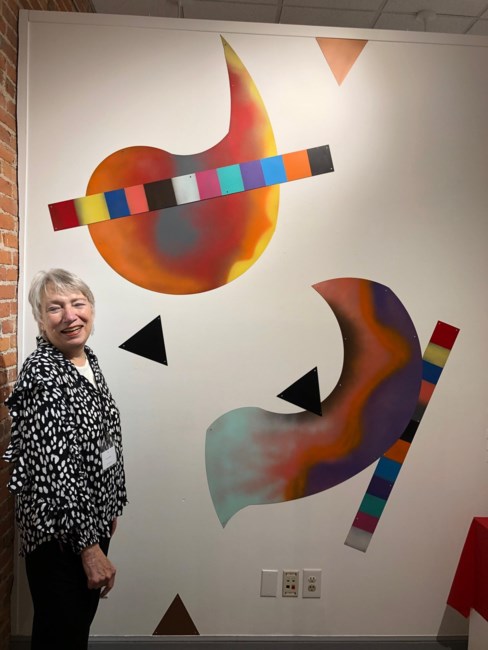
Margaret Lee Parker was born on May 10, 1947 in Chicago, Illinois, the middle daughter of three girls. Her father, Gilbert, was a carpenter, her mother Pauline, taught art at a local high school in Glenview, Illinois, where they raised their family. Her parents lived their lives as artists—building the homes they lived in, sewing clothes, planting gardens, painting, quilting, and making sculptures—providing the example Margaret drew from to forge her own creative path. She rode her bike to high school with her cello strapped to her back, earned a full ride to Bennington College where she studied dance and poetry in addition to fine art, and completed her BFA at the University of Michigan in 1969.
After art school, Margaret lived and painted in her studio on Fourth Avenue in Ann Arbor. She made sets for University of Michigan School of Music, Theater, and Dance opera productions, as well as wrote, staged, designed costumes, and directed her own play, Return to Myself. Her first solo show of paintings was held at the original Borders Books on State Street. During that era, she met her future husband, Mark Hodesh, at a mutual friend’s birthday party. She was playing the pots and pans with a wooden spoon and invited him to chime in. When she wanted to move to New York to pursue her art career, Mark joined her.
In 1988 Margaret completed a series of 14 terra cotta reliefs titled Stations, a reflection of the homelessness crisis she witnessed on the streets of her neighborhood. When finished, the reliefs were hung on display at the Cathedral of St. John the Divine, and served as inspiration for and illustrations in a volume of poetry by Daniel Berrigan. The author Mary McCarthy called Stations: The Way of the Cross “A moving and original book. A remarkable collaboration.” The actor Martin Sheen wrote, “Parker raises street misery to eye level as Berrigan raises the cry of the poor to an eloquent rage.”
Her commitment to social justice was reflected throughout her career in works that explored topics including race, slavery, consumerism, climate change, democracy, and women’s rights. In 2010, her sculpture C’ood: a democracy experiment was shown at Art Prize on Calder Plaza in Grand Rapids. She advocated for a per cent of the city’s budget to be allocated for public art, and she later chaired the city’s Commission on Art in Public Places. She was also an active participant in the Women’s Caucus for Art, and deeply valued showing work with the local chapter as well as in many group shows with the national organization.
Margaret applied her creative practice in every medium imaginable, from oil paint and watercolors to rebar rods woven through with old t-shirts. Even the cloth napkins she insisted on ironing or the cards she taped to Christmas gifts reflected her totally unique artistic sensibility. Her creative direction also shaped and informed her husband Mark’s series of successful small businesses. In Castine, Maine, she painted a mural of the town on the walls of the dining room at the inn they ran together for 13 years. She also planned and tended a magnificent garden, arranged bouquets with the flowers she grew, and ran the dining room—all while raising their young daughter, Jeanne. When the family returned to Ann Arbor in 1997 to re–open the former Hertler Brothers store in its new incarnation as Downtown Home and Garden, Margaret designed the font for the sign that hangs on the building’s brick exterior. In the Margaret Parker Studio above the shop, she created iconic black and white ads and biannual newsletters for the store that were circulated in the Ann Arbor News, the Ann Arbor Observer, and regional distribution of the New York Times. She transformed the store’s parking lot into an urban oasis when she woke up one night from a dream and penned a simple sketch for a pleached hedge made of European hornbeams. Today the trees wrap around the corner at S. Ashley and Liberty, providing shade and enjoyment for pedestrians, patrons of Bill’s Beer Garden, and birds alike.
Without hesitation, Margaret always said her best art teacher had been her mother. After her mother’s death, Margaret took on the work of preserving Pauline’s artistic legacy, mounting exhibits of her narrative quilts and watercolors at locations throughout the Midwest, including a joint retrospective at the Ann Arbor District Library (2018), and solo exhibitions at the Wisconsin Museum of Quilts & Fiber Arts (2016) and the Milwaukee Art Museum (2021).
Pieces of Margaret’s own body of work reside in the permanent collections of the U.S. Capitol, University of Michigan Museum of Art, and numerous private collections.
She loved and was beloved by her husband, Mark Hodesh, daughter, Jeanne Hodesh, son-in-law, Donald Harrison, and grandson, Reuben Harrison Hodesh, as well as her sister, cousins, nieces and nephews, extended family members, and the many friends and artists she met along the way.
Show your support
Add a Memory
Share Obituary
Get Reminders
Services
SHARE OBITUARYSHARE
- GET REMINDERS
v.1.18.0