OBITUARY
Chou Bik Kuen Lee
24 March, 1926 – 22 January, 2016
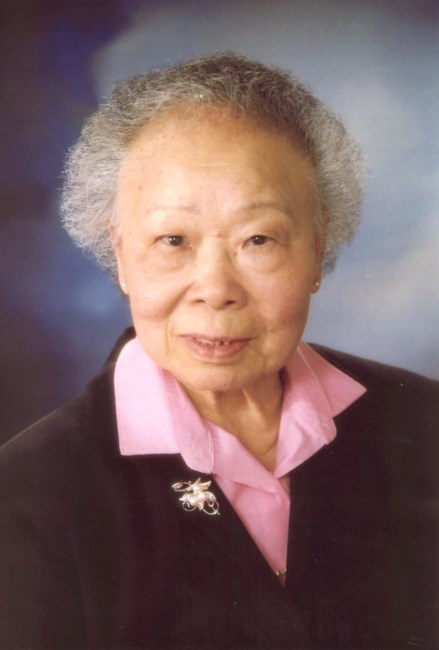
Chou B. K. Lee of Brookline passed away peacefully on January 22, 2016. Born on March 24, 1926. Devoted mother of Thomas S. W. Lee and wife Sharon, Paul W. Lee and wife Mary, and Elizabeth W. W. Leung. Loving grandmother of Bradford, Nathan, Gregory, Samantha, Tina, Kacey and Kelly. Chou Lee came to Boston in 1947 under the War Brides Act from a rural village in southern China. With her late husband Richard Lee who worked in Chinese hand laundries and restaurants, she was a garment worker in various sewing factories for over 30 years as they raised their children in Boston Chinatown before moving to Brookline in 1961. She taught her kids to be hardworking, to value education and to be caring and to help others. She and her late husband were most proud of the fact that their three children, Tom, Paul and Liz graduated from college, the first members of their family to do so. Visitation will be in the Boston Harborside Home of J. S. Waterman & Sons Waring-Langone, 580 Commercial Street, BOSTON, Thursday, January 28th 5:00-8:00pm with remarks from family to celebrate her life at 6:30pm. Parking attendants on duty. The family will receive visitors again in the funeral home on Friday, January 29th from 9:30am to 11am. Burial will be in Mt. Auburn Cemetery, Cambridge. In lieu of flowers, tax-deductible contributions may be made to the Richard and Chou Lee Scholarship Fund, the proceeds of which will be awarded as part of the National Association of Asian American Professionals Boston Future Leaders Program. Please send checks payable to NAAAP Boston, P.O. Box 51922, Boston, MA 02205 and note "ln Memory of Chou Lee" in the memo line.
Chou Lee Remembrance:
Chou B. K. Leejavascript:__doPostBack('ctl00$ContentPlaceHolder1$btnSave','')
March 24, 1926 – January 22, 2016
On behalf of our family, I would like to thank you for joining us today to celebrate the life of our mother, Chou Lee. I am Paul, the middle son. I want to introduce my older brother, Tom, and his wife Sharon, from Sacramento (their sons, Brad and Nathan are unable to be with us tonight), my younger sister Liz and her daughters, Tina, Kacey and Kelly of Brookline, and my wife Mary and our daughter Samantha (our son Greg could not be here in person from California but is present by Skype).
My mother’s life is a classic American immigration story, of coming the US from a foreign country in search of opportunity and freedom, working hard and achieving a successful life, and adopting this country of her own. Since coming here in 1947, she never went back to China because she considered this to be home.
Chou Lee was born in a rural village in southern China. Her father left the family before she was born because he did not want to be a farmer, preferring instead to go to Guangzhou to study. So my mother never met her father (although I did when I visited China in 1983). My mother and her older sister, and then their younger brother, were raised in the village by their single mother. My mother and her sister were top students in the local schools which earned them scholarships to study at a magnet school at the nearby city. The competitiveness of the school gave my mother a strong appreciation the importance of hard work to keep up with her classmates and she was always reminding us of how important it was for us to work hard in our studies.
My mother told us harrowing stories of having to flee to the mountains to escape bombings from invading armies during the Sino-Japan War and of the lawlessness of gangs of thieves roving through the countryside. My mother’s home was invaded by thieves when she was five and she had a lifelong scar on her face from being slashed by one of the intruders.
My parents met through an introduction when my father went back to China after World War II to find a bride. They were married after a very short courtship, and my mother came to the US in 1947 under the War Brides Act, becoming the first woman in our family to come to the country. They settled in Boston Chinatown where my brother and I were born in rapid succession and they set about raising a family as my father worked in a series of Chinese restaurants. But for a young woman coming a rural village halfway around the world, it was very intimidating. At that time, the population of Boston Chinatown was over 90% men, so she had few friends or role models. But my mother proved that she was a survivor. She got along well with my grandfather, devoted herself to raising her children and taught herself English. She attended English classes and citizenship classes at the Maryknoll Sisters Center on Tyler Street. Ultimately, she became a naturalized US citizen and years later got her drivers license.
Her English was quite good, although like most immigrants she understood a lot more than she could speak. And she had some unusual constructions in her speech. In her later years, when she had a lady come help her clean her apartment a few hours a week, she referred to her not as the “cleaning lady” but as the “clean lady”. I guess that works too, the clean lady is coming to clean!
My mother found work as a garment worker in various sewing factories around Boston. For you history buffs, one factory was located on the top floor of what is now the China Trade Building at Boylston and Washington St and another was located in the building next to Jacob Wirth where the Youth Hostel is now. She met many other immigrant workers and constantly surprised us with foreign phrases she picked up along the way in French, Portuguese, Spanish and Italian. And when she needed to be home with her kids, she did sewing work from home. I remember going to the factories to pick up bundles for her to work on at home.
At the factories, she was paid by the piece. Her specialty was sewing the pockets on women’s blazers for a few pennies each, very hard work for not much pay. She did her work so well that she was usually chosen to sew the samples when new garments were introduced so that her fellow workers could see how the new item was put together. She especially liked to do samples because she was paid by the hour rather than by the piece.
I want to say a few words about her name. Her maiden name was Chou Bik Kuen with Chou as her last name. This became Chou Bik Kuen Lee when she married. But to her Chinese friends her first name was always Bik. I remember the time when her co-workers at the sewing factory encouraged her to adopt an American first name, so for several months her first name was Lily. We had trouble accepting this and it was dropped after a while, and she has been known as Chou ever since.
Because our father worked 12 hour days, 6 days a week at the restaurant, our mother was really the one who introduced us to the outside world. I remember going to Sunday matinee movies at the old Publix Theater where the Kensington apartment building now stands. In those days before on demand video streaming, this was the best way to see second run movies cheaply. For $.25 per adult and $.10 per child, we saw double features of John Wayne, Kirk Douglas, Elizabeth Taylor and my favorite, Alan Ladd because he was short. It was rare for us to afford a first run movie, although I remember seeing Son of Flubber at the Paramount. And Herbie, the VW bug was one of her favorites.
In her later years, she valued her independence and took pride in taking daily walks several times a day around Coolidge Corner in Brookline. She was very active right up until the end of her life, rising at 5am and exercising for at least an hour before breakfast of coffee and half a whole wheat hotdog roll with a slice of cheese and mayonnaise.
Throughout her life, my mother was always reaching out and connecting with people. As part of her daily walks, she was a regular at CVS to pick up her prescriptions and Trader Joe’s for her groceries. She was well known and treated very well by the staff at both places. I went with her once to pick up a prescription at CVS. We had to wait for it and my mother stood at the cash register the whole time blocking others. When I suggested that she step away, the clerk said “Oh no, it’s fine for Mrs Lee to stand right there.” At Trader Joes, she was pleased to show them her Trader Joe’s gift card which enabled her to shop without bringing money. She never missed a chance to tell them that her son gave it to her. The staff knew that she wanted a double paper bag with handles. In her condo complex, the residents were very kind to her, with several often stopping to help her carry her groceries.
Another highlight of her week was going to the Brookline Senior Center on Thursdays to meet with other Chinese ladies where they would reminisce about growing up in Hoiping and Taishan. Others included Judge Paul Yee’s mother and Lena Wong’s mother.
In her final years, my mother constantly reminded us that she was very happy because she lived to see her children get a good education, have good careers and become good, caring people. She especially loved her grandchildren. She delighted in our family gatherings on Mother’s Day, July 4th, Labor Day, Thanksgiving and Christmas. She also looked forward to her excursions on Saturdays when Liz and the girls would take her grocery shopping in Chinatown or to the Mall. She always told me how much she enjoyed the time with the girls, especially lunch at Legal Seafoods or in the food court. But going shopping with her was sometimes like taking a two year old. If you didn’t watch her she would wander off on her own and Liz and the girls would have to search for her in a panic. When they found her she always said “why are you so worried, I knew where I was.”
So my mother’s life was a life well lived, full of hard work but also the joys of success and family. She taught us to be survivors, to work and study hard and to connect with people. She never stopped caring about us even after we grew up. She looked forward to daily visits from Liz on her way home from work. While she wanted to see me in person, she worried about the perils of driving in Boston, so we compromised and I called her every night. When I missed a night because of a meeting or function, there was always a message on the answering machine in what sounded like a screaming voice: “Call Ma” or to change things up, “Ma, Call”. Tom also called every night from California.
And like all Chinese parents, she showed her love for us by feeding us. She always started each conversation with “have you eaten yet?” She enjoyed making all her special dishes for us, especially dim sum for special occasions and roast turkey for Thanksgiving. Her turkey was always so moist and tender and Sharon has used her recipe with great success.
In my last conversation with her the day before she died, as she was passing in and out of consciousness, when I reached down to tell her I was leaving she reminded me to do two things: get something to eat and drive carefully, or in her words, “Drive, be Careful”.
My mother loved us very much, and we all loved her and will miss her.
For Grandma.
Love, Greg.
Grandma bragged about us. Right to the end. About all of us: her kids, her grandkids. Which, when you think about it, is funny, given that we all exist because of her. Not just in the literal sense, but because she made us who we are.
I must admit, sitting with her in the hospital, I realized, I don't know this amazing woman. Sure, there has always been a language barrier, but we're family. It shouldn't be that hard. I thought I knew her story, that she'd grown up in a village in China, and Grandpa had gone back to find a bride as part of the War Brides Act after the war. But I realized, I didn't know how she felt about it. I didn't know what the journey was like. What she expected. I didn't even know whether she wanted to come or not.
So, I asked her to tell me a story. Dad helped. Between them, a wonderful life came into focus for me. It turns out that, yes she did in fact want to come, because everyone knew life was better in America. Yes, the journey was really rough. Yes, she's happy she came. And somehow, that was really comforting for me to know.
We Lee's are all Grandma's life work. Her successes and failures ride with us. It is humbling to think that someone so intelligent and wise spent her life so that ours could be better. My takeaway: don't waste it, Greg. But, I don't think that's how she thought about it. Grandma was selfless, her gift of life was, is, freely given. There's no expectation of greatness, just a hope for happiness. And for me, that's all the more motivating, to live life as fully and completely as possible, not to waste a moment, to appreciate those around us, and our great family.
Grandma, thank you. Thank you for everything you have done for us. Thanks for being there for our parents. Thank you for all the hard work, the selflessness, without thought of reward, for us. It motivates me each and every day, knowing what you sacrificed, knowing how you spent your talent and intelligence to get us ahead in this world, not just so that we could be successful, but so that we could live the lives that we want. I promise not to waste it.
Grandma Remembrance - Sami :
I think all of my memories of Grandma have to do with food. I speak almost no Chinese, but one phrase I know: “Are you bao bao?” “Are you full?” She was always trying to get us to eat more. When we were kids, that was great, but as we got older, it somehow got harder to eat enough, so Kacey, my cousin, said, the trick is, take just a little each round, spread it out on your plate, and chew really slowly, so that when she comes around, “Eat! Eat!” You can say, “I still have food, Grandma! I am eating!”
This was just one of the ways that she showed us she loved us. I was going to make some of her recipes for today, because that would be so quinesentially Grandma, to cook and push food on people but refuse to speak. She didn’t want the fanfare, but she could make us eat.
And she wanted to make sure that we would carry on the recipes. So I know Tina, Kacey, and Kelly learned more than the rest of us, but I gained some good dumpling skills and Aunt Sharon has a funny story where she was trying to teach them to tie the banana leaves around sticky rice and she says, “Just wrap it! No big deal.” And they’re saying, “ah! They’re falling apart!”
We had a lot of fun, eating, cooking, and fending off her attempts to feed us more.
Show your support
Add a Memory
Share Obituary
Get Reminders
Services
SHARE OBITUARYSHARE
- GET REMINDERS
v.1.18.0