OBITUARY
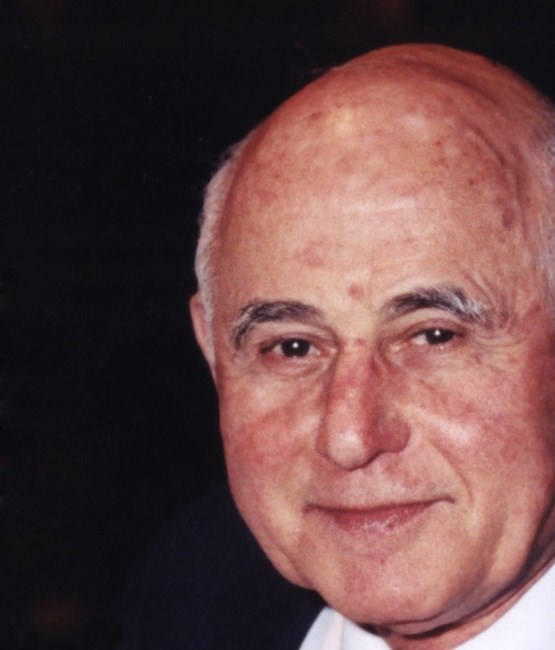
Dr. Bernard Reisman
15 July, 1926 – 21 November, 2011
While still a graduate student at Brandeis University, Bernard Reisman helped create a program that trains professionals to be ready to lead others and navigate the challenges of contemporary Jewish life.
“If the Jewish community is to mobilize its resources effectively,’’ he wrote years later in a 1994 article for the Journal of Jewish Communal Service, “then there is no higher priority than strengthening its cadre of Jewish professionals.’’
Dr. Reisman, a professor emeritus of Jewish communal studies at Brandeis and the founding director of the university’s Hornstein Jewish Professional Leadership Program, died Nov. 21 in Bedford VA Medical Center of complications of Alzheimer’s disease. He was 85.
In the mid-1960s, Dr. Reisman was finishing his doctorate at what was then the Florence Heller Graduate School for Advanced Studies in Social Welfare. Working with Leon A. Jick, he created the Hornstein program, which launched in 1969. Dr. Reisman served as director of the program until he retired in 1999.
Dr. Reisman “was one of the most beloved figures in Jewish communal life,’’ Jonathan Sarna, a professor of American Jewish history at Brandeis who chairs the Hornstein program, said in a statement posted on a university website. “He was, however, best known for his leadership skills; his warm, caring demeanor; and for the practical wisdom that he imparted to legions of students and colleagues.’’
Some learned as much from Dr. Reisman at the dinner table as at the university. With his wife, Elaine, he traveled extensively, often bringing international students to Brandeis.
“There were always lots of students at our house,’’ his wife said. “At the drop of a hat, he would invite someone to dinner. Professionally, he talked about building community. In his personal life, he lived it.’’
In an e-mail, Susan Shevitz, an associate professor emerita at Brandeis and a former student of Dr. Reisman’s, called him “the consummate professional and caring colleague,’’ adding that “he brought out the best in people.’’
Dr. Reisman founded the Osher Lifelong Learning Institute at Brandeis, which offers adult-education courses, lectures, and workshops. He also was a sought-after speaker and the author of many books and articles.
Born and raised in the Bronx, N.Y., Dr. Reisman graduated from City College of New York and received a master’s degree in social work from what is now Case Western Reserve University in Cleveland and a doctorate from Brandeis.
In 1951, he married Elaine Sokol, whom he met at a retreat for those who worked at settlement houses, helping immigrants adjust to life in the United States.
Before moving to Newton to study at Brandeis, Dr. Reisman and his family lived in the Chicago area, where he taught at Loyola University.
Dr. Reisman’s daughter Robin Maltz of Newton said that growing up, she and her siblings vied for the chance to do chores with their father, who made even mundane tasks seem fun.
“He would tell stories, ask questions, really talk to us,’’ she said.
In a eulogy at a memorial service in Newton last month, another daughter, Sharon Conway of Hartford, described Dr. Reisman as “a loving family man, a respected Jewish professional, a mensch, a guy who didn’t take himself too seriously, a man with a fun and irreverent spirit.’’
His son Joel of Newton said Dr. Reisman liked to arrange block parties in their neighborhood and encouraged even the most reserved neighbors to take part in the conversation.
“He thought people felt better when they allowed themselves to talk to each other,’’ Joel said. “He believed in chit-chat, that it could be a heart-baring experience.’’
In 1995, while at Brandeis, Dr. Reisman began experiencing memory loss that was diagnosed in 1999 as Alzheimer’s disease. The diagnosis coincided with his retirement and inspired him to advocate for those similarly afflicted.
His wife said that after they accepted their new reality, “our attitude was that this was a lousy thing that had happened to us, and we were going to push back.’’
They did so through support groups at the Massachusetts and New Hampshire chapter of the Alzheimer’s Association. Dr. Reisman also spoke publicly about what it was like to cope with the disease.
“My mind was my primary tool, and the reality is, I’m not as capable as I once was,’’ Dr. Reisman told the Globe in 2002. “That ain’t fun, I can tell you. It’s like a pitcher with an injured arm, a pitcher that loses his fastball. A lot of times, it’s depressing; it makes me want to kick the dirt. But I keep trying.’’
That he did, said Jim Wessler, chief executive of the local Alzheimer’s Association chapter.
“Bernie was smart, articulate, and funny,’’ said Wessler. . “He paved the way for Alzheimer’s patients taking an advocacy role.’’
Wessler said that when he first met the Reismans, most support groups were for caregivers, not patients. Dr. Reisman joined a support group and soon ended up as its volunteer leader.
A decade ago, Dr. Reisman also volunteered to speak on Capitol Hill in Washington, D.C. Wessler said more than 400 people had crowded into a hearing room when he and the Reismans learned the microphone was broken. “It was utter chaos,’’ Wessler said.
Nevertheless, Dr. Reisman stood when his name was called, focused on the crowd, and “spoke eloquently for six minutes,’’ Wessler said. “When he was finished, you could hear a pin drop. And then they gave him a standing ovation.’’
Alan Teperow, executive director of the Synagogue Council of Massachusetts, is a Hornstein graduate and longtime friend of the Reismans. After hearing about the diagnosis, he contacted Elaine Reisman in part to help ease her burden as a caregiver, and because “I wanted to spend time with Bernie while he was still with it.’’
The two swam, played tennis, hiked, and later just sat and talked in a weekly ritual they called “Mondays with Bernie.’’
When he was a student, “Bernie was like my father,’’ Teperow said. “In the end, our roles were reversed.’’
In addition to his wife, daughters, and son, Dr. Reisman leaves another son, Eric of Baltimore; a brother, Donald of Queens, N.Y.; and eight grandchildren.
Wessler said Dr. Reisman “helped change the world’’ by “using his passion to bring awareness about the disease to the forefront.’’
Show your support
Add a Memory
Share Obituary
Get Reminders
Services
SHARE OBITUARYSHARE
- GET REMINDERS
v.1.18.0