
OBITUARY
Jerome Silver
5 April, 1921 – 5 April, 2012
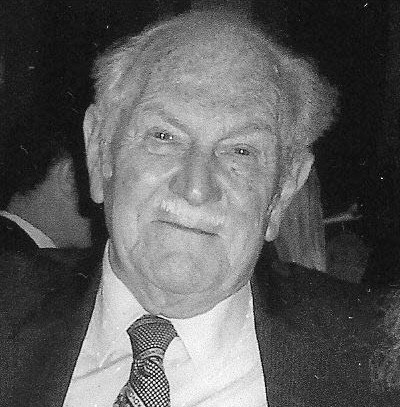
JEROME SILVER, age 91, died April 5, 2012. World War II Army veteran. Beloved husband of Mildred (nee Wolkov); devoted father of Leslie Silver , Alan Silver, Larry (Marybeth Ayella) Silver of Philadelphia and Arlene (Fred Cook) Silver-Cook; dear brother of Helen (Robert H.) Braithwaite (deceased); loving grandfather of Michael and Rachel Ayella-Silver and Allison Cook; cherished uncle of Linda (David) Trachtman and Robert A. Braithwaite. Services will be held at BERKOWITZ-KUMIN-BOOKATZ MEMORIAL CHAPEL, 1985 S. TAYLOR RD., CLEVELAND HTS., Monday, April 9 at 1 PM. University Heights Masonic Lodge services at 12:45 PM. Interment Bet Olam Cemetery. The family will receive friends at The Hamptons Community Room, 27040 Cedar Rd., Beachwood MONDAY FOLLOWING INTERMENT UNTIL 5:30 PM AND 7 TO 8:30 PM. Contributions are suggested to the charity of choice.
---------------------------------------------------------
Jerome Silver – Cleveland Lawyer, Civic Leader and Football Star
Jerome Silver, a life-long Clevelander and long-time pre-eminent Cleveland lawyer, died this past Thursday of natural causes on his 91st birthday. He is survived by his loving wife of over 63 years Millie (nee Wolkov), four children and three grandchildren
Mr. Silver, known to friends and family as Jerry, was a high school football star, playing end for the John Adams High School Rebels, and played in two Plain Dealer Charity games before large crowds at Cleveland Municipal Stadium in 1937 and 1939. He practiced law in Cleveland from 1946 until 2001, expertly representing Cleveland’s small businesses, working people and families in a law firm he built from scratch. He served two terms as a member of the University Heights City Council and was an active member throughout his professional life of the Masonic Lodge, the Tau Epsilon Rho Law Society, the Cleveland Bar Association and Park Synagogue.
Born April 5, 1921, Mr. Silver grew up in the Kinsman area on the east side of
Cleveland with his sister Helen and parents. As an adolescent, after school and during the summer, he and his chums would take two street cars to 66th and Lexington and, if they could not sneak in, would stand outside the right-field bleachers of League Park, peering through slats in the wall, waiting for fly balls to sail over the wall to return them for a free pass into the game.
Mr. Silver’s father Louis, an attorney for the Nickel Plate Railroad, died when Mr. Silver was 14, in the middle of the Depression, and Mr. Silver worked various jobs after school to support his mother Carrie. Mr. Silver often spoke of the suffering of families in his neighborhood during the depression. He witnessed grown men sitting with their household possessions on the curb in front of their homes crying after the sheriff had had their houses emptied and padlocked following foreclosure. These occurrences became so frequent, he recalled, that after a time the authorities and banks became overwhelmed and families, with the help of their neighbors, simply carried their possessions back into their houses after the sheriff had left – and then waited for the next round. The desperation (and resourcefulness) of the times were deeply ingrained in and shaped the life-outlook of those who endured, including Mr. Silver.
Mr. Silver attended Alexander Hamilton Junior High and John Adams High School, which was then known as the “melting pot” high school of Cleveland because of its diversity in ethnicity, race and religion. Students got along, Mr. Silver said, and they never knew that there was anything special about their school, but it was. Mr. Silver excelled in football, playing end for the Rebels, and the team won its only two City Championships in 1937 and in 1939 (his senior year) when the team was undefeated. In both seasons, Mr. Silver played in the City Championship Charity Game in Cleveland Municipal Stadium. The 1939 championship game drew over 40,000 fans.
During his senior year in high school, Mr. Silver and his friend on the team Morris Friedman were recruited to attend the University of Alabama and offered football scholarships. Their religion may have played a factor, as southern schools at the time valued having a Jewish player or two on their sports teams. Mr. Silver at first planned to attend. In those days, college freshman were not eligible to play varsity sports out of concern for academic performance (in contrast to today’s rules) but football powers like Alabama found ways around the rules. As part of the scholarship offer, Mr. Silver received a letter directing him to attend freshman year at East Central Junior College in Mississippi, where he could play football and advance his skills. Mr. Silver was ready to attend until he received another letter from the junior college, listing what he needed to bring along when he came to school. The list included two pairs of jeans. As Mr. Silver put it, in 1940 only “farmers and cowboys” wore jeans and he had no intention of being either.
Mr. Silver chose instead to attend Miami University in Oxford, Ohio, also on a football scholarship. Following his freshman year at Miami, after learning that Thompson Products in Cleveland was paying the then “unheard of” (as he put it) large entry salary of $25 per week, Mr. Silver decided to return to Cleveland to help his mother. Mr. Silver worked at Thompson Products operating a lathe until he was drafted and served in the Army. To make ends meet and to support the country, Mr. Silver’s mother Carrie also worked in a factory during the war.
Mr. Silver loved automobiles and during the 1940s, he and some friends built a two-seat roadster from scratch and nicknamed it the “Playboy”.
After the war, on the GI Bill Mr. Silver completed college and attended law school at Western Reserve University, working part-time for a family-owned title company. When he graduated from law school, the title company owners asked him to open an Akron branch of the company, but Mr. Silver wanted to be a practicing lawyer. He was admitted to the bar in 1946 and, after apprenticing for a year with another lawyer, in 1947 he opened up his own practice in the NBC Building on East 6th Street in Cleveland. Although Jewish lawyers were not welcome in the established law firms in that era, it was Mr. Silver’s personality to build his own practice nonetheless.
Mr. Silver’s notoriety in Cleveland as a high school football star, and a Jewish one, attracted some unusual clients - also notorious - at the outset of Mr. Silver’s legal career. Shondor Birns, the Cleveland businessman, was one of his earliest clients and knew of Mr. Silver’s athletic reputation. As Mr. Silver put it, Mr. Birns asked Mr. Silver to work out disputes with Mr. Birns’ business colleagues using “gentle persuasion and logic” in the hope that more serious advocacy would not be required.
One of the advantages of this early relationship with Mr. Birns was that Mr. Silver had VIP access to one of the best clubs in town, the Alhambra at 105th and Euclid, which featured big bands, dancing and “the best food you ever want to eat” according to his wife Millie. Mr. Silver met Millie in early 1948 and, to impress her on an early date, took her to the Alhambra. They loved dancing together. Typical of that post-war era, the romance was not attenuated, and they were married six months later on September 12, 1948. 1948 was a year of celebration for them – on their honeymoon, which was an auto trip to California in a new Pontiac, they listened on the car radio to the end of the pennant race, and wins by the Indians over Boston teams in a never before one-game playoff and then the World Series. Mr. Silver liked to remind listeners that the other Cleveland professional teams, the Browns and the hockey Barons, also won championships that year.
At his wedding, Mr. Silver told friends and relatives (and presumably Millie) that he wanted a “football team” of children. They were well on their way, having three boys by 1952, all of which loved football. Millie was somewhat more focused on having a daughter and, at the bris for the third boy, sister Helen suggested that he not “drink too much wine” in the hope of having a girl. Libation was curtailed and prayers were answered with a girl four years later, Arlene, completing the family.
Mr. Silver moved his law office to the beautiful Society for Savings building on Public Square in the 1950s and grew his practice. His early philosophy was to take a client’s case no matter how small so as to become the client’s “lawyer” for future matters. It was difficult going but the strategy worked. Mr. Silver moved his practice to the Leader Building at 6th and Superior where he nearly always had lunch in the busy and classic Colonnade Cafeteria in the lower level, the place to dine for Cleveland lawyers. He would sit with his many friends and colleagues in the legal profession at lunch who would unhesitatingly turn to him for tips on legal strategy in their cases. In the 1970s, Mr. Silver purchased a building on Prospect Avenue in the Uptown area and with several associates, including his son Alan, practiced law until the age of 80 in 2001.
In addition to dancing with Millie, cars, football and family, he and Millie loved to travel, visiting Europe, Asia and the Middle East many times. Their favorite trip, based on the number of times the story has been told and retold, was visiting their son Leslie in Korea who was serving in the Peace Corps teaching English to children in a small town Sokcho, near the DMZ.
Mr. Silver loved to read, especially the legal journals and daily newspapers, which he read from cover to cover, even when there was more than one in Cleveland. He also loved conversation, often with much to say, but also being a good listener. He had a special respect for small businessmen and working people, a respect he imparted to his children. Along with his friends, relatives, wife and children, his three grandchildren were the joy of his later life.
Show your support
Add a Memory
Share Obituary
Get Reminders
Services
SHARE OBITUARYSHARE
- GET REMINDERS
v.1.18.0