
OBITUARY
Eulalio B. Lobato
10 December, 1919 – 31 January, 2010
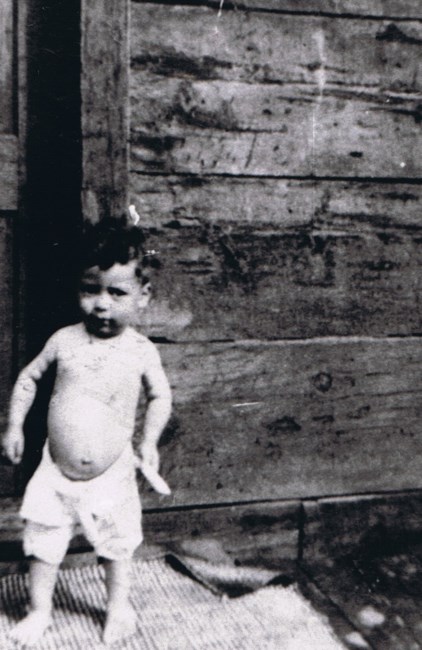
When someone is identified as a natural leader, certain images come to mind. First thoughts are of a no-nonsense, tough-minded, dedicated and disciplined person. This description accurately fits Eulalio B. Lobato who was indeed a born manager. He will be remembered as being highly organized, practical and realistic. He was a person who always carried a strong sense of duty with him throughout his life. Possessed with traditional “old school” morals, Eulalio was an individual who clearly communicated to those around him just who he was and what he was all about. Everyone acquainted with Eulalio knew him as a well-respected man who was a stable force to his family and the military community.
Eulalio was born on December 10, 1919 at home in Blanco, New Mexico. His parents were Eluterio (Abelino) and Nacioncena Lobato. Even as a youngster, Eulalio learned to be objective and decisive. His faith in the principles of authority and dependability was something that he carried with him throughout his life.
As a young boy, Eulalio was able to put his natural abilities to work. He was a bit like the sergeant of the family, helping to make sure that the others did what they should do and that they avoided those things they weren’t supposed to. In other words, he liked to organize and direct. He wasn’t above a little mischief though. Eulalio was raised with seven kids, 6 siblings. He was the first born and had Tonita, Lucille, Andrew, Jose, Victor, and Abram as siblings. Eulalio had an inborn appreciation for the order in the family, taking on family responsibilities. For Eulalio, this was a natural order of life, one he gladly embraced.
Eulalio's matter-of-fact attitude about most things was developed during his childhood. As a young boy, Eulalio enjoyed being part of teams, and groups of other kids who shared similar interests. Eulalio played marbles. Eulalio's memorable achievements included double passing 2 grades in one year.
In school, Eulalio was as close to being a model student as one could possibly imagine. He sought to achieve perfect attendance in all of his classes. He would eagerly complete his homework, and often put in extra study time when he felt it was necessary. A logical and focused thinker, Eulalio was always good at following directions and meeting his schedules, whether they were set by his teachers or were self-imposed. Eulalio’s personal motto could well have been, “Do it right the first time.” He graduated from Durango High School in 1937. He enjoyed some courses more than others, having favorite classes and teachers. His favorite class in high school was English and History. The teacher he enjoyed learning from the most was Sister Mary Ursula.
Eulalio’s practical work ethic carried over into his military career. His logical mind permitted him to work hard without succumbing to the usual distractions of Army life. He would tackle an assignment and work through it before moving onto the next assignment. Eulalio’s orderly nature gave way to establishing personal training habits and procedures that not only helped him stay on track but often put him ahead of his other unit members. When Eulalio saw the need or benefit, he would willingly take on the extra assignment or even seek extra challenges in order to achieve more and become a better soldier. He earned his BA later in life after retiring from military service. His favorite course was psychology. Eulalio participated in a drama production of Don Quixote.
An objective and conscientious individual, Eulalio reveled in the security of his family. On December 1, 1941 Eulalio exchanged wedding vows with Mary Sorida Barela at the Cathedral in Santa Fe of Santa Fe, New Mexico. One of Eulalio’s most endearing qualities was his uncanny desire to explore new horizons and his unending enthusiasm for organizing a celebration for his family and friends.
Eulalio was ever watchful of his children. He worried about them and was deeply concerned for their development as they grew up. He maintained a firm hand in their upbringing. Eulalio would give his stamp of approval to their requests, as long as he could see how they might benefit. He also had the ability to enforce the rules as needed to ensure that his children were properly raised. Eulalio was blessed with nine, three daughters: Corine, Yolanda, and Mary Jo, and six sons: Rudy, Dave, Steve, Rick, Edward, and Daniel. They were also blessed with eleven grandchildren; Daniel, Andre, Aaron, Chad, Carly, Christopher, Katie, Sabyn, Sylas, Ryan, and Taylor.
Being a hard worker who valued efficiency, Eulalio was always striving to make improvements where they were necessary. He was able to analyze situations and problems, keeping everything and everyone on track. An excellent military administrator, Eulalio was a person who could quickly make decisions based on the information available. As the base admin officer for the world’s largest Strategic Air Command base at the time, Pease Air Force Base in Portsmouth, New Hampshire, he played a key role in America’s response to the Cuban crisis that occurred in the early 1960’s. He also provided military coordination by participating in the Paris Peace Talks that convened later in that decade. His primary occupation was as a US Air Force Officer. He served for 30 years. Eulalio was a team player who certainly lived out the motto of “give me a job, and I will get it done.”
Eulalio enlisted in the Army Air Corp, that became the US Air Force in 1947. His sense of duty helped lead him into the military where his understanding of rank, his willingness to abide by rules and regulations and his desire to follow orders was admired by his fellow service men and women. He was in the European Theatre during World War II. Eulalio saw action as a gunner and radio operator as a crew member of a B24 Liberator aircraft called “Shack Happy”. He was shot down twice and a prisoner of war in Rumania. Through his hard work and dedication, he achieved the rank of Chief Warrant Officer - 4. He received several awards recognizing him for his heroism, including a Purple Heart, Bronze Star, Bombadier Wings, and European Theatre, American Defense, National Defense, and Korean Service metals.
Eulalio approached his leisure time in the same manner that he approached his life. A person who enjoyed the outdoors and one who understood the nature of things, he appreciated the hours he was able to devote to his various hobbies. His favorite pursuits were bowling, square dancing, bingo, fishing, and camping. Eulalio was content to enjoy his favorite pastimes with family but was also willing to share his interests with others. While at Rhein Mein Air Force Base in Frankfurt, Germany, he organized its first square dancing club that was enjoyed by both military and German nationals.
Playing by the rules was a natural thing for Eulalio to do in life and that carried over to his enjoyment of sports. In high school and the military, Eulalio played soft ball. Recreational sports also included bowling. He also was something of a sports fan and enjoyed watching his favorite events whenever he got the opportunity. Tops on his list were football, golf, and ice skating.
Being generous with his time and energy, Eulalio liked to belong to a variety of groups and organizations. He was a vocal leader who enjoyed being a part of things. His desire to uphold traditions and his ability to take charge of any type of project made him a tremendous asset. Throughout his later years, Eulalio was an active member of the Knights of Columbus, Ex POW association, and VFW.
Faith was important to Eulalio. He held high moral standards and actively practiced his religion. For that reason he held deep spiritual beliefs that he was willing to share. He was a member of the Catholic Church. During that time, he was in the Knights of Columbus.
When it came time to travel or take a vacation, Eulalio used his scheduling expertise to make sure everyone and everything was ready to go. That also meant that he maintained a recreational vehicle and enjoyed late model automobiles. Eulalio had a knack for making sure that everyone who was involved had their specific tasks and that those tasks were completed. Favorite vacations included Hawaii, Alaska, Bahamas, Puerto Rico, and Mexico.
Eulalio was a lover of animals and cherished his pets. One of Eulalio’s favorites was Courvossier, "Vacy" for short and Stormy. They were best friends for 13 years. His family was rounded out by his numerous pets.
When Eulalio’s retirement finally arrived in December 1, 1973, he was well prepared. He used his critical evaluation skills to make sure that every detail had been preplanned and attended to. His new life involved transition from administrator of the North American Air Defense Command’s Cheyenne Mountain complex in Colorado Springs, Colorado to his “Lazy Boy” rocker. In retirement, he found new pleasure in travel. In many ways, Eulalio loved retirement. It provided him with the opportunity to catch up with his friends, collect some bowling trophies, attend functions and group outings, and tackle new interesting activities.
Eulalio’s first wife Mary passed away due to cancer shortly after his retirement. Mary’s sister Delfina came to his aid as he still had younger children at home. Their relationship blossomed over time and Eulalio took Delfina as his bride and together, they enjoyed many more years.
Eulalio passed away on January 31, 2010 at Parkmoor Nursing Home in Colorado Springs, Colorado. Eulalio passed away due to old age and its complications. He is survived by his wife Delfina Lobato and children. Services were held at Peterson Field Air Force Base Chapel, Colorado Springs, Colorado. Eulalio was laid to rest in Memorial Gardens Cemetery, Colorado Springs, Colorado.
All who knew him would agree that Eulalio was a pillar of the community. He lived his life with his feet firmly on the ground. He had a strong work ethic, was pragmatic in his thoughts and acts, and constantly sought the means for self-improvement. He was willing to share his ideas and knowledge for the benefit of others, so that they could accomplish more in their lives. Eulalio B. Lobato did his best to ensure that his family, friends, loved ones, military staff, and everyone whose life he touched were given the chance to become better persons.
February 2, 2010
Dear Lobato Family, Relatives, and Friends
The following pages are a typed copy of a handwritten paper our Dad wrote on February 17th, 1975. At the time he was enjoying his immediate retirement and was focusing his time on pursuing a late in life degree in Sociology from the University of Colorado in Colorado Springs. What he wrote is the story of his early military career from the time of his enlistment in the Army Air Corp to his subsequent capture at the hands of pro-German Romanians on their native soil. What’s missing is all that followed and how he survived six months with his captors and lived to return home to his family and continue his career living past his 90th birthday.
This document was unknown to our family for all these years until brother Dan found it recently while organizing some of his possessions. It’s amazing for many reasons; the largest of which is that he never told us about any of this in detail. We knew of his time in the war and being a prisoner but his story takes us on a walk in his shoes, or wings, as we might prefer it.
It appears unfinished. It ends without closure and suggests as a school assignment maybe he ran out of time. No small wonder in that the original document is 67 handwritten pages in near perfect hand writing. Who would do that now? For his effort he received an “A” from his instructor as noted in the margins of the original. The ending leaves us to wonder what happened next, but today we know the story. The Army Air Corps raids on the oil refineries of Ploesti was one of great importance to the allied forces in Europe and was pivotal in cutting off enemy forces from strategically imperative oil.
Dad’s story of the men he served with is what paved the way for US victory in Europe. We are proud to be able to share it.
With Loving Memory,
Rick Lobato
Eulalio B. Lobato
My Military Career
I was inducted into the United States Army on March 16, 1942. My first assignment was Ft. Bliss, Texas, where I was issued my Government Issue clothing. I was given a series of tests to determine what areas I could be placed in for the best of the military service. The results of the classification tests indicated what possible duties I could be assigned to, or to what schools I could be sent to. You could specify your desires but the needs of the service were first. I indicated that I would prefer to be assigned to the Army Air Corps with a desire to be trained to fly.
We were housed in tents and although the tents were well secured to the ground, the winds at that time of the year were gusty and strong. Also cold and of course sand blew into our beds and clothing. The bath houses (latrines) were approximately two blocks away from our tent. Thus taking showers and cleaning up was quite an experience; especially when reveille was at 5 A.M. and still dark.
My first taste of close-order drill was experienced in Ft Bliss, Texas as well as my first long distance march over rough terrain. Our instructors were Japanese American soldiers who had been moved inland from coastal areas because of their possible loyalty to their land of origin. To be truthful, I was scared of them because of their ancestry as well as being trough drill instructors. I couldn’t remember my left leg from my right and I guess I was the typical sad sack. Being of small stature, all of my clothes were too big, so you can imagine what kind of a soldier I looked like then.
Our base pay was twenty one dollars ($21.00) a month and at the time, I was already married with a child expected within a few months. My wife was living with my parents because I could not afford to have her live in a home of her own on the salary I was getting from the Army. I sent her as much money from what I
had left after getting the barest necessities that I was required to have. I was a smoker and previously I had smoked ready-made cigarettes, but now I was destined to roll my own; which I did. No cokes, candy or ice cream for me, which I missed horribly but I had to contribute as much as I could to my wife at home. This seldom was much more than ten or twelve dollars a month. These were dark and gloomy days for us. The war in the Pacific was going badly for us at that particular time and here I was a part of it, even though involuntarily, and being prepared to become an active part of it eventually.
For reasons unknown to me, I was kept at Ft. Bliss for almost two months and after my initial processing and close-order drill, I was ordered to report to the processing center for temporary assignment as a clerk typist. During my in processing, I was administered a typing test which indicated I could type fairly well. I had taken typing while attending high school and had a year of business college before being drafted. I had attained a typing speed of 65 words a minute on my tests, so they put me to work typing up records of new in-coming draftees.
Eventually I was notified that I was being assigned to Wichita Falls, Texas as an Air Corps unassigned, and classified as a clerk-typist. I finished my twelve weeks of basic training at Wichita Falls and in May 1942, I was shipped to Macon, Georgia as a qualified clerk-typist and assigned to the 47th Air Depot Group. This move from Texas to Georgia was my first experience of traveling in a troop train. A complete messing car was a part of the train and all our meals were prepared on the mess car, and we went, a car at a time, to get our meals, served on our issue mess kits. These we brought back to our cars and ate in our assigned berths. Incidentally we were on sleeper cars. Two individuals bunked on the bottom compartment and one on the top compartment. Before I get too far ahead of my story, I’ll explain what a mess kit consists of. It’s a covered tray with divided compartments to supposedly keep your food divided, and the top or lid was also divided for additional servings of food. However, by the time we got back to our individual cars, what with the swaying and rocking of the railroad cars, the food on our mess kits were one mixed up glob of slop. After we finished eating our G.I. chow, we of course had to wash our mess kits for use in the subsequent meal. The silver had holes on the handles so that the handle of the mess kit could be threaded through the hole on the silverware and sloshed in soapy water back in the kitchen car.
The washing of the mess kits was done on G.I. cans (garbage cans) usually of 30 to 50 gallon capacity. As I mentioned earlier, one of these cans contains soapy water and usually two others next to it contained rinsing water. But careful as we tried to be, when you consider that each troop train carried possibly 500 personnel and all ate the same way, washing of our mess kits was quite a problem. There was no means of drying out your mess kit, so we let them air dry. Grease accumulated in the washing water and at best, the cleaning was not very sanitary. Some of the troops contacted what we called the G.I. runs and again that became a problem because we only had two bath rooms on each car; and when nature called it was a mad scramble to get to the bathrooms on time. Those G.I.’s were caused by leaving soap on our mess kits while in the process of washing them. We were told to keep them clean, but some of us weren’t too careful, and of course suffered the consequences. I was lucky and didn’t get the G.I. runs at this particular time.
Finally after three days and nights of traveling, sometimes at zero miles an hour, which was spent on railroad sidings, waiting for other troop cars going our way, we finally arrived in Macon, Georgia.
We were met at the railroad station by a convoy of G.I. trucks. Our G.I. bags were loaded all together in several of the trucks and the troops in others. When we arrived at the camp, called Wellston Air Depot, where our unit, the 47th Air Depot Group was stationed, the chore of sorting out our individual bags began. Each of us had identical G.I. bags, all colored blue, with the only difference being that our names and serial numbers were stenciled on the sides. Finally after a mad scramble of identifying our own bags, we were lined up with our bags and the First Sergeant called roll and assigned each one of us to a particular squadron, based on our job title. Each squadron in turn had a representative to escort us with our bags to our 4-man tents. These tents had just recently been put up and no attempt had been made to clean the interior before we occupied them. Four bunk beds were on the floor, the folding type, so my three other tent mates and I scrounged us up a broom and swept the leaves, paper, and dirt off the floor. We set up the bunks and proceeded to the supply tent to check out bedding. We all were issued one thin mattress, 2 sheets, 1 pillow case and three G.I. woolen blankets. We each had a spot next to our bunk beds where we could hang up our clothes in a certain manner, with all buttons fastened and all facing the same way. All of us were privates, having entered the Army at approximately the same time, so none of us
knew too much about service life except what had been taught us in basic training back in Wichita Falls, Texas. We learned fast, as the First Sergeant, whom we met on our arrival, came to each of the tents on his first official inspection. Needless to say a lot of the things we thought were alright had to be done over again. This included our beds, as the collar on the top G.I. blanket had to be so far from the head of the bed and folded just so. We all looked at each other and I’m sure each one of us soon formed an opinion of him, none of them good.
Soon a bugle blew for chow; our first meal with our new outfit. The mess hall was also a tent, with field equipment used to prepare the meals, and of course the old familiar mess kit was to be used for us to eat with. The same type of washing facilities were used here for cleaning our mess kits, except that the water was good and hot, as a fire was kept burning slowly under each G.I. can. Again no drying facilities for our mess gear except air dry.
The afternoon was spent in getting ourselves oriented, by different members of the unit and we were all briefed as a group in a huge hangar and introduced to the officer personnel. Our Group Commander was a major named Carl Smith from San Antonio, Texas. He briefed us as to the mission of the unit and what to expect in the forthcoming future. He welcomed us aboard and told us that as soon as the outfit was fully manned, we would be heading overseas to a combat theater.
The mission of our unit was to retrieve downed aircraft if possible and repair them for combat duty. He indicated that we were approximately three quarters manned and that as soon as our whole compliment was reached, as personnel arrived from different technical schools and by-passed specialists like myself, we would be alerted for overseas duty where needed.
Our Group was composed of four different squadrons, three of which were the maintenance and repair squadrons and one, the headquarters squadron was the housekeeping squadron. The headquarters squadron was the squadron charged with housekeeping duties such as the clerks who manned Group Headquarters, where I was assigned eventually, and the cooks, bakers and medics, legal personnel, finance personnel etc.
Almost every day we had new arrivals from different technical schools and by the latter part of June 1942 we were almost fully manned.
In the meantime I had applied for Aviation Cadet training, hoping to become a pilot and was found qualified both mentally and physically. I met a board of officers who also qualified me for training as an Aviation Cadet.
When my Group Commander, Major Smith, was notified by the Aviation Cadet Examining Board that I had been qualified for Aviation Cadet training, he called me into his office and congratulated me and told me that as of that moment I was promoted to Corporal. Hurray I told myself; now I’ll be earning more money. Corporals pay was a huge fifty four dollars ($54) a month. After having been almost completely broke since my entry into the service, way back in March, that $54.00 sure looked big. Major Smith also told me that orders would be issued by Air Training Command sometime in the near future, transferring me from my present assignment to another unit not alerted for overseas duty, pending my formal entry into Aviation Cadet Training. But until that happened, I was to be his personal clerk-typist, which I was until August 1942 when I was transferred to Werner Robins Air Base, approximately 50 miles from Macon, Georgia. I got to know Major Smith very well during my duty with him as his clerk-typist. He advised me on many matters, principally as to what to expect once I was commissioned as an officer.
I reported into my duty assignment at Werner Robins Air Base on August 10, 1942. At that time the base was being built with the now familiar two story barracks which most of us have seen. Some of these type barracks are still being used in Fort Carson, CO with the open bay type sleeping accommodations. Being a corporal, I was allowed to sleep in a private room at the end of the big bay, but I was also assigned the duty as barracks chief. I didn’t have any other duty except to see that the barracks was kept clean and orderly. This was done by maintaining duty rosters, detailing everyone to specific duties as required.
The unit I was assigned to here was a holding detachment where personnel were kept, pending further disposition. Cases were just like mine and also for other schools or further reassignments for other reasons. Needless to say, I was kept busy just being barracks chief, as there were 45 persons on each floor of the barracks and that many people can sure create a mess of things if no one is there to push them into taking care of things.
On the 23rd of August 1942 I received my orders to report to Nashville, Tennessee for further processing as an Aviation Cadet. The big day had come and now was the time to separate the boys from the men, as far as I was concerned. I looked forward to this with great expectation and also a certain amount of dread. I had heard from various sources that the wash-out rate of Aviation Cadets was almost 50%. Of course I didn’t want to be on the wash-out list. I was driven to the railroad station in Macon, Georgia and I was on my way to Nashville.
Upon arrival at Nashville the following day we were met at the station with staff cars by representatives of the Aviation Cadet processing center at Cherry Hills, just outside of Nashville. We wondered why the staff cars, as all times previous to this, we always rode on the back end of a 6x6 G.I. truck. We soon found out as we were told on arrival at Cherry Hills, that we were all potential officers and had to deport ourselves accordingly. Two other men had come with me from Werner Robins to start Aviation Cadet training.
All of our former G.I. clothing was taken away from us and a complete new issue of Aviation Cadet uniforms were issued to us. We were domiciled in one-story barracks with regular wall lockers to keep our uniforms hanging. The code of conduct of Aviation Cadets is very strict and they made sure we started right.
The day following our arrival, we started on psychometric tests to test our reaction to various conditions which we would encounter while flying. In addition, we were administered a new series of mental tests to determine whether we would be trained as pilots, navigators or bombardiers. My desire was to go to pilot school. These tests took two or three days to administer, due to the volume of candidates that were being tested.
Following these tests we were again given complete physical examinations. I thought I was in good physical condition, so I wasn’t afraid of taking it. My visual acuity was 20/20 and my depth perception was almost perfect. After completing the physical examinations, we attended many lectures informing us of various items of interest to us and what to expect in the immediate future. I was so happy that I had gotten so far without any troubles. However, a few days after having completed the physical examinations, a notice was placed on the squadron bulletin board for me to report to the flight surgeons office for a re-check. I had no idea
what they wanted to see me for as I thought I had passed everything with flying colors.
Upon reporting in to the flight surgeons office, after identifying myself, I was told to go to the eye clinic for dilation of my eyes. Drops of medicine were placed on my eyes and I was told to keep my eyes closed for several minutes until the doctor came to look at me. I had no idea what they were looking for and I really wasn’t too worried, as I had never had any problem seeing clearly. Soon two doctors came in to the darkened room where I was. I was led to a chair similar to what the dentist uses and told to sit down. The doctors looked into my eyeballs with all types of lights and instruments which I couldn’t see very well because of my dilated eyes. They seemed to concentrate on my left eye more than on my right eye. The doctors retreated to another section of the room and I could hear them discussing something, but I couldn’t make out what they were saying. Soon one of them told me that they were through with me and told me to return to the squadron where I would be notified of their findings. I was issued a pair of dark glasses and told to wear them until my eyes came back to normal, as any bright light would hurt, in the dilated condition my eyes were in.
Several days went past and I had not heard anything from the doctors, neither had I heard from the classification center as to what class I was to go to for training. I kept looking at the bulletin board for any kind of information about the disposition to be taken concerning my status.
The days stretched into weeks and still no word. Nothing at all, and as cadets we could not leave the area without permission and the orderly room (office) didn’t have any advice to give me. I was told not to worry, as these types of things took time. But I was getting very nervous; however there wasn’t much I could do as the Flight Surgeon’s office was off limits to us unless we were sick, so all I could do was wait. Wait I did and finally on the 15th of October 1942 my name finally appeared on the bulletin board to let me know that I was to appear before a board of officers for an evaluation. Besides my name, there were other names to meet the same board, to be conducted on the 22nd of October, 1942.
My stomach turned several flip-flops, as I knew that something had gone wrong; only I didn’t know what and no one would tell me. During this period of time
there was a tremendous backlog of cadets awaiting class starting dates at the base in Tennessee where I was. The reason was because of the limited training schools available and there were more applicants than spaces available.
Finally the 22nd of October arrived and I reported to the board of officers as directed. I was informed by them that I was disqualified, under honorable conditions, because of an elongated left pupil which in the opinion of the medical officers, could cause probable trouble as a pilot trainee.
I was as disappointed as a person can get. All of this time I had aspired to becoming a pilot and here I was being told that I couldn’t be one. I was asked what my desires were and I indicated to them that I still wanted to fly, and if I couldn’t train to be a pilot, I asked to go to gunnery school. They told me that they would recommend me for such training, provided my eyesight would be good enough for that training.
I was informed that as of that day, I was no longer an Aviation Cadet and for me to turn in my cadet uniforms and draw regular G.I. clothing and that I would revert to my former enlisted grade of Corporal.
I was told to report to my orderly room for further instructions pertaining to my re-assignment. I was processed out of the cadet squadron immediately and assigned to a holding detachment on another part of the base. In a few days, orders were issued transferring me to Biloxi, Mississippi for further training.
Again, on arrival at Biloxi, I was tested again for radar operator and aircraft mechanics. You had to be either one or the other before you could become a gunner. I qualified as a radio operator and was finally sent to Sioux Falls, South Dakota for radio operator training. I arrived there on Christmas Day 1942.
I must regress back in time, for something of major importance had happened to me on July 5, 1942. While I was still stationed in Georgia, I had become the father of a baby girl and I did get to go home to see her for a few days before I went to Nashville, Tennessee as an Aviation Cadet aspirant.
After arriving at Sioux Falls, we were assigned to classes in radio operations which started the day after my arrival, along with several other boys from Biloxi, Mississippi.
I was the only NCO in my entire class of over 200 students. I was a high and mighty corporal and all the rest were privates. However this proved to be detrimental to me as I became the class leader, barracks chief and in general, Father Confessor to all of the students in my class. Here I was all of 22 years of age and charged with all of these responsibilities as well as going to school along with the rest of them.
The course was designed to qualify us as both radio operators and radio mechanics. As a radio operator, I was required to receive and dispatch messages in Morse Code. Luckily I had an ear for it, as I had no trouble learning Morse Code and by the time I graduated in May of 1943, I could send and receive code at the rate of 18 words per minute. The radio mechanics portion of the course was for in-flight repairs only and didn’t involve too much technical training.
While I was attending school at Sioux Falls, South Dakota, my wife joined me for the first time since I had entered the service. We found a one bedroom efficiency apartment in town for a reasonable rent. Remember I was only a corporal at the time, earning all of $56.00 a month. The Family Dependency Act had been passed by Congress and my wife received a check in the amount of $80 plus my contribution of $25.00. Together we were bringing in the huge sum of $136.00 a month. By today’s standards it doesn’t sound like much, but things were cheaper then and the dollar was worth a lot more.
I couldn’t go home every night, as we had night classes, but one night a week I could spend at home with her. Other nights when the weather wasn’t too bitterly cold, she and the baby would come to the service club and visit with me for an hour or two. We were extremely happy, but in May when I graduated, I had to send her home to stay with my parents. I had been selected to go to Harlingen, Texas to go to gunnery school.
I arrived in Harlingen the latter part of May 1943 and we immediately were put through the paces. We attended ground school in the mornings, learning all about our weapons and turret systems. In the afternoon we were sent to the firing range to fire hand held guns. We started off with .22 caliber rifles and BB guns and at the end of the first week we started on .30 caliber machine guns. We fired these at moving targets.
By the end of the third week, we were firing skeet at clay birds from what the military called a moving base. These were 2 ½ ton G.I. trucks circling around a track and clay birds were lofted at us from all directions; the object being of course to react fast and learn how to lead, to hit our target. We were using 16 gauge shot guns and believe me, it was a chore just to stand up, bouncing on the rear of the G.I. truck, much less firing at a moving target. There were 24 traps mounted around the track and of course the goal was to shoot 24 birds each time around.
Quite often while shooting, the shot gun would slip from our shoulders, down to the arm, while the truck was bouncing around the dirt track and the concussion of the gun on our arm muscles wasn’t the best feeling in the world. I would go to my barracks at night with my right arm muscles swollen to almost twice the normal size.
We finally all qualified on the ground phase of our training by the end of the fourth week and those of us who had survived thus far were taken to the flying phase of our training at a satelite base approximately 10 miles from the home base. Here we were scheduled to fly on open cockpit T-6’s (Texan) aircraft. We were issued hand held .30 caliber machine guns which we mounted on a track on the rear cockpit. We were also issued two belts of .30 caliber ammunition consisting of 500 rounds of ammunition on each belt, for a total of 1000 rounds. We had to carry the machine gun, the ammunition, our parachute, and our flying clothes to the aircraft, in one trip, when we met the pilot who we were flying with on that particular flight. Can you imagine me struggling underneath all that weight, to the flight line, where the aircraft was parked in the hot Texas sun. The ramp must have been over 100 degrees in the shade, as this was already the first part of July 1943.
We all had five flights to fire at different types of targets. The first was at ground targets and we would fire as we dove at them from above. Talk about thrills, when we were aiming at our target, our bodies would react violently to the G-forces imposed, as the pilot would literally wring us out, weaving and turning as he was diving. We were supposed to track our target and fire as many times as possible on the two passes we made on each flight. Hell, all I could do was hang on for dear life, as I bounced all over the rear cockpit and kept the blasted machine gun from killing me. We were anchored by a strap to the bottom of the plane, but even so
you weren’t too secure as you had to stand up to be able to fire. I managed to fire all of my ammunition somewhere in the general direction of the target. We proceeded to the base after the second pass at the target and I felt that surely I would be washed out (eliminated), as I couldn’t see how I could have hit the ground with my firing, much less the target. After we landed, we checked in to flight operations and cleaned our gun and turned in our flying gear. My legs were so wobbly and my stomach was still upset to the point where I thought I’d have to heave when we landed. However, I made it to flight operations with all my gear and got checked out. Approximately after two hours or so, my target that I had fired on, was brought in by ground crews detailed for that purpose and I scored my hits. All of us were issued different colored tips on the bullets of the ammunition we fired so we knew what our individual hits on target were. We were not supposed to fire at any other target except the one assigned to each one of us individually. These targets were ten feet square and to my surprise, I had placed approximately 50 hits on it out of 1000 rounds fired. I didn’t know whether this was good or bad as no one would tell us anything.
Two of our five flights were at ground targets and the last three were at airborne targets towed behind a tow plane with a long cable. The last of the flights, we fired out of gun turrets with twin .30 caliber machine guns. This flight was on T-34 (Boston) type aircraft and we sure could tell the difference of firing from a turret versus a hand held gun. We also had to score our hits after the tow plane dropped the target over the flight line. Still no one would tell us what we were doing or rather how we were doing.
On the fifth day, we were all returned to home base at Harlingen and after being allowed to clean up, we all were marched to a huge auditorium where we were told we would be notified whether we had graduated or flunked out. Talk about sweating it out; as by this time our class had shrunk to about half of the original starting number. Fellows were being dropped every day for all kinds of reasons and this day, we the ones remaining, were to be issued our silver wings.
I don’t recall at this point how many had flown with me at the final week of training but none of us were too sure whether we would graduate or not. We were told that if our name was called, we had made it, and if it wasn’t, we had not. We were all assembled in the auditorium really sweating it out and finally the list was
called alphabetically. I could see long and sad faces all around me as names were skipped. Finally they came to the L’s and my name was called and to my surprise, I was qualified as an expert aerial gunner. I was pinned with both my wings and an expert aerial gunner badge.
From Harlingen we were shipped to training bases all over the states, to form new combat crews in B-17’s and B-24’s. All of us who had graduated as gunners were promoted to Sergeants. So here I was, a brand new sergeant, sporting wings of an aerial crew member.
I was shipped to Salt Lake City, Utah, which was a B-24 redistribution center. There they decided which bases needed what crew members. I was further reassigned to Davis-Monthan in Tucson, Arizona where the other members of my crew were arriving from other schools. The pilot, co-pilot, navigator and bombardier came from their respective flight training schools and the enlisted members, like myself, from our schools. Like I mentioned before, I was a radio operator/ mechanic in addition to being an aerial gunner. The other five enlisted crew members, in addition to being gunners were armament, aircraft mechanics, and turret specialists. After being formed as a crew, we got together to know each other better, as from that day forward we would be an entity for the remainder of the war.
We started flying as a crew immediately through what they called 1st phase training. This consisted primarily of getting to know our equipment and aircraft better. We went on practice bombing runs, air to ground missions, using tracer bullets at night and navigation missions. We were there in Tucson until the middle of October 1943. We were given our final checks as a crew and shipped as a crew to Brunning, Nebraska to join our permanent unit, the 449 Bomb Group (H). The (H) after the unit designation was for “Heavy”, as we were the crew flying the heaviest and largest bombers which we had at that time. Our squadron was the 717th Bomb Squadron. There were three squadrons to each bomber group and then three bomber groups to each bomber wing. We flew training missions as a squadron and as a group from our home base in Brunning, Nebraska until the middle of December 1943.
From there we received our orders to go to Europe for combat flying. However we had to go to Topeka, Kansas for final outfitting and a last minute check-out of our aircraft and crews. We were issued all of our combat gear, side arms (.45 caliber pistols, watches for the officers and me the radio operator) plus flack-vests, and helmets (piss pot). All the crew members were checked out with no problems, but our airplane developed problems with the auto pilot. The problem with the aircraft could not be fixed there, so we had to go to Tinker Field in Oklahoma City, Oklahoma which was a major repair depot, to get the aircraft fixed. We were in Oklahoma City approximately a week before the trouble could be fixed, as the electrical current was fluctuating from the generators, thus causing the auto pilot to be erratic. When the aircraft was rated combat ready, we went back to Topeka, Kansas to pick up the rest of the crew. Only the pilot, co-pilot, navigator, bombardier, flight engineer and myself had gone to Oklahoma City.
When we arrived at Topeka, we were greeted at the flight line by the other members of our crew, plus other members of the squadron who were flying with us as passengers. These personnel included the ground crew for our aircraft and the Squadron Operations Officers. They were sure glad to see us, as they were the only ones of the 449th Bomb Group left, as the groups had departed for overseas three days before our arrival.
We remained there overnight and left the next morning to Morrison Field in Miami, Florida, which was our overseas departure point. We remained there overnight and departed the following morning for Boringen Field, Puerto Rico (now known as Ramey AFB), arriving there at 2 PM Christmas Day 1943. What a way to celebrate Christmas, but we had no choice. We remained in Puerto Rico for two days because bad weather kept us from getting to our next stop, which was Trinidad, West Indies.
When the weather finally cleared, we left Puerto Rico on our next leg of our flight to Trinidad, West Indies. We arrived there with no mishap and after remaining overnight (RON), we left the following morning on our next leg to Belem, Brazil, where we again remained overnight, before proceeding to Fortaliga, Brazil on the eastern coast across from Africa. We stayed in Fortaliga two days waiting for weather to clear before jumping off across the Atlantic to Dakar, the capital of Senegal and West Africa. We crossed without incident, arriving in Dakar in the
late afternoon. Again we remained there overnight and departed the following morning for Marakesh, French Morocco. Again we remained there overnight, except that here we had to sleep in our aircraft to keep the Arabs from stealing our stuff out of the plane.
Right after we landed in Marakesh we were accosted by a bunch of Arabs who wanted to buy our mattress covers. We wondered what in the world would they want with mattress covers, but we soon found out. They would cut the corners off the closed end of the mattress cover and slip the whole thing over their head, with another hole for the head, and use it as an outer garment. It was tied around the waist with a belt or rope to keep it from flapping too much and to them it was a perfect suit of clothes. We laughed until we almost died when we saw these people using this means of dress. They had obtained these items from other crews who had stopped there on their way to the combat zone and were paying fabulous prices for them. These Arabs would pull out a roll of green backs large enough to choke a horse and buy anything you wanted to sell. To them anything the Americans had, had to be good and they would pay accordingly.
The next morning we again took off from Tunis, in Tunisia where we saw our first taste of what war does to a city. We saw bombed out buildings and rubble lying all around. However, unknown to us at that time, Tunis was hardly touched in comparison to what we would see later. Tunis was one of Hitler’s major sea ports to supply his Afrika Korps, that made Rommel so famous. We were not allowed to go into town while there, as there were reports of unexploded shells going off ever so often. We were considered too valuable to risk losing a trained aircrew at that stage of the game. We were only in Tunis overnight as we took off the following morning for Italy, our final destination, where we were to start flying combat missions.
Our emotions were varied as each one of us had different feelings about how we were going to accept combat flying. We were eager of course, but no one wants to die, and we knew that the average life expectancy of a bomber crew was less than a 50-50 chance of survival.
After flying for approximately seven hours, we arrived at Grottaglie, Italy. This was to be our home base for as long as we knew. The main element of the 449th
Bomb Group, having left the states almost a week before we did, had arrived and we were told that one of the crews from one of the other two squadrons had crashed on take-off at Fortaliga, Brazil. It was the only casualty that occurred during the entire move. They crashed into the Atlantic after losing power, soon after take-off over the ocean and the pilot had managed to retract his landing gear and ditch in the ocean. All survived, however all their personal belongings were lost as we all had brought everything we owned on each aircraft that we were flying on. The crew had been ferried over on a regular transport plane and had arrived in Grottaglie the day before our arrival.
Grottaglie airfield had been one of Mussolini’s primary training fields, where Italian pilots had been trained for combat against us. Prior to the invasion of Italy by the Allies, the entire field; buildings, hangars, and fuel tanks had been bombed into nothing. There wasn’t a building standing anywhere. The steel framework of one of the hangars was all that could be seen standing up and what was left was all twisted and burned.
We were greeted by our Group Commander, Colonel Alkire, and our Squadron Commander, Major Shaw. We were told that there was no place in which to live, except the bare ground. Our life support equipment, tents and canvas cots etc. had not arrived yet, as they came over by surface transportation. The sea lanes, where our ships traveled, were pretty well patrolled by German submarines, so everything that sailed had to come by convoy with plenty of protection by destroyers, and usually a baby aircraft carrier. Of course the travel time from New York, across the Atlantic, to Taronto, Italy involved at least two weeks when traveling in convoy, so we had to do what we could with the little we had brought with us. Each of the three squadrons of the 449th Bomb Group had been designated an area for their particular squadron. Our area was the South East end of the North South runway. We looked in that direction and there wasn’t a thing that could give us shelter from the elements; not even a standing wall was left standing in our area. We could see piles of G.I. equipment scattered all around us and we soon found out that these were where the other personnel lived; on the bare ground and nothing overhead. Luckily there was no snow on the ground at that particular time as this was January 2, 1944.
We were told that there was a pile of straw in our area and for us to fill our mattress covers with straw and this would serve as our bed. We had been issued two mattress covers and three O.D. (Olive Drab) blankets back in Topeka, Kansas when we processed through there. This would have to do as that was all there was. Those crew members who had sold their mattress covers to the Arabs when they went through Africa were regretting their actions now, as they had to sleep on the straw with nothing to hold it together. Luckily for our crew, we had not valued money that much and we all had our mattress covers. They were a very valuable commodity now and we were soon approached, by those that had sold theirs, to try and buy at least one of ours. No dice, as we realized that having to live on the bare ground, for no one knew how long, it wasn’t worth the money we were offered for our new, more valuable mattress covers.
The day after we arrived was spent on servicing our aircraft for combat as the Group was to get its baptism of fire on the 5th of January 1944. We checked and double checked everything and we were all satisfied that all was ready, including ourselves. We had named our plane “Shack Happy” as 6 out of a crew of 10 were married, including myself. The average age of the crew was 25 years. The right waist gunner was the old man of the crew. He was 34 and had two children. His name was Gilman C. Allen. I had one child which I have mentioned before. The youngest was 18 ½ years old. The pilot was 26 years old, the co-pilot 24, the navigator 23, the bombardier 23, and I was also 23. The flight engineer was 27 years old. The other three gunners were also very young; I don’t recall their exact ages now but somewhere between the youngest that I mentioned above and the oldest who was 34.
Grottaglie was a small sized town 34 kilometers north east of Taronto, which was a major sea port on the arch of the heal of Italy. We saw several ships sunken in the harbor, which had been bombed during and prior to the invasion of Italy by the Allies, on our way in from Tunis. The town of Taronto didn’t look too bad from the air but later when we had a chance to see things close up, we found out that the damage had been quite extensive. Most of the buildings which were still standing were pock-marked with bullet holes. The P-38 Lightning was on all the Italian’s tongues and they sure dreaded it, as they had been straffed very effectively by them.
On the 5th of January we were awakened early by MP’s (military police) and told to get up and proceed to the skeleton of the only remaining hangar, to be briefed on our target for today. Mission number one for us and for the Group; briefing was for 4AM. and take-off as soon after as daylight permitted. We hurried to what was called the mess hall for breakfast. The so called mess hall was an area close to the skeleton of the hangar where field ranges had been put together by the mess hall personnel, out in the open. Again the good old mess kit was our only source of dishes to eat out of. We ate S.O.S. (“shit on shingles”/beef & gravy) and plenty of hot coffee as we were pretty well chilled from sleeping on our straw beds and 3 blankets. The temperature might not have been close to zero but it sure felt like it to us and believe me we were cold. If it hadn’t been for that delicious, steaming coffee to thaw us out, I don’t know whether we could have flown our first mission.
After chow, we immediately went to the designated briefing area and when everyone was assembled, the Group Commander, Colonel Alkire, announced that we were to bomb Skopjic, Yugoslavia which was not to be too heavily defended. Our target was the marshalling yards. Only a small amount of anti-aircraft fire was to be expected and there was not much of a possibility of fighter aircraft, as the German Luftwaffe was supposed to be up north defending the father-land.
When it was light enough, the white flares were shot up into the air, signaling that we were to take off and proceed as briefed. Engines were started and aircraft started taxiing to the one and only runway, the north-south runway, which I had mentioned before. Bombs had been loaded during the night by the ground crews and the fuel tanks filled to capacity, as it was to be a 10 hour mission.
Our squadron was the first one airborne; all eighteen aircraft followed, by the other two squadrons. The 717th Bomb Squadron had been designated as the lead squadron and our crew as the lead crew. The Group Operations Officer was flying with us as an extra crew member, making 11 people on our crew. We formed over the Adriatic and headed for our target. While in-route, we test fired our 50 caliber guns to insure that they were all operational. They were, as we had seen to that, the day after we arrived in Italy. I was flying as lead radio operator, being on the lead plane and was to relay the bombing report back to our group headquarters after bombs away. The radio equipment was on the flight deck immediately behind the pilot and co-pilot, and my gunnery position was in the top turret, which
was immediately above my radio position on the flight deck. Complete radio silence was to be imposed for security reasons and also to be able to listen to any messages coming from our group headquarters, in case of a recall or additional information was transmitted from them to us. All messages were coded and transmitted in Morse Code. All radio operators were monitoring the radio sets, regardless of what position they were flying as gunners. The only difference being that they couldn’t send from the other positions on the plane. As long as the lead operator was acting in that capacity, all others on the other crews were just gunners.
We finally crossed the Adriatic and started flying over Yugoslavia; so far nothing but flying in close formation. We reached the I.P. (Initial Point) and started on our bomb run which was north of the I.P. The target, the marshalling yards at Skapjic were soon visible. The day was clear and nothing was opposing us so far. Bomb bay doors were opened by the bombardier and with the bomb sight engaged and him flying the plane, we proceeded towards our target. When we were getting close to our target area, we saw puffs of smoke ahead of us and about 2000 feet below us. We knew what it was: FLAK. All of us alerted each other over the intercom and kept our eyes on it,as this was our first experience with it, and frankly I was very interested in watching it, as it looked so clean. A round ball of smoke was hanging in the sky and nothing else, and way below us. I thought to myself – those Ack Ack gunners sure don’t know what they are doing and there isn’t anything to worry about. They just don’t have our range or maybe their guns aren’t big enough to reach us. There I sat on my top turret, feeling fairly secure and saying to myself ; “there’s nothing to this combat flying”. All of a sudden I looked ahead of us, at a great big puff of smoke right on our flight path and at our elevation and I sure changed by mind quickly about those Ack-Ack gunners. Our aircraft proceeded ahead to the target and we dropped our bombs on target. When the bombardier announced “Bombs Away” on the intercom, I could feel the plane rise up somewhat from the loss of 10, five hundred pound bombs, as they were released. I immediately crawled down from the turret and got on my radio and transmitted my report to our headquarters, which was encoded in advance, telling them of our success in hitting our target. They acknowledged receipt and I again went back to my top turret and remained on the look-out for enemy aircraft. None were seen on our first mission. When we arrived back at our home base at
Grottaglie, we were de-briefed and given hot coffee and doughnuts. We found out that a couple of our aircraft had received minor skin damage from the flak but nothing serious. Our first combat mission complete, we thought that if all remaining 49 missions were going to be like this one, we wouldn’t have to sweat too much.
However we were to find out later that it was Fifteenth Air Force policy to let each new unit fly “a milk run” mission first and then get the tougher ones later; which we did. On our tenth mission we were flying as a group again. Our target was again marshalling yards in Verona, Italy. The Group Commander was flying the lead plane on this mission and our crew was flying the high box to the right of him. We had run into very concentrated flak on our way in from the I.P., when all of a sudden, out of nowhere Folke Wolfe fighters came at us head on and at the very first pass, Colonel Alkire’s plane was hit and set a fire. We saw all ten parachutes file out and the plane blew up soon afterwards. We proceeded on toward the target, fighting German fighters all the way and did drop our bomb on target.
The German fighters were attacked by our own fighter escort (P-38’s) and finally driven off. We did manage to shoot two of the German fighters down in flames. Not by our particular crew, but by some of the other gunners on the other bombers. Our fighter escort shot down another two for a total of four. But we lost one bomber and our Group Commander. Quite sometime later, we found out through the International Red Cross, that he was alive and a P.O.W. along with the rest of the crew, for which we were all thankful. It was best to be alive, even as a prisoner, than dead.
On my thirteenth mission we were bombing Regensberg, Germany, the site of ball bearing factories. The entire Fifteenth Air force went on this mission and the Eighth Air force from England also were bombing the same target, on what was called 1,000 plane raids. This was a long, long mission for us, from the southern end of Italy into southern Germany. We had relays of fighter escort (P-38’s) all the way to the target. Flak was so thick that you could almost get up and walk on it, and fighters were all over the sky; both ours and theirs with dog fights all around us. Every so often a red puff of flak would be seen and this was a signal to the German fighters to come in and attack the bombers, as there would be a lull in the flak for a few minutes. And come in they did, just like bees. Messerschmitt’s and
Folke Wolfe’s. We got hits on our right wing tanks and could see the precious fuel being drained away and we knew that we would never make it back. Luckily we had already bombed our target and were already headed south. We were still able to fly with the formation, as no fire had resulted; only loss of all the fuel on our right wing tanks. We held a hurried inter-com conference and decided that we didn’t want to fly over Switzerland and bail out, as we knew that we would be interned for the duration of the war. So we considered flying a little east and bailing out over Yugoslavia and maybe the Partisans would pick us up. However, the Chetniks who were pro-German, were very strong in northern Yugoslavia, so we decided not to go that route either and finally decided to go south towards Italy and follow the coast line on the Adriatic side, and when our engines quit because of lack of fuel, head the plane towards land and bail out over land and try to evade the enemy and hopefully reach our own lines. We were flying over water, separated from our group’s formation, as they were well to the east of us over the middle of the Adriatic to be out of range of anti-aircraft guns. The front lines were just south of Monte Casino, which is about the center of Italy, on the eastern side of the country. We could see the hill where the abbey of Monte Casino was located, when the first engine quit and moments later all the others back-fired and quit. The pilot headed the plane towards land and we all prepared to bail out just as soon as we were over land. Luckily we had maintained our elevation of 20,000 feet while over water, and even though a B-24 doesn’t glide very well, we had enough altitude to give us a few minutes to try to get to land. The bomb bay doors were open and just as soon as we saw land below us we jumped. That is, seven of us jumped. The pilot, Lt. Morton and the co-pilot, Lt. Marshall, and the flight engineer, Billy Walter went down with the plane and bellied it in on the middle of an olive grove. By the time we had bailed out, we were down to around a thousand feet, so we hardly had time to pull our rip cords and the parachute billowed out and we were on the ground. I landed just like a paratrooper and rolled twice on the ground and looked around to find my other crew members. We had all bailed out almost simultaneously so we all landed within an area of a couple of city blocks from each other. Rather I mean all seven of us landed in that small area. Lt. Forshage, the navigator, had managed to land on one of the olive trees and while falling through the branches had cut one of his ears, causing it to bleed quite profusely. But other than that, no one else was hurt. We didn’t know exactly where we were so we got rid of our parachutes and gathered together and at that
moment we saw a billow of black smoke to the south of us and sounds of gun fire in the same general direction.
We knew that the smoke was our plane, but didn’t know what was causing all the gun fire. Soon a group of British soldiers came running to where we were and told us that we were in no-man’s land and to hurry the hell out of there to the south, which we did, running like hell. We went over a small ridge and there ahead of us we could see our plane burning and away quite some distance, were three figures watching it burn.
When we got close enough to be able to see who these figures were, we recognized the other three members of our crew, who had gone down with the plane. They were ok and only shook up quite a bit. They had also survived, for which we all were very thankful. We walked further south for a little way with our British escort and we turned ourselves over to an American Infantry unit. God was on our side on this particular day, as we had managed to make it back to our lines and friendly territory. One or two minutes sooner and we would have bailed out right into the hands of the German army. That was too close for comfort, but thanks to the good Lord above, we were safe.
After being turned over to the American troops, a G.I. truck was made available to take us back to our own unit which was some 70 miles further south. We arrived there late that evening and were welcomed by all our fellow crew mates as they had assumed that we were all dead or captured. They had seen us leave the formation and in trouble while still over the Alps. When we hadn’t shown up, they all imagined the worst for us and they sure were one group of happy people, to see us back in the land of the living. The luck didn’t last too long for us, as the next mission we flew was back to Regensberg again two days later and you can imagine how we felt after our prior experience.
We made the 14th mission ok without any problem to our crew. We did lose two bombers of our group to fighters, but none from our squadron.
After completing this mission the flight surgeon grounded our complete crew and sent us to a rest camp for five days of rest. Believe me we sure were ready for it as our nerves were all shot.
The US Army had taken over some resort hotels on the extreme northern tip of Italy, to be used by people like us who needed a well deserved rest. We still didn’t have much in the way of comfort at our home base. Tents had been obtained and canvas cots also, but that was all. No heat or no lights yet, as the convoy had not caught up with us for some reason or another and we were flying our missions with a minimum of rest. The weather had been very miserable and we were thankful that at least we were dry in our tents, even if it was hard to keep warm. We still had our straw beds and we spent quite some time in them to try and stay warm.
One incident happened on the way back on our last mission. I was flying on the nose turret and fighters were all around us. I was keeping my eye on them and firing an occasional burst at them, but they were all too far away for me to get one. My oxygen supply failed me due to icing of my hose, just as it entered the face piece. I yanked it off and the navigator who was immediately behind me, took it and cleared it for me. I was too busy keeping the fighters away from us to take the time off to clear my oxygen lines. This was a no-no to let your oxygen supply fail as we had to use oxygen continuously when flying over 10,000 feet. But in the excitement of watching the fighter planes, I completely forgot to clear my oxygen lines.
After our five days of rest at the rest camp, we were again cleared for flying combat. It was at this time that the Angio beach head was opened and we flew several missions in support of the invading forces. For a while it was nip and tuck whether our ground forces could retain their toe hold, but with our support they advanced and were able to push the German army back toward Rome.
We were flying missions almost daily and the magic number of 50 missions was getting closer and closer. I had flown on missions to Tovlon, France; Stahn, Austria; Gloesti, Romania; Sofia, Bulgaria; and had accumulated a total of 39 missions completed. I had only eleven more to go, and then back to the states. But this was not to be, as on my 40th mission we were bombing the Ploesti oil fields and as usual we were greeted by hordes of fighter aircraft, even before we reached the I.P.
We were flying lead on the high box to the right of the leading element. We had already spotted the I.P. and were getting ready to turn left to start our bomb run,
when a swarm of enemy fighters barreled right through our formation from 1 o’clock high and on the first pass our rudder control cables were cut. No one was hurt on that pass but the plane couldn’t fly formation, so when the group turned left at the I.P. point we couldn’t turn with them and we skidded way out to the right of the formation. The pilot still had control of “Shack Happy”, our plane, but couldn’t maneuver it too well. He was using the engines on either side to make the turns. He did this by advancing or retarding the R.P.M., then causing the plane to skid with a turn. The elevators and ailerons were functioning properly. We were maintaining altitude but by now we were way out to the right of the formation, and when the German fighters saw us all alone, they pounced on us full force. Cripples were their meat and we fought them off as much as we could, but we didn’t stand a chance. After about 5 minutes of this they set our aircraft afire. Our intercom was also shot out during the fight and we could not communicate with the other members of our crew. I found out that we were afire because my turret had turned to the right as far as it would go while firing at a plane, and I saw the mass of flames on our aircraft. I had seen enough of other planes on fire to know that our plane would explode momentarily. We still had our bombs aboard, adding to the potential of a greater explosion. I straightened my turret. I was flying the nose turret again on this mission and fell backwards into the navigator and bombardier position. They were not there. However I saw the co-pilot going out through the nose wheel well and I followed him, having time to only fasten one side of my parachute to my harness. We wore chest pack chutes but could not wear them while in the turret, due to the close area. We had to have them outside the turrets and in my case hanging on the bulkhead to the right of my turret. I knew the plane was going to explode at any moment and I wanted to get out as soon as possible. After I cleared the aircraft, I buckled the other side of my chest pack and delayed pulling the rip cord, as I wanted to lose altitude fast to clear myself of the debris caused by the exploding aircraft. We had been flying over cloud cover and I felt that I should delay pulling my rip cord until at least after I had gone through the clouds. I estimated that they were at around 10 to 15 thousand feet elevation and well within breathing range. We had been flying at 25,000 feet with the formation. I was tumbling as I descended and when I saw that I had penetrated the clouds, I pulled my rip cord. I felt nothing, and thought they have shot up my parachute and it is not working. I could see the strand lines going up from me, but I couldn’t see the canopy because of the heavy clouds. After what seemed like an eternity and
having lived my whole life in those few moments, I descended below the clouds and had already resigned myself to giving myself to my maker, as I knew that my chute had failed me. To my surprise, after I was down far enough from the clouds, I could see the canopy fully extended and operational. I had evidently pulled the rip cord at the exact moment during my tumble, so as not to feel the jerk that is usually felt when the chute blossoms out. I never saw any other parachutes from the other members of my crew. I knew the co-pilot, Lt. Marshall, had bailed out as I saw him go out just before me.
All of a sudden, I saw a German fighter plane above me. I watched it as it circled and then he dove at me, firing as he came. I could see his 20 MM shells exploding above my canopy. He made three passes at me on my way down, but missed every time. The prop-wash of his plane would start my chute spinning as he pulled out after making his pass at me, and all I could see for a while was a blur of clouds, horizon and land. There was no way to stop the chute from spinning. I tried stopping by pulling the strand lines on one side, but I wasn’t successful, so I just spun. After the third pass that the fighter plane made on me, I was too close to the ground for him to bother me anymore. He had missed me completely but nonetheless he had sure scared the hell out of me!
I was way out on the countryside and I could see a group of 20 or 30 people scattered out at approximately where I would land. I tried to drift away from them by slipping my chute, but they would shift with me as I drifted, so I finally gave up and resigned myself to my fate.
I landed on a plowed field, as this was the 4th of May 1944 and the farmers were getting ready to sow their crops. I unbuckled myself from my chute as I hit the ground. I was completely surrounded in a matter of moments. Everyone seemed to be speaking at once and I couldn’t understand one word that was being said. They were speaking in Romanian, a language that I had never heard before. All I could think of to say was that I’m an American, I’m an American. I was taken to a small village nearby and there I was led to a fairly large building that to me appeared to be the main building of the village. Inside a fairly large room I saw two of my crew mates; Lt Forshage, the navigator, with a large wound on his nose and bleeding profusely, and Sgt. Horres, the tail gunner. Horres was the baby of the crew and I could tell by looking, that he was scared half way out of his mind.
He was starring off into space muttering, “O my God, “O my God”. I found out later that he was the first one picked up by the Romanians.
No one was doing anything to control the bleeding of Lt. Forshage, so by sign language, I asked if I could do something and I asked for water. They seemed to understand what I was trying to say and soon someone came in with a pan of water and some clean cloths. I cleaned the dried blood off as best as I could and talked to him. I asked him how he felt and all he would say was “I’m hurting very badly”. I bandaged him as best as I could and at least stopped the blood from flowing. I tried to calm Horres down but didn’t seem to make much of an impression. He just kept muttering, “O my God”, “O my God”. I was scared too, don’t think that I wasn’t, but I felt that we had to contain ourselves and try to make the best of a bad situation.
After about an hour since I had been brought to the village, two two-wheeled carts were brought to the front of the building where we were being detained. Lt. Forshage was loaded into one and Horres and I into the other. Mind you we were all covered with pointed guns aimed at our middle all this time and this was no time for heroics. We were scared, believe you me, not knowing what to expect next. The chatter continued all around us as we proceeded to another village approximately a mile away. We were leading the parade, the two two-wheeled carts drawn by one horse and the multitude of villagers following us. By this time some Romanian soldiers had appeared from somewhere and were now in charge of us. They were walking alongside the carts as well as behind us with their guns cocked and ready.
When we arrived at the other village, we were thrown into what appeared to be a jail as the windows and doors were steel barred. That is, Horres and I were jailed. They took Lt. Forshage away to some other place. We found out later that he had been taken to a dispensary to be cleaned up. He rejoined us after four or five days. There were only three of us that we could account for out of a crew of ten.
Later that afternoon, a person with his entire face wrapped up in bandages was brought in. I couldn’t recognize him when I first saw him but just as soon as I heard his voice, I knew who he was. He was Lt. Morton, the pilot. He was burned all about the face and hands as he was still in the airplane when it exploded and he
was blown out. All he remembered was coming to, just before he touched the ground. Luckily he had his parachute fastened securely. The pilot and co-pilot were the only ones who could wear their parachutes all the time. Theirs were the seat type where ours were the chest pack type. Our turrets were too cramped for us to wear anything but our harness and as I mentioned earlier, the chest pack was stowed close to the turret where it was easily available if needed. He had been taken to the same dispensary where Lt. Forshage had been taken and had seen him there. He had also seen Billy Walter, the flight engineer, who had wounds all over his right side of his body from shrapnel. That accounted for 4 living so far. Lt. Morton told us that he knew that Sgt. Godiez, the ball turret gunner had been killed during the dog fight and also Sgt. Clough, the right waist gunner, who had been blown in half with the same burst that had injured Sgt Walter. I told him that I had seen Lt. Marshall bail out but had seen no parachute open. We could only hope. Lt. Morton said that Lt. Campbell, the bombardier had replaced Sgt. Walter on the top turret after the initial hit, to allow Sgt. Walter to go back to the rear of the plane to see if he could do anything about the rudder control cables. That was where he was when he was injured and Sgt. Clough, killed. According to Lt. Morton, Lt. Campbell had attempted to get into the turret with his parachute pack on and had accidentally pulled the rip cord and spilled his chute inside the plane. We had no spare chutes, so we felt that he had to have gone down with the wreckage.
Professor’s comment:
“Wow! One of the most exciting journals I’ve ever read!” Clear & well paced; unity too - A
NOTE:
The author became a prisoner of war in Romania after being shot down, was freed when that country was repatriated in WWII and he went on to complete a 30 year career as an officer in the United States Air Force.
The Ploesti Oil Fields operation was a major allied offensive of World War II, breaking the Axis powers of Germany to fuel its aggression. Had it not been for the fortuity of a wind gust, that drove his parachute from a blazing landscape, the author’s progeny would not be here to record this transcript.
Post war assignments:
1946 Kirkland Field Air Force Base – Albuquerque, New Mexico
1953 Ladd Air Force Base – Fairbanks, Alaska
1955 Walker Air Force Base – Roswell, New Mexico (509th Bomb Squadron, SAC)
1958 Pease Air Force Base – Portsmouth, New Hampshire (509th Bomb Squadron, Strategic Air Command, SAC – entire squadron relocated from Roswell to Portsmouth)
1962 Thule, Greenland
1964 Ent Air Force Base – Colorado Springs, Colorado
1966 Otis Air Force Base – Falmouth, Massachusetts
1968 Rhein Mein Air Force Base – Frankfurt, Germany
1971Cheyenne Mountain Complex – Colorado Springs, Colorado (under mountain military control center, North American Air Defense Command, NORAD/Space Command)
1973 Retired – Colorado Springs, Colorado
Born: December 10, 1919 – Died: January 31, 2010
http://www.mem.com/ContentDisplay.aspx?ID=18652423
http://www.norfield-publishing.com/449th/449site.html
http://www.youtube.com/watch?v=eWO7UqP7acc
http://www.youtube.com/watch?v=JZenN39fP98
http://www.wwiimemorial.com/default.asp?page=registry.asp&subpage=search&drawtable=YES
Show your support
Add a Memory
Share Obituary
Get Reminders
Services
SHARE OBITUARYSHARE
- GET REMINDERS
v.1.17.0