OBITUARY
Lester William Maxfield Jr.
3 January, 1951 – 12 June, 2023
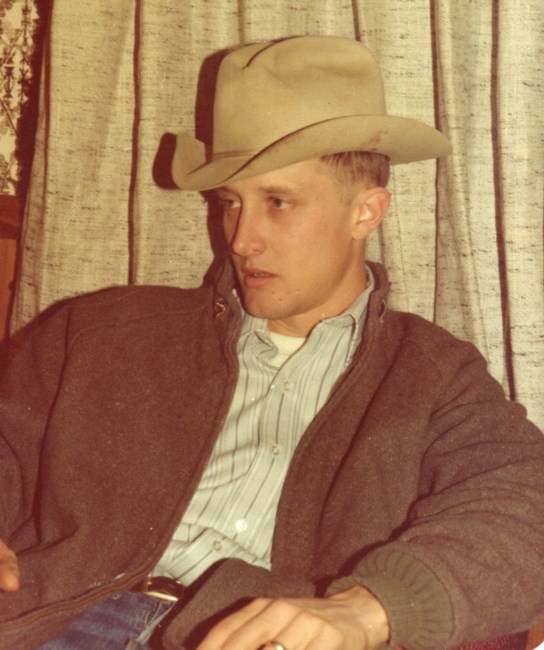
Lester William Maxfield, Jr., passed away at home in Colorado Springs, Colorado, on June 12, 2023. His wife of forty-seven years and three of his four surviving children were with him as he took his last breath.
Lester was born on January 3, 1951, in Scottsbluff, Nebraska. His maternal grandfather, T.C. Halley, who would die later that year from injuries sustained in a car accident, was a founding patriarch of the North Platte Valley and was reputed to be the largest lamb feeder in the United States. Lester’s father, Lester William “LW” Maxfield, Sr., had come from Kansas and, in 1949, purchased a cattle sale barn thirty-six miles to the west in Torrington, Wyoming. The Torrington Livestock Commission Company grew tenfold under his ownership into the largest sale barn west of Kansas City.
Lester inherited his father’s aptitude for business. He erected a wooden stand at eight years old and employed his younger brother, John, as a clerk to sell polished rocks and later candy bars to neighborhood kids. By 1963, he was the proprietor of a lucrative beverage business. The nerve center of the operation sat across the street from the sale barn at Red Christy’s Sinclair Gas Station. On sale days, Lester packed paper cups with ice, added a splash of Coca-Cola, and arranged the cups into a crate with shoulder straps for John, six years old at the time, to ferry across the street and sell to customers bidding on cattle. Lester managed the operations while sitting atop a beverage cooler smoking cigarettes.
After graduating from Torrington High School in 1969, Lester attended the University of Denver where he worked full-time at a bank, studied accounting, graduated in three years with honors, and, in the summer after his second year, completed an intensive program at the Western College of Auctioneering in Billings, Montana. On the first day of his second year in college, Lester was sitting on a rock next to a bend in Clear Creek at a popular party spot in the mountains west of Denver. “Do you smoke marijuana cigarettes?” asked a young woman, who obviously didn’t. “Doesn’t everybody?” Lester responded before inviting her to “pull up a rock and sit down.” Teresa Agnes Mullane had arrived earlier that day from New Orleans for her freshman year at Loretto Heights College. The connection was immediate. You could not meet Lester Maxfield and deny the singularity of his presence. “I’m gonna marry you,” he told her the next night.
Lester and Teresa moved two years later to Laramie, Wyoming, so Lester could attend the University of Wyoming School of Law, where his oldest brother Pete served as dean. After graduating third in his class in 1975, Lester was slated to follow his second-oldest brother Tom by getting a Masters in Law from New York University. But plans changed. He used money earned in law school from trading stock options and real estate to partner with his third-oldest brother Mike and acquire a portfolio of businesses back in Torrington. It was a motley mix - a flower shop, trailer park, apartment rentals and a drive-in movie theater - but it served as his ticket home. He and Teresa moved to Torrington and were married that year.
Lester spent his early years back home on the road trading cattle five days a week and auctioneering and working the ring at the sale barn the other two days. He spoke often of the relationships he built with the patriarchs of the family dynasties of Wyoming agriculture. He was honest. Tireless. And considered a savant with numbers, which he attributed to playing Oklahoma Gin as a child with his maternal grandmother. He spoke especially fondly of Bernard and Noeline Sun, fourth-generation operators of the famed Sun Ranch west of Casper, Wyoming. Noeline made the world’s best pie, he claimed throughout his entire life, while he and Bernard would flip a quarter for a hundred-dollar bill whenever Lester was in the area buying cattle.
He was a man of idiosyncrasies. He ate only chicken livers for his second year in college after negotiating a volume discount from a meat market. He didn’t think twice about wearing manure-stained pants while bidding on art at Christie’s and Sotheby’s in New York City, watching Evander Holyfield and Greg Louganis win medals at the 1984 Olympics in Los Angeles, and eating raw oysters at Acme Oyster House in New Orleans. And he was a hustler. He hustled on the pool table. He hustled in the bowling alley. And he hustled at cards. He enticed unsuspecting targets with early success, upped the ante, then took all their money. His nieces and nephews called it being “Uncle Lestered.”
In large social gatherings Lester was quiet, almost shy. In small settings he displayed an intensity for conversation punctuated by piercing light blue eyes. He opened doors for women, put his napkin in his lap, kept his elbows off the table and never demanded but always appreciated a table set with fine linen, silver, crystal and china. He was a man’s man. A product of the soil upon which he was raised. Compared to the fertile farmland of the Midwest, where the topsoil can be a foot deep, everything comes harder on the Great Plains. Success takes more effort. The risks are more acute. Hailstorms. Tornados. Droughts. You hadn’t lived, it was said, if you hadn’t gone broke at least twice. The only answer was to work harder. “The cows eat on Christmas,” Lester would say, meaning that every day was a workday.
After trading cattle for years, Lester bought a feedlot in Morrill, Nebraska. He fed all types of cattle, but he did best with old momma cows. He ran South Morrill Feeders from 1987 to 2008, assembled a supporting cast of ranches and farms, and eventually became one of the largest cow feeders in the country. His favorite place to spend time was Red Cloud Ranch. It sat thirty miles north of Torrington and served a century earlier as a stop for the Sioux as they traveled to and from Fort Laramie. The land was rich with artifacts. Cliffs cut into a hillside by Rawhide Creek had been used by the Sioux as a buffalo run, saturating the soil with arrowheads, spear points, adzes, axes and grinding stones. Lester spent hours artifact hunting with his Australian Shepherd, Coco, and went on to curate an august collection of Native American artifacts, photographs by Edward Curtis and paintings acquired on trips to Oklahoma City and Santa Fe.
In 1993, Lester moved his family to Colorado Springs, Colorado, and commuted for a decade to Wyoming and Nebraska to run his businesses. He was no less active in his new home. He opened a coffee shop with multiple locations long before Starbucks arrived, invested in a half dozen private companies, served on the boards of a bank and data center, traded stocks through the tech boom, mentored young entrepreneurs, and played golf at the Colorado Springs Country Club and duplicate bridge with Teresa at The Bridge Center.
Lester is survived by his wife Teresa, his eldest daughter Jessica, his sons Patrick, John and Stephen, his son-in-law Sam, his daughters-in-law Jamila and Katie, five grandchildren (Imran, Usman, Maura, Theo and Esther), brothers Peter (Karen) and John (Colleen) and seventeen nieces and nephews. He was predeceased by his parents Lester William Maxfield, Sr., and Jean Halley Maxfield, brothers Mike and Tom, and youngest daughter Rebecca, who passed away while climbing Pikes Peak in 2018.
To celebrate Lester’s extraordinary life, the family will host an open house at Lester and Teresa’s home on August 12, 2023, from 1:00 to 4:00 pm MT. Anyone interested in donating to Lester’s favorite non-profit may mail a check to the Sunrise Historic and Prehistoric Preservation Society (SHAPPS), PO Box 30, Hartville, WY 82215.
Fond memories and expressions of sympathy may be shared at www.Swan-Law.com for the Maxfield family.
Show your support
Add a Memory
Share Obituary
Get Reminders
DONATIONS
Sunrise Historic and Prehistoric Preservation Society (SHAPPS)PO Box 30, Hartville, Wyoming 82215
Services
SHARE OBITUARYSHARE
- GET REMINDERS
v.1.18.0