
OBITUARY
Susan L DiPietre
28 January, 1955 – 15 February, 2026
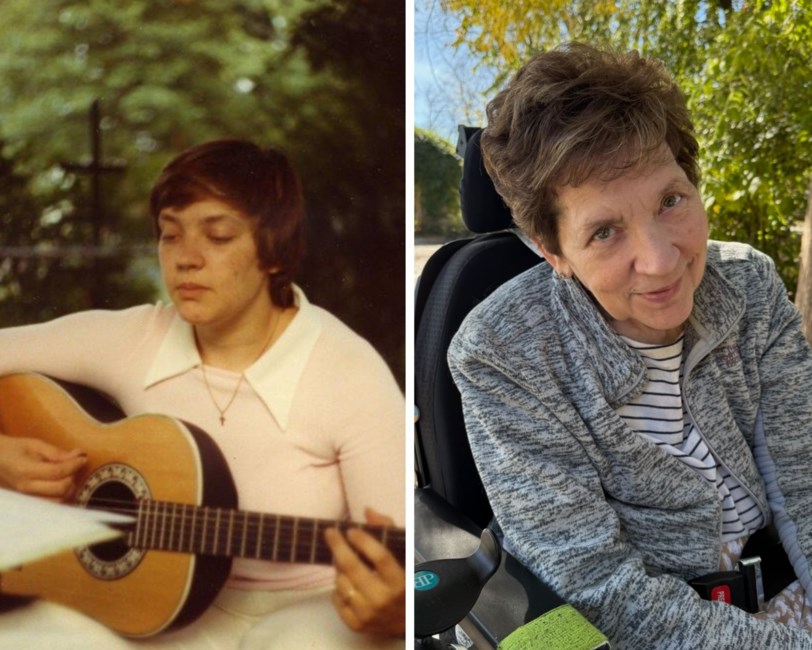
Susan Lee DiPietre was born on January 28, 1955, in St. Louis, a city whose sturdy neighborhoods and immigrant parishes helped shape the deep sacramentality that would define her life. From her earliest years, there was in Susan a rare integration of contemplation and action. Her faith in Christ was neither ornamental nor abstract; it was interior, nearly intuitive in its profundity, yet wholly embodied in gesture, tone, and presence. Those who traffic primarily in theological precision sometimes found themselves quietly corrected by her—because while their reasoning might have been exacting, Susan’s faith was incarnate. She understood, with a kind of instinct that can’t be taught, that divine truth is best communicated through love.
Susan grew up in St. Louis city proper and attended Saint Margaret's of Scotland and St. Elizabeth’s Academy. Her heritage was richly immigrant—German forebears who operated a small German bakery on Shenandoah. Family members lived above the shop; flour and laughter and deep tiredness from serving others from 4 a.m. till late at night, mingled daily. In later years, once the older generation could no longer host, Susan gathered the extended family for Thanksgiving for over two decades. The day after Thanksgiving, they baked Christmas cookies using decades-old recipes from the bakery and even the original bakery tools—a continuity of love made edible. Catherine, her daughter, an accomplished baker continued this tradition, which included her German family stollen recipes which were without parallel.
Her father’s family immigrated from Albania/Romania and after decades working at St Louis Shoe company for less than a dollar a day, they sacrificed and saved and purchased a small business and an apartment house where they fully engaged the promise of freedom which is the heritage of this country. Susan relished making pita, having been taught by her grandmother, Susan rolled out countless layers of dough by hand to create the fluffy textured wonder of baklava and pita instead of buying factory produced filo dough. The immigrant struggle was woven into Susan’s very character and integrated by the faith traditions of both families.
She began her vocation as a first-grade teacher at Most Holy Name of Jesus Elementary School on North Grand in St. Louis, a setting as challenging as it was grace-filled. It was there that the man who would become her husband first appeared during recess to entertain the children. The students, with characteristic delight, called her Miss Sue and him Mister Sue. Between morning and afternoon sessions, the two would sometimes slip away for tripe sandwiches at a nearby soul food restaurant, returning fortified for the holy work of teaching.
Susan possessed a remarkable charism for children with severe autism. Time and again, children who remained silent with parents and therapists would speak or sing within minutes of encountering her. It was not technique. It was recognition. She saw them—not as diagnoses, not as puzzles to be solved—but as persons waiting to be addressed with reverence. In the last few years of her life, a family friend brought such a child into her home. While adults conversed in other rooms, Susan sat on the floor with the child. Within minutes, the house fell still as soft, loving tones—hers and the child’s—floated through the air. It was as if a veil had lifted and all present knew they were witnessing something sacred.
On July 9, 1977, she married the love of her life, Dennis. Their marriage was not merely affectionate; it was covenantal—lived in mutual reverence, profound spiritual companionship, and abiding tenderness. On that day in 1977, he took her arm in his and on February 15 as they held each other in a loving embrace, praying adoration to God, he released her into the arms of her savior as her favorite hymn was playing softly.
In the final two years of her life, as illness advanced, three mid-career therapists at Rusk Rehabilitation Hospital—Jessica, Michelle, and Shawna—entered her story with extraordinary devotion. She loved them and was loved in return. Alongside them stood beloved Mady and later Maya, who worked with her in the home and inevitably fell under the quiet spell of her gratitude and courage. Her neurologist, Dr. Angela Richmond at the University of Kansas Health Systems, treated her with clinical rigor and groundbreaking attentiveness, an expert in movement disorders. Yet what Susan treasured most was not expertise alone, but the welcoming friendship and help of another woman. Dr. Richmond would remove her white coat—a symbol of authority, and protection from the patient, a potential barrier or distancing—and kneel beside Susan’s wheelchair, eye to eye, friend to friend. She also received beautiful, intentional, family-centered care from Dr. Ross, her primary care physician in the MU Healthcare System.
Susan believed she had two primary callings in life: motherhood and music. Her voice was pure, unadorned by self-conscious performance. She did not sing to impress; she sang to bless. She loved teaching children simple, exuberant songs—“I Am a Big Giant Love Ball,” “The Doughnut Song,” and, during Advent, the radiant duet “Children Run Joyfully, Jesus Is Lord.” When the first day of classes came every fall Susan would drive her children to school and sing the Grayson Warren Brown song, “May the Lord Bless You”.
For many years she led music at one of the liturgies at the Newman Center in Columbia, Missouri. When she could no longer step onto the platform, Dennis would gently help her to her seat and adjust the microphones until even that became impossible. Still, the music had already done its work.
She is survived by her husband, Dennis, her two children, Catherine and Jacob. Jacob, now an accomplished business executive, once cherished simple walks to the grocery store with his mother. On the way home, they would open a bag of chips and share them—an act of gleeful rule-breaking that was all the more significant given Susan’s ordinarily fierce respect for order. Catherine not only sang beside her mother for years but later helped select and coach younger children when she herself outgrew the role. Catherine and Susan each week watched every Doris Day movie ever made together and her mother’s love of children and teaching created a living legacy in Catherine. Degreed in theology from Loyola University in Chicago, Catherine has served as the Director of Religious Ed at the Newman Center and currently voluntarily provides religious education programming for the young people of her present faith community in Westphalia, Missouri. Susan’s five grandchildren were beloved beyond measure; she loved them with a vitality undiminished by physical decline. She is survived by loving cousins, 2nd cousins, an aunt and her brother and sister-in-law. She is also survived by a brother and her nieces.
When motherhood and music gradually receded under the advance of Multiple Sclerosis remnants and an atypical, aggressive form of Parkinson’s disease, she did not consider her life diminished. Instead, she asked God for another calling. It came disguised as suffering. Refusing to be defined by diagnostic labels, she accepted each day as given from the hand of her Lord, determined to “play the cards” she received in a way that would win hearts. And win them she did.
Dennis currently provides individual spiritual friendship/mentoring to a large group of university men who are emerging as future champions for Christ. They will penetrate the workplace and bring it to wholeness for the glory of God. These men, Protestants and Catholics alike, range from undergraduates to medical students, and grad students, including men who come from St. Louis area and Kansas City to deepen their experience of God. Susan co-ministered with Dennis supporting each one in prayer, loving them without favoritism—though special gratitude is owed to Thomas, whose tireless acts of service over several years, borne out of his love of Christ, his character and love for the family, ranged from assembling hospital equipment to keeping her beloved bird feeder filled. She loved her housekeepers of over 30 years, Connie, Stephanie, Liz and others in their family and considered them family.
Even when her final year rendered her unable to engage actively, her suffering became intercessory. Placed mystically within the wounds of her Savior, it bore fruit in the lives of those young men and family members she cherished.
She also served her local community generously, including leadership roles in various women’s organizations. She understood stewardship instinctively: everything had been given; nothing was possessed. She held even her own life in an open hand.
Susan Lee DiPietre’s life was not defined by accomplishment alone, but by presence. She marvelously embodied the description of the life of Christ, “Here I am; I have come to do your Will, (Hebrews 10:7). She practiced a faith that was credible because it was lived, luminous because it was humble, and enduring because it was given away.
May God grant unto her eternal rest and may her prayers enable each of us to say, “Yes”, like Mary, the mother of Jesus, her model and friend, when God calls to us, in His sovereign grace, in a most unexpected moment.
Show your support
Add a Memory
Share Obituary
Get Reminders
Services
SHARE OBITUARYSHARE
- GET REMINDERS
v.1.18.0