
OBITUARY
Dale Seiberling
6 April, 1927 – 1 May, 2021
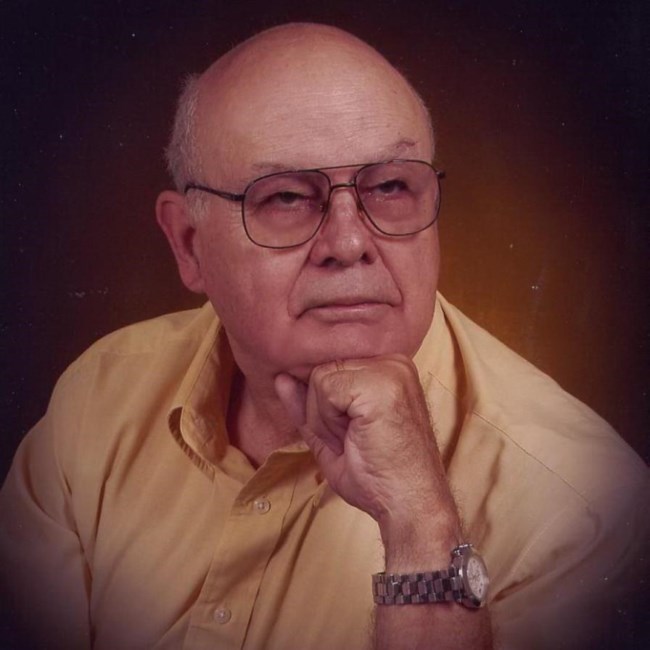
He graduated from Norton High School in Norton, Ohio and The Ohio State University.
Dale was a private pilot for 50 years, an accomplished sailor and loved swimming, snorkeling and water skiing into his 80's. He taught courses for the Vero Beach Power Squadron in navigation and safety for twenty-five years as well as teaching his family to swim, sail, snorkel and ski on rivers, lakes and in the ocean. He loved music and played the clarinet, organ, ukulele and harmonica. He also entertained his children by yodeling and sang in the church choir in his later years. He designed four of the houses he and his family lived in during his life. Completing all the interior work of Aerie with the help of family and friends, putting to use his love of woodworking.
Dale, wholeheartedly believed in the slogan "But for Ohio State." Growing up on a dairy farm along with his education in Food Science and Technology at OSU, provided the impetus, education and opportunity to revolutionize an entire industry. That's exactly what Dale Seiberling did for food processing. Back in 1950, cleaning and sanitizing dairy equipment was an inefficient, labor-intensive process. Equipment had to be taken apart, washed and reassembled by hand: bucket and brush, hose and boots. Cleaning was done at night, by the most recent hires, with little training or supervision.
As a senior in Dairy Technology, Dale recognized the potential of a new technology called "in-place cleaning," which pumped flush, wash and rinse solutions through partially assembled piping. He wrote a report about it and a year later was inspired by a presentation on automation by John Diebold at the Ford Motor Co. As a graduate student, he converted his initial report into a visionary paper published in the Journal of Dairy Science. It described how in-place cleaning could be combined with automated process control and ultimately permit computer control of both. The cleaning process was named CIP (Clean-In-Place) and, at first, it was applied only to piping. Dale recognized that the process and all equipment should be "CIP-able." By 1953, standards were developed that included pipes, joints and gaskets. Spray cleaning of transport and plant tanks followed.
This was just the beginning of an impressive career and a new chapter in the history of food processing. Today, many products in our pantries, refrigerators and medicine cabinets have been processed in CIP-able systems that reduce labor and waste, improve control and increase production capacity and safety.
Referred to by many as the "father of CIP," Dale began his career as an instructor at Ohio State. In 1955, as a consultant to Hopewell Dairy, he developed the world's first automated CIP system. Dr. W.J. Harper encouraged his work and contributed bacteriological and chemical expertise. Dale spent the next five years developing and patenting various components that would automate both processing and cleaning.
He then became an engineering consultant to develop and commercialize automated CIP, and subsequently, fully automated process and cleaning systems. This work led to positions as general manager and then vice president of a company for which he guided the design, installation and startup of more than 100 automated dairy processing systems and about 700 CIP systems here and abroad. In the early 1970s he installed several of the first computer-based control systems in the dairy industry.
By 1976 Seiberling had guided the transfer of the automated process and CIP technology from dairy to a variety of companies producing infant formulas, candy, baked goods, canned soups, condiments, dessert toppings and salad dressings. He had extended CIP to breweries, wineries, meat-based pet foods and meat smokehouses. Over the years, he has applied CIP technology and process/CIP automation to nearly every food process.
Through his own company, Seiberling Associates, Inc. (SAI), incorporated in 1977, he personally oversaw process and CIP engineering activity. In the late 70s and early 80s the technology was applied to pharmaceutical processes such as IV solutions and blood fractionation, and then to dry granular. In the early 1980s SAI acquired Electrol Specialties Company, which fabricated CIP and control systems, transfer panels and spray devices. When several milk-borne disease epidemics were encountered in 1985, state and federal regulatory agencies turned to Dale to help train their staffs.
Dale worked internationally on CIP based projects in England, Germany, Mexico, Japan and India. His biggest legacy is those who had the experience and benefit of the teaching and mentoring he provided to students, employees and others in the food science field worldwide. From 2002 through 2008 he guided the CIP-able process design for four major biopharmaceutical projects and continued to support adult education programs and private CIP seminars worldwide through 2012. He has published widely in industry journals and books and holds four patents related to his profession.
In keeping with "But for Ohio State," to pay forward, Dale established the Dale A. Seiberling Endowed Professorship in the Department of Food Science and Technology to attract an internationally recognized food engineer to Ohio State's faculty-a position currently held by one of his former students. He also established the Jean F. Seiberling Scholarship in honor of his wife. The scholarship provides support for graduate students working in dairy engineering to continue the research and innovation that has typified Dale Seiberling's distinguished career.
He has written two books, Clean-in-Place for Pharmaceutical Processes and his most recent, One Man's Quest to Keep you Safe: Dale Seiberling and Clean-in-Place Innovation.
He was preceded in death by his wife Jean Folk Seiberling, with whom he shared 53 years of marriage, and his second wife, Sally Smith Seiberling. He leaves three daughters, Leslie (Robert) Olson, Lynda (Robert) Chambers and Lisa Seiberling, four grandchildren and seven great-grandchildren, four sisters, Marcy Webster of Columbus, OH, Lois Maston of Longmont, Colorado, Arlene Hurst of Stowe, OH and Lynne Klamo of Oregon, a brother-in-law Chooch Wells, and many nieces, nephews and cousins.
A service to honor his memory will be held via Zoom on Friday, May 7th at 11:00AM. It will be officiated by Pastor Janet Hufford of First Presbyterian Church in Pataskala and Pastor Jack Diehl of Our Savior's Lutheran Church in Vero Beach, Florida. We hope you will join us in this virtual service to celebrate the life of Dad, Dale and Pappap Seiberling. We chose this type of service to be as inclusive as possible to Dale's family and friends across the country and internationally. If you have a memory or story you would like to share during the service, please send an email to [email protected] so you can be added into the service. Please try to enter the Zoom service between 10:45-10:55AM so that we can begin on time and we ask that you please identify yourself once entered so we have a record of attendance. The invitation link is:
Memorial Service for Dale Seiberling on Zoom
Time: May 7, 2021 11:00 AM Eastern Time (US and Canada)
Join Zoom Meeting
Please come online not later than 10:50am for Dale Seiberling's Memorial Service on Friday, May 7th at 11am.
Meeting ID: 811 7858 1541
Passcode: 552488
Donations can be made to "Friends of the Norton Ohio Library" and mailed to: Norton Branch Library, 3930 South Cleveland-Massillon Road, Norton, Ohio 44203.
Show your support
Add a Memory
Share Obituary
Get Reminders
Services
SHARE OBITUARYSHARE
- GET REMINDERS
v.1.18.0