
OBITUARY
Dan Weiser
10 July, 1933 – 20 June, 2015
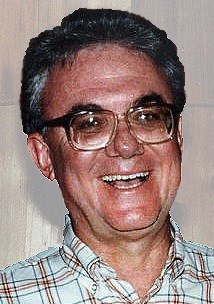
Dan Weiser – beloved by his wife, Louette, his children, grandchildren, sister, nephews, and nieces – passed away peacefully on June 20th in the loving presence of his family. Dan lived a life of accomplishment and social action, leaving a legacy of family devotion and civic improvement. Dan Weiser was born in St. Louis in 1933 to Hannah and Edel (“Bud”) Weiser. They moved to Galveston when Dan was still young. Dan was a gifted student, graduating from Ball High School at age 16. He was 21 when he earned his BA, and 25 when he was awarded a Ph.D. in Mathematics (both degrees from Rice University). He received a prize for his dissertation, on a topic not remotely understood by mere mortals. When Dan was 16, he met Louette Kestenberg at an event in Houston sponsored by a Jewish youth organization. Always decisive, Dan asked Louette to be his date for the dance that same night. The evening went well, apparently. Dan and Louette attended Rice together and were married in 1954. They celebrated their 61st anniversary two weeks before Dan’s death. Dan was a devoted father of four boys: Alan, Martin, David and Michael. On family trips from Dallas to Houston and Galveston, Dan delighted in providing age-appropriate math problems, playing word games, and singing silly songs from his youth. As his sons went off to college, Dan took great interest in their activities and enjoyed meeting their friends. Dan was invariably warm and kind to his daughters-in-law: Mary Ann, Donna, Mary, and Jenny. Dan was thoroughly besotted with his nine grandchildren and two great-grandchildren. Family was a great source of joy and pride for Dan. Social activism was central to Dan’s life. When Dan and Louette moved to Dallas in 1958, racial segregation was enforced as a matter of deep custom and explicit law. Dan quickly fell in with a group of liberal Democrats in Dallas who challenged the status quo. Dan and others successfully fought against the poll tax that prevented African-Americans from voting. They also supported civil rights initiatives that, eventually, were enacted by Congress as the Civil Rights Acts of 1964 and the Voting Rights Act of 1965. These were unpopular stances in Dallas in the early 1960s, but Dan and his friends adopted the view: “if not now, when?” Dan’s mathematical know-how led to his role as redistricting guru. From the 1960s forward, Dan was among the foremost experts in the country with respect to statistical analysis of political districts. Dan was often the expert witness for civil rights groups throughout Texas seeking to ensure equitable representation pursuant to the Voting Rights Act and the U.S. Constitution. In addition, he was the lead plaintiff in the key case of “White v. Weiser,” which was decided by the U.S. Supreme Court in 1973. Because of Dan’s central role as redistricting expert, along with his clear-headed analytical approach, Dan became a mentor and informal counselor to countless public servants. He deeply enjoyed providing advice and assistance to these hard-working candidates and public officials. He never sought elected office himself (beyond local precinct chairman); instead, he loved to assist others in navigating through the slings and arrows of modern politics. Dan took special interest in helping candidates who were different from the dominant political class in Texas in the 1960s. He won awards for his work helping women candidates win elections. He also helped many African American and Hispanic candidates, as well as gay candidates. Dan was also an early advocate for progressive environmental policies. Dan had a very successful career as a mathematician for Mobil Oil in Dallas. His work provided opportunities for travel around the world to Mobil’s far-flung operations. He often organized business travel so he could meet with family for sight-seeing. Dan was a prolific museum-goer. He also was a long-time supporter of the arts, serving many years on the Dallas Arts Commission. In the past five years or so, Dan’s memory faded dramatically, and his verbal interactions became more limited. Until the very end, however, he retained his cheerful amiability. Nothing pleased him more in the past few years than family gatherings, especially when happy singing broke out. Dan knew every word to hundreds of old songs, and he sang each song with gusto. Dan is survived by: Louette Weiser, his wife of 61 years; sons Martin Weiser (and wife Donna Miller), David Weiser (and wife Mary Crouter), and Michael Weiser (and wife Jenny Weiser); grandchildren Lauren Waldrop (and husband Will Waldrop), Julia Weiser, Leah Weiser, Nathan Weiser, Daniel Weiser, Leo Weiser, Aaron Weiser, Sarah Weiser, and Rachel Weiser; and great-granddaughters Mary Louise Waldrop and Ann Rabbe Waldrop. Dan is also survived by his sister Lily Kanter, and many nieces and nephews. Dan was predeceased by his parents, son Alan, and daughter-in-law Mary Ann Weiser. A memorial service will be held on Tuesday, June 23 at Temple Emanuel, beginning at 10:30am. A private graveside service will be held at Temple Emanu-El Cemetery. Those wishing to make a donation in honor of Dan are encouraged to contribute to Temple Emanuel in Dallas, or to a social action project of their choice.
Show your support
Add a Memory
Share Obituary
Get Reminders
Services
SHARE OBITUARYSHARE
- GET REMINDERS
v.1.18.0