
OBITUARY
Dr. Lester Lee Eidemiller
11 March, 1919 – 16 June, 2012
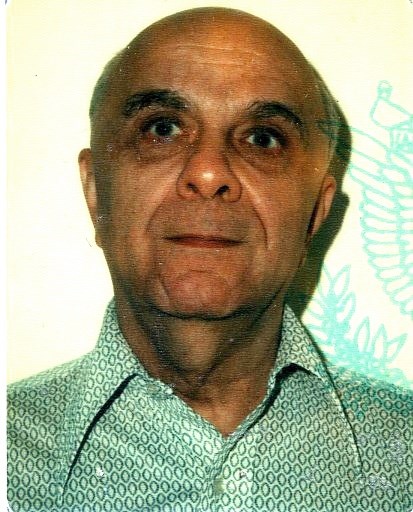
Mary McCarty (Staffwriter)
His idea of fine dining as the Hasty Tasty Pancake House, and he probably hadn't bought a new suit since the 1970s.
In his later years, my friend Lester Eidemiller exuded a genteel shabbiness that would hardly suggest hidden financial resources. "The old miser," friends would say, affectionately.
Yet when Lester died June 16 at 93, he left the largest bequest in the history of Oakwood's Wright Memorial Public Library and the second-largest in the history of the Muse Machine - $300,000 to each organization. It's a legacy befitting his lifelong love of books and the arts and of sharing those passions with young people.
And it came as a complete shock to both non-profits. Ann Snively, director of the Wright Library, knew him well from. his many years as a faithful patron. "We are certainly surprised and very pleased to learn about his bequest," she said.
Mary Karr, interim director of the Muse Machine, said of the gift, "It's huge," second only to Erma Catterton's $1.6 million bequest. That $300,000 could cover the typical average cost of in-school programs - about $325,000 - or the comparable annual cost of student musical productions.
In addition, a letter from President Herbert Hoover, written Nov. 16, 1928, to Lester, a distant cousin, was donated to the Presidential Library. "Would you believe that the Herbert Hoover Presidential Library actually has the letter that Lester sent to Herbert Hoover?" marveled Lester's close friend, Hank Baust of Beavercreek.
Lester lost his vision as an adult due to retinitis pigmentosa, a congenital disease, but blindness didn't dim his thirst for books and knowledge. The library was his lifeline.
Recalled his friend Becky Khan of Oak-wood, "They let him circulate books and CDs for six weeks and didn't fine him, even if he was late.
There was a young librarian named Sara who was always kind to him and put up with his shenanigans. He could be quite demanding, but he was always grateful."
In his early years, Lester explored the world, leaving Dayton after a brilliant boyhood in which he served as class president of the Fairview High School class of 1937. Lester earned his doctorate in philosophy from Columbia University in 1945, studying under John Dewey, Lionel Trilling and Margaret Mead and brushing shoulders with other young intellectuals, including Norman Mailer. After completing a graduate fellowship in philosophy at Brown University, Lester taught philosophy at Brooklyn College, Penn State University and the University of Nebraska.
In 1953 his life took a dramatic turn, quite literally, when he moved to Copenhagen, where he founded the American Drama School. He introduced the concept of method acting and taught courses on acting and improvisation. He produced the first Danish performances of plays by William Saroyan and Edward Albee.
In 1970, his stepfather died and Lester returned to Dayton to provide devoted care for his mother, Dorothy Eidemiller Taylor, during the last 11 years of her life I became one of hundreds of Dayton-area high school students who volunteered to read for him and, in return, learned profound lessons about American literature.
In the 1990si Lester founded a "Hot Topics" group for Oakwood High School students designed to encourage critical thinking on a wide range of academic topics, earning praise from one student as "a1 Renaissance scholar, in the sense that he is able to discuss an incredibly broad range of subjects."
It was an amazing and exemplary life by any measure, but behind every stellar resume lies a real human being with real human flaws. That came out in Lester's memorial service, which was affectionate, full of warm tributes, yet also honest about his faults. It turns out that "difficult" is deceased-speak for someone who could, at times, be self-centered and demanding.
Lester turned away some of his readers and volunteers because he had trouble empathizing with the time constraints of those of us slogging it out ! in the workaday world. His own world was small yet vast - lived out in a small room on the second-floor of his modest white frame house in Belmont. Most of all, he enjoyed sharing his rich life of the mind with readers and students.
"It was through new encounters that he could tell his stories, teach, question and introduce new ideas to new young minds," recalled my sister, Beth McCarty. "I think his little room on the second-floor was a classroom and most students rotated out after a few years - some with a new way of looking at the world, or a newfound love of a short story writer or play or musical. We all learned something from each other." Lester was "difficult," without question. Yet think of the most difficult teacher you ever had -any chance that he or she turned out to be the one who taught you the most?
I'll never forget Lester's withering look when I confessed an admiration for the saccharine novel "Jonathan Livingston Seagull" or pronounced the name of German composer Richard Wagner with an unforgivable "W." I never made either of those mistakes again. Lester appeared to give little thought to giving back to others. Yet I am struck by how much he had given to all of us without knowing. He was Beth's first step in her career as an occupational therapist.
For Becky Khan, "He opened doors intellectually; he exposed me to some very famous writers and thinkers, particularly on social issues and globalization." Today she serves on the activities committee of the Dayton International Peace Museum.
I learned the wonders of Saul Bellow and John Cheever and John Updike and looked at writing and literature in a whole new, I more sophisticated way. As his fierce intellect faded, during the final few years, his lifelong love for Broadway came to the forefront. His friends and the staff at Brook-dale nursing home in Oak-wood threw a Broadway bash to celebrate his 90th birthday. Cole Porter got through to him when Kant no longer could.
And now he's giving back to Dayton in a way that will last for generations. As Beth observed, ' "He loved it when he i didn't have to pay a library j fine or a ticket to a show. But in the end, the man that got out of paying for his coffee when out on the I town paid the biggest compliment of support to the things he without a doubt loved and lived for."
A gift like this, observed the Muse Machine's Karr, "lives on forever. What could be more valuable than helping kids to experience the arts?"
Lester, my friend, you are teaching us still.
------
LESTER EIDEMILLER BIOGRAPHY
Lester Lee Eidemiller – born 3-11-1919/died 6-16-2012 (93)
Father – Lester W. Eidemiller, born 4-5-1885/died 7-13-1936
Mother – Dorothy Becker, born 11-2-1885/ 1981
1937 – graduated from Fairview High School…was president of his class. During high school, he wrote a column for school paper titled “The Dopester”, did sports writing and had poetry published in school paper. He noted that George Gershwin died the same day her graduated. He was musical as a child…played piano and trombone and collected phonograph records
1941 – B.S Philosophy. Northwestern University, Illinois- member Phi Gamma Delta fraternity.
1941-1945 - Columbia University, NYC, graduate work for Ph.D in Philosophy. Studied under such notables as John Dewey, Lionel Trilling, and Margaret Mead. Ph.Dissertation titled “Meaning and Method in Psychoanalysis”.
1942-43 Graduate teaching fellowship in Philosophy, Brown University, Rhode Island
1945-1948 Instructor in Philosophy, Brooklyn College, NY
1948-1949 Penn State University, instructor in Philosophy
1949-1952 University of Nebraska, instructor in Philosophy. Courses taught: Ideas in Contemporary Culture, Elements of Ethics, Greek and Roman Philosophy, Esthetic's, Ancient and Modern History of Philosophy.
1953-1970 Lived in Copenhagen, Denmark
- Taught English at the Berlitz School or Languages and served as Inspector of
English at Benadotte Skolen, largest international school in Denmark
- Instructor in English for diplomatic personnel at Poland, Hungary, Yugoslavia, Argentina embassies.
- Founded the American Drama Studio in 1960.
- Directed activities of the American Drama Studio and instructed courses on acting and improvisations.
- Producer of first performances in Denmark of plays by Saroyan and Edward Albee.
-
1951– Dorothy Becker Eidemiller married Roy Taylor, beloved stepfather to Lester.
1970 – Roy Taylor died 4/13/70 - Lester returned to US
1970’s Lester completed original literature survey and draft for a course on American
Fiction of the 1960’s; Completed research for course in acting techniques with special emphasis on improvisations for the blind; completed research for courses in contemporary drama, published cassette recording for the blind under sponsorship of the League of Women Voters (all this is from his resume)
Past Memberships: American Philosophical Society, Society for Esthetic's, Children’s International Summer Villages, Phi Gamma Delta, First Unitarian Church (board member), National Federation of the Blind, Toastmasters International.
1976 – Lester recorded his voice for a part in the play “The Water Engine” by David Mamet
Later years - started “Hot Topics” for local high school students. He had students read to him once a week from books written on history, politics, economics, the environment and other interdisciplinary subjects. He encouraged critical thinking. I was one of his adult readers starting in the early 90’s and learned a great deal from him. (I have an article from the Oakwood Register on this)
He also had a huge collection of tapes he made of American musicals and had students come and listen to his collection at his home. He could sing and knew lyrics from all the musicals. His other interests included jazz and humor.
Show your support
Add a Memory
Share Obituary
Get Reminders
Services
SHARE OBITUARYSHARE
- GET REMINDERS
v.1.18.0