OBITUARY
Lona Lucille Donnell
17 January, 1925 – 28 January, 2020
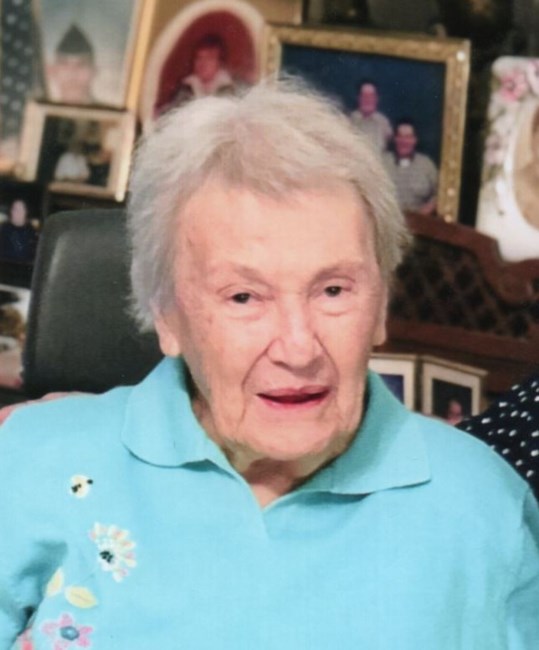
Lona Lucille Donnell was born 1-17-1925 in Cumberland, Oklahoma to William Roy Maxwell and Lona Mary Pool Maxwell, 17 days after her birth, her mother died of childbed fever. Lucille was raised by her grandparents, Lorenzo Dow and Cordelia Crisp Pool. Her grandmother was her mama and her all. Her grandmother gave her a loving, nurturing and stable foundation. She was raised in their country home where she went to a one room schoolhouse, milked cows, picked cotton, went to church. She played in the great outdoors with her cousins, rode in a wagon pulled by a team of mules that she and grandmother occasionally got to go to the town of Madill. She grew up in the depression. She said they didn't know they were poor, because everyone was poor and in the same predicament that they were in. Lucille went to the Mourners Bench and was baptized in a creek at an early age. Lucille's world was forever changed on July 4, at the age of 13, when her dad and step-mother, came under the pretense of buying her new school clothes, took her from her beloved grandmother and brought her to Oklahoma City. She was not allowed to return to the only life she knew, and was not allowed to write her grandmother letters. Lucille endured many years of abuse and her only friend was the Lord. At the age of 21, Lucille moved to the downtown YWCA. She began a career at Sears Roebuck and Company and excelled as an elevator operator, later finding her niche in the hardware and tool department, becoming one of the first women to work in that department. She could tell you what any tool was and what it was used for and also the size and type of any nut, bolt or screw. She enjoyed selling Craftsman tools. During her time at Sears, a young man came into the basement and eventually got the courage to ask her for a date. His name was Jim Donnell. They dated for several months and married on April 10, 1949. The following April, their first child, Lona Mary Donnell was born. Jim and Lucille would purchase a home up the street from his parents, a house that Jim's dad help build, in what is now known as the Paseo District. A son Hollis, was born to them three years later. Lucille and Jim raised their children at the Northminster Presbyterian Church and she was very active in the church, working with VBS and family night dinners on Wednesday night. They spent the next ten years building their home and family and helping others. And then a daughter Tammy was born. Lucille was a good cook, fed her family well and invited others to the table for potluck. She never backed away from hard work. She taught herself how to refinish and reupholster furniture. She sewed her clothes and those of her children. She despised wastefulness because she knew what it was to have very little. She was grateful to the Lord for all that He had done for her and her family. Jim and Lucille would go on to acquire additional properties in the Paseo area and remodel and repair them. Their neighborhood started to deteriorate, so the family began working in the neighborhood association. Lucille began to pass out neighborhood newsletters and ride patrol. In their later years together, Jim and Lucille traveled the U.S. , seeing many historic sites and museums, on both coasts as well as throughout the United States. Lucille was compassionate towards animals. The family has had many dogs, some cats, birds and a squirrel. She loved driving and riding in her 1968 Pontiac Bonneville. She was even known to take a challenge to a drag race. Lucille's nickname was Frankie. She gained this name at the YWCA when other young women would seek her counsel, often telling them what they didn't want to hear. She was a counsel to her family, friends, aquaintences and even strangers. She would often ask the people seeking her counsel if they were praying about their problems. Their answer was often "no." She would encourage them to pray and tell them about the power of prayer and that Jesus was a friend that sticks closer than a brother. Lucille always loved her family. She was a daughter, a wife, mother, grandmother, great-grandmother, friend, helper, volunteer, counselor and prayer warrior. She was preceded in death by her mother, grandparents, father, husband Jim, daughter Lona, brother Vernon and his wife Melba. She is survived by her son, Hollis Donnell and wife Johneale; daughter, Tammy Donnell; grandsons, Terry Robbins and wife Richmond and their daughters Alexandra and Madison; grandson, Aaron and Joshua Donnell; niece, Christine and Jim Gilbertson; cousins, Betty Travis and Arnold Setliff; and beloved dog Misty. The family wishes to thank Adam and Emily Rogers and their daughters Madeline and Scarlett, Ron and Mary Frantz, Pete Berga, Iran Gann, and Gina Jones.
Lona Lucille Donnell Eulogy Written by Ronald H. Frantz
If one lived 95 years, I feel that they deserve a short story this afternoon.
My name is Ron Frantz. My wife, Mary, our family, and I were neighbors of the Donnell’s from 1982-1994.
From February 1968 until August 2001, a simple, low-key television show ran for 912 episodes. I loved the opening scenes. There were aerial views of a neighborhood. Miniature houses and small cars with very small people and trees and signs were shown. A little streetcar rumbled by. It was a perfect little neighborhood with traditional little houses. The show would then start with the key neighbor, Mister Rogers, who would greet everyone to his real (or TV) neighborhood and the Neighborhood of Make Believe. Everyday issues and everyday people would be complemented with bigger issues and not real people in the Neighborhood of Make Believe. There were serious lessons to be learned. I must admit, though, I didn’t pay attention to these lessons. I simply was enamored with this scale model neighborhood. As a want-to-be-architect, even then, I was drawn to this place. I had this goal to buy a house and live in a neighborhood like this—where you actually know everyone on the block.
In February 1982, 38 years ago this month, just before my 24th birthday, I was able to buy a traditional little house in this neighborhood called Paseo in Oklahoma City. I loved this house….and couldn’t believe that I actually owned a house. I set about restoring the house. Along the way, I got married, we had twin sons, we adopted a total of 4 cats and 4 dogs. (Many of these adoptions came about with the counseling of Tammy and Lona.) In the 12 years we lived here, we got to know many of our neighbors, including Lucille Donnell, her husband Jim, and their daughters, Lona and Tammy. Through conversations I learned about her son Hollis and his family as well.
I must say, in those early years, in the 1980s during the Oil Bust, the Paseo Neighborhood was anything but a fun place to be. Empty houses, crumbling apartment buildings, abandoned cars, high crime rates, truant schoolchildren, stray dogs, homeless kitties, drug dealers, prostitutes, and arsonists made this place anything but Mister Rogers’ Neighborhood. We lived more in the Neighborhood of Make Believe….hoping that just one day, the houses and apartments would be filled with nice neighbors who…..and the list of good things hoped for could make another 912 episodes of that TV show.
In the process of getting to know neighbors, I learned that there were many good neighbors all throughout. However, there was one special corner. N.W. 27th Street and North Dewey Avenue. This is where the Donnell Family lived….just 2 blocks up from my wife and me. As today is Lucille’s day, I am just going to use her name. However, please know that my comments are for all the Donnells.
During the time we lived here, I thought a lot about what makes a good neighbor. Why is this corner or block stable or attractive or inviting when other places seem so forgotten and maybe outright scary?
Here are some of my thoughts:
A good neighbor paints their house and keeps it tidy no matter how tough the house next door looks.
A good neighbor may even buy the house next door just to protect that house from worse options.
A good neighbor plants flowers, shares bulbs and cuttings, and waters their yard even when the place next door has thigh-high weeds or cars on blocks.
A good neighbor doesn’t shoo away straggly old dogs. They set out bowls of water and provide food and give them names.
A good neighbor may realize that a neighbor down the street is lonely or scared. After befriending the stray dog, the good neighbor may place that dog with that lonely neighbor.
A good neighbor doesn’t do bad things to homeless cats. They set our water and begin to buy cat food as well as dog food.
A good neighbor joins in the neighborhood association and helps as needed. They may not care to distribute newsletters by day or ride security patrol through the dark of the night. However, they do it.
A good neighbor may realize they have small sleeping rooms or garage apartments that could house newcomers to the neighborhood or to Oklahoma City or to Oklahoma or to the United States. They rent those spaces for fair prices and maintain them very well.
A good neighbor may find bountiful falls that produce many “Famous Paseo Pecans.” They shell those pecans and sell them to many others so that all can have tasty goodies throughout the holidays. Many, many people came to rely on the annual “exchange” of pecans. By the way, we just made up the name “Famous Paseo Pecans.” Don’t try to Google that for more information.
A good neighbor always finds an extra chair and invites another to have a home-cooked meal. The chairs may be closer together around the table and the servings may be a little smaller. However, the helpings of hospitality make for fulfilling evenings for everyone.
A good neighbor invites you to pull up a lawn chair and sit in their magical little garden area…surrounded by greenery and blooms, an arbor and vines, a rock garden constructed of rock finds from all over. Bags of popcorn with special cheese toppings and cool drinks soften the hot summer evenings.
A good neighbor, during those impromptu indoor suppers or outdoor sittings, tells you what they think. Truly tells you what they think. The thoughts are not sugar-coated, but they are not mean-spirited, either. They are just frank.
A good neighbor serves as a co-hostess for an elegant afternoon Double Baby Shower for neighbors down the street, inviting neighbors from throughout the area. As the “Mother’s Day Weekend Flood of 1993” poured outside, the hostesses, Lucille, Lona, and Tammy, poured another round of warm beverages and served beautifully tasty homemade desserts on exquisite serving pieces. As torrential as it was outside, it was totally wonder inside.
A good neighbor hosts an annual neighborhood reunion and disguises it as a garage sale during the Paseo Festival each Memorial Day Weekend.
A good neighbor also comes to your house. When they do, they drive their classic black over burgundy 1968 Pontiac Bonneville 4-door hardtop. They park out front and let your neighbors know that you have the coolest of friends.
A good neighbor holds tight on their little corner of the world and makes it a very big influential place for many others.
A good neighbor remains stable and becomes an anchor when many others may give up and move away.
A good neighbor is Lucille Donnell—and her family.
In 1998, while on a tour related to a conference, we were told we would duck into a television studio and tour a set where a show was filmed. We were in downtown Pittsburgh, Pennsylvania. I was with a group of architects and designers who help restore old buildings and old houses all over the country.
I can’t tell you how surprised we all were. There we were standing in Mister Rogers’ Neighborhood. We saw the scale model neighborhood and The Neighborhood of Make Believe. We all worked in tough towns—but worked with people who believed that their areas could be better. We were like little kids. It was incredible. All of us were influenced by this show.
They were not filming that day so the set was a bit dismantled. We didn’t meet the “real” neighbors like Neighbor Aber, Lady Aberlin, Mayor Maggie, and Mr. McFeely. We didn’t see any signs of those from the Neighborhood of Make Believe like King Friday the XIII, Lady Blaine Fairchilde, Tadpole Frogge, X the Owl, or Cornflake S. Peically. However, we did talk about people back in our home states and our hometowns who were much like these TV celebrities—real or not. To be honest, I had to think about all those interesting names. Back in the 1980s, we had our share of neighbors with names like those of the Neighborhood of Make Believe. Those names were a way to find a laugh and to fight the stress. It would have been a show called Mister Rogers’ Neighborhood Gone Wrong. Real Wrong.
Seriously, though, I immediately thought of many of our good neighbors in the Paseo Neighborhood. I thought of Lucille Donnell and her entire family.
Just before Christmas, a movie came out, A Beautiful Day in the Neighborhood. It is about Mister Rogers…and the lessons we can still learn from him.
If we were able to talk to Mister Rogers, he would tell us that yes, it is a sad day in the neighborhood today.
Today is February 1. It is the first month in 69 years that Lucille Donnell will not be on her corner in the Paseo Neighborhood.
Mister Rogers would tell us that it is okay to be sad. Maybe we can even be a little mad. Possibly some may feel totally exhausted.
However, he may also tell us to pull up the chairs around the table or circle the lawn chairs in that great little patio between 601 and 607….and talk about our feelings.
He probably then would ask us to talk about all the really good days—talk about the beautiful days in the neighborhood.
Then his final question probably would be, “Have you told your neighbor that you love them and appreciate them for all the kind things they did?”
A good neighbor is Lucille Donnell.
Today, with so much love, we say thank-you, Lona Lucille Donnell, for being a good neighbor to all of us.
Show your support
Add a Memory
Share Obituary
Get Reminders
PALLBEARERS
Hollis Donnell
Joshua Donnell
Tammy Donnell
Aaron Donnell
Terry Robbins
Pete Berga
Services
SHARE OBITUARYSHARE
- GET REMINDERS
v.1.18.0