
OBITUARY
Valery N. Soyfer
16 October, 1936 – 11 June, 2024
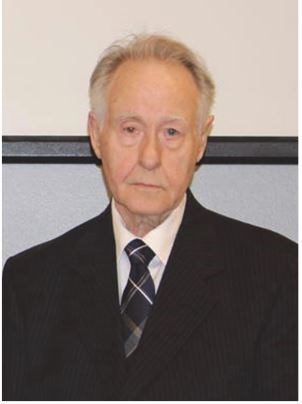
George Mason University.
Valery Soyfer was born and got school education at Gorky (Nizhny Novgorod), then moved to Moscow where he graduated from Timiryazev Agricultural Academy and Physics Department of Lomonosov Moscow State University. During his student years he was highly influenced via informal mentorship of the great Soviet physicist and Nobel prize winner, Professor Igor Tamm.
Over the years, Valery Soyfer became a prominent geneticist working in leading positions at various research institutions in the USSR. A major focus of his research was the genome instability and genome repair. Valery’s very successful scientific carrier was abruptly stopped in 1978 after he applied for repatriation to Israel. He was fired and was denied the exit visa from the USSR. He became a refusnik for upcoming almost 10 years.
During his refuznik years Valery continued to be extremely active in a variety of ways. He and his wife Nina had to support themselves and their two kids. He became heavily involved in the struggle for human rights in the USSR. But his major project was writing his opus magnum: a painstaking historical study entitled “Lysenko and the Tragedy of Soviet Science”. This work established Soyfer as a major historian
of XXthe century science.
Chapters of his opus magnum were published during Perestroyka in the most popular Soviet weekly magazine of that time, ‘Ogoniok’. This made Valery famous among general public. He even started doubting whether he wanted to leave the USSR after all. But, perhaps, due to the internal struggle within the USSR Politburo, in 1988 he and his family were stripped of the Soviet citizenship and kicked out from the USSR. They landed in Columbus, Ohio where Valery had an outstanding invitation to take the Distinguish visiting professorship position at Ohio State University.
It is truly remarkable how quickly Valery resumed scientific activity after he had been denied for 10 years (!) any access to the biology lab. He started inviting his colleagues from the USSR to visit OSU and establishing collaboration with them. Very soon he managed to get an NIH grant due to one of these collaborations (with Maxim Frank-Kamenetskii). Such resounding success allowed Valery to receive the tenure position first at OSU and then at GMU.
But again, like back in USSR, it was not enough for Valery to pursue pure scientific carrier. He continued to publish books and articles on history of science (both in English and in Russian). In addition, he became heavily involved in George Soros’s Open Society Foundation. He became very close to George Soros. Perhaps, his most ambitious project was the International Soros Science Education Program, which continued for 10 year, between 1994 and 2004. The program financially supported more than 120,000 scientists, professors and teachers in the counties of the former USSR. Valery injected all his passion into the project, which supported scientist and educators of the collapsed empire when they were most in need being abandoned by their governments.
It is truly amazing how one person could accomplish all of the above, and much more.
Show your support
Add a Memory
Share Obituary
Get Reminders
Services
SHARE OBITUARYSHARE
- GET REMINDERS
v.1.18.0