
OBITUARY
Richard Tanner Pascale
June 14, 1938 – May 24, 2024
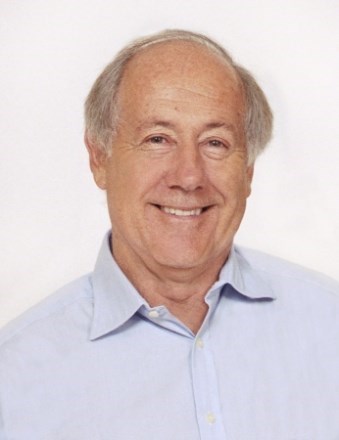
Richard was in his early 30s when he decided to divide his professional life in quarters – spending equal time teaching, writing, consulting and gaining inspiration. And while he succeeded at the first three, becoming a popular professor, bestselling author and advisor to executives, it was the last where he truly excelled. Richard loved to learn and was limitless in his breadth of interest and discovery. From business to history to science, he was a voracious reader and deep thinker. Human complexity and living systems fascinated him. He cherished connecting with people. He would listen carefully to their stories, quietly observe their work or environments, and use warmth and humor to create and nurture relationships. Richard’s quest for inspiration made him not only a better professor, author and consultant – but also a more compassionate, creative, compelling and charismatic man.
Richard graduated from UC Berkeley with a BS in Mechanical Engineering in 1961. He served as a Lieutenant in the US Navy in Japan and the Philippines. Richard earned his MBA in 1967 and his doctorate in 1971 from Harvard Business School, where he was a Baker Scholar. He served as a White House Fellow (class of 1969) and subsequently participated in a special White House Task Force that resulted in the reorganization of the Executive Office of the President and established the Office of Management and Budget. He went on to serve on the faculty of Stanford Graduate School of Business from 1971-1991. While at Stanford, he taught the most popular course in their MBA program at the time, a course on organizational survival. In 1997, Richard joined the Saïd Business School, Oxford University as an Associate Fellow and continued to teach executive leadership courses until the time of his illness.
Richard’s writing and teaching focused primarily on the intersection of leadership, strategy and organization. During his long and distinguished career, he authored and co-authored 5 books, including the best-selling The Art of Japanese Management (with Anthony Athos, 1981), Managing on the Edge: How Successful Companies Use Conflict to Stay Ahead (1990) and The Power of Positive Deviance: How Unlikely Innovators Solve the World's Toughest Problems (with Jerry and Monique Sternin, 2010). He also authored numerous articles in the Harvard Business Review, one of which won the McKinsey Award for Best Article in 1978, and a number of case studies including Honda B (with Evelyn Christiansen, 1983), which continues to be taught in business schools today. These case studies were the beginning of Richard’s work on organizational agility, which continued throughout his career. During this period Richard also contributed to the development of the McKinsey 7S Framework.
Richard’s unique ability to elevate any team started early in his college days as captain of the UC Berkeley water polo team. His coach noted that while he didn’t score the most goals, whenever he was in the water the team worked exponentially better together. In the decades since, he helped executives across many industries improve their ability to tackle the most complex challenges. He facilitated hard conversations, gave tough feedback and enabled change – all underpinned by his respect and empathy. Through Richard’s consulting work, he advised senior executives and management teams of companies such as AT&T, BAE Systems, BP, Coca Cola, GE, Intel, Goldman Sachs, Motorola, The New York Times and Royal Dutch/Shell. He also consulted to government and not-for-profit organizations, including the World Economic Forum, the United States Army, USAID, the Sierra Club, the Appalachian Regional Commission, Save The Children, the International AIDS Vaccine Initiative, and the Gates Foundation’s Global Alliance for Vaccine Initiative.
Richard balanced his passion for ideas and the mind with a love for physically exploring and experiencing the natural world, its art, food and cultures. These interests took him kayaking in the South China sea with his first wife, Wendy, camping in the remote Sierra Nevada mountains with his daughters and visiting a Kung Bushman tribe with his sister in Namibia. Traveling extensively in Japan with his wife, Ann Carol, sparked their shared love of its art and architecture, which lead to the creation of his beloved Japanese-inspired retreat in the Santa Cruz Mountains in California. He also loved food and cooking big Italian meals to share with family and friends. In later life, his and Ann Carol’s travel throughout the wine regions of Europe led to their interest in viticulture and produced a French Burgundy-inspired Pinot Noir.
For Richard, humor was an essential part of life – he could help you laugh through a difficult moment, play a masterful practical joke on a family member, or use it to break up tension in a classroom. But mostly, he just loved to laugh. He often quoted Victor Borge, “laughter is the shortest distance between two people.”
Richard was born Richard Johnson, June 14th, 1938, the son of Marion Isabel Tanner and George Peter Johnson. He is survived by his wife of 49 years, Ann Carol Brown, and their daughter, Ashley Pascale; his first wife, Wendy Slattebo, and their daughter Alisa Pascale; his son-in-law David Rines; his granddaughter, Maisie Rines; his sisters Louise Pascale, Carol Chandor and their families; and his extraordinary caregivers of almost 5 years, Jackie Mason and Gloria Thomas.
A memorial service to honor Richard’s life is planned sometime in the coming months. Details will follow.
In lieu of flowers, donations may be made to The Nature Conservancy.
Show your support
Add a Memory
Share Obituary
Get Reminders
Services
SHARE OBITUARYSHARE
- GET REMINDERS
v.1.18.0