
OBITUARY
Carole M Buchanan
26 December, 1932 – 27 June, 2022
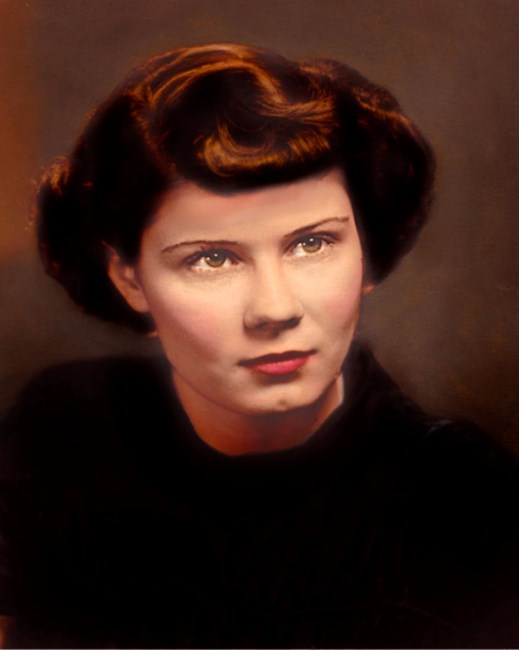
Carole was born December 26, 1932, to Roy Eugene Morton and Esther Morton in Kingfisher Oklahoma. She was more of a tomboy than her peers, and she loved to climb trees, roller skate, and play tennis.
Carole excelled in school, skipping the fourth grade and making straight A’s. She graduated in 1950 as valedictorian. In that era, women were not accepted into engineering schools, which was a great disappointment to her.
After graduation, she spent a year in Business school. Her career started as an entry-level accounting clerk and grew into many senior-level Legal Secretary positions. After stepping back from work to raise her two children, she returned to work for the Federal Government in New Jersey, then as a Legal Administrator working for a top former US attorney at Porter Hedges law firm in Houston, Texas.
During her long life, Carole was a living witness to some of our country’s most pivoting moments. She lived through some of the Great Depression, the bank failures of 1932, World War II, the Dust Bowl, the bombing of Pearl Harbor, then later of course through 9/11 and the COVID-19 Pandemic.
She met the love of her life, Ralph Taylor Buchanan, in 1952 in Wichita Kansas. They wed a year later, on November 14 1953. Because Ralph was an Air Force pilot, they moved to various Air Force bases during their lives, living in Kansas, New Jersey, South Carolina, and Florida.
Carole and Ralph enjoyed going on cruises. Some of her favorite cruises were to the Caribbean, Jamaica, and Alaska. She also enjoyed gardening, birdwatching, and playing Bridge.
The most important thing in life to her was her family. Carole was an active and involved parent, working tirelessly to help both children succeed in school and then later in life. As a military wife, she kept things humming along smoothly at home, taking care of the house, the garden, the children, at times while Ralph was away for weeks or months at a time.
Carole was preceded in death by her parents; brother Roy Morton Jr.; and her husband Ralph. She leaves behind daughter Barbara Bissinger and her husband Ron; son Mark Buchanan and his wife Elizabeth; granddaughter Christina Bissinger; niece Jennifer Fahey and her husband Jim and daughter Patricia, nephew Roy Morton III and his son Roy IV; and a host of cousins on her mother’s side of the family.
Carole was a devoted wife, mother, grandmother, and friend, and she will be greatly missed by all who knew her.
Note: The following story was started by my mother, Carole Buchanan, many years ago. All of this is in her own words. She never completed it. I am including it here to give her friends and family some insight into her early life. -Barbara Bissinger
Carole’s Story
In order to view a person’s life, one should first know their background.
I was born in a small town in Oklahoma in 1932. The year 1932 was not the first year of the great depression, the stock market crashed in1928. It was, however, the year in which the banks failed. Anyone who had money invested in any instrument which drew interest, or had their household funds, or small business proceeds in banks could not access their money. This led later to the formation of the FDIC. It was not a good year.
In that day and age, three to four generations of a family lived in the same house. My extended family consisted of my mother and father, my father’s parents, my great grandmother (who was bedridden) and my aunt. This worked well at that time, as whoever was around babysat with me. Granddad owned a large ranch type house with five bedrooms, living room, dining room, kitchen two bathrooms and a long back porch which was converted into something of a rec room with windows all around. It was large enough to accommodate everyone.
My mother and dad were Charleston dancing, bootleg booze drinking, party people, and weren’t around much. Prohibition was the order of the day. No liquor could be brought into America legally, or sold in any state. Of course, it was brought in and Oklahoma was floating in it. I assume all the other states had bootleggers to. I remember going with Mother or Dad to a house on the outskirts of town, driving a circular dirt driveway to the back of the house where there was a window. A buyer told the bootlegger what kind of liquor they wanted, paid him, and it was handed out the window. A buyer drove off and the next buyer pulled up. They operated 24 hours a day and were never bothered by the local cops. I assume the cops were well paid to look the other way.
My granddad, when I was very young, owned two farms, a gas station, the local department store (Morton Ames), and an insurance agency. Dad helped run some of the businesses. Leasees ran the two farms (at that time called “sharecroppers”) thus we always had plenty of food. They grew mostly wheat, but also fed a few cattle and pigs which were slaughtered every fall and put in a meat locker. There was always plenty of food as mother and grandmother raised a garden and canned every summer.
From the time I was five, I was expected to work in the garden, help them can food, and when the harvest crews arrived every August, help them cook for the workers. The harvest crews arrived from the south and worked north. They came in large combines, sometimes 4-6 of them. I remember grandmother wringing the neck of 12-15 chickens before lunch and supper. I had to help pluck the feathers off the birds and cut them up.to be fried. The cooks made 8 pans of biscuits, pans full of gravy and lots of bacon and eggs for breakfast. This started at4:00 in the morning. After breakfast, Mom and grandmother made pies and cakes for the rest of the day. They had help from other owners’ wives, then helped them the following two to four weeks as the combines and crews moved further north.
Both my mother and grandmother tried to make a “lady” out of me. I had the usual white gloves, starched dresses, and Mary Jane shoes. I was given piano lessons, singing lessons, elocution lessons, and many kinds of dancing lessons. The “lady” business didn’t take and I was an out-and-out tomboy. I always had scratched knees from climbing trees, and sidewalk roller skating. The toys girls played with in the 30’s were jacks, jump ropes, and paper dolls. The boys had marbles, footballs, baseballs, and small steel cars, if their parents had money enough to buy them. Bear in mind there was no plastic at that time to make the toys we know now.
The house we lived in was across the street from the high school, so I had a tennis court to play on. I inherited my dad’s old tennis racket. And each year in the spring, I was given a tin of new tennis balls which was to last all summer and fall. By July they were as dead as a doornail, but my 25 cents a week allowance didn’t cover buying new ones. I played all year, anytime I could find a partner.
During this period, a drought unequaled in American history occurred. It was generally west of Kingfisher County, but the prevailing winds carried the dust east. I remember my mother hanging wet sheets in front of the windows to keep some of the dust out. This was a story in itself. The looks on the faces of the foreclosed farmers and their wives and children made you physically ill. All they had fit in the backseat of an old car. This, on top of the depression, was too much for many. Thousands of them went to California and their children and grandchildren are still there. Anyone wishing to find out about this drought should read “The Grapes of Wrath.”
Grandad was an unusual person. He tried to help everyone who was out of work. He extended credit to all, and the depression lagged on. Even though the WPA put many to work building roads, bridges, and parks, the pay was starvation wages. People couldn’t pay him and he sold off most of his assets.
Although we were never poor, by the time Butch (Roy Jr) was born, things were much different. Mom and Dad were very involved in Oklahoma politics, and about that time they were awarded the political plum of managing the drivers’ license bureau in the county. That lasted a few years until the crooked governor was impeached. They rented a house of their own for the four of us.
Butch and I had Nanny whose name was Thelma. That woman was the sweetest lady and she lived with us for years. Air conditioning didn’t exist at that time and I still remember her starching and ironing my frilly cotton dresses in 100-degree heat. She kept Butch in line, which wasn’t easy at that time.
Several times a year we all piled in dad’s black car (the only color made at that time) and went on a four-hour trip to visit my mother’s parents who lived in Caney, Kansas. My mother had four sisters who all lived in that area. Her youngest sister was three years older than I and we played dress-up in all the old clothes of the sisters.
When it was nice outside, grandmother shoved us all kids out. Each of the older three sisters had at least one girl, and some boys too. We then played hide and seek and tag. I remember it was a fun time playing with my cousins. The one cousin I stay in touch with is Bev Wagonseller.
My maternal granddad was a wildcatter (independent oil driller). If we were good and he was actively drilling, the older cousins were allowed to accompany him to the well site and watch the action. He was very rich when he hit a good well, but usually poured it back in the next two. When he was rich, he would buy cars for his kids, and blow money as though it grew on trees.
My maternal grandmother was a huge lady (who wouldn’t be after eight kids) who was as sweet as could be. She had to put up with the antics of five daughters and three sons. She didn’t believe in smoking and all the girls smoked. The back bathroom was always filled with smoke with my aunts fanning the air out of an open window, even in the coldest weather. Life around my aunts (flappers like mom) was a picnic.
Back home, on Sunday afternoon I was given $ .15 to go to the movies. Movies were in black and white, but they did have sound. I tried never to miss a show because they were short serials--if you missed an episode, you didn’t know what was happening. I still remember the villain tying the lady to the railroad track with the train coming. Then one Sunday when I was eight years old, I came out of the theater and when Dad picked me up, he told me the Japanese had bombed Pearl Harbor. I knew very little about the Pacific or war at that time, but soon learned. Everyone’s life changed drastically.
Dad, being 4F because of his asthma, and with two children, was not drafted. He wanted to help the war effort and applied to Boeing-Wichita. With a business degree from University of Oklahoma, he applied one day and they called him the next. He went north leaving us in Oklahoma until he could find somewhere for us to live. After five months of actively looking, he turned up a one-bedroom apartment for us.
The Boeing factory was a sleepy place of about 9,000 people in 1942 making parts of some kind. Then they bid and received a contract for B-47 bombers. These planes turned out to be the workhorses of WW II. What ensued was the build-up of workers to 35,000 in 1942-3. The builders couldn’t keep pace with the needs of people for housing and you took what you could get. When the contract for the B-47 wound down, the B-52 was ready for production. It was built there, too.
Mom, Dad, and Butch, who was still in a baby bed, slept in the bedroom. My aunt DeeDee moved in with us the following month, as she was hired in the personnel department and couldn’t find a room to rent. DeeDee and I slept on a pull-out couch in the little living room. Everyone was on a different schedule and working overtime. Dad worked from 2:30 pm to 12:00 am. DeeDee worked from 6:00 am to 4:30 pm. I went to school from 9:00 am to 3:30 pm. It was all mom could do to keep Butch quiet while Dad slept.
There were no refrigerators in homes, things were kept cool in an Ice Box. The iceman arrived twice a week with a large cake of ice and placed it in the Ice Box. Nobody locked doors and he arrived and left whenever he could. The milkman delivered the milk every morning. The schools were overcrowded and they shoved me up a grade because they had more 4th graders than 5th graders. Thus, I skipped the 4th grade.
My Dad’s uncle, Dick Morton, was a beer distributor in Wichita. With gas rationing, they actually distributed the Budweiser by horse drawn wagons, something similar to the TV commercials you see during Christmas. I was allowed to actually ride the beer wagon with him one afternoon. I still remember the horses, Mike and Ed. I got to feed them an apple.
I know it probably wasn’t true, but it seems as though the government rationed everything. You could only have one car per family, as whoever was working was allowed only enough gasoline to get to work and back seven days a week. Everyone rode the city buses, including school kids. I walked to the elementary school as it was only six blocks. Our telephone depended on an operator. You picked up the receiver and waited until the operator came on the line and gave her the number you needed. She plugged in a line to that number. Calling long distance was a rare occasion because the lines were kept open for the war effort. Rarely, Dad’s Uncle Dick would have a case of beer extra for Dad. Mom, DeeDee, Butch, and I would ride the bus across Wichita and lug a case of beer back by bus so Dad could have a spot of beer late at night when he arrived home.
Sugar was rationed, so nobody had cookies, cake, etc. I can’t remember what else was rationed. It seems there was very little which was plentiful. There were no fresh fruits or vegetables in the winter unless you grew your own. All meat was strictly rationed. You did without many things we eat today.
Finally, DeeDee found a room to rent, and I had the privilege of sleeping on the couch alone. In late 1943, Dad and Mom found a two-story house to buy on the outskirts of Wichita and we moved out of the small apartment. For a little while I had a room of my own again. This lasted six months, then another aunt came to live with us. My aunt Bea brought my best pal of all my cousins, her daughter Bev. They lived with us for a while and it was fun.
I lived a long way from the junior high school and got adept at catching buses and transferring to other buses to arrive at school. I got up at 4:30 AM to do this. All of the kids I went to school with did this. No cars were being built and there was no gas or tires for the ones which existed, you hoofed it. I didn’t mind the long walk to the bus stop during the spring and fall, but sure didn’t like it the freezing weather. Here again, you do what you must do.
Industrial production of civilian goods almost shut down during WW II. TVs didn’t exist. No radios were being built. We had an old console radio and were lucky that a neighbor could scrounge up tubes and fix it when it broke down. When something broke you had it fixed or did without. Parts for anything were hard to find and sometimes toasters, or lamps, or things of that nature just wore out. I visited my grandparents in Kingfisher in the summer. At age 11, I could get on a train in Wichita and be in Kingfisher in 4 hours. My granddad was always trying to somehow get an old LC Smith typewriter to keep working. Getting simple things like a typewriter or an adding machine ribbon were a problem. Of course, there were no computers, copy machines, fax machines. If you had to travel you took the train or bus. Airline travel was not available at that time. There were very few airports, fewer commercial planes, and, again no gasoline for anything but essential travel devoted to the war effort.
I went through junior high school in Wichita before WW II ended and the government shut down the production of B-52s. Boeing had no more business to place in that plant, so people were laid off. My dad was kept on to inventory the equipment and do the accounting for the government. Gradually the country converted the factories from war munitions, tanks, airplanes, etc. into civilian use. Out of the war came things like plastics, TV’s, transistors, refrigerators, air conditioning, commercial airplanes for travel and other things we now have.
In the spring of 1947 Mom and Dad sold the house and we moved back to Oklahoma. I entered the 10th grade the following fall. We lived alone in the large house, and my grandparents moved to an apartment over the insurance agency in a building they owned.
My high school life was uneventful. I sang contralto in the Methodist church choir and performed all the alto solos. In school, I had an excellent memory, made A’s in everything I took. It was easy. I tutored the football team through Algebra I and II. They paid me back by electing me homecoming queen.
I graduated in 1950 as valedictorian with straight A’s throughout. I was given a four-year scholarship to Cotty College in Missouri. It was (you guessed it) a finishing school. Everyone in town was still trying to make a lady out of me. Becoming a lady still bored me and I turned it down. I applied at Oklahoma A&M and Oklahoma University for a scholarship in Civil Engineering and was turned down. Women were not accepted in engineering. My granddad died in my senior year and I missed him terribly, he was the only one who would play chess with me.
I spent a year in business school as I was not old enough to do much else. Then I came home and worked for Dad in his insurance office. The Korean War began around this time, and my aunt Bea went back to work at Boeing. She called me one day and told me there was a clerical opening in the accounting department and did I want a job there. I said yes immediately, and was there within days to interview.
I was two months from 18 at the time and Personnel was not very interested in me, as they believed I too young. The good people in Accounting fought for me, and waited until I was 18 and hired me. I started as an accounting clerk. I had a year of accounting in business college, and learned fast. I was there 5 years. When I quit, I was the Secretary to the Chief Accountant.
I met Ralph in 1952. He was then, and still is, my hero. We dated for a year, then married in 1953. We were not poor, just didn’t have much money. Boeing was paying me $.52 an hour, plus overtime. I don’t remember how much Ralph was making, but it was not much more. However, things were much cheaper then.
We rented a little apartment and bought some used furniture. We bought an old car which would barely make it up the Kellogg Street overpass. We held our breath until we got to the top. Gradually, we both began to make more money. I advanced and was given nice raises. Ralph got his promotion to Captain. We actually bought a little house. Mother and Dad bought a larger TV, and gave us a little 9 inch black and white TV. There still were no color TV’s. Wichita had three stations: ABC, CBS, and NBC. We had very little choice and watched sports mostly. We lived there until 1958.
I left Boeing in early 1957. Barbara was born in late 1957, and the house was too small. We sold that house and bought a larger house closer to McConnell AFB.
Show your support
Add a Memory
Share Obituary
Get Reminders
Services
SHARE OBITUARYSHARE
- GET REMINDERS
v.1.18.0