
OBITUARY
Kay S. Wireman
25 June, 1928 – 16 January, 2013
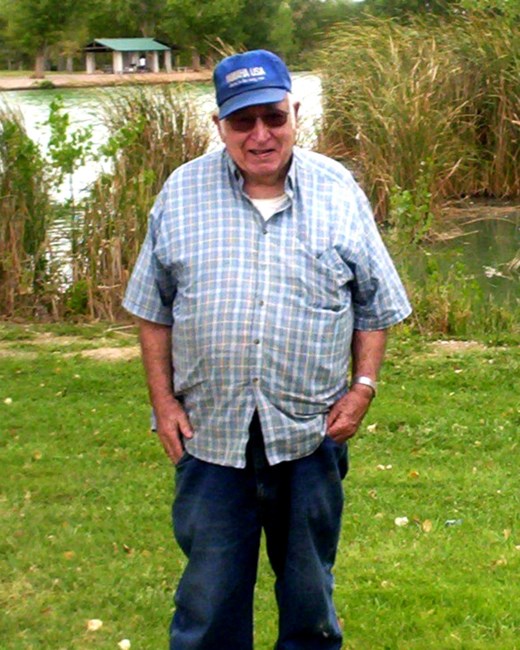
Kay and his identical twin brother Ray came into the world on a pleasant summer day, the 25th of June 1928, on the second floor of their grandfather's house in a small town in southeastern Idaho, called Grace. Our parents were Joseph and Ethel Wireman. Dad had changed the Swiss name of W-e-y-e-r-m-a-n to the easier to spell W-i-r-e-m-a-n.
To give you an idea of what was going on in the world in 1928: Mickey Mouse made his first scene appearance, Katherine Hepburn first went on New York stage, Amelia Earhart became the first woman to fly across the Atlantic, Amos and Andy went on NBC radio, sliced bread was sold for the first time, Scotch tape came on the market, Ol Man River was recorded by Victor records, The Three Musketeers premiered in New York City, and it was the year before the fall of the Stock Market which brought on The Great Depression which Kay and the rest of our family felt deeply.
The Great Depression caused the money banks to foreclose on much property. Kay's grandfather, one of the wealthiest land owners in that part of Idaho, lost all his lands, except his house where Kay was born, two lots with it, his pool hall, and a 300 acre dry farm up in the foothills of the Rocky Mountains.
Joseph moved the family, which consisted of Ethel, our older sister Betty Jo, Kay and Ray to Wyoming. Kay used to tell stories about how he and Ray liked the wild open spaces of Wyoming with lots of antelope, deer, and elk, to hunt, and lots of fish to catch. The family pretty much lived on wild game and garden vegetables during the Depression. They lived in Wyoming for about 8 years, while Dad worked on dam construction.
About 1938, when Hitler came to power in Germany, Dad moved the family to Mound Valley, Idaho, about 20 miles from Grace. He rented the 300 acre dry farm from grandfather. Kay and Ray loved the ranch as it was called. It lay in the foothills of the Rocky Mountains. They hiked, hunted, fished, swam, and snow-shoed. Kay told the story of how Dad would give him and Ray one bullet each and expect them to bring back two rabbits, which they always did. Kay and Ray created a language all their own that nobody else understood, which I understand is typical of identical twins, but it didn't help when they started school. Dad let them go through the eighth grade, and then pulled them out of school to help work the farm.
The Second World War began in 1941. Rubber, gasoline, sugar and many other things were rationed, but our family ate wild game, mostly elk, deer, pheasants, grouse, and rabbits; and vegetables from a large vegetable garden (with diamond back rattlers in it) and lived very well. Kay used to tell the story about Dad shooting an elk from 1000 yards while sitting on a horse. Pheasants were plentiful. Kay liked the way mother stewed wild pheasant in seasoned gravy, as did we all. In later years, Kay said hunters didn't understand how to hunt pheasants. He said the trick was to hunt the cocks and leave the hens to raise more pheasants. He was right. Nowadays there's not a pheasant to be found on the old ranch property. One day, during Kay's teenage years, while operating the seed drill, he became curious as to how the drill screwed the seed down the little holes. He stuck his finger into one. It cut off the end of his finger. Kay's ancestors were Scotch and English on mother's side, German Swiss on father's side. The joke goes that four ancestors came over on the Mayflower, and the rest swam over.
One winter there was a couple of feet of snow on the ground. Kay and Ray started off on their daily rabbit hunt. I decided to follow. I was about 6. I trudged through the snow for about half a mile, then I pleaded for help. Kay picked me up, set me on his powerful shoulders and carried me the rest of the day. That's the kind of person Kay was. He did everything he could to help. He'd give you the shirt off his back as they say.
Dad died in 1945.
In 1951, Kay joined the Navy to see the world. And that he did. He was assigned as gunner's mate to the Fletcher class destroyer DDE 445. On 19 November 1951, Fletcher cleared Pearl Harbor for a tour of duty screening the carriers of the 7th Fleet in Korean operations. She also fired shore bombardment on two occasions, participated in antisubmarine training off Okinawa, and patrolled in the Taiwan Straits. Returning to Pearl Harbor on 20 June 1952, she was at sea again from 5 September to 24 November for the nuclear bomb test called Operation Ivy, then completed another tour of Far Eastern duty from 14 May to 30 November 1953. During Korean operations, DDE 445 received 5 battle stars. Kay told me a story about what happened in the Taiwan Straits. His ship ran aground on a sandbar in range of occasional Chinese mortar fire coming down on them from high in the mountains in mainland China. Kay said it was luck the Chinese communists didn't realize his ship couldn't move, as they would have been able to sink her. Kay's ship was in the Taiwan Straits to help protect Chiang Kai-shek from being driven from Formosa. (As an aside, Kay's future sister-in-law's father was part of Chiang Kai-shek's delegation to the United Nations in 1947.)
At various times, Kay really enjoyed shore leave in Japan and in Hawaii. After the navy, while working in California, Kay reunited his relationship with a beautiful young lady called Mary, in Santa Barbara. They were to be married, but eventually broke up and Kay came to Las Vegas. Kay and Ray worked at the Blue Diamond Company in Blue Diamond, Nevada, manufacturing gypsum wall board, for 30 years.
In 1955, I lived with Kay and Ray in Pitman, Nevada. They graciously supported me through my last year and a half of high school. I will never forget their kindness. Kay retired, helped his brother Ray build a large, log house in Overton, Nevada for his nephew Bob and family.
In his later years, on many occasions, I took Kay for walks around the Floyd Lamb State Park near Las Vegas. He liked to feed the geese popcorn. He was a good brother and confidant. He was a down-home kind of guy.
His old heart stopped, at home, on the 16th of January, 2012, at the age of 84. He is survived by his brother Don Wireman and wife Rita, Don's son Don Jr., Don's daughter Sonja, Don's granddaughter Winifred, nephew Bob Wireman, Bob's daughters, Jessica, Nicole, Marie, and many nephews and nieces. His first cousin Nancy has made a contribution to the American Heart Association in Kay's name.
He will be greatly missed.
Arrangements under the direction of Palm Eastern Mortuary, Las Vegas, NV.
Show your support
Add a Memory
Share Obituary
Get Reminders
Services
SHARE OBITUARYSHARE
- GET REMINDERS
v.1.18.0