
OBITUARY
Roger Vernon Reed
April 20, 1935 – November 15, 2025
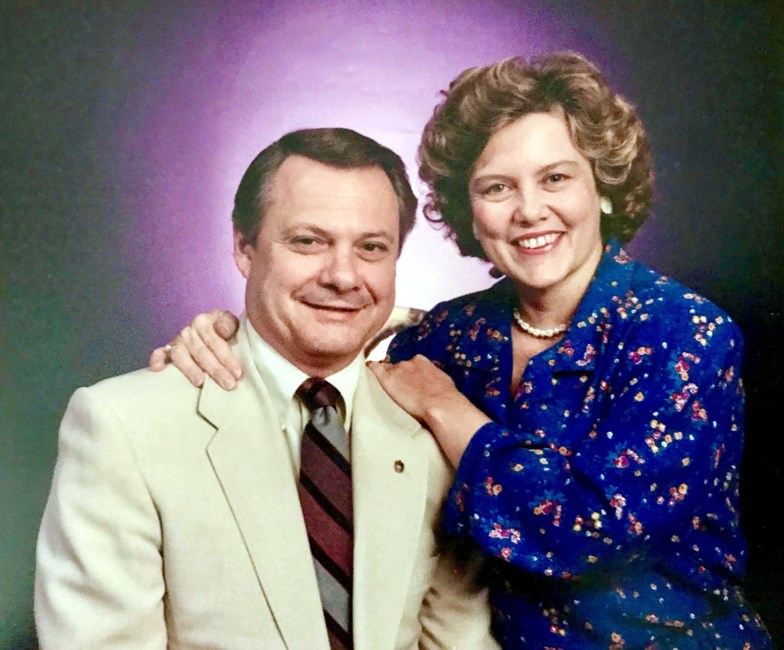
Born one block from Highway 71 — in Springdale, AR — Vernon was the 5th of 6 boys born to Roger John Reed and Olivia Barr Reed. As the oldest boys grew and began to start making plans to leave their farm, the family sold their chicken operation to the owner of the local feed co-op, allowing the family to move across the state line into Missouri.
Moving first to Marionville, and shortly thereafter to Freistatt, Vernon knew from the very beginning what he wanted to be when he grew up. At the age of five, while watching his mother work with graph paper to create a plan of their new house, Vernon was locked into the profession once his mom told him, “Architects create house plans and design other buildings.”
“I want to be an Architect,” he proclaimed! He made sure to tell all of his teachers that was his goal and he insisted that they teach him what he needed to know to become one. His brothers were also a major influence on his life, learning from them and following in their footsteps where he could. Vernon picked up on reading at an early age — completing the third grade readers before he even started school. His teachers noticed and this motivated Vernon to strive to be the best in his class.
Soon, he was old enough to attend Monett High School. It was there that Vernon learned to play the oboe and was seated next to the first flutist, Barbara Darlene Adams. While she was a year behind him in school, both knew immediately they were meant for each other.
Vernon was the lead in the Senior play and was on the debate team. He went on to lead the school’s basketball and football teams to successful seasons his junior and senior year — playing forward and quarterback respectively — all while still maintaining his grades to become class Valedictorian.
At the University of Arkansas, Vernon said he was “fortunate to have lived in a house designed by Edward Durell Stone” and take studio classes under him. John Williams — the founder of the Architecture Department and first dean — and E. Fay Jones were also professors and studio instructors respectively. It was Fay’s first year of teaching and the connection was instant, all remained lifelong friends.
Once Darlene completed her nursing studies in Springfield, the two were married in September of 1957. That school year she moved to Fayetteville, accepting a position as the operator of the school’s daycare facility. To learn more about her husband’s profession, Darlene enrolled in Jone’s History of Architecture classes while Vernon taught freshman studios students and finished his degree.
ROTC helped get Vernon through college and once he graduated, duty called, receiving his first assignment. In the Air Force, Vernon oversaw the construction of almost two-thousand houses at Vandenberg Air Force Base in Santa Barbara, CA. His first Architectural projects included the design of the front entry gate to the base, the officer’s club, the golf course, and club house.
Retiring as a Captain, the couple, and their first son, moved to Liberty, MO. Renting an apartment right next to 71 Highway, Vernon signed on as Lead Designer for Emil Bayerl, Architects, developing the plans for several dormitories at Northwest Missouri State and a Methodist Church in Maryville.
Soon, he moved to the architecture firm of Kivett & Myers, hired on as a Job Captain. Working on the Katz Drug Store of St. Joesph, Vernon not only executed the design work, he completing all the drawings and ran the structural and mechanical calculations himself, resulting in the project coming in significantly under hours and budget. This prompted the accountant to walk by his desk one morning and say, “Today would be a good day to ask for a raise.”
And, it was. His efforts resulted in him being placed as Project Lead on Temple B’nai Jehudah where he constructed scale models to help resolve the building’s dynamic form. He then ran his structural calculations by the desk of a new engineer to Kansas City — Bob D. Campbell. Later in the process, he consulted with Leo Zahner, who assisted in developing the flashing details for the building’s complex roof and skylight assemblies. Vernon’s last project for the firm was the Federal Reserve Bank of Kansas City.
About this time, Vernon and Darlene bought their first house, one block off of Highway 71, where they began to grow a family and would have two more sons.
In 1965, Vernon hung out his own shingle in Liberty, working on many homes and office buildings in the area. He enjoyed a good client base who would return to him for their next project. His practice focused mainly on historic preservation and restoration efforts including: the Missouri State Capitol, Adjutant General Office Building, various buildings in the Capitol Complex in Jefferson City, MO, and the Missouri State Penitentiary. He developed guidelines for historic districts, providing templates for area communities to follow.
Local adaptive reuse or restoration projects included: The Lincoln Building, Clay County Courthouse, Western Missouri Mental Health Center, the Filix Building Facade Restoration, St. Vincent's Family Service Center, the Santa Fe Neighborhood Rehabilitation Demonstration Program, The Plaza Apartments, Quality Hill Residences and Office, six buildings at the Nevada Habilitation Center, four buildings in the 18th & Vine Historic District, Fire Station 16, and dozens of schools, churches, apartment buildings and private residences.
Throughout the state, he designed additions to libraries in Monett, Aurora, Nevada, and Maryville. He restored the Walt Disney home in Marceline and completed two additions to it. The Girl Scouts hired him to create the master plans for two camps — one in Missouri, the other in Nebraska — and their respective troop houses. That effort lead Vernon to design nearly a dozen projects for a client in Nebraska.
While remaining active as an Architect, the AIA called and he responded with a gusto in service to the profession. His commitment to the AIA, on a local, regional and national level, serves to underscore his passion for the practice of architecture.
Starting out as a member of the Legislation Committee in 1966, he worked his way up to President of the Kansas City Chapter, President of the Missouri Council of Architects, and served as a delegate for the Central States Regional Conference for 13 consecutive years. He became a Fellow and eventually was elected to the National AIA Board of Directors.
Along the way, Bruce Patty, Linda Young and Vernon worked to reshape the AIA Kansas City Chapter into a more focused organization, dedicated to enhancing the profession. Vernon developed the Chapter’s “Skylines” video program and served as the Director during shooting. Most of his efforts originated as an outreach effort to connect Architects to the public. His commitment to the chapter extended out to voting in 50 consecutive elections for the local AIA Board Members.
Vernon wrote the Copyright Protection Bill for Architects to help secure their work and he was both amazed and pleased that every word he wrote was adopted by Congress without any changes. He wrote hundreds of articles for “Litigation Avoidance” and has authored four books.
While on the national Board, he successfully nominated both E. Fay Jones and Thomas Jefferson for their Gold Medals.
In May of 2007, while at the National AIA Annual Convention in San Antonio, Vernon presented, “Drawing the Line: From Jefferson to Jones; A History of American Architecture” to celebrate the 150th Anniversary of the AIA. According to the AIA Convention staff, it was the most attended lecture in the history of the convention.
Vernon and Darlene were able to travel extensively and he enjoyed the great outdoors: visiting national parks, tending a garden, or working on the farm. He grew grapes and made exceptional wine from his Norton and Viognier grapes. Vernon enjoyed trying new things and was able to get along with everyone he met. He would regularly tell anyone who listened that he lived a full life and would occasionally reflect on his achievements “despite having never lived very far from highway 71” as he liked to say.
Vernon was preceded in death by his parents and by his brothers: Harry Henderson, Harry Bird, Robert Bruce and Louis Leon. His wife of 62 years — Darlene Adams Reed — preceded him as well.
He is survived by his brother, Richard Clinton Reed of Independence, and his three sons: Roger Adams — his wife Cynthia Dahnke — Alan Christopher and David Oliver — and his wife Phuong.
A visitation will be held after the new year with plans to be announced at a later date.
In lieu of flowers, the family suggests that, come spring, you plant yourself a small garden or flower bed so that you too might experience and share in the joy of working the land and reap the rewards that come with it.
Show your support
Add a Memory
Share Obituary
Get Reminders
Services
SHARE OBITUARYSHARE
- GET REMINDERS
v.1.18.0