
OBITUARY
James Wing
19 August, 1912 – 9 November, 2008
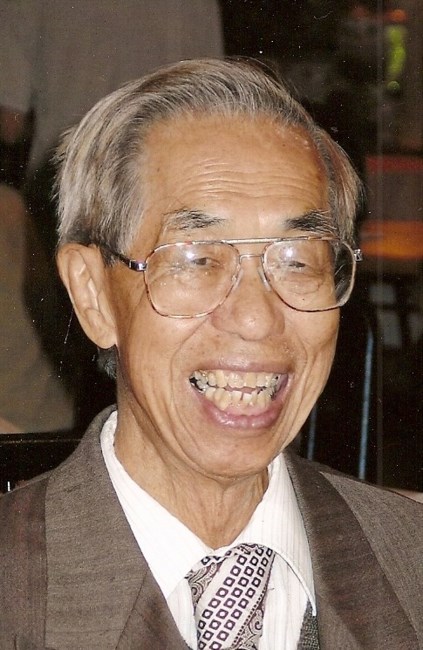
Eulogy given by his son Simon at his funeral on November 13, 2008 at the Montreal Chinese Presbyterian Church.
First of all, of behalf of our family, I would to thank all of you for coming here this morning to celebrate my father’s life and to pay last respects to him. I also thank the many people who came to visit at the funeral home, who called us, sent us email notes or cards or offered many other kind deeds. We are overwhelmed at the abundance of these gestures and truly feel surrounded by warmth. Thank you again from the bottom of our hearts.
When someone lives for 96 years, it is hard to know where to begin and where to end. So I decided to just share a few vignettes from my father’s life. My grandfather had arrived in Canada in 1920 and in 1923 he sent for my father to join him here in Montreal. My father was only 11 at the time. My father recalls his childhood here in Montreal as being very difficult. My grandfather worked long hours in the restaurant & night club business and as a typical Chinese man of his times, new nothing about raising a child. So he left my father with the family of his business partner and friend. Though this family was very kind, my father recalls missing very much his own mother and at the same time feeling somewhat neglected by his own father – neglected in not feeling the daily parental concerns and cares. When I heard this about 15 years ago, I was rather surprised. Surprised in that for most men, parenting is not instinctive, but has to be learned. So I was surprised by my father’s comments about not feeling cared for by his father as my father was very good at caring for his children and I wondered how he learned it. When I was young, he would tuck me into bed almost every night making sure to push the blankets and bed cover around my side and back underneath my back so I was like a tight log, secure and cuddled for the whole night. From those experiences, I learned to do that for my own girls. I know they will hate me for saying this, but they sometimes still ask to be tucked in in this way.
My father was a devoted member of this congregation, coming faithfully every Sunday until a few years ago - rain, shine or snow. This church used to be located in Chinatown. In the early 1950s, my father decided to move out of the Chinese ghetto and buy a house north of St. Laurent in Cartierville. So it would take an hour and a half each way to get to church on Sunday using buses and streetcars. One of my earliest memories as a child is being held in my father’s arms one winter Sunday when a snowstorm appeared. We had to walk home about half a mile from the bus stop to the house across an open field that was still a farm. I recall the wind blowing the snow hard, but feeling very secure in the arms of my father. That simple memory taught me about both parenting and the importance of being devoted to something.
My father’s faith was not a theoretical, academic one, but a practical one. He probably could not have told you much about Barth, Bultmann, or Niebuhr, but he understood very much the virtues of the Christian faith – love, joy, forgiveness, kindness, patience, faithfulness, gentleness, self-control, and he practiced them in his daily life. He had a deep concern for the welfare of his world and with his last two children gave them Chinese names that expressed his hopes for the world. When his third child was born in China in 1949, he named him Gok Gee, which means national peace and prosperity, expressing his heartfelt hope that after half of century of war and weakness that China could be strong again and at peace. Indeed, the early years following the communist takeover were marked by peace and stability. So perhaps emboldened by this positive sign, when I was born in 1955, he decided to name me Sipen which means world peace – expressing a hope for peace after two tumultuous world wars. I have to admit he was less successful with this wish than with the former one of my brother’s name.
My father was a ruling elder in this congregation for about 50 years. When one is an elder in a congregation for that long, one inevitably experiences some conflicts – but he was always good at helping to resolve conflict with his gentleness and sense of fairness. He had an uncanny knack for bringing justice and mercy together when they sometimes seemed to demand opposite conclusions.
He applied the same approach to his involvement with the movement for the redress of the Head Tax. My father believed that it had been unfair to single out the Chinese to pay this burdensome Head Tax and unfair to have had the associated immigration rules that resulted in the separation of Chinese families for decades. So he participated actively in this movement for redress, offering to share his own personal story wherever it would help. But my father’s involvement in this movement was not a hostile or aggressive one or one motivated by anger. He truly thought that Canada was a great country and was thankful for its many blessings to him and his family. However, he believed that for the sake of honesty, to honour truth and righteousness, that it was necessary that we acknowledge this aspect of our history and make some form of apology. I am grateful to those in the Head Tax movement who achieved the apology two years ago from the Harper government, at a time when my father was still well enough to understand and appreciate this outcome.
In summary, if I had to sum up my father’s life, I would refer back to the three cardinal attributes of the Christian faith enunciated by St. Paul in his letter to the Corinthians – those attributes being faith, hope and love. Faith - My father’s faith was that despite the sad things that go on around us, in the big wide angle picture of things, there is a destiny towards good for which God is driving us towards in His way. Hope – the faith that my father had in God’s destiny allowed him to have hope that tomorrow can bring a better day – hope that sustained him when for example he lost contact with his wife and two young children for many years during the Sino-Japanese war and didn’t know if they were dead or alive – hope when he lost his son Gok Gee in a car accident at the age of 22. Love – girded with a faith and hope that the future will evolve for the better, one is more free and more willing to risk loving others – and love us my father did – He loved his children and their spouses, his grandchildren, his friends and his community. For all of this love that he gave us, thanks be to God. Rest in Peace Baba.
Just before I step down, I want to explain this somewhat non-traditional reception in between the funeral service and the burial. In the Chinese tradition, the children are expected to throw a party for their father when he turns, 70, 80, 90 etc. When my father turned 70, I was still a resident in training and so could only afford to invite his closest friends to dinner. When my father turned 80, I had just been appointed a lecturer at McGill and so I thought I could be a bit more extravagant and told my father that we should have a real party with all of his friends. At first he declined and said this was not necessary, but a week later he came back and said he had changed his mind and gave me a list of 150 names. For those of you who were there, you might remember that in my father’s speech he said that if he made it to 100, he would invite everyone back and he would pay that time. Although he didn’t make it to 100, I am told that there are devious Chinese ways of counting that would bring it up to 99 or 100. So I am pleased to say that my father invites you all for lunch today.
Show your support
Add a Memory
Share Obituary
Get Reminders
Services
SHARE OBITUARYSHARE
- GET REMINDERS
v.1.18.0