
OBITUARY
Stefan Hreha
25 March, 1918 – 15 August, 2015
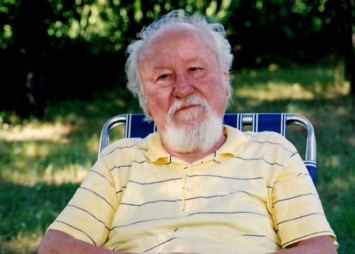
Reverend Grega, members of the family, friends and acquaintances –
Lucille and I would like to thank you all for your presence here today and for the solace you have provided us during this difficult time.
Who shall say what thoughts and visions
Fill the fiery brains of young men?
And who shall say what dreams of beauty
Filled the heart of Hiawatha?
All he told to old Nikomis
When he reached the lodge at sunset
Was the meeting with his father
Was his fight with Mudjekeewis
Not a word he said of arrows
Not a word of Laughing Water
These words, which I committed to memory when I was in grade 10 at Marymount HS, are taken, as best as I can remember them, from the epic poem “The Song of Hiawatha” written by Henry Wadsworth Longfellow in 1855. They impressed me then, as they still do now, as capturing an enduring truth of human experience. I may not have articulated, or fully understood this idea as clearly then as I think I understand it now – but something in these words spoke to me in a voice I could not ignore.
The lines I quoted speak of revelation and of sharing with others, through language, what one has undergone and experienced. They speak of dreams and trials animating the thoughts of young men (and, I should add, young women too). But they also speak of silence, of secrets and the quiet places of the heart that remain unspoken. Today these words put me in mind of my father. Throughout his life he was fired with dreams and ambitions that he shared with others through his writing and his speeches. His ideas and his accomplishments made him a very public man. But he was also a private, quiet man. He avoided idle chatter and would often sit at social events without saying very much. If he were in his teens today, he would view social media with profound disdain. Needless to say he shared many of his thoughts and ideas with his family, friends and colleagues. At the end of the day, however, there was a silence, a place he chose to keep to himself.
My father was, in many respects, not a “manly” man in the conventional understanding of that word. He was not competitive, he did not boast of his achievements – he had much to boast about had chosen to do so - he was strong-willed but not ego-filled and he was not self-promoting. He played no sport, had no conventional hobbies, never looked under the hood of a car or, for that matter, took any interest in them, he did not fish or hunt and he did not smoke, drink heavily, gamble or frequent bars. Verbal crudeness and displays of physical strength were simply not part of his character. He did, however, love movies, watching comedies and news programs on TV and gardening – he had a green thumb. He wrote poetry and he reflected on the vicissitudes of daily life. He wrote mostly in Slovak and from what I have heard from others who read his writing, and from the written comments he received, I know that he wrote very well and that his writing connected with the people who read his articles and poetry. I deeply regret that I am not able to read and understand what he wrote.
The public side of my father’s life is well known to an earlier generation of Slovak immigrants to Canada. My father arrived at Pier 21 in Halifax in December of 1936 – he was 18. After arriving in Montreal, he went to Olier academy on Pine Avenue and in the evenings he learned English. Despite his age he was placed in a class with much younger children because of his lack of English skills. My father frequently told the story of how, during class, he would open his desk cover so as not to be detected and scribble lines of poetry in Slovak as a distraction from what must have been, for him, an alien and boring environment. Not long after his arrival in Canada, in 1937, he formed a literary circle to discuss Slovak letters and to preserve the Slovak language among Slovak immigrants.
In 1939 WW II broke out and with it the incubus of Hitler’s Reich spread across Europe. In 1942 my father was called to join the Canadian Army. He served in the 3rd Battalion of the Irish Fusiliers until the end of the war when he was honourably discharged from military service. During his time in the army he travelled the “New Country” from Halifax to Nanaimo, British Columbia. This wartime experience engendered a love for Canada that endured his entire life. In 1943 he was stationed for a brief period in Vernon BC – a place I visited some 30 years later when I travelled across Canada. I recall phoning home one evening and telling my father where I was. He proceeded to recall the same place, including the hill I was looking at. The war years suddenly made an unexpected appearance in the early 1970’s in the cross-country wandering of a carefree hippie.
On March 5, 1942 the first edition of “Kanadsky Slovak” (Canadian Slovak), a newspaper that my father founded and which was the official organ of the Canadian Slovak League, rolled off the press. He was all of 24. He edited the Kanadsky Slovak until he stepped down as editor in 1953. The newspaper has the distinction of being the only surviving Slovak weekly in North America that has been published, without interruption, for over 70 years. In 2007, he received an award from the National Ethnic Press and Media Council of Canada for his lifetime achievements in journalism. In that same year he received a jubilee trophy from the Canadian Slovak League, a fraternal organization in Canada, then celebrating its 75th anniversary.
The year 1942 was a very significant one for my father. In that year not only did he launch a very successful newspaper but he also wrote his first play “Za Chlebom” which was staged at the Gesu Theatre on Bleury Street. He went on to write several other plays as well as texts for musicals. His most popular play, Yesterday, Today and Tomorrow, was staged in Montreal as part of the festivities during Expo ’67, as well as in Binghamton, NY.
The year 1946, however, was even more important. On June 22, 1946 my father and mother were married. In the years I lived at home while growing up I never heard them raise their voices at one another. Like all married couples, they disagreed and argued, but they always managed to make up in short order. My father was kind and devoted to my mother whom he regarded as his “guardian angel”. Toward the end of her life, when disease and dementia robbed my mother of her vitality and pieces of her identity, he would attend to her needs with steadfast purpose. He would go down on one knee to help her with her slippers even though she did not recognize or fully appreciate what he was doing for her. After she died he placed her slippers on a paper towel on the counter in the bathroom and every morning he would touch them in remembrance of her. The slippers are still there.
Throughout his life (including the weeks just before he died) my father never ceased writing. In addition to his literary work, my father also wrote articles of historical import (in the early 1960s he wrote an article on the origin of Slovak people in Canada that was published in the Encyclopedia Canadiana), numerous letters to the editor and extended obituaries about friends who had died. My father was naturally (and frequently irritatingly) taciturn, preferring to write his musings rather than speak them. He was in his bliss when sitting in front of his typewriter - an old manual Royal typewriter with a faded red/black ribbon - framing his thoughts and ideas before they vanished.
In 1952 my father was hired by Crane Canada. He began working in the stock room but quickly advanced to an office job. He was promoted, in 1955, to the position of Advertising Production Manager, a position he held until his retirement from Crane in 1983.
During his active life he was always a sought-after speaker and writer. Growing up, I remember attending many Sunday afternoon events where my father would be giving a speech as part of some Slovak event. On one occasion the then-minister of Minister of Immigration and Cultural Communities in the PQ government, Gerarld Godin, was present. My father spoke in Slovak and English and at the conclusion of his talk Minister Godin slipped him a handwritten note congratulating him on his talk. The young man from Vranov nad Topla was in his element.
Over the course of his public life my father was honoured numerous times. His poetry was featured in a week-long exhibition in his hometown in the old country. He received recognition from the World Slovak Congress for his contribution to Slovak life and from Matica slovenska, Slovakia’s scientific and cultural institution, which presented him with the Stefan Moyses medal. More than anyone I know my father devoted his life to pursuing his heartfelt interests – love of his homeland, writing about the culture and historical figures of Slovakia, and working on behalf of Slovaks in Canada. Many people never met my father but they know of him through his writing.
His public life is more or less a matter of record. The details are not difficult to unearth. There is, however, another side to my father – one that is not as well known – a private side known to only a few people. At least until today.
My father loved to watch comedy programs on TV. From I Love Lucy, Our Miss Brooks and Wayne and Shuster to Yes Minister and Everybody Loves Raymond. He enjoyed these programs immensely and he would laugh, sometimes so hard and so heartily that he could literally not see for the tears streaming down his face. He had an infectious and heartfelt laugh. He loved watching The Dragon’s Den and news programs. CBC Newsworld, The 5th Estate, 60 minutes were among his favourites.
And he loved music. He enjoyed Slovak music most of all but he also had favourites from popular music. In the country one evening, as we were preparing to turn-in for the night, he asked me if I remembered a song with the words “Perhaps, Perhaps, Perhaps”. It did not ring a bell so I Googled it. It turned out to be a song recorded by Doris Day in 1954. I played it for him and he came out of his room, dancing and singing the refrain. He was 97.
Unlike many people I know, he could eat just a few peanuts or have just one glass of wine. He was moderate in his tastes especially when it came to things he did not especially like. One evening recently we were having fish with broccoli for dinner. We asked if he would like some vegetables to go with his dinner. He replied, “OK – but don’t give me too much”. He ate the fish, but just half of one broccoli spear. When we asked if there was something wrong with the broccoli, he replied – “I have nothing against vegetables, but: everything in moderation”. He was also honest, but diplomatic to a fault. If he didn’t like a dish we made he would say – “That was very good, but you don’t have to make it again for me.”
In the last few years of his life I would do his errands, in particular his groceries. Every few days he would have a few things he would like me to get for him. His lists were never very long but one list was memorable for its brevity and its items. He wanted just three things: Milk, Schweppes Tonic Water, and whippets!
Needless to say most people, once they have made up their minds about something, find it difficult to change their views. This becomes especially true the older one becomes. My father was no exception to this generalization but, in addition, he was able to combine this form of stubbornness with a disregard for logic that was breathtaking. My father was vision impaired. He was blind in his right eye and could barely see through his left. Naturally we were concerned about him as he walked about his flat. One day in January, he told us that he would frequently go down the basement stairs at night to check on the furnace. We were alarmed to hear about this and proceeded to remonstrate with him. Lucy and I both pressed our case as strongly and as forcefully as we could. Seeing that he could not prevail, he finally conceded the point. He looked at us with a perfectly straight face and said: “OK, I know you are right. I could fall and then what? Break a hip? I don’t want to end up in the hospital. I won’t go down to the boiler room at night anymore….but if I do, I’ll be very careful.”
My father was always supportive of my undertakings even when he could not fully appreciate them. When I elected to study philosophy at Loyola College he tried to persuade me to do something useful. “Have you considered going into marketing or advertising?” he asked. I was, of course, unmoved by his suggestion and after a few days of continued discussion he relented. Neither one of us knew at the time that I would go on to teach philosophy for my entire professional life.
One of his verbal habits was to conclude almost all of his statements about things with the tag “For me.” After dinner, for example, he would say “That was very good – for me” or after watching a movie he would say ”That was sentimental – for me”. At first I found these comments off-putting – after all if you say that something is good who else are you speaking for if not for yourself. But with more thought I came to appreciate a different view of the matter. He was underscoring the point, frequently forgotten in our nostalgia for the absolute, that he was speaking about his experience of the thing in question – and not about the thing itself - something neither he, nor Kant, could speak about. My father did not go on to develop this distinction but his resistance to speaking about his experiences of the world as though these were the same for everyone was enlightened.
What was most impressive, for me, about my father was his incredible and prodigious memory. On one occasion over dinner Lucy and I were chatting with him about films (It appears that he saw just about everything made in Hollywood in the 1930s 40s and 50s.). The name Claudette Colbert came up and we both claimed that she was a French actress from the 40s. We were quite confident and pressed the point. “No sir”…he said. “… she was an American actress”. With a name like “Colbert” we were convinced that we were right. I thought I would settle the dispute by doing some quick research on my I-phone. Bad move. My father was right. Although Colbert was born in France she came to the US as a child and was considered to be an American actress.
There are many things I will remember about my father. His calm and his taking time to think about things before venturing an opinion, and his balance in making judgements. There are many more things I will miss. After I retired from active teaching I became involved doing volunteer work for the International Baccalaureate. This work frequently took me out of town. On every occasion I had to leave home he would insist on seeing me off – regardless of how early or the season. He would be at the front door, clutching his housecoat at 5:30 am on a cold January morning, giving me a parting hug and wishing me safe travels. As I entered the taxi he would wave and say “So long!” He could never bring himself to say goodbye.
I have shared with you what I know and remember of my father. Other people also have their memories of him and of his life and he will live on for as long as people remember.
But there is much that I, and others, do not know of my father. These are the “…thoughts and visions…” that filled his heart and mind but that were never spoken and shared. I would often see him, sitting in his lawn chair under a tree, looking off into the distance, deep in thought. He was quiet, at peace, and content not to speak. When I think of him at these times I am reminded of the difference between the silence of lovers and the silence of stones.
So long, Mr. Chief.
Rest in peace.
* * * * * * * * * *
Stefan Hreha 1918 – 2015
Stefan (Steve) Hreha died peacefully, on August 15th at the age of 97, at the Jewish General Hospital. He was pre-deceased by his wife, and his brothers Albert Hreha and Jimmy Reha (Claire Tousignant). He is survived by his son Steve Robert (Lucille Moquin), his sister Stella (Dr. John Weisnagel), sisters-in-law Olga Marejka (feu Frank Slodichak), Alice Marejka (feu Joe Lukca), Annette Marejka (feu Jean-Louis Lefebvre), Veronica Marejka (Raymond Bertrand), Eugene Marejka, and brothers-in-law, Eugene Marejka (Zenia Collins) Albert Marejka (Norma Jiggens) and many nephews and nieces. Steve emigrated to Canada with his mother and two younger brothers (Jim and Albert) in December 1936. His father came to Canada earlier, in April 1927, to establish himself in the “new world” and to make a home for himself and his family. His sister, Stella, was born in Canada. Shortly after his arrival in Canada Steve became involved in various Slovak cultural activities. In 1937, at the age of 19, he founded a literary society. On March 5, 1942 the first edition of “Kanadsky Slovak” (Canadian Slovak), a newspaper that he founded and which was the official organ of the Canadian Slovak League, rolled off the press. He was all of 24. He edited the newspaper until he stepped down as editor in 1953. The Kanadsky Slovak has the distinction of being the only surviving Slovak weekly in North America that has been published, without interruption, for over 70 years. In May of 1942 Steve was called to the Canadian Army where he remained until after the war when he was honorably discharged. While he was in the army he travelled across Canada, from Halifax to Nanimo. This wartime experience engenderd a love for Canada that endured his entire life. In 1946 he married Pauline Marejka. They had one son, Steve Robert. Over the next 7 years Steve, with the help of his wife, continued to edit the newspaper until 1953. In 1952 he was hired by Crane Canada where he rose to the position of Advertising Production Manager. In 1956 the company presented him with a cheque for a suggestion he made regarding production. He retired from Crane in March of 1983. Throughout his long life Steve wrote articles on various topics that were published in newspapers and other publications both in Canada and the USA. He wrote texts for musicals and several stage plays. His most popular stage play, Yesterday, Today and Tomorrow was staged in Montreal as part of the festivities during Expo ’67 as well as in Binghamton, NY. He also wrote an article on the origin of Slovak people in Canada that was published in the Encyclopedia Canadiana. He was frequently asked to speak at public events. Dr. Anthony X. Sutherland, historian and former editor of Jednota, a Slovak newspaper published in the USA, wrote in his book dealing with the history of the Canadian Slovak League: “…Hreha is among the most prestigious Canadian Slovak journalists…” He was honored by Matica slovenska, Slovakia’s scientific and cultural institution, which presented him with the Stefan Moyses (the first chairman of Matica slovenska) medal. In 2007, he was presented with an award by the National Ethnic Press and Media Council of Canada for his lifetime achievements in journalism. In that same year he received a jubilee trophy from the Canadian Slovak League, a fraternal organization in Canada, then celebrating its 75th anniversary. Steve had a long and productive life. To anyone who knew him he was a kind and thoughtful man who prided himself on being realistic and balanced in his views. He will live on in the cherished memories of those who loved him. The family would like to thank the doctors and nurses on 7 West of the Jewish General Hospital for the care they provided my father and the compassion and understanding they showed the family. Their practice of medicine exemplified what human beings can be in the service of strangers. The family will receive condolences at Centre Funéraire Côte-des-Neiges, 4525, chemin de la Côte-des-Neiges, Montréal, Qc H3V 1E7, Tuesday August 18th, from 2pm to 5pm & 7pm to 9pm. The funeral service will be held at Saints Cyril Church, 7187 2e Avenue, Rosemont, Montréal, Qc, H2A 3G8 on Wednesday August 19th, at 10am, thence to Notre-Dame-des-Neiges Cemetery. In lieu of flowers the family requests that you send a donation to the Jewish General Hospital foundation at www.jghfoundation.org would be greatly appreciated.
Show your support
Add a Memory
Share Obituary
Get Reminders
Services
SHARE OBITUARYSHARE
- GET REMINDERS
v.1.18.0