
OBITUARY
Barbara Lane
May 31, 1941 – September 18, 2023
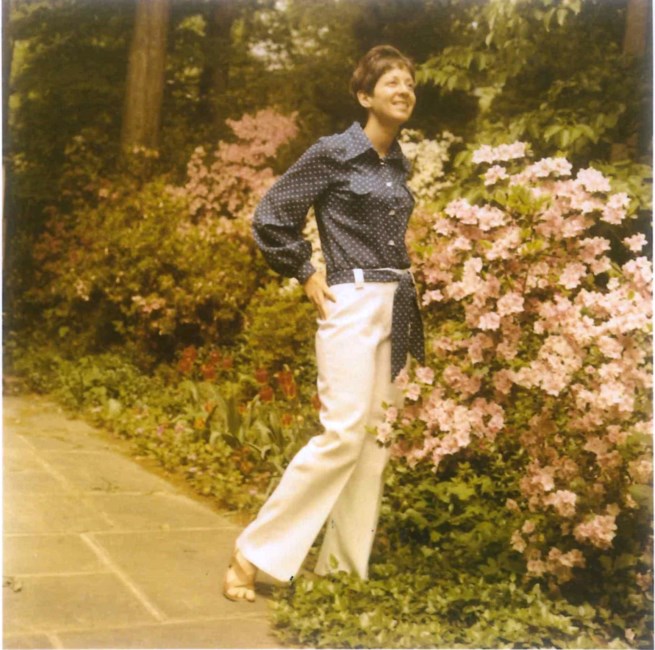
Beloved wife, mother and professor Barbara G. Lane passed away on September 18, 2023 in New York City at age 82 — in her sleep, in her own bed, the way she would have wanted it. A strong advocate for women’s equality, she was the first woman in her family to complete college, go to graduate school, and have a decades-long professional career as an art historian. But her devotion to family and friends was even stronger.
Barbara was born on May 31, 1941 to Ethel and Leon Greenhouse in Philadelphia, PA.
She grew up outside of Philadelphia and graduated from Lower Merion High School, where she became passionate about the humanities and was active in school theater. She went to Barnard College in New York to continue those interests, and it was there that she discovered art history, which became her calling. She also met the love of her life in the first week of school, Joseph M. Lane, then a student at Columbia University. They married on June 23, 1963 and were fortunate to spend over 64 years together.
After graduating from Barnard and marrying, Barbara moved to Cambridge, MA, where Joseph was at Harvard University Medical School. While there, she got her master’s degree in art history at Boston University and worked as a curatorial assistant in the Department of Prints and Drawings at the Boston Museum of Fine Arts, experiences that confirmed her passion for studying and collecting art. They later moved to Philadelphia, where Barbara earned her Ph.D. in art history at the University of Pennsylvania. She worked closely with her mentor, Lotte Brand Philip, and focused her scholarship on Northern Renaissance, Early Netherlandish, and Medieval art, especially the painters Hans Memling and Jan van Eyck. During her Ph.D. program, while her husband worked at NIH in Bethesda, MD, for his military service during the Vietnam War, Barbara conducted her thesis research at the Library of Congress and taught at the University of Maryland. They then returned to Philadelphia, where Barbara completed her thesis and started teaching as an Assistant Professor at Rutgers University, first at the Camden College campus and then at the Douglass College campus, where she received tenure.
They moved to the New York area in 1975, and Barbara continued to teach at Rutgers until 1979, when she was recruited by Queens College, CUNY, to teach art history for the Medieval and Renaissance periods. She was eventually elected to chair the Art Department at Queens and served in that capacity for 18 years. Under her leadership, the Art Department initiated its highly successful program in graphic design. In 2000, after Barbara’s outspoken advocacy led the CUNY Graduate Center to expand its art history curriculum to include pre-modern fields, she was elected to its faculty, and went on to serve on the Executive Committee of the Program in Art History. She continued to teach generations of students at both Queens College and the CUNY Graduate Center until 2017. She was also a mentor to junior colleagues and shepherded many in her department to tenure.
Barbara was a prolific scholar whose 18 articles were published in the leading journals in her field. The first of her six books, The Altar and the Altarpiece: Sacramental Themes in Early Netherlandish Painting, focused on visual artists’ promotion of Catholic liturgy — a topic she expanded upon in subsequent essays, including the often-cited “Sacred versus profane in early Netherlandish painting.” Her most recent book, the definitive "Hans Memling: Master Painter in Fifteenth-Century Bruges" was, like much of her work, a probing analysis of an important artist’s production, sources, and influence. In her research and teaching, Barbara elucidated the intentions and practices of the most significant Early Netherlandish and Northern Renaissance painters — Jan van Eyck, Rogier van der Weyden, Hugo van der Goes, Petrus Christus, and Robert Campin, as well as Memling — and explored the overarching themes and issues that connected them, such as intersections of naturalism and imagination in 15th-century religious art. She was the recipient of multiple awards and grants, including funding from the National Endowment for the Humanities. Over the course of her career, Barbara chaired four sessions at the College Art Association’s annual meetings, presented her work frequently at national and international gatherings, and developed strong relationships with fellow scholars at home and aboard, especially in Belgium. She firmly believed in the importance of examining works of art up close and in person, and thus traveled widely and purposefully, often visiting cities and small towns where there might be only a single artwork relevant to her work. Though she retired from classroom teaching in 2017, her scholarly work continued; she was working on multiple articles up to her last year.
As passionate as Barbara was about art history, her family and friends came first. She was a devoted wife and best friend to husband Joseph. She dragged him throughout Europe as she researched her art, but they always found time to enjoy long walks and wonderful restaurants along the way. They met at a school dance and continued to love dancing together for the rest of their lives. Barbara and Joseph also loved to travel for pleasure, to go to the theater and museums, to dine and laugh with friends, and to watch romantic comedies.
Barbara lovingly raised daughters Debra and Jennifer to be fiercely independent. She sparked a love of the arts, theater, and movies in them, but also encouraged them to achieve their own successes, however they defined them. Through ups and downs, she never stopped supporting them. She adored her grandchildren Benjamin, Zachary, and Oliver, and loved spoiling them with a ridiculous number of presents — every holiday was special for her, always an opportunity to celebrate and show her family how much she loved them. Known to her friends as Bobbi, she was loved by many for being a generous, loyal, and devoted friend. And she pampered her dogs, who were her constant companions.
While continuing to live in New York for the rest of her life, Barbara and Joseph bought a second home in Ridgefield, CT in 1990 that was designed by Edgar Tafel, an apprentice of Frank Lloyd Wright. They had looked for many years to find a place that was more than just a house, and finally found it in Tafel’s design, which expressed the best of the Prairie style, built into and open to the landscape. They restored the house with Tafel’s help, and it became her favorite place to spend weekends and holidays with family.
Barbara had a strong sense of ethics and always advocated for doing the right thing, in both her professional and her personal life, for both herself and more often for others. She also had a big sweet tooth, a mischievous grin, and a bubbly laugh. There was nothing better at the end of the day than snuggling in bed with her husband, her dog, and any other family that were around, to watch an upbeat movie and snack on candy.
Barbara is survived by husband Joseph, daughters Debra and Jennifer, grandchildren Benjamin, Zachary, and Oliver, sister Anne, and many cousins, nieces, and nephews. She will be very greatly missed, but just as greatly remembered. She will always be part of us.
Show your support
Add a Memory
Share Obituary
Get Reminders
SHARE OBITUARYSHARE
- GET REMINDERS
v.1.18.0