
OBITUARY
Margot Wellington
July 31, 1934 – April 14, 2026
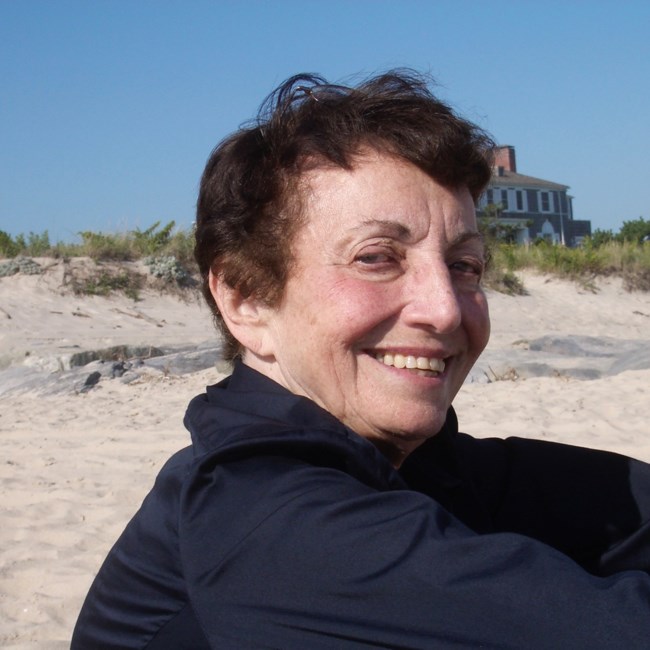
Margot Wellington, a longtime New York urbanist, civic activist, and preservationist, died on April 14, 2026, at the age of 91. As executive director of the Municipal Art Society from 1976 through 1983, she guided the venerable civic organization through a period of dramatic growth and change, capped by a successful public campaign—with Mrs. Jacqueline Kennedy Onassis as its most visible participant—to help save Grand Central Terminal, threatened at the time with demolition by its owner, the Penn Central Railroad.
During her seven-year tenure as executive director—the first woman to hold that position—Ms. Wellington led the transformation of the Society, one of New York’s oldest civic groups, from a relatively small and elite civic organization to a large and active force in the life of the city. Taking charge at a low point in the history of New York City—which had narrowly avoided bankruptcy the previous fall—she was convinced a sizable population of New Yorkers were committed to their beleaguered city’s future, and quickly embarked on an effort to radically enlarge the Society’s membership, in both size and diversity, offering new recruits a poster of Saul Steinberg’s famed New Yorker cover, showing the view from Manhattan’s West Side myopically dwindling from the Hudson River to a few remote landmarks around the globe. Within three years, membership had grown from several hundred to more than four thousand, requiring that the group’s 1979 annual meeting be held in a space no less capacious than Radio City Music Hall.
Building on that success, Ms. Wellington conceived the pioneering idea for a new kind of publicly accessible hub for city affairs, called the Urban Center. Raising millions of dollars from corporations and foundations, including CBS, the Vincent J. Astor Foundation, and the J.M. Kaplan Fund, Ms. Wellington led the effort to transform the historic Villard Houses on Madison Avenue and 50th Street into a vibrant crossroads for civic activism, drawing together into a single structure the headquarters of five major non-profit organizations—the Society itself, the American Institute of Architects’ New York Chapter, the Architectural League, the Parks Council, and the American Society of Landscape Architects. In the center’s high-ceilinged main-floor rooms, ideas and concepts about the urban environment were presented regularly to a general audience, through almost-nightly programs and dozens of exhibitions about the past, present, and future of the city (including, in 1981, a full-sized mockup of a section of the Esplanade then envisioned for Battery Park City, on which visitors could sit and comment). Ms. Wellington also insisted the complex include an amply stocked bookstore, Urban Center Books, devoted to architecture and cities, which became renowned around the world among design professionals. (The Center and its bookstore would continue operation for thirty years, and their loss is still mourned by many in the city’s architecture and design community.)
Projecting the energies of the Municipal Art Society in every direction, Ms. Wellington brought in dozens of new staff members, expanded its publication, The Livable City, and led multiple charges in the cause of preservation, including campaigns to save Radio City and St. Bartholomew’s Church—two other landmarks which, difficult as it is to imagine today, were threatened at the time with closure or disfigurement. She lobbied for the creation of the Upper East Side Historic District, a then-controversial proposal to bring some of the city’s most exclusive avenues and streets under the purview of the Landmarks Commission, and helped to organize a community group, Friends of the Upper East Side, to guide the district’s orderly development.
The greatest challenge—and triumph—of her tenure came in 1978, with the threat to Grand Central. The terminal’s owners, the Penn Central Railroad, had instigated a legal challenge to overturn the building’s landmark designation, in the hope of building a 55-story office tower atop the station, a structure which would have overwhelmed the terminal and destroyed its waiting room, and, in one iteration of the proposal, eliminated its Beaux-Arts façade. With memories still fresh of the loss of Pennsylvania Station a dozen years before, and with the city’s Law Department and Landmarks Preservation Commission—having lost at the state appellate court level—preparing to argue their case in front of the U.S. Supreme Court, Ms. Wellington and her board launched an ambitious campaign to build public and media awareness of the station and of the challenge to its survival. Gathering some of the city’s most prominent cultural and political figures to the cause, including the architect Philip Johnson, the writer Brendan Gill, Mayor Ed Koch, and, most visibly, Mrs. Onassis—who had offered her help to Ms. Wellington’s predecessor, Kent Barwick, a few years before—she organized a multi-pronged effort that included a storefront to on Vanderbilt Avenue to spread the word among New Yorkers, and culminated in the “Landmark Express,” a well-publicized rail excursion on April 16, 1978—the very day the court started to hear arguments in the case—carrying celebrities and supporters from New York to Union Station in Washington, D.C., where the energized group was greeted by Second Lady Joan Mondale, Senator Daniel Patrick Moynihan, and a crowd of reporters. Dramatically demonstrating that the fate of the terminal was of concern not only to a handful of preservationists but a broad segment of the populace, the high-profile effort bolstered support for designation, and may well have contributed to the positive outcome of the Supreme Court case: a stunning 8-0 decision that not only upheld the terminal’s landmark status, but established the legitimacy of the landmarks law in general. The historic finding not only saved the terminal’s architecture for generations to come, but set a firm legal precedent for preservation efforts all around the country.
Margot Zausner Wellington was born on July 30, 1934 in New York City to Gertrude Freeman Zausner and Nathaniel Zausner, whose family’s thriving dairy business in Washington Market (today’s Tribeca) was credited with introducing creme-fraiche to the United States. She soon moved with her family to Los Angeles, where her exposure to the city’s pioneering architecture came early. As a girl of six, she recalled, she spent Sunday afternoons at social gatherings at the Frank Lloyd Wright-designed Freeman House in the Hollywood Hills, pressing her nose against the glass corners of that early modernist structure, gazing out on the city view below; a few years later, her parents commissioned a house by Rudolph Schindler, and she vividly recalled design meetings with the charismatic Viennese-born architect, though the house itself was never completed. After graduating Phi Beta Kappa from UCLA in 1955, Ms. Wellington attended the USC School of Architecture, and worked for a time for the architect John Galen Howard, whose office occupied Schindler’s own landmark house (now the MAK Center for Art and Architecture) on Kings Road in West Hollywood. In 1957, she married Fred Wellington, an animator whose work on the films of Charles Eames extended Ms. Wellington’s involvement with the design world (Eames once confided to her that he had to continue to create new furniture lines for Herman Miller in order to subsidize his short films, which no one would pay for). After the birth of their son, John Wellington, in 1961, the couple traveled through Europe, where Ms. Wellington honed her interest in the shape of cities and learned the intricacies of French cuisine—a lifelong passion—before moving in 1965 to New York. Looking for work, she cold-called the urbanist Jane Jacobs—still living in Greenwich Village after the publication of her 1961 book The Death and Life of Great American Cities—and charmed the author by describing how the book’s principles had led her to the best restaurants in European cities. By the end of the call, Ms. Jacobs had directed Ms. Wellington to her first job in the city, with the landscape architect and planner Arnold Vollmer. (She and Mr. Wellington divorced in 1967.)
Ms. Wellington’s formative experience as a professional urbanist took place from 1969 to 1975, as Vice-President of the Downtown Brooklyn Development Association, where she fought to reverse the declining fortunes of the borough’s central business district, through street improvements, new buildings and retail stores, large-scale public artwork, and imaginative urban activations, including the Atlantic Antic, an annual September street festival that stretches ten blocks along Atlantic Avenue. It was her energetic leadership in that role—and her infectious enthusiasm for city life—that brought her to the attention of the Municipal Art Society’s board.
After stepping down from as director, Ms. Wellington continued to work closely with the Society, sitting on its board and several committees, and, in 1987, in partnership with Mrs. Onassis and the philanthropist Helen Tucker, establishing the Brendan Gill Prize, awarded annually to a cultural work that, in the sponsors’ words, “best captures the spirit and energy of New York City.” She also consulted on several urban regeneration projects in France, where she lived part time.
With her life partner of 52 years, Albert Sanders, a die-casting executive whom she married in 1980, and with whom she maintained homes in New York, East Hampton, and Paris, Ms. Wellington became the focus of a sprawling and diverse community of architects, urbanists, artists, community leaders, and others, who enjoyed her original and imaginative dinners—mixing French, Mexican, and American influences—and lively and engaged conversations about cities, architecture, and culture.
Besides her son John, an artist and teacher, she leaves behind a stepson, James Sanders, an architect, author and filmmaker; a stepdaughter, Avis Sanders, a public interest attorney; and three grandchildren.
Show your support
Add a Memory
Share Obituary
Get Reminders
Services
SHARE OBITUARYSHARE
- GET REMINDERS
v.1.18.0