
OBITUARY
Marvin Glasser
1 November, 1929 – 13 October, 2021
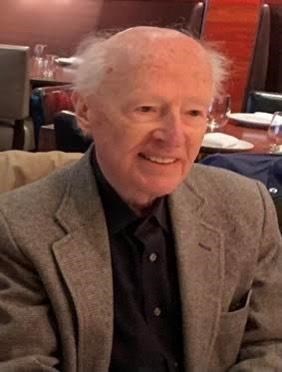
Teacher, Poet & Writer
Marvin Glasser, was born to Jewish parents in Brooklyn on November 1st, 1929. He graduated from New York’s City College in 1951 with a B.A. degree in English and received a M.A. from New York University in 1953. After serving in the army from 1953 to 1955 he resumed his graduate studies in English at N.Y.U. In 1957 he was hired as an instructor at an all-Black school, Dillard University, in New Orleans. In 1958 he returned from New Orleans to New York and took several adjunct positions at a variety of area schools including Fairleigh Dickinson University, Pratt University and Lehman College. In 1959 at a dance hall in Midtown near Times Square, Marvin met Ingeborg Schöttler. Inge had fled Germany with her sister Marianne in 1947 after years of torment under Nazi rule. Inge’s father had been Catholic and though her mother was born Jewish she had converted as a young woman to Catholicism. Inge and Marianne were both raised as Catholic but under Nazi law they were labeled as “mischlings” or half-Jewish and half-Aryan. Their father had encouraged them both to pursue practical careers. Inge had studied engineering and Marianne became a secretary.
Despite their mixed blood, during the war the Nazis were willing to look the other way in order to fill their demand for engineers and secretaries to support the war effort as most German men had been recruited into the military, and young capable female workers were in high demand to fill their vacated positions. Their mother however was forced into hiding and Inge and Marianne were both interrogated by the Gestapo to betray their mother’s whereabouts. Inge was even imprisoned for a short time. Both girls resisted, but due to an informant their mother was eventually found, arrested, and sent to Dachau where she perished.
As a result of these traumatic events Inge suffered in later life from severe agoraphobia which Marvin accepted and adjusted to accordingly. Though early in their marriage they were able to make a few trips to the Berkshires, Maine and once to Canada, as time went on and Inge’s condition worsened, Marvin never traveled again beyond the Upper West Side of New York City. Though he longed to see the world, he refused to abandon Inge.
On December 6, 1964 the two were married at a synagogue on the Upper West Side, although Inge for most of her life would continue to attend Catholic mass at least once a week. In 1962 Marvin was awarded his doctorate from N.Y.U. His dissertation was on Tennyson and Yeats. At the time he was working as an adjunct professor at Pace University where he was offered a full-time faculty tenure-track position in 1964.
That same year Marvin took up writing poetry. He also wrote fiction including one unpublished novel, as well as several unpublished short stories and detective stories. His first love however was poetry and over the years he’d had poems published in a variety of literary journals both here in the United States and abroad including: “Alembic,” “Art Times,” “Cider Press Review,” “Hiram Poetry Review,” “Iconoclast,” “Mudfish,” “Nimrod,” “Plainsongs,” “Poetry Salzburg Review,” “Rattle,” “Talking River,” “The Evansville Review,” and “Words of Wisdom,” to name a few.
While at Pace and before retiring in the 1990s, he authored several critical articles on Shakespeare and Spenser which were published in a variety of scholarly academic journals. In the 1980s he wrote an extensive book-length critical work on Shakespeare’s characters in the tragedies. The book was never published.
In 1970 while on vacation together in the Berkshires, Inge took up oil painting and water coloring which she pursued for the rest of her life. Both Marvin and she shared a richly creative collaborative relationship throughout their marriage. In 2006 Inge’s memoir of growing up in Nazi Germany “Dance of the Panther” was published by Book Republic Press. Inge died at home in their apartment at 309 West 104th Street on March 13, 2018. After her death, Marvin lived alone and continued to pursue his poetry as well as his ongoing participation in a reading group which he had been a member of for many years.
A devote of both the English Elizabethan and Restoration periods, Marvin was especially enamored with the great Restoration diarist Samuel Pepys who had witnessed the Great Plague of London, the Second Dutch War and the Great Fire of London. Marvin was intimately familiar as well with all the great tragedies of Shakespeare. He was a consummate grammarian with keen editorial and critical instincts, as well as a poet of deftly concise poems. His work was always intellectually and philosophically adroit and addressed the existential paradoxes in life and human experience. Using compressed figurative language and acute objectivity, his short, terse poems questioned mortality and life’s attendant sorrows. I shall miss him dearly, especially his curmudgeonly wry wit and his great reserves of empathy. Marvin died on October 13, 2021 at his home in Manhattan just shy of his 92nd birthday and three years after the death of his beloved Inge.
Walter Holland, October 15, 2021
Show your support
Add a Memory
Share Obituary
Get Reminders
Services
SHARE OBITUARYSHARE
- GET REMINDERS
v.1.18.0