
OBITUARY
Raymond Franklin
18 July, 1930 – 10 June, 2025
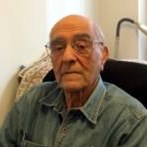
Ray was a scholar, a political economist who produced several books, beginning with The Political Economy of Racism in 1973. And he was a popular teacher. He remained productive even into his nineties: his last book, The Changing Shape of History from the New Deal to the Conviction of Trump, was published in September 2024.
Ray was born and grew up in Detroit. He spent early years hitchhiking across America and attended several colleges before earning B.A. and M.A. degrees from Wayne State University, while also working in the auto industry and playing an active role in the United Automobile Workers. He earned his doctorate at UC Berkeley and taught in several colleges before coming to Queens College, where he remained for thirty years.
At Queens, Ray was a major player. He won the Teacher of the Year award in 1993. He was deeply involved in the political upheavals at the College, especially the 1969 uprising of students opposing the Vietnam War. He co-founded and ran the Monday Lunch, a popular, informal faculty lunchtime seminar on political and social topics of the day, often with guest speakers, that ran throughout the 1980s. In 1990, he became the founding director of the College’s Michael Harrington Center for Social Justice, where he remained unil his retirement.
Ray is survived by his wife, Margery B. Franklin; two sons, Ken and David Franklin; grand-daughters Kamalka and Hannah Rose Franklin; and grandson Sebastian Franklin. His family and many friends, colleagues, students and comrades on whom he had a deep impact, will greatly miss him. A memorial celebration in New York City of Ray’s long, productive and colorful life will be announced in the near future.
The story of Ray’s life and many accomplishments makes good reading, especially in his own unique voice. What follows is a few excerpts from an oral history interview he did in 2019 with Dean Savage, Professor Emeritus of Sociology at Queens College. The tape recording of the entire interview resides in the Queens College Library archives and can be accessed online. Ray’s voice comes through as it could not do in a conventional obituary. Readers who knew Ray will recognize it and enjoy hearing it again in their imagination. Those who did not know him will discover a unique personality.
Queens College Oral History Interview with Ray Franklin, Excerpts:
Dean Savage Hi, this is Dean Savage. I'm doing an oral history today, October 16, 2019, with Ray Franklin, retired professor of economics at Queens College.
Dean Savage So now, Ray, start at the beginning and tell us something about your life and the kinds of things that you did in your life and what your experiences have been.
Ray Franklin Well, I'll start off with just real turning points. I went to an all-Jewish high school in Detroit, Michigan. I graduated in 1948. The last year of that graduation was, of course, the founding of [the State of] Israel, and my high school class was dominated by Zionists who had a big influence on me. Before that, up to the 12th grade, I was sort of a jock. I was on the baseball team. I was also into golf. I got reasonably good grades, but not great grades; good enough to get into the University of Michigan. The Zionists had an influence on me in two ways. Politically they were all socialists and socially they were free spirits, unlike the rest of the students who were in [my] graduating class. So that was the end of 1948. Then upon graduation, I went to the University of Michigan. There I lasted three semesters, [and then] I dropped out.
Ray Franklin I was not very happy. I [don't] know exactly why I was so unhappy, but maybe it was related to pressure from my parents who wanted me to become a lawyer or a doctor. And none of those plans interested me. When I told my dad that I was taking a sociology course, he said 'socialism is for the rich, that's when you should become a socialist.' He didn't [know] it was an academic subject.
****
Ray Franklin The end of 1949 is when I made the decision [to leave home]….I hit the road and went west; and I got odd jobs. The job market was very good at that time. It was the '50s; the economy was booming everywhere, so I got odd jobs very easily until I got to Denver.
****
Dean Savage You traveled by hitchhiking.
Ray Franklin All over. I learned the art of hitchhiking. The art of hitchhiking, aside from looking reasonably clean, is you put up a sign, not [for] where you ultimately want to go, but [for] the next town 20 miles down the road. People driving feel it’s safe that way: A hitchhiker with a destination. And sometimes they like company. Then once you get in the truck or car and start talking and everyone feels comfortable, I would say that I'm really going much further. Oh, fine, fine was the usual reply. The driver felt safe. And so that was the Denver experience. I finally got to Seattle, Washington. I got a room on Cherry Lane or Cherry Street.
Dean Savage Cherry Street.
Ray Franklin Which at that time was a slum, completely. It was very shady. I got a basement room, I couldn't see out of the room except for legs that walked by. One sleeping room and a bathroom and that's where I stayed.
Ray Franklin I know I took a bus to the [Boeing] plant…. It was an easy job. As planes came down the assembly line, there were tables, round tables, on the side of the planes and at each table someone did something different. I stenciled some design on pieces of aluminum that would be then cut and stapled on the plane. Boeing was a very good place to work. They offered workers a chance to go to school, to get promoted, to get more skills. I really found it very pleasant.
* * **
Dean Savage Now, what explains why you decided to move on? You got a job in Denver that seemed like it was a good job. You had a job in Seattle at Boeing and you then decided to move on.
Ray Franklin I wanted to see the West Coast, I wanted to see the country. And I wasn't worried about money because I had a big roll of cash in my pocket. I wanted to get back East. I wanted to go to Vermont and connect up [with] Scott Nearing…in Brattleboro, Vt.
* * **
Dean Savage After three semesters [at Goddard College], you returned to Detroit.
Ray Franklin And then, in Detroit, I enrolled at Wayne State University. I also worked in the auto industry while going to school, and worked in the [United Auto Workers] union. I started what was called the Detroit Labor Forum, which met every month in the Detroit Public Library auditorium. We had about 200 people attending each month. This was at a time when the Democratic Party couldn't gather 12 people at a public meeting. And in the course of that, I met a very active unionist, [Emil] Mazey, who was president of Local 13…. I started the forum and then he joined, so we had a big crowd and the forum was just general education. We invited C. Wright Mills, Paul Sweezy, William O’Connor; we invited anyone who had concern with power in America, mostly academics. It … was a liberal left forum, and it was very successful. I worked day and night shifts in the auto industry. It was easy to switch between night and day shifts, depending on my course load. At Wayne I got a BA degree in sociology… Then I got an MA in economics.
Ray Franklin And I got married and had a baby, Ken, in 1958. And decided it was time to get on with my life. So I applied to U. C. Berkeley…. There I took my first standard economics course and learned more as a teaching assistant using Samuelson’s elementary text book than any of my previous work in economics.
****
Dean Savage So then you went on to City College.
Ray Franklin I went to City College. Again, no interview…. Henry Villard, at City College, called me up and he said, 'you had my daughter in class and I asked her if there are any good teachers in economics at Vassar. And she said there's only one and his name is Ray Franklin.' So his wife was on the board of directors of Vassar, so how could he go wrong?
****
Ray Franklin Villard made everyone teaching the elementary economics course use the textbook that he wrote. I used it the first year because it was ordered for me. But at the beginning of the second year before classes began, at the department meeting he asked each faculty member if he was going to use his book. Each nodded their heads up and down like robots. When Villard came to me, I said no Henry, I have standards. The faculty became absolutely silent as if each were holding their breath….When I was walking out of the meeting with my colleague, he said I had just lost my job…. I got my walking papers. Margery was really mad at me for being a “bad boy” and losing my job without anything in the future.
****
Ray Franklin I heard that Queens had a job opening. And so I applied for that. [Bill] Hamovitch [Chair of economics at Queens] interviewed me.
****
Dean Savage So now you're at Queens College.
Ray Franklin Yeah. I was at Queens College, and that turned out to be a blessing for me. I quickly felt extremely comfortable in the economics department….I was there for 30 years and my time there was just great. I got up every morning and said to myself, 'Thank God I don't work for a living.'
****
Dean Savage Say more about the Michael Harrington Center. Maybe start by saying something about Michael Harrington's presence at Queens College.
Ray Franklin Yes. Well, Michael and I had martinis every Monday at 5 o'clock in the faculty dining room when they were serving liquor, and we talked. We both had Monday evening classes. That's how I met Michael. And we had a continuous argument about whether socialists should go inside the Democratic Party or work outside. I was for outside, he was for inside. I didn't know him personally well, but I knew him well enough in that context. He was a great lecturer…. So, how did I launch and became head of the Michael Harrington Center?
Dean Savage Joe Murphy [then President of Queens College] is crucial here.
Ray Franklin Yes, absolutely. Joe Murphy, in the first place, and myself and Michael Wreszin. We met every Thursday, more or less, in Murphy’s office downstairs in the front building.
Dean Savage Jefferson Hall.
****
Ray Franklin We drank bourbon and we told stories. I don't think I should tell some of the things he said. But we talked about all kinds of things.
Dean Savage [Murphy] was president at Queens in the 1970s and later became the Chancellor of the entire CUNY system. And when he was Chancellor was when he was instrumental in helping to found the Michael Harrington Center.
Ray Franklin Exactly, and Shirley Strum Kenny was the president [of QC] at that time. And Joe said, ‘before I retire, I want to give you some money.’ … ‘How much do you want?’ …. I went to Shirley. She said, ‘don't ask him for a specific amount; ask him for as much as he could provide, because I want to set up a social justice center in Michael's name.’ And Joe had liked Michael. And so he said, ‘how's 600 thousand?’ Fine. And he wrote the grant to the amount of 600,000 dollars in such a way that it couldn't be touched. It was put into my bank account and I alone could authorize its use…. I moved from the economics department to one of the temporary buildings and we developed projects….
****
Dean Savage All right. You were the director of the Michael Harrington Center from the time of its founding until 1995 when you retired. And along the way, toward the end of your career, you won an award for teaching in 1993….
Ray Franklin That was the best thing that happened to me. I had a few other little awards, but that was the one that I really cherished most, and I got a little note - I don't know if everyone got this little note - from Shirley Strum Kenny: 'Ray, I'm so happy that you got this award,' It was a little special.
****
Ray Franklin I've been reflecting on how lucky I was to have bumped into Queens College, given the previous two experiences of college teaching. I didn't know whether I'd ever find a campus that filled my hopes and imagination because I did have a dream of colleagues who I genuinely liked and saw on and off campus and students who I would nod to as we passed each other on campus, and get to know some serious students who attended my classes. It was really a romantic dream I had and it was realized beyond expectations. I loved teaching and enough students loved me to give me a high. At Queens, I realized that my dream came true and lasted for 30 years….
Dean Savage Oh, that's a perfect note to wrap this up. Thank you very much.
Show your support
Add a Memory
Share Obituary
Get Reminders
Services
SHARE OBITUARYSHARE
- GET REMINDERS
v.1.18.0