
OBITUARY
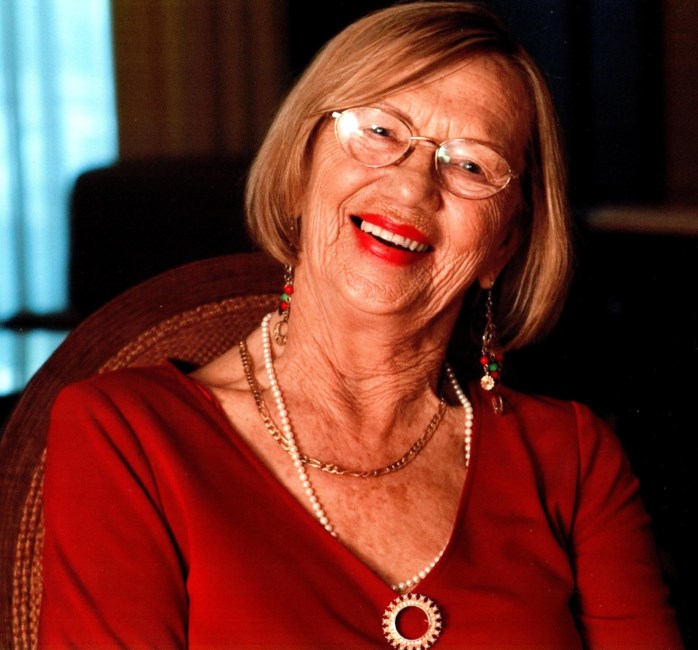
Anna Yvonne Gadomski nee Misztela
28 June, 1930 – 24 April, 2021
In 1939, war shook Poland. The September 1939 Nazi Campaign and the invasion of eastern Poland by the Red Army of the USSR were two military events that dramatically shaped and permanently altered my future. I was nine years old at the time and living with my family in Sarny, a town in eastern Poland.
Poland's Political Situation 1920 - 1940
Eastern Poland's population totaled 13,000,000 at the time. Two main treaties kept the peace: the Treaty of Riga and the Polish-Soviet Non-Aggression Pact. However, on August 23, 1939, a week before the German attack on Poland, the secret Ribbentrop-Molotov Treaty was signed. Its intent was not only to remove "socially dangerous and anti-Soviet elements" to Soviet prisons, but also to eradicate civilians into labour and forced resettlement/concentration camps in Siberia and Northern Russia, thereby accelerating their Russian assimilation. On September 17, 1939, eastern Poland was invaded by the Red Army. Four brutal mass deportations followed:
* The first mass deportation took place on the 10th of February, 1940. Unspeakable hardship made worse by severe cold weather befell this group of 250,000 men, women and children from the eastern Polish "enclaves" (western Ukraine). The were herded into 110 cattle trains, ending up in Northern Russia and Siberia, including my two older sisters, my mother and I.
* 330,000 women and children were herded into 160 cattle trains and dispersed in Asiatic Russia on 13th of April, 1940.
* 250,000 Poles were moved to northern Russia from June to July, 1940.
* 200,000 more Poles followed in 1941.
The total number of Polish citizens deported by the Soviet government during its "eternal friendship" with Nazi Germany between 1939 and 1941 amounted to 1,680,000 people, not including prisoners of war. Among these, it is calculated that there were 560,000 women, 380,000 children and about 150,000 elderly and sick persons. Typhus, dysentery and malnutrition were endemic throughout this dispersal, abetted by starvation diets so mortality rates were high. Grave digging and the organization of burial parties were the principal off-duty occupations handed to unit leaders in the winter and spring of 1939 and 1940. By the middle of 1942, half of the deportees were dead.
Siberian Taiga In Summer
The Siberian Taiga stretched from the Ural mountains to the Pacific Ocean. It is a huge unbroken forest covering an area larger than Canada. This area, because of its freezing temperatures and lack of food, has primarily been used as a gigantic political prison since the 17th century.
The deportee (me) was a non-person, a slave of the Soviet penal system. Upon arrival at the Siberian Taiga labour camp, we were greeted with these words: "Here you will live and here you will die. You will get used to it."; and the notorious statement, "you who do not work, will not eat". Those incapable of work by their age, illness or infirmity, or infancy were excluded from ration issue. Everyone was expected to work, notwithstanding climatic extremes, deployed as forestry or factory labour, or in road construction and/or mining.
The Creation Of The New Polish Army And Amnesty
In London, the British government was at war with Germany; the Polish government was at war with both Germany and the USSR. Sikorski and Churchill were coming to some accommodation with Moscow in order to get Soviet permission to form a Polish Army in the USSR to bolster defence against the German attack on the Soviet Union. Negotiations were finalized on the 30th July, 1941. The Polish-Soviet pact was signed by Sikorski and the Soviet ambassador Iwan Maisky, in the presence of Churchill and Eden. This treaty provided for the restoration of relationships, the creation of a Polish Army in the USSR, and a so-called "amnesty" for all Polish citizens detained in the USSR. On 4th August, 1941, General Wladyslaw Anders was released from Lubianka, to be notified of his appointment as Commander in Chief of the reformed Polish Army in the USSR. He had been imprisoned since 1939. At this stage, it was calculated that about 15,000 officers and an unquantifiable number of other ranks were unaccounted for. It was agreed that the assembly point for the new army would lie between the Volga and the Urals, with the main headquarters at Buzuluk, near Kuibyshev.
The physical condition of the soldiers and the civilians was appalling. Typhus and dysentery were commonplace; many deaths had occurred in transit from imprisonment to freedom. As the winter of 1941 approached, health problems multiplied. The Soviet authorities failed to supply adequate provisions, i.e. significant food shortages, over half the personnel had no boots, and weapons were supplied for only one division. By December, 1941, the number of Polish servicemen who had succeeded in reporting for duty at the reception centres reached 44,000. Food rations issued by the Soviet General Staff was deliberately maintained at 26,000. On the 4th December, 1941, it was agreed that the army would be transferred to the southern part of the USSR and a few thousand Polish soldiers would be sent to Great Britain for special training. In 1942, the new headquarters of the Polish Army moved to Yangi-Yul, near Tashkent, with widely-separated units being based in Kirgisia, Kazakhstan and Tadzykistan. Evacuation of the army began immediately after Christmas, 1941, the first large group leaving Buzuluk on 15th January, 1942. Between January and May, 1942, the Polish Army continued to be plagued by typhus, with an increasing incidence of dysentery; soon after malaria followed. The outcome was death on a vast scale. By mid-March, 1942, the Army numbered 70,000, despite the transport difficulties and the intransigence of the Soviet General Staff, which had adjusted rations but only to 40,000--this figure being further reduced to 26,000. At the same time, thousands of released POW's and civilians were diverted to the south to await the arrival of the main army. They were sent by rail to Turkmenistan, and from there by boat along the Amu-Daria to forced labour. After the war, it emerged that only a few of these Poles ever returned alive.
In May and June, 1942, the more able-bodied men and women of military age were transferred to camps in Palestine to prepare for active service. On 3rd May, 1942, at Quastina, Palestine, newcomers were officially merged with the Carpathian Brigade. The new unit was designated 3rd Carpathian Rifle Division.
On 12th September, 1942, General Sikorski named the army "the Polish Army in the East". The Commander in Chief was General Anders. His headquarters were at Quizilh Ribat in Iraq. The main base was at Quassasin in Egypt, under the command of General Michal Karaszewicz-Tokarszewski. On April 13th, 1943, the German radio broadcast reported that corpses of thousands of Polish officers had been found buried in the Katyn forest. In another communique dated 25th April, 1943, the Soviet government broke off diplomatic relations with the Polish government in response to the Polish government's request that the International Red Cross verify this information. On the 3rd July, 1943, General Sikorski was killed in an air crash of Gibraltar after attending staff conferences at Kirkuk and Cairo.
Civilian Deportees Leaving the USSR
Exodus to Iran, India, Palestine and Africa
By mid January 1942, camped among the soldiers, for the first time, were numbers of civilian refugees who were lucky enough to have family serving in the newly formed Polish Army. Thanks to my oldest sister Wiesza, who was a nurse, this included my family. Since almost no assistance was extended by the Soviet authorities, we had to travel from Siberia relying solely on my mother’s ability to gather intelligence, barter a place for us on the trains and find food and water. Those Poles who were incapable of travel because of age, infirmity or lack of Polish army dependent status were condemned to continuing captivity. On 18th March 1942, Stalin gave Anders permission to conduct a rapid evacuation of a little over 40,000 evacuees to Persia (Iran). The reception depot was in Krasnovodsk on the Caspian Sea.
By the 4th April 1942 the Krasnovodsk depot received 33,039 military and 10,789 civilian evacuees. These survivors, including my family, crossed the Caspian Sea on Soviet ships in batches going to Pahlevi. A second evacuation from Uzbek and the Kirghiz territories to Krasnovodsk took place in August 1942. This exodus was larger, consisting of 44,832 military personnel and 25,437 civilians.
Hospitals opened in Teheran, Pahlevi and Isfahan with the assistance of the Red Cross and the Polish-American Relief Organization. Five refugee camps opened in Teheran, Meshed and Achwaz; as well as hostels for the elderly, an orphanage and a community center. Those under military age joined the "Junak" units preparing for military service later.
About 35,000 civilian refugees and dependents were temporarily distributed among camps throughout the British Empire: Teheran; Achwaz; Ispahan; Chela; Balachedi and Kolhapur; a transit camp in Karachi; a settlement camp at Valivade near Goa, East Africa and 22 settlements established in Uganda, Tanganyika (my camp), Kenya and Rhodesia. On January 16, 1943 (only 8 months after our evacuation), the Soviet government informed the Polish government in London that all Poles remaining in the Soviet Union and originating from the provinces under Soviet occupation would be considered Soviet subjects. These Poles were doomed to remain in the Soviet Union.
My family and I stayed in Tanganyika (Tanzania) from 1942 to 1946. Then we immigrated to London, England where I successfully completed a 4 year program in Registered Nursing. In 1952, just married to Jan Gadomski and pregnant with my first daughter Halina, I moved to Canada. Jan and I proudly welcomed two more daughters -Yolande in 1953 and Basia in 1959. This beautiful country immediately won my heart and I am ever so proud to call it my home.
* * * * * * * * * *
Peacefully on April 24, 2021 at her long term care home in Ottawa, at the age of 90.
Yvonne had a full life anchored in her love of family, zest for living, successful career and ability to adapt.
She was predeceased by her beloved husband Jasiu Gadomski (died 2008) of 56 years and by her dear sisters in England (Wiesia Chmura, Basia Berka).
An elegant, kind and gracious woman, she was a positive role model to her family. She will be greatly missed by her daughters and sons-in-law: Halina Cyr (Denis, died 2021), Yolande Nowak (Rudi), Basia Ruta (Andy), her grandchildren (Yvonne Fallenbuchl (Adam), Catherine Gannon (James), Liana Cyr, Joanne Nowak (Gabriel Ménard), Jonathan Ruta, Philippe Cyr (Rong Emily Wang), Nicholas Cyr, Matthew Ruta, Thomas Ruta, and her great grandchildren (John Fallenbuchl, Eric Fallenbuchl, Quinn Ménard Nowak, Madeleine Gannon, Ethan Gannon, Hannah Ménard Nowak). She will be fondly remembered by her nieces and nephews, other relatives and lifelong friends.
Yvonne was born in 1930 in Sarny, Eastern Poland. As a result of World War ll, she was deported with her family to a labor camp in the Soviet Arctic. Eventually they found their way to a refugee camp in Eastern Africa where they spent 6 years. In 1948, Yvonne and her family left for London, England where she was educated in nursing and where she met Jasiu, an engineer and her future husband. In 1951, Yvonne and Jasiu came to Canada and settled in Montreal where their 3 daughters were born. In 1971, they moved to Ottawa where Yvonne pursued a new career in real estate.
For those interested in donations, please consider organizations related to dementia, such as the Dementia Society of Ottawa & Renfrew County. We are very grateful to the staff of Garry J Armstrong Long Term Care Home in Ottawa for their care of our mother and especially in her final weeks.
The family will receive friends at McEvoy-Shields Funeral Home, 1411 Hunt Club (at Albion Road) on Friday, April 30, 2021 from 5:00 - 5:30 pm, 6:00 - 6:30 pm, 7:00 - 7:30 pm and 8:00 - 8:30 pm. Those wishing to join the family are required to call the funeral home to schedule a time. Due to pandemic restrictions a private Funeral Mass will be on Saturday, May 1, 2021 at 10 am at St. Hyacinth`s Church, the funeral will be live streamed for all to watch at www.funeraweb.tv. Interment Beechwood Cemetery.
Show your support
Add a Memory
Share Obituary
Get Reminders
Services
SHARE OBITUARYSHARE
- GET REMINDERS
v.1.18.0