
OBITUARY
Johanna Fiand Méthot
30 May, 1938 – 5 April, 2016
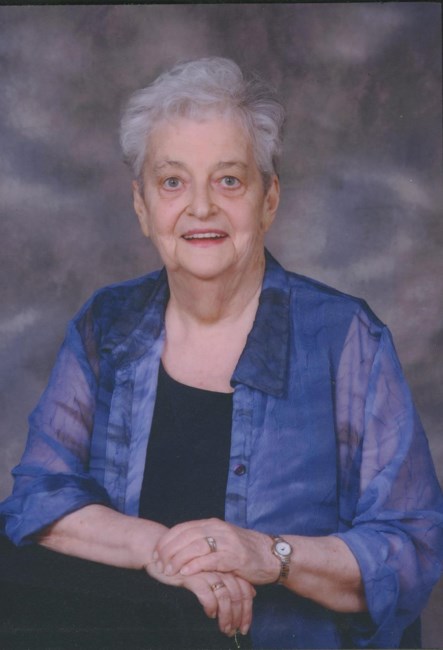
“I am a poor wayfaring stanger, a travelling through this world of woe…”
My mother, Johana Edith Fiand Méthot died this morning. She was young. She would have turned 78 next month. I’d like to say that she went without a struggle, but that would not be true. Her life, despite her attitude of openness and wonder and joy and awe at all things and the love she felt and so freely gave was one similar to that poor wayfaring stranger of song - through sickness, toil and danger, but through it all she went in love and joy and hand in hand with her husband Clark.
Her story is one that leaves anyone who hears it wondering why there hasn’t been a movie made of it. In my imaginings it is a film that is projected onto a bed sheet fluttering in an ocean wind, a film shown on a troop ship carrying displaced people, refugees, the homeless of war. She watched a film on such a ship, I think the film was Mrs. Miniver, black and white and distorted by the breeze, the film incomprehensible to a little German girl huddled up with her mama and sisters munching on chocolate bars supplied by kind sailors.
She was born in Surabaja, Java in what was the Dutch East Indies. Her Dad owned a hotel there before the war, a German national who had escaped the insanity of his homeland and met the love of his life on a foreign shore. The family was sundered by the war – he spent it in a prison camp in Dehradun India, and the women, my grandmother, mother and twin aunts were shipped to Japan. Together they endured the allied bombing and the deprivations of war, worsened after the German surrender. Douglas MacArthur lent the USS General Black to pick up the flotsam and jetsam of war and bring them back to Europe. There were refugees from Japan and China, and a host of stops on the way. The girls gazed over the railing into the Red Sea, eager to see the spears and chariots of the Egyptians, oblivious to the Exodus story they were part of.
They were reunited with my Opa in Germany, but spent scant years together before he left for Canada to make a new home for them. Once again a sailing ship, once again a refugee, once again washed up on a foreign shore. They were together again in Montreal, but Opa succumbed to cancer on Christmas Eve 1953 and mom had to quit school to help provide for the family. Mom often told us that she felt sorry for us, that we hadn’t had the opportunity to travel and see the world.
She met Clark, the love of her life on a blind date 61 years ago on April 6th. He cut a fine figure, he did, a dashing young Québecois boy who had just as much United Empire Loyalist in him to make up “The Two Solitudes” in one person. They were married in 1957, and welcomed me in 1958, then Michael 15 months later, and Jim 18 months after that. They got the boys out of the way first. Christine came in 1965 and Katherine in 1972.
There’s a story mom told me of when she was very little before she was shipped off to Japan. A refugee woman asked her how many kids she wanted to have, and she gravely told the assembled women that she’d have five. “Why Five?” they scoffed. “Because I promised!”, she said, and her seriousness – a little girl of maybe two – impressed the women. She didn’t remember much of that until after Katherine was born and she got some flak for having had yet another baby. “I promised.”, she said.
We were poor. I have to say that, but I didn’t know it. Dad had to work two, sometimes three jobs to make ends meet. They’d over extended themselves in the days before socialized medicine and Oma got sick and needed care. No, I didn’t know it. We delighted in Mom’s desperate suppers, things like baked hotdogs in a barbecue sauce made from mustard, ketchup and brown sugar, with corn flakes crushed and sprinkled on the top. The main ingredient? Love.
I have memories of homemade play and tent forts and living rooms taken up with kiddie train sets. I have memories of her dressing the boys up with turbans and capes and encouraging us to watch the approaching thunder storm to conjure up lightning. She loved song and filled our road trips with “On Moonlight Bay”, “Beautiful Brown Eyes”, “The Old Rugged Cross”, “Freight Train”, and countless others. She had such a mischievous streak in her, she pranked a very young edition of me into calling the Man in the Moon (the telephone operator) for a pizza and laughed as I quickly hung up and told her that it wasn’t the Man in the Moon but the Virgin Mary and that she was very upset.
Mom saved my life. Had I not had a warm welcome at home, a cup of tea, a loving embrace and a “Tell me about it…” I would not have survived the hell that I went through in High School. She made home into a safe space, she gave me strength to face each day, and encouraged me to explore my own inner life through books and writing and my own imagination. I do not exaggerate, she saved my life.
She lived for stories, storytelling, books and reading. She did engage in embellishment at times though. While she could quote the facts of the matter she also never let a good story go to waste if it could be improved. She always wanted to know the end of things, to see how things fit, how the world and people connected, and jumped into the middle of real life stories all the time to make connections, build bridges and write satisfactory endings, some of them quite epic indeed. And in mom’s universe all life had to be, must be epic. She gave her life to life.
Mom loved. I don’t think that I have ever known anyone who loved so totally and completely and freely and openly. She wore her heart on her sleeve though, and suffered all her life with feelings of inadequacy, something that anyone who knew her would shake their heads at.
She worked with young pregnant women, and opened up our home to many of them, and through the years helped train many crisis counsellors and through them reached out to hundreds if not thousands of women in distress. And when you were with her you knew that you had her entire attention, and when she told you “It will be okay” you believed her.
She and Dad suffered through the pain of losing one of their children, and suffered with their daughter-in-love who had lost her own son, mother and husband in short order. But she lived each day as a gift and she was very much aware of the grace of the relationships she lived. She held us all close to her, children, grand-children, great-grandchildren, friends, relations and all loved ones, no matter how many miles sundered us.
She had this uncanny memory and a mother’s sentimentality, remembering each of us as we were when we were 10, 17, 2, as babies in the womb … and missing all of us at all of those ages while revelling in who we were in the moment. And now I think I have a glimpse of this strange ability, I see her as the mommy of a toddler, singing “I see the moon and the moon sees me.” I turn around and she’s dandling our two little boys on her knees. She’s the young woman I never met but know through her stories, swimming to the floating lighthouse in Lac St. Louis, she’s fixing Stollen in the kitchen and singing German Christmas carols, tramping trails with her papa and sisters in the Black Forest, and then lying in the hospital bed as Christine and I held her hands and tell stories and laugh and love her.
She was an exceptional woman, an amazing mother, and I will miss her terribly. “But there’s no sickness, toil or danger, in that bright land to which she goes…”
Michael Méthot, Thursday, April 7, 2016:
Pardon me while I digress...
To digress: to stray from the main intent or point or idea of a story or discussion.
If you ever had more than a few moments to sit and talk with my mom, you'd know that, when she truly was "in the zone", digression was what it was all about.
Discussion would be going all out on some point of philosophy, or culture, or literature, or entertainment, or politics, or family matters, or neighbourhood happenings, or teenage angst, and mom's eyes would light up with some connected point that might at first seem out of left field but...
My mom always liked to reminisce about the long hikes she took with my Opa in the post war Schwarzwald. She and her sisters and Dad would walk for hours from the crowded small house they shared with Opa's mom in Haslach. I gather that this was an inexpensive way for a long absent Father to reconnect with his family and to get them away from the rubble reality of post-war Germany...
I imagine her on these walks, taking in what must have been for her a whole new world. She was used to the towns and settlements under the shadow of Fujiyama, or her earliest memories of the steamy tropical streets of Surabaja, which she would also talk about with us.
I don't think these walks were "goal oriented". There was no itinerary or fixed routine, I imagine. No stopwatches or pulse checking. No personal bests. In my minds eye I see her noting the plants and tall dark pines and the course of the winding trail and whatever interested her on the way.
She sang us songs from those days, often.
So mom would be totally involved in the discussion and then would interrupt her own train of thought to bring something up. Sometimes she would add brackets to her parentheses and dig even deeper into an associated idea or complication or implication.
My mom did not live a life that had been imagined or planned. I think perhaps that was one of the first things she must have learned as a child - on one train or truckor another, whether being carried across a flood swollen gorge on theback of a young US Marine - and she would always ask American men of a certain generation where they had served - and thatnk them for their service. She held that they had saved her life. All of them...
She took it personally.
..or weeks on a boat away from home and father on a trip to a place that no one wanted to go. My mom learned a deep lesson that the itinerary was never a set thing. The endpoint and destination were always in question. Best to not think about that and concentrate on making connections in the present. Keep loved ones in your heart. Carry the family.
Because of that damned stupid war.
Because of that damned stupid war a little girl - hardly old enough for preschool had to become the emotional support and confidante of her own mother. Because of that damned stupid war that whole family, like millions of other families, had to look to the sky for death and hunt for bread for want of food.
Then, after the war in Canada, when plans were being remade and the chance was floating out there that maybe a girl could go back to being a girl, in school, learning English to go with the German and Japanese and Malay, making friends.... it all fell apart again.
Opa died.
There was no one to support the family.
Mom never spoke of this with any trace of bitterness or loss. It was just something that happened.
Plans had to be shelved. Connections had to be made. Work must be done. Carry the family.
And she met my Dad.
There are bursting roomfulls of people now because of the meaning of that sentence.
It happened at a blind date party when Clark asked his buddy (who was organizing the party) to rig the process so he would get the prettiest girl. He walked in and saw her and knew. Connections on the way.
Goals were not always what you thought they were. But fate and goals are two separate and distinct things.
My Mom was fated to meet my Dad and have all of us - in my most agnostic moments I still firmly believe that.
I also know that in all of her marvellous digressions - digressions that were epic in their convolutions and constructions - Mom never lost sight of any main idea or intent or topic or purpose - never.
She held the true value always. The true value of a walk in the woods is a walk in the woods. The true value of a song is the singing and sharing. The true value of journeys is who you take with you. The true value of family is family. Connections matter.
Godspeed, Mom. Promises kept. Alles ist gut.
Know that you are loved.
Josef Méthot, Saturday, April 9, 2016
Hello, dear friends and family. Thank you for being here. Mes amis – mes chers amis - merci mille fois d'être ici. My name is Josef Méthot. I am Steven's son and Johanna's grandson. I have been asked today to share a few words about my Oma. I feel compelled to say that this is not a eulogy. Or rather, it is not the eulogy. So many people here today in this room knew Oma long before my birth, and knew her through all the struggle, richness, pain, and joy and above all unending love that filled her life. There are other eulogies to be written – other eulogies that must be written – and stories to be told. One of them was written by my father; I quote him here: “Johanna's story is one that leaves anyone who hears it wondering why there hasn't been a movie made out of it.” It certainly amazed me as a young child; before I knew where Indonesia was, or could comprehend the struggles she faced throughout her life. And yes, like all families, we've heard and told (and retold) all the best stories over and over again, and yes, in the re-telling things can get quite cinematic. They are great stories; I'll tell some of them today. Yet they are not what I remember most about my Oma – instead, it is the small things, the quiet conversations, the fresh baking, and the unending love.
So many of us knew Johanna, but I was fortunate enough to be among those who could call her Oma. I was a grandchild. There is little that gave Oma more joy in her life than her grandchildren and great grandchildren – all, if I count correctly, 16 of us. To say she loved us unconditionally is putting it too lightly. She was comfort. She was love. I am tempted to think that our lives were her greatest passion. She followed us closer than Pa followed the Canadiens – if such a thing were possible. Even though we grew up in Calgary, Oma was always there in our lives; whether it was her multi-coloured letters, her evening phone calls, or the timeless words of wisdom that stayed with us every day. She told us: “I'll send you kisses on the moon. Every time you see that moon looking down on you, you'll know I'm looking at the same moon, and no matter the distance, we'll be together.” She told us about the ancient power of eagles, of forests, of music. She told us how to find God, and find love, in all the small, fragile, beautiful things of the world.
When I was 19, in the throes of young love, I had my heart broken for the first time. I struggled as well with a deep depression that weighed me down. Seeking to get away, I went up to Saltspring Island. A good friend of mine who was also in pain and I paddled out on the sea near Salt Spring as the sun went down. The wind died away. Everything was perfectly still. Birds settled on the water. And the moon rose, big and bright and full, and made a ladder on the waves right up to the sky. I began to tell my friend about Oma, and the pathways of the moon, and felt closer to her than ever before, over thousands of kilometers. We laughed, cried, and healed. That was, and is, the power that Oma's love had in our lives: to mend, to embrace us, and to lift us up.
Several years ago, we stopped receiving letters from Oma; but not because she stopped writing – she had simply found something better! The earth trembled when Oma discovered Facebook. If any match were made in heaven, it was Johanna and the internet. The joy she took in it was the joy of being even closer to her grandchildren, sharing in our triumphs and sorrows, loves and losses; often when we needed it the most. It must be said, however, that Oma had far more than sixteen grandchildren and great-grandchildren. In particular, the partners and spouses of her grandchildren were embraced and loved, enthusiastically, immediately, unquestioningly – whether they expected it or not! Even from the moment of learning her name, Oma opened her heart, her prayers, and her house to my partner Montanna. It caused us some embarrassment at first; it is not every family that opens itself so readily and warmly to its newest members. But Oma taught us all very well how to love.
In February, we were fortunate enough bring most of the Méthot family together here in Peterborough, to sing songs, tell stories, and share the burdens of the last few months. I was reminded once again of the power of quiet moments, shared laughter, and small gestures to fill our lives with love. When we would visit Oma and Pa's as children, we would often break out the “Wizard” card game, or as Pa calls it “the world famous Up-Down game”. We would spend evening playing trick after trick. Whenever we took too long, Pa would look at his watch and remind us, this being a Tuesday mind you, that we “had Church in the morning.” While we all laughed, Oma would sit at the corner of the table, with her perfect poker face, and win trick after trick after trick. I'm convinced, however, she and Pa conspired to let us kids win a few now and then.
Oma felt deeply and reflected carefully. She was a woman of strong morality and profound empathy, and her wisdom was remarkably versatile and unexpected. She once told me a story of when my father was very young. She was helping a young German mother in Lachine learn English, and so they agreed to not speak in German. Oma was watching my father and uncles and her friend's children while her friend went into the store when a German tourist standing next to her turned to her husband and loudly complained in German: “Ugh, these French Canadians breed like rabbits!” Oma kept a straight face, but when her friend came out of the store, Oma greeted her in German – to her friend's confusion, and the horror of the tourist! Oma was always quick to remind me that the moral of this story is not about revenge or embarrassment, but how we should be careful of our prejudices, be kind with our words, and never assume someone cannot understand us! Those lessons, and others she taught us: to stand up for yourself, to listen carefully, to think before you speak and judge, and to remember where you came from.
My Oma also had a remarkably sharp mind. Sometimes I felt she kept pace with me during my university studies, always having an anecdote, historical footnote, or comment at hand during our conversations. She talked passionately about the history of the Church, of her experiences during World War 2, but also of the Germanic and Celtic myths and legends which ran in her blood. Her tremendous store of knowledge was breathtaking, and as anyone who ever had the misfortune of engaging her in Trivial Pursuit knows, near-encyclopedic.
Still, for me, and for many of my cousins, the strongest memories we have of Oma is of quiet afternoons shared reading Calvin and Hobbes, of long hugs and gentle conversations, and walks, movies, games and meals shared together. For me, these are the strongest and most enduring memories I have of my Oma. They might not make it into any movie, but they speak to me of a woman who filled every moment of her life with love and the pursuit of love. The depth, power, and passion of Johanna's soul showed itself in every part of her life. Oma would have embraced and loved the whole world if she could, and sometimes, I think she succeeded even in that impossible task.
Je me répete en français: mes souvenirs de ma Oma les plus forts sont petits, doux et calmes. Je me rappelle bien passant des après-midi en lisant les bandes dessinées Calvin and Hobbes – toujours préférées de Johanna. Des longues promenades, des films, des jeux, des repas partagés ensemble. Ce n'est pas du cinéma, mais pour moi ce sont les souvenirs les plus importants, les plus durants, les plus touchants. Ils représentent une vie et une âme qui débordaient d'amour à tout temps, un amour profond et sans fin. Il faut le dire que nous sommes parmi les gens les plus chanceux et bienheureux du monde d'avoir connu Johanna. Elle est, j'en suis certain, parmi les saints.
It is hard – no, impossible – to imagine a more wonderful and loving Oma. Oma, you were a mentor, a sage, a counsellor, a cheerleader, an adviser, and the dearest of friends. You filled our lives with love, and taught us to love each other openly and freely. And for those of us who called you Oma, I should think that we are all the luckiest grandchildren in the world. We will miss you terribly, and we love you so very much. We will look for kisses on the moon, and watch for eagles, and smile with you when we hear babies laughing – and we will know that you are with us, forever in our hearts.
Thank you a thousand times for your thoughts, your prayers, and your love. It makes and has made a world of difference to all of us. You are loved.
* * * * * * * * * *
Peacefully, surrounded by her family in her 78th year at the Peterborough Regional Health Centre on April 5, 2016. Loving daughter of the late Wilhelm and Elisabeth Fiand. Beloved best friend and wife of Clark for 58 ½ years. Much loved mother of Steven and Natalie, Michael and Melissa, the late Jim (survived by his wife Cathy), Christine and Michael, and Katherine. Dear Oma to Matthew and Jennifer, Brian and Taryn, Tim, Jennifer, Nicolas, Josef, Gillian, Megan, Hanna,
Leah, Sophie, Jacob, and the late Jonathan and Hannah. Great Oma to Lillian and Ruby. Dear sister to Barbara Fiand, Theresia Quigley and Louis. Will be missed by the Méthot Family and her many nieces and nephews. Johanna loved life, especially the very young and their mothers. Johanna volunteered at Birthright, starting in 1972 and acted as regional consultant for Ontario from 1984 to 2011. She was also a long-time member of the CWL. Visitation will be held at
COMSTOCK FUNERAL HOME & CREMATION CENTRE, 356 Rubidge Street on Friday, April 8, 2016 from 2:00 p.m.– 4:00 p.m. & 7:00 p.m. – 9:00 p.m. Mass of the Resurrection to be held at St. Alphonusus Liguori Church, 1066 Western Avenue on Saturday, April 9, 2016 at 11:00 a.m. In lieu of flowers, donations may be made to Birthright International (777 Coxwell Avenue, Toronto, Ontario, M4C 3C6) or Cystic Fibrosis Canada. Many thanks to Dr. Natalie Whiting and the nurses and staff of the palliative care unit. Online condolences may be made at www.comstockfuneralhome.com
Show your support
Add a Memory
Share Obituary
Get Reminders
Services
SHARE OBITUARYSHARE
- GET REMINDERS
v.1.18.0