
OBITUARY
Kenneth Cassidy
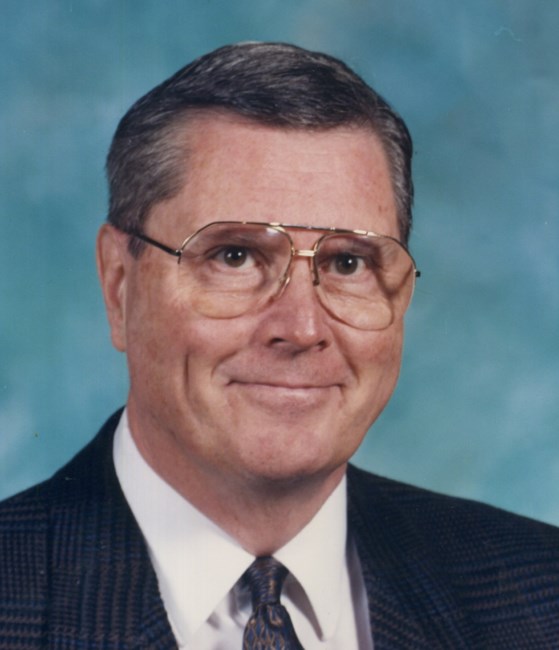
EARLY LIFEKenneth Cassidy (1932-2010) was born into a world beset by a shattering Depression. The son and only child of Maurice Cassidy and Mary (nee Wheeler) Cassidy, he grew up in a supportive and loving Irish household. His mother had nearly died at giving birth and her sister Irene Wheeler moved into the family home to help with the baby. Irene remained a part of that family for the rest of her life. Ken flourished under the lovg of Mary, Irene and Maurice.Ken's father, born in 1899, had been too young to join the First World War. As a train man working for CM, he was protected from conscription during the Second World War. Irene and Mary worked at Dominion, Steel and Coal ("Dosco"), which became Dofacso. Their three incomes provided Ken with an economic cushion at the time not enjoyed by many. Ken was raised to appreciate not only the moral strength of his immediate family, but also the bonds of friendship and community, as he grew into adulthood in a society immersed in hard times.As Mary Cassidy, noted "we were fortunate to all work throughout those years when so many lost everything." Indeed, their fortune allowed them to pay for the ten operations that were necessary for Ken's ears - without which he would have been deaf. Late in her life Mary also noted " we saw good people lose everything, children suffer because they could not afford medicine, with all of us working we were able to get Ken what he needed." While not a wealthy family, they were fortunate at a time when many neighbours and friends suffered.EDUCATIONThe Second World War ended when Ken was 13. His family being actively engaged in the Irish community. Ken attended elementary school at Daniel O'Connell. He then went on to attend the Jesuit run Loyola High School. A renown institution in Montreal, Loyola prepared young Catholic men for life and leadership in their community. Ken was to be the first of his family to attend and then go on to Loyola College. He graduated from the Loyola High School in 1949.Life, however, had another challenge for him. The summer that he graduated, Ken felt a pain in his knee. The possible diagnosis that the time was tuberculosis of the bone. As a result, Ken spent the next 3 years in a body cast His education delayed, he matured into adulthood lying flat on his back.He returned to Loyola College in 1952, There, he chose to study Commerce. Welcomed back to the Loyola Community, he threw himself into the life of a student and he became Student College president. He was then elected President of the Canadian Federation of Catholic College Students. He relished the life he had there. He was formed by the values of his family and his Alma Mater. Upon graduation from Loyola College in 1956, he was awarded the Loyola Medal.HIS LIFE-LONG VOCATION FOR EDUCATIONAfter graduation his entry into working life was a job in business. Not surprisingly for those who knew him, Ken did not find the world of business appealing. Rather, he remained inspired by the values of the community that had formed him. After he and his Aunt Irene had brought together the records of all the known graduates, he led a committee that founded an alumni society for Loyola College in 1957. From there, he returned to Loyola High School, where he found his vocation teaching English and Latin, beginning his career in 1958. He then attended St. Joseph's Teaching College to gain his academic credentials for teaching, and received his initial education degree in 1959. Much as he loved his Alma Mater, he left Loyola to join the Baldwin Cartier School Board in 1960 as a teacher. After one year, he became a Vice Principal at St. Thomas High School. In 1965, he was named its principal.During this initial period of his career, he also married Patricia Gain and had two children, Christopher and Janet. Although a devoted family man, Ken also managed to continue his formal education, and obtained his Masters of Education from St. Michael's College in Vermont. He and his colleague, Luc Enrico, would travel the long hours required to attend St. Michael's. In 1967, he was granted his Masters degree.Ken's pursuit of higher learning was never a dry pedantic one, nor was he interested in knowledge for some esoteric pursuit. He firmly believed that education, done well, could allow every student to reach his or her potential, ki spite of many challenges, he maintained this belief throughout his career, and consistently sought innovations in education to allow all students to flourish. Indeed, throughout his life, he was always able to see in each person unique talents. He went out of his way to reach out to students, colleagues, friends and acquaintances, and sought to spark in them the confidence and the desire to aspire to their fujl potential and to find their vocation.In 1965, Ken was appointed the first principal of the combined English and French school of St. Thomas High School. At St. Thomas, as part of his pursuit of excellence in education, he created the Gold Star program for-excel|ence. The success of this program was noted by the McGill Faculty of Education. Along with his friend, Oliver Nicholson, the City Manager of Pointe Claire, he also founded a student exchange program with Northumberland. Hundreds of students benefited, and their lives enriched, by the vision of Ken and his friend, Oliver.In 1969, he was appointed the first Principal of the elementary school, St. Charles. There he found a young and eager staff within a growing community. A large school with Vice-Principals, he continued his talent for Innovation in education. Pushing the boundaries of the traditional library, he created the Paul Barrret Learning Center, named after a young man who had died tragically. In the vanguard at the time, the learning centre broadened the concept of a lifcrrary, and acknowledged then emerging technologies, by incorporating multimedia centers and open learning areas. There, a student might work alone or collaboratively, using audio-visual equipment. Enriching and expanding upon traditional approaches to learning, more students, with diverse learning skills, could be engaged.In 1977, he transferred to Fathers of Confederation.School, also an elementary school, popularly known by students as "Pops of Con". Haying provided leadership in two new schools, "Pops of Con" provided Ken with new challenges and unseen opportunities to better the educational environment.Ken was known for his passionate pursuit of ways to improve the learning of his students. For instance, during a conference for educators, he was inspired by the insights of Roger Taylor, an American educator, who had identified what was then not a well-known problem with dropouts: many were amongst the most gifted and talented students. "Imagine a school", Taylor said, speaking to the assembled educators, "with a special group of students. These students have a private room. They have teachers dedicated to them. They have specialized equipment. The whole school supports them and knows their name. We call them the basketball team. Twelve privileged physically gifted students. Yet what do we do for the intellectually gifted?" asked Taylor. "Nothing. Today they drop out in growing numbers." Ken saw in Taylor a man who had observed the same phenomenon that he had In his teaching experience. The two spoke, and out of their conversations, Ken was inspired to lead yet another innovation effort, this time for a gifted education program at the Baldwin-Cartier School Board.Driven by his passion and sense of vocation, Ken recruited others as he sought to reinvlgorate the educational community. He believed teachers wanted to inspire their students, and he gathered around him those passionate educators who also sought to inspire. Through collaborative team effort, and this volunteer staff of devoted educators, Ken took on the challenge of creating a gifted education program. Roger Taylor shared his vision with Ken's colleagues. .With support of the board, the gifted education program was created at the Baldwin Cartier School Board.As a former "Loyolian", Ken valued the idea of school as a community. When he started at "Pops of Con", the school did not have a standard that inspired its students. Ken, inspired by the feats of Terry Fox, had an idea. Although Terry Fox's Marathon of Hope attracted little attention in Quebec, Ken believed that the actions of Terry Fox were heroic. He decided to change the name of the school, to honour an individual that adversity could not defeat and who could be a role model for students. Asked at the time why he was changing the name, Ken said, "Well, first no one knows who the Fathers of Confederation are. The children do not relate to them. Often we are called by people who think we are a monastery." He went on to say that "Terry Fox inspires them. We can build a community around him." And build It he did. Before many others had yet to understand Terry Fox's legacy, Ken already believed that Terry would become amongst the best known and loved of Canadians. Thirty years later, Ken's prescience has been confirmed.The election of the Roman Catholic President Kennedy in 1960 had been an inspiration to Ken. Kennedy's call to "ask not what your country can do for you, but ask what you can do for your country" built on Ken's Loyola experience, where he learned the Jesuit's call to become a man for others. Ken's offices over the years were always adorned not only with a bust of Kennedy but also an etching of Terry Fox.This call translated into his vision that excellence in education should not only inspire the gifted but also be inclusive of those less gifted. Ken believed in integration of the whole community, and was an early initiator of having students with Downs Syndrome take part in school life within regular classes. This was a balance that answered the challenge of the young Kennedy and reflected Loyola's motto of becoming a man for others.Having successfully founded the gifted education program, and after advancing the integration of the intellectually challenged, Ken also shepherded what was then a fledgling bilingual program to stability.Since the gifted program at Terry Fox proved to be a great success. Ken's colleagues, with whom he had created the program, put out a detailed three-volume manual that would guide other educators in the establishment of such a program.He then was asked to take the helm of a new elementary school, St. John Fischer, from which he took early retirement.Indicative of his personal philosophy, when asked why he had decided to retire early, he said, "Well, three years is not enough time to start a new project. I do not want to mark time. It Is time to allow a younger principal to provide leadership." Ken's vocation had always been about inspiring others to do their best. When he felt that the time had come to pass on the torch, he did so gracefully.A DEVOTED FAMILY MAM, FRIEN D AND SARTORIALISTNot only a passionate educator but a profoundly devoted family man, Ken married Patricia Gain in 1961, after a short courtship. The two were both members of the small but strong Irish community in Montreal, and were often seen dancing together at community events. The two shared not only love for each other, but a passion for education and inspiring others. During the time when Ken had found his vocation and was building his career as an educator, Patricia stayed at home to rear their two children, Christopher and Janet.As a young man, holding his III infant son In his arms, he called out to his wife, Patricia, "He has been shot." "He" was President Kennedy, a source of many personal inspirations for Ken and a source of hope for the Catholics once known as the "white niggers" of North America. Kennedy's death was a source of great grief for Ken. Ken passed on the legacy of this man to his children.Patricia, herself a product of Montreal's then Catholic all-girls Marionopolis College, shared Ken's commitment to the helping professions and to life-long learning. As their children grew older, Patricia would daily ferry the children to the babysitter, Ken to work, and then attend day classes herself at McGill University. She would end her day by doing the ferry in reverse. After six years, Patricia obtained her Masters of Social work. An innovator like Ken, she then set out to revolutionize the care of those that were then called the "mentally retarded". She continued to be active in social work until she retired In 1999.Ken and Patricia built strong bonds with extended family and friends. Their home was the setting for many social gatherings, during which Ken's wit, warmth and intelligence always shone, and the bar was also always well-stocked. Ken's drink of choice was a martini. Although he set high and tough standards in his professional life, Ken was easy-going with his friends.In 2000, after they both retired, Ken and Patricia traveled to Naples, Florida, to enjoy the winter sunshine and socialize with other "snowbirds", meeting with friends both old and new. They were also fortunate to have taken cruises to the Caribbean and to the Mediterranean, before Ken's health issues prompted the cancellation of subsequent planned cruises to Panama and another one to Northern Europe and Russia. Patricia had always wanted to visit China with Ken. Because he could not do so, Ken insisted that Patricia visit China with her sister, which she did for a month in 2005.Their children, Christopher and Janet, grew up to reflect the values of Ken and Patricia. Christopher attended Loyola High School, following in his father's footsteps, and went on to pursue graduate work and political activism. Janet attended dueen of Angels Academy, and then followed her mother, working for many years within the social service network.Ken was fortunate to have seen his grandchildren grow into fine young men. Sean Glithero, son to his daughter Janet and her husband, Ed Glithero, is fourteen years old and attending Ken's Alma Mater, Loyola High School. Liam Cassidy, son of his son Christopher Cassidy, is ten years old, attending elementary school.For those who knew Ken, remembering him is also to remember his love of all things sartorial. Although humble of his accomplishments, Ken believed that a man should always be proud in his appearance. Amongst his memorable ensembles are a Nehru jacket and pants, and a burgundy velvet jacket. He often told of meeting the designer, Sir Edwin Hardy Amies, of Savile Row in London, England fame. While attending a conference in Ottawa, Ken went shopping and purchased some Hardy Amies suits. The salesperson told Ken that the designer himself happened to be in Ottawa that] day, and invited Ken to have cocktails with the designer. On meeting Ken and hearing of the suit purchases, the designer said to him "Your wife will think you've gone totally mad!" Patricia was unstintingly supportive of Ken's work, as he was of hers. She was by his side throughout life's joys and challenges. In recent years, as Ken's health declined, she tirelessly kept his spirits high. Together they hosted two parties in the past couple of years: one on Canada Day, and, keeping with their heritage, a grand fling on St. Patrick's Day. Many will remember fondly the marvelous gastronomic feasts Ken and Patricia prepared, working harmoniously together in the kitchen as they in life's journey.Ken Grant assisted Ken in the last two years of his life. The Cassidy family extends much thanks for his friendship and support of Ken.Ken will be missed by his professional colleagues. He will especially be missed as a loving husband to Patricia, father to Christopher and Janet, grandfather to Sean and Liam, and friend to many.
Show your support
Add a Memory
Share Obituary
Get Reminders
Services
SHARE OBITUARYSHARE
- GET REMINDERS
v.1.18.0