
OBITUARY
Frank V. Wallin
30 January, 1912 – 18 July, 2011
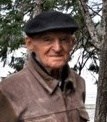
January 30, 1912-July 18, 2011
On Monday, July 18, 2011, Frank Wallin, beloved husband, father, grandfather and great-grandfather, went into the presence of the Lord. He was a man of faith his whole adult life.
He was preceded in death by his wife of 58 years, Thelma Nordquist Wallin and his granddaughter, Jessica Bunt Evans, and by his two sisters: Oda Wallin and Magda Lundquist of Denmark. He is survived by his three daughters: Carol Womack of Cleveland, Ohio; Mary (Dennis) Bunt of Federal Way, WA, and Eunice Overhulser of Salem, Oregon. He is also survived by his nephews Mogens (Karen) Olsen and Hasse (Eva) Lundquist of Denmark and his niece Barbara (Philip) Nordquist of Milwaukie, Oregon. He has seven grandchildren and six great-grandchildren.
Frank grew up in Denmark. In 1936, at the age of 24, he and a friend decided to bicycle around the world. Shortly after his arrival in India, he became converted to Christianity and decided to stay in India as a missionary. He met and married Thelma Nordquist while in India. Together, they served the Lord for twenty-five years in India. They moved to Puyallup, WA. Frank worked with juvenile delinquents until his retirement.
The memorial service will be Friday, July 22, at 1:00 p.m. at First Covenant Church, 3501 S. Orchard, Tacoma, WA.
TRUE STORIES FROM THE LIFE
OF
FRANK V. WALLIN
I grew up in Denmark in an entirely non-Christian community. My father was not a member of the state church so neither was I. I remember before I left Denmark I had been to church four times: twice for weddings and twice for funerals. That was all my contact with the church.
As I grew up I really had many things to enjoy. I had good health, I had a job and could get along, I had friends. But there still was something missing. I took up boxing and did fairly well. But eventually I decided something exciting would be to take a trip around the world by bicycle. I found another young fellow who had pretty much the same idea and together we decided to start on a bicycle trip around the world. We left Denmark in July, 1936.
Traveling down through Europe was an easy thing to do. The roads were really good and we really didn’t have any problems until we left Hungary and had our passports stamped saying that we had exited and could not come back. Then we came to the Yugoslavia border and had our passports but they demanded a great amount of money to get our bicycles into the country. So we were stuck. We could not return to Hungary because our visas had been cancelled and we couldn’t get into Yugoslavia because we didn’t have the money. There was a young fellow who spoke German and he kind of got excited about these two strangers. He got permission to invite us to his home so we stayed with him until we could manage to have money sent from Denmark.
We came to Belgrade. The Danish ambassador was a very friendly and understanding person but he strongly advised us not to try to go through Yugoslavia by bicycle. He assured us he would be ready to help us if we got into trouble. He wrote a letter to himself and said that if we got into trouble, we were to drop the letter into the post office and it would get to him. If we could not get the letter to the post office, we were to drop it in the street and because it was a very official envelope with the ambassador’s seal on it, it would no doubt get to his office. He said that if he got the letter he would know that we were in trouble and he would do his best to find us and help us. We never needed to mail that letter.
We had no difficulties in Yugoslavia but when we got to the Turkish border we had the same problem. They demanded a deposit for our bicycles. But the officer in charge allowed us to go to Alexandria. We were allowed to bicycle into the city. Somehow there was a police officer waiting for us and he kindly invited us to stay in the police station overnight. I am not sure what he would have done if we had refused. The next day the officer in charge allowed us to travel as far as Istanbul and get our money and pay the entry fee for the bicycles there. He told us that if we did not report to the police within three days we would be arrested wherever we were. However, we didn’t have any problem with that. While we were in Istanbul we became friends with a young fellow who spoke English. He was very friendly and interested in our trip, our background, where we came from and where we were going. It was only on the day when we left Istanbul that we learned that he was an officer in the Secret Police who had been assigned to check on us and see what we were doing and where we were going and just keep track of us.
Traveling through Turkey the roads were very bad. We came through some very well known places: Derby and Lystra where Paul had been stoned. In those days I hadn’t even heard about Paul. It was only later on that I realized what interesting places we had come through. The roads were bad but otherwise everything worked out all right. From Turkey we entered into Syria where they now have all kinds of trouble. We came through Aleppo. We followed along the Euphrates River and came through areas and cities where now they have real trouble with all kinds of fighting. Baghdad was quite peaceful during the time we were there. The road was flooded between Baghdad and Basra so we couldn’t cycle there but we managed to get on a river boat sailing down the river from Baghdad to Basra. In Basra we got jobs as sailors on an Indian dhow that sailed between India and Africa. This particular dhow was on its way back from Africa to India. Below decks they had cargo but there were no cabins. Everything was out in the open. The back part of the ship was raised up to be the same height as the railing around the whole boat. That’s where the captain piloted the boat. We spent most of our time up there. In front of this raised up part was a big box of the same height where the cooks sat and made the food. In front of that was another box of the same height which contained our water which we had hauled out of the river. We slept on the raised up part in the back. One night the sailors came over and grabbed hold of us, tied us up with rope and all of a sudden we remembered that before we got the job we had to sign a paper saying we traveled under our own responsibility. If we disappeared nobody could be made responsible. We had signed so many papers that it was just routine to us. But, in the middle of the night it looked different. We expected to be thrown overboard into the Indian Ocean. But they didn’t throw us out. Next morning they untied us and we realized they were afraid that we would roll over the boxes into the ocean so they had tied us up to a post so we didn’t roll out! Eventually we came to India. We had spent nine months on the trip.
Shortly after we arrived in India, Frej (pronounced Frī), my traveling companion, developed ulcers on his legs so it was difficult for him to bicycle. We were put in contact with some Danish missionaries. One was a nurse and she could help him with his ulcers. While we were there and I waited for Frej to be healed, I observed the lives of the missionaries and while we were there I accepted Christ as my Saviour. While I was still in India God gave me a distinct call to stay right on and become a missionary. So I stayed in India and started learning Marathi and started studying the Bible which I had never read before.
In due time I met Thelma who had come to India under The Evangelical Alliance Mission. We were eventually married and our three girls were all born in India. When we started out to get on the mission field, we worked among tribes of aborigines called Bhils. Most of the people we worked with lived in villages which were carved out of the jungle. We had many Indian co-workers—pastors, evangelists and teachers. We had a boarding school with about 120 boys. Thelma supervised the school and also ran a small dispensary for both the boys, to watch over their health, and the people in the villages. In addition to the boarding school, we had about twenty schools out in the villages. All together in the course of time many of the boys grew up to become teachers, evangelists and pastors.
People lived primarily in small villages near the jungle. Every once in a while a tiger would come out of the jungle and kill an ox or bullock which would be a great loss for a village. The animal could have provided his income for a year. So when there had been a kill they would often come and ask me to kill the tiger. I had a license and a gun so when people came and asked me to help, I would try to accommodate them and go out and kill a tiger. I killed one striped tiger and several panthers.
One day villagers came in and asked me come out because a tiger had killed a cow. The general routine is to that the tiger kills the animal the first night and drinks the blood of the animal that night. The second night he comes back to eat the carcass. So when you come out you may have a chance to kill him the second night. You build a platform up in the tree and then arrange the kill in such a way that you can see the tiger and get a shot at him. When we came out we built a machan, a small platform in the tree, and a couple of us got ready to be up there to shoot. For several reasons we were interrupted in the hunting and we didn’t get a chance to kill the tiger that night. The next day I decided to go out and stalk the tiger and kill him. I asked our pastor who was a good hunter to come with me but he had other things to do. The head master, also a good hunter, couldn’t come either so I went out alone to the village. When I got there, there were about a dozen men waiting for me. We walked into the jungle where the kill was and found where the tiger had been lying during the night and we followed his trail through the jungle. I had the gun. A fellow who had my cartridges was to stay near me and we started through the jungle, following the tiger’s trail. We came to a fire line. That’s a line where they remove the trees and bushes to keep the fire from jumping from one section to the other—I suppose it’s about 50 feet wide. I was already out in the fire line when I heard somebody behind me say, “There he is.” And then I looked up and sure enough, there on the trail we were following was a tiger sitting on the other side of the fire line right on the trail we were following. I was already in the fire line and there was nowhere to rest a gun while shooting but I thought a time like this could be a matter of life and death—I surely can’t miss it—so I aimed the gun and shot—and clear missed it! With a roar he jumped up and in big jumps came across the fire line. He was about 6-8 feet from me when he stopped and the two of us stood and looked at one another for a while. Then he turned around and went back to where he had been in the first place and I thought, “Well, all these people around me kept him from attacking,” so I turned and looked and there wasn’t a soul around me. All the men were sitting up in the trees here and there. Here I was, all alone with an empty gun facing an attacking tiger. Later I thought that when the men deserted me and climbed up in the trees, God probably sent a group of angels to protect me. I couldn’t see them but the tiger could. And that kept him from attacking. We were on a hillside and nearby there was a ravine and I thought if I could get higher up in that ravine, I could surprise the tiger from above and get a better shot. So I got the man with my cartridges to come higher up in the ravine with me. He pointed and said, “He’s over there,” and then he climbed up in a tree. As I looked over the ravine I could see the tiger was sitting there watching this guy climb up in the tree so there was no element of surprise any more. But out in the fire line one tree had been left all alone and I thought that if I could get up in that tree then I would have a good view of the tiger but I also realized that when I got up he would probably attack. Well, I looked at the distance from me to the tree and the distance from the tiger to the tree and thought that I could probably run faster to the tree than the tiger could. When I had decided that, I got up. As I expected, the moment I got up the tiger saw me, roared and jumped across the fire line. I was running for the tree from this side, and the tiger came running from the other side. Only, I was aiming for the tree; the tiger was aiming for me! I got to the tree first and I tried to put a foot on it and climb up. My foot slipped and I fell down and lost a few seconds on that. But there was a branch about three feet off the ground. When the tiger came to the tree, he didn’t need to jump. His head was level with my foot and I thought, “There, he got you anyway.” Of course, I was desperate to get out of the way. On my head I had a topi (sun helmet) and apparently I must have hit something so that this topi fell down behind my back. As the tiger stood there with his mouth open ready to grab me, this topi came down floating in front of him. He grabbed what was moving, which was my topi. I climbed higher up in the tree and turned to see if he was coming after me because tigers, too, can climb trees. But the tiger stood at the foot of the tree with my topi in his mouth. God shut the mouth of an attacking tiger with an old topi in answer to prayer. The tiger dropped the topi with a grunt as if to say, “I surely gave you a scare,” which he did! Then he walked across the fire line and sat down to watch me and to wait for me to come down from the tree. The target was a hunter’s delight—I shot once and he tumbled over. When we had waited for a while and didn’t see him move, I said to the guy in the other tree, “Go down there and hit him with a rock and if he moves, I’ll shoot.” But he said, “No, Sahib, you go down and throw the rocks.” So I did and eventually I hit the tiger and he didn’t move so we were quite sure he was dead. A tiger may appear dead but if you go over and kick him, the next thing you know is that you are the one who is dead! Then the men came out of the trees and came up. We tied the tiger to a branch and began to carry him out of the jungle. Just then, here came the pastor and the head master who I had asked to go with me. So when we met them I asked them how they found us. They said that outside the jungle there was a guy watching the cattle and they asked, “Have you seen Sahib?” “No,” he said, “I haven’t seen Sahib but a while ago Sahib shot and the tiger roared. After a while Sahib shot again. Now I haven’t heard anything for a while. By now I am sure one of them is dead.” So, I said, “When I asked you, you couldn’t go out. How come you are here anyway?” The pastor said, “After you left we felt there was something wrong so we called our people together to pray for you and we came out as quickly as we could.” While all this was going on in the jungle, there was a group of people sitting at home praying for me. I believe in prayer.
After twenty-five years in India, Thelma and I and the girls, who were now teenagers, returned to the United States. Thelma taught in the public schools and I worked with juvenile delinquents until I retired.
Arrangements under the direction of Powers Funeral Home, Puyallup, WA.
Show your support
Add a Memory
Share Obituary
Get Reminders
Services
SHARE OBITUARYSHARE
- GET REMINDERS
v.1.18.0