
OBITUARY
Han-Kuang Kuo
29 November, 1934 – 31 December, 2025
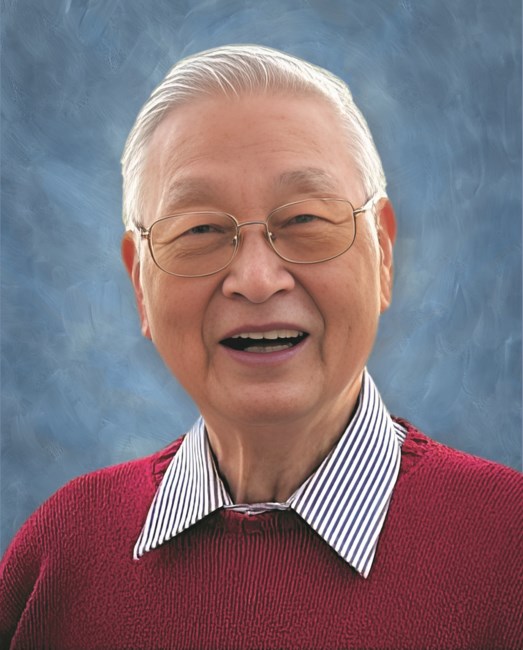
Han Kuang Kuo, 91, passed away on December 31, 2025, in La Jolla, California. In his final days, he was surrounded by his beloved wife, Ann (Man Shu) Kuo, their three children, six grandchildren, and extended family and friends. He felt their love, prayers and devotion, and was deeply comforted by their presence, before taking his most peaceful final breath.
Born in Nanchang, China, on November 29, 1934, to father Yu Tien Kuo, and mother Chu En Chang, Han Kuang was the eldest of seven children— four boys and three girls. His father pursued a career in the military, while his mother devoted herself to raising their family. Han Kuang spent his early years in Chongqing, China, before moving with his family to Taiwan in 1948.
He attended National Taiwan Ocean University (NTOU) and was a proud member of the school’s first graduating class in 1956. After completing his mandatory military service, Han Kuang entered the private sector, working aboard cargo vessels for various Taiwan shipping companies. His job took him all over the world for months at a time, traveling to the United States, South Africa, the Persian Gulf, Singapore, Malaysia, and many other countries in between. During his shore leaves, he courted the love of his life, Man Shu Hsieh, and they were married in 1963.
Han Kuang and Man Shu made their home in Keelung, where they raised their three children: Yung Hsiang (Benjamin), Yung Fen (Alice), and Yung Tai (Tony). In 1969, after years of dedication and hard work, Han Kuang achieved his captain’s certification in the merchant marine. Captain Kuo, as he was called, was then permitted to invite his wife to join him on his long journeys— enabling them to travel together to major ports around the world.
When Han Kuang decided that life on the seas was not what he wanted with three young children at home, he transitioned to an office role for the Teh Tung Shipping Company in Taiwan. He earned deep respect and trust within the company and was sent to New York City to lead expansion operations in the United States.
The family immigrated to the United States in 1974 and settled in New Jersey, where Han Kuang reunited with many of his younger siblings, who were studying and living in the U.S. His siblings looked up to their big brother, who was kind, generous, and a positive role model. Over the years, the siblings and their children gathered for holidays and birthdays, laying the foundation for the strong family bonds that continue to unite three generations today— from the siblings to their children, and now to the cousins’ children.
Han Kuang and Man Shu— who adopted the American name Ann— enjoyed their life in New Jersey, raising their three children. Ann worked at Summit Bank for many years, while Han Kuang commuted to York City and Jersey City for work. The couple had a very active social life, reconnecting with many former classmates and friends from Taiwan, who had also settled in the area. They gathered on many weekends to ballroom dance and sing karaoke. Han Kuang loved to sing and had a soothing voice. Their outings kept them active and strengthened their lifelong friendships.
In 2013, after 39 years in New Jersey, Han Kuang and Ann moved to San Diego to enjoy retirement in the beautiful weather, and to live near their son Tony and his family. In recent years, they became members of the Glory Christian Church of San Diego. They were baptized in 2022, accepting God’s love, grace, and presence in their lives. The church community has brought them fellowship, a sense of belonging, and many wonderful new friends.
In his retirement, what brought Han Kuang the most joy was spending time with his grandchildren—Justin, Jillian, Collin, Nina, Kyla and Kaze— who were his pride and joy. They fondly remember their smiling grandfather— Ye Ye, as they called him— as patient, curious, and always happy. Ye Ye loved to cook— he knew the grandchildren’s favorites were his homemade baozi and scallion pancakes. Though the process was a lot of work, he would skillfully knead the dough, then joyfully watch as his grandchildren fold the bao just as he had taught them years ago. He had perfected these recipes and loved passing down his techniques for preparing traditional Chinese foods, which his grandkids will continue to make in his honor.
Han Kuang was preceded in death by his parents; his sister Han Cheng Hsu and her husband Lin Hsi Hsu; brother-in-law Shih Chieh Lee; and sister-in-law Jun Ling (Wang) Kuo. He is survived by his devoted wife of 62 years, Ann; his son, Benjamin Kuo, and his children Justin and Jillian; his daughter and son-in-law, Alice & Greg Gernhardt, and their children Collin and Nina; his son and daughter-in-law, Tony and Marcella Kuo, and their children Kyla and Kaze; his siblings, Han Hsiung Kuo and wife Sha Sha; Cheng Ying Lee (Han Lan Kuo); Han Cheng Kuo; Han Yu Kuo and wife Hsiu Chin; Han Hwa Hung and husband Jenn Duan; and many loving nieces, nephews, grandnieces, and grandnephews.
Services will be held on January 24, 2026, at El Camino Memorial - Sorrento Valley, 5600 Carroll Canyon Rd, San Diego, CA 92121. Visitation will take place from 10:30-11:30 AM, followed by a funeral service from 12:00-1:00 PM. Han Kuang will be laid to rest during a private burial on January 27.
Memorial donations in Han Kuang’s honor may be made to Glory Christian Church of San Diego. Donations may be mailed to:
Glory Christian Church of San Diego 9888 Carroll Centre Rd, Suite 100 San Diego, CA 92126
Please indicate in the memo section of your check, “In memory of Han Kuang Kuo”.
****
Eulogy from Han-Kuang Kuo daughter Alice,
Today we gather to honor and remember my father — a man whose happiness came naturally and whose smile was effortless. No matter what kind of day we were having — good, bad, or somewhere in between — my dad had a way of lightening the mood. I remember him coming home from work every evening around 7 PM. He would come through the garage door singing a little tune, just to announce that he was home. That was his way of saying, “I’m here, my lovely wife and kids.”
My dad loved sports — but he was not the loud, yelling, referee-blaming kind of fan. He appreciated the competition and the skill of the athletes. He watched everything: baseball, basketball, tennis, ice skating, gymnastics, the Olympics — honestly, the list goes on. One year, we drove to Williamsport, Pennsylvania to watch the Little League World Series championship game when the team from Taiwan made it to the finals. It was a fun time — long hours in the car, family time together, and cheering alongside hundreds of other Taiwanese immigrant families. That day was memorable for all of us. Dad was a New York Yankees fan — probably because they were world-famous and conveniently available on one of our local TV channels. My brothers and I, however, were Mets fans, mostly because Channel 9 aired Westerns, which my brothers watched, and then the Mets games came on. Back in the day, it took effort to change the channel. Despite rooting for rival teams, there was never angry trash talk in our house. I think that’s why I enjoy watching sports today. How could I not, growing up in that environment? Basketball may have been his favorite sport. I have faint memories of him playing basketball with classmates at his college reunions. He and my mom were also fully swept up in “Linsanity” —some of you know what I’m talking about. For the past 40 years, he enthusiastically followed University of Michigan football and basketball, thanks to our family’s strong Michigan legacy. More recently, he added Purdue football and basketball to his list. We made sure his TV subscriptions let him watch all his beloved teams — and while he wasn’t exactly fluent on the internet, he did figure out how to find Michigan football highlights on YouTube. We were very impressed by that.
My strongest childhood memories are of family gatherings — holidays and birthdays spent with Po-po, aunts, uncles, and cousins. Family was at the center of my father’s life. Three generations gathered multiple times a year, and those moments brought him immense joy. While we kids played, our parents chatted — loudly — and cooked incredible food. Cooking was how our parents showed love. My dad was especially famous for anything involving dough. Bao zi, jiao zi, cōng yóu bǐng — his were the gold standard. No one could make bāo zi pí or jiǎo zi pí as soft, silky, and perfectly white as his. Other people’s versions would sag or come out dull, but his were always of high quality. He never wrote recipes down. Everything was by feel. Over the years, we hovered around him, trying to capture ingredients, proportions, techniques — learning by watching and doing. Even in his later years, when he cooked less, he was still watching YouTube videos of others making bao zi, picking up new tricks and quietly improving. That meant we had to update our recipes — again. Just this past Thanksgiving at Debbie’s, he was right in the middle of the action, advising on kneading, wrapping, and frying. He knew — and we knew — he was still the best.
Another family tradition my dad nurtured was our love of crabbing. When we were young, he’d pack the crab traps into the car and take us to marshy spots in New Jersey or Long Island. We’d set up lawn chairs on a bridge or overpass, drop the traps, and spend the afternoon pulling them up every few minutes with excitement. Sometimes he’d even drop a fishing line and see what he could catch. It must have been fate that my college boyfriend — now my husband, Greg — also grew up crabbing in Old Saybrook, CT. On Greg’s first visit to our home in New Jersey, my parents welcomed him with open arms — and a six-pack of Heineken. They figured that with a German last name, he must be a beer drinker. At our wedding, my parents showed off their ballroom dance skills. When the DJ started the music, my parents — along with their friends — burst onto the dance floor. In seconds, the room turned into a synchronized ballroom performance. That started the party for us.
Greg introduced us to a different method of crabbing: weighted lines baited with chicken legs. Our crabbing tradition has continued for over 30 years. At first, it was just my parents visiting us in Connecticut. Then my brothers and their families joined. Year after year, more extended family joined and grew the gathering to what it is today — with a record attendance of 65 people one summer. My dad loved being surrounded by everyone — catching crabs, soaking in the sunshine, listening to children laugh and run around. Even in his later years, he walked from the house to the dock every half hour to check the lines — probably logging 10,000 steps a day. This past summer, he did it with his walker. Nothing could stop him. Crabbing gave him both peace and excitement, and he was always happiest when he was in the middle of family life.
My father taught me that happiness doesn’t come from big things. It comes from love, togetherness, and being generous to others. So many studies say that strong relationships with family and friends are the key to a long, healthy life. Looking around at all of you, it’s clear — you helped give him exactly that.
爸爸, I will miss those easy, playful chuckles we shared. I will always cherish your smile and warmth. You will forever live in my heart.
*****
Eulogy from Han-Yu Kuo: 大哥生平
我是郭漢光的小弟郭漢渝,我們家一共有四兄弟三姊妹,大哥和我相差十四歲,今天我代表我的兄姐妹們在這裡和大家敘述在我們心目中的大哥.
我的父親從黃埔軍校六期畢業後參加北伐,松滬及抗日戰爭,勝利後留守重慶,我大哥出生在江西南昌,他小時的生活是在一個不用為經濟操心及長輩關愛的家庭中長大,民國49年我父親因調職遷台,將我們的家庭安頓在台灣南投後,就馬上到金門任職. 家𥚃就由大哥及大姊幫忙母親照顧弟妹 .
後來我聽父母說大哥在台中一中畢業後考上了台中農學院和基隆海專,大哥為了減輕父母為弟妹們學費的負擔和將來就業後的薪資能幫助弟妹們安心上學,就放棄了四年大學而選讀三年制的基隆海專。在我小學三年級的時候,我們家因父親的職務搬到基隆,那時大哥常常回家幫助家務,教我們游泳及帶我們玩耍。
大哥平常非常樂觀,平易近人,對弟妹也非常的觀愛和照顧,從來不會責駡弟妹,大哥在海專航海系畢業後進入復興輪船公司任職,薪水豐厚,他都將薪資繳給父母幫助弟妹完成大學學業及來美深造,我們三兄弟都能順利完成博士學位。
大哥一家來美後在New Jessy 定居,每逢假日,因爲我在波士頓MIT讀書,他都會邀請我及家人去他家過節團聚,後來我的兄弟姐妹也陸續搬到紐英格蘭,每逢年終假期我們都會輪流在各家聚會聯絡感情,我們的下一代因常玩在一起,長大後也非常的親切,後來大哥的女兒Alice及她夫婿Greg也繼續了我們的傳統,每年夏天都在他Connecticut 海邊的家中辦一次family Reunion,已經連續辦了十多年了,每年大家都會去參加這聚會,熱鬧非凡,甚至有多到60人的記錄。因為常見面,我們下二代的子女們都處的非常的和睦親切。2013年我和大哥都因兒女及氣候關係從東部搬到加州,我們也常常見面。
大哥在抗戰勝利後,曾隨著父母回到家鄉浙江青田住了兩個星期,拜見了長輩也見到了堂兄弟們,還和他們在小溪池塘捉魚玩耍,在2009年時大哥帶著我們一起回去尋根祭祖。我們一共有二十幾位浩浩蕩蕩參加這趟的尋根之旅,見到了堂兄弟們都感覺非常親切,同時也對我們的家鄉及親友家族們有了多一層的認識。
大哥的一生孝順父母,愛護弟妹,待人處事和藹可親,熱心服務,都給弟妹們做了最好的榜樣。大哥身體一向健康,本以為還會和我們相聚多年,沒想因為腦中風突然離世,讓我們悲痛不已,在東部的弟妹及姪兒女們聽到這個不幸的消息,都馬上決定要來參加大哥的葬禮,由此可見大哥在我們心中的地位。我們非常不捨大哥的離去,但是我們也會在心中永遠懷念他。
I am Kuo Han-Yu, the youngest brother of Kuo Han-Kuang. There are four brothers and three sisters in our family, and my eldest brother, Han-Kuang, was fourteen years older than me. Today, on behalf of my siblings, I would like to share how we feel about him.
Our father graduated from the sixth class of the Huang-Pu Military Academy and participated in the in the civil war for China unification, the Battle of Shanghai, and the War of Resistance against Japan. After the victory, he stayed in Chongqing. My eldest brother was born in Nanchang, Jiangxi Province. He grew up surrounded by the love of his elders in a time when he did not yet have to worry about money. In 1949, my father was transferred to Taiwan. After settling our family in Nantou, he immediately went to serve in Kinmen to defend against the Communist invasion from Mainland China. During this time, my eldest brother and sister stepped up to help my mother care for the younger children.
Later, my parents told me that after graduating from Taichung First Senior High School, my eldest brother was admitted to both Taichung Agricultural College and Keelung Maritime College. However, to ease the financial burden on our parents and to ensure his future income could support his siblings’ education, he gave up a four-year university degree. Instead, he chose the three-year Keelung Maritime Professional School to enter the workforce sooner. When I was in the third grade, our family moved to Keelung for my father’s new assignment. I remember that my eldest brother often came home to help with housework, teach us to swim, and play with us.
My eldest brother was always optimistic, approachable, and loving. He never blamed us for the burdens he carried. After graduating from the Department of Navigation, he worked for the Fuxing Shipping Company and earned a good salary. He selflessly gave his income to our parents to help his younger siblings complete university and pursue graduate education in the United States. Because of him, all three of us younger brothers were able to successfully complete our doctoral degrees.
Eventually, my eldest brother's family moved to the United States to pursue better educational opportunities for their children. They settled in New Jersey. Because I was studying at MIT in Boston at the time, he always invited my family to his home for holiday reunions. Later, as more siblings moved to New England and New Jersey, we took turns hosting holiday gatherings. Now, his daughter, Alice, and her husband, Greg, carry on this tradition. For over ten years, they have hosted our annual summer reunion at their waterfront house in Connecticut, inviting the entire Kuo family. Every year, 40 to 60 family members—including the second and third generations—attend. We look forward to this event deeply; it allowed our children to grow up close to one another. In 2013, my eldest brother and I both moved from the East Coast to California, enticed by the pleasant climate and the desire to be closer to our children. We were fortunate to visit each other often.
Looking back to his childhood, after the victory in the War against Japan, my parents took my eldest brother back to our hometown of Qingtian, Zhejiang, for two weeks. There, he visited our elders and met our cousins, even playing in the streams and catching fish with them. He developed a connection to our distant relatives that the rest of us did not have. In 2009, he led over twenty of us back to our hometown to trace our roots and pay respects to our ancestors. We were warmly welcomed by our cousins, gaining a much deeper understanding of our heritage.
Our eldest brother was a devoted son, always filial to our parents, loving toward his siblings, and kind to everyone he met. He set the best example for us as we grew up. Because his health was always good, we thought we would have many more years with him. We are devastated by his sudden passing from a stroke. The fact that our siblings, nephews, and nieces on the East Coast immediately decided to fly in for his funeral demonstrates his profound importance to us. We are deeply saddened by his departure and will cherish his memory forever.
***
Eulogy from Jillian Kuo
Hi everyone, it’s heartwarming to see you all, though I know we wish it were under better circumstances. My name is Jillian and I am Ye Ye’s oldest granddaughter. It is an honor to speak today on behalf of the younger generation to reminisce on how Ye Ye touched our lives.
I’ll be honest, I struggled to write this piece as I felt I couldn’t capture what seemed to be Ye Ye’s epic journey of life in 5 minutes. He was a military man, a ship captain, an immigrant who forged a new life for himself, his family, and generations to come. His story could probably be turned into a book, a new age Odyssey if you will.
But to me, he was Ye Ye, the ever smiling, ever so sunny grandpa that filled the kitchen with sounds of the mixer beating baozi pi and the smells of freshly fried cong yo bing. I always knew Ye Ye was there, first because well, you could hear his snores from across the house–and those snores were passed down to all the Kuo men–but after that, by the sound of his slippers sliding across the floor, and then by the inevitable, “Jillian!”, an excited greeting to welcome the day. And he did this with everyone, all the cousins, all the aunts and uncles. A cheery grin, and little laugh, and the classic shake of the hand–”Oh Collin! Yeah yeah Hahaha”
And those little moments are, in some ways, the memories that I appreciate the most. Because to me, Ye Ye was the center of our family. He was the pork filling of the bao zi. It was Ye Ye’s world, and we were all just living in it. This was most evident that year when we were celebrating the August birthdays at family reunion with cake, and Ye Ye decided, despite his birthday being in December, to stand right in front with everyone else, just happy to be there. Being with Ye Ye meant being with family, and being with you all is something I treasure deeply.
While this is a sad day, what I believe Ye Ye would have wanted most is for all of us to smile. In his words to Nina when she was applying to colleges, “Don’t be sad, you have good school Michigan waiting for you”. So to honor his positivity, here are a few more of my favorite Ye Ye moments:
● Justin and I would sit on the couch in his house in New Jersey, looking into the yard for any deer that wandered by
● I visited him and the San Diego Kuos during college, made bao zi for me to take back, I then subsequently forgot the baozi in the freezer, and Kyla & Kaze called me to excitedly thank me for the baozi that they then ate
● The iconic video of Nina, Nai Nai, and Ye Ye dancing to Obsessed by Mariah Carey–ask her if you want more info
● Lastly, for his 90th birthday, we did a White Elephant gift exchange in San Diego with the immediate family. If you haven’t done one of those, this is where you open a gift one at a time and then other people can steal your gift. Ye Ye unwrapped a massage gun, which he was very chuffed about getting. Uncle Greg then thought it would be hilarious to tell Nina to steal the massage gun. Ye Ye’s face when Nina said she was going to take it was a mix of confusion, sadness, and betrayal. In fact, he was so confused, that Nina felt incredibly guilty and ended up just awkwardly walking away. No one else tried to steal it, and he was happy the rest of the night.
I hope some of those stories made you smile. I know that wherever Ye Ye is, he is smiling with us, happy to be loved and celebrated by his family. And that’s what matters most–being together, sharing smiles, and making memories to cherish for this lifetime and beyond.
Thank you :)
Show your support
Add a Memory
Share Obituary
Get Reminders
Services
SHARE OBITUARYSHARE
- GET REMINDERS
v.1.18.0