
OBITUARY
Richard B Speed
24 October, 1917 – 24 February, 2019
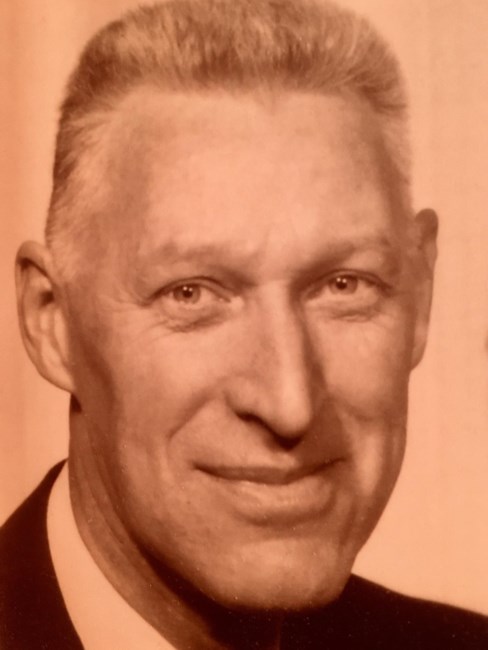
Richard Berry Speed was born in New Jersey on October 24, 1917, the son of Richard and Elizabeth Speed. As a child, he was influenced by his father who was a sketch artist for the New York Post. As a young man he was influenced by the Depression which set in when he was twelve years old and lasted until after he graduated from Columbia University in 1939. During his first year at Columbia, he was on the crew team. Thereafter he focused on his studies. Although he was always interested in astronomy and architecture, he chose not to major in either of those fields because nobody was hiring architects or astronomers during the depression. Instead he made the practical choice to major in chemistry, a field that he thought would give him the best shot at a job after he graduated.
Meanwhile he met and married Harriet Caltis, and the two moved to Boston in 1940 where Richard began research work at MIT. During the Second World War, he was recruited to participate in a top-secret wartime project that took him and his new wife to a secret city located at Oak Ridge, Tennessee. There he was one of thousands of engineers and technicians who participated in the Manhattan Project. Meanwhile, Harriet became one of the thousands of “girls of the atomic city” who supported the enterprise.
Once the war was over, Richard and his wife drove across the country, eventually settling in Southern California. Shortly thereafter they began a family, having three boys, Richard Jr., Jeffrey, and Keith. Meanwhile, he designed a new home in West Covina where the family lived until moving to a new home in Orange County that Richard also designed.
Meanwhile, during the Cold War Richard worked for a number of defense subcontractors and moved up into the management ranks until finally taking a position with the Northrup Corporation in Hawthorne where he played a leading role in negotiating with the Navy for the construction of the F-18 fighter jet.
Finally he retired and moved to the desert that he loved and settled in Indio where he designed and built two more homes. Simultaneously he devoted himself to caring for his wife Harriet who was stricken by Alzheimer’s disease. While undergoing this ordeal, he met Dorothy McIntosh whose husband was also suffering this terrible affliction. After their spouses died they settled in together. Dorothy was Richard’s second great love. After her passing, he lived independently on his own terms until his recent passing.
In life, he was a man of reason and compassion, equally at home discussing science, philosophy, history and music. He enjoyed both classical music and that of the Big Band era. And he loved to dance.
He will be missed by his children, and by all who knew him.
Services will be held at Fairhaven Memorial Cemetery in Santa Ana, California on Monday March 11, 2019.
In lieu of flowers, donations may be made to the Alzheimer’s Association in his memory at alz.org.
Show your support
Add a Memory
Share Obituary
Get Reminders
DONATIONS
Services
SHARE OBITUARYSHARE
- GET REMINDERS
v.1.18.0