
OBITUARY
Wilma Fielding Lasser
28 February, 1929 – 21 October, 2024
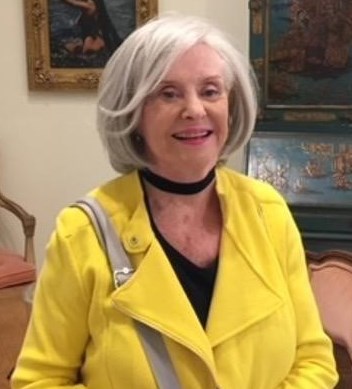
Shortly after her death, family and friends gathered for a Celebration of Wilma's life. What shined through in the celebration was the warmth, acceptance, and encouragement that Wilma radiated to everyone whose lives she touched. Wilma loved generously and was widely beloved.
Wilma also fully embraced her romantic and creative sides. "Dancing and romancing," Wilma often said, were her twin passions, and she was able to follow those passions throughout her life. The creative and romantic impulse that animated her and brought her joy, at times, also brought with it a sense of sadness and unfulfillment, but it never ceased to be a source of expansive feeling and free self-expression.
Family and Close Friends--Wilma's Heart Center
Wilma was especially close to her two sons, Glen and Randy Fielding. Both found their mom's model of compassion and creativity, coupled with her gentle guidance, to be an inspiration and an indispensable support as they found their own path in life. Wilma stayed in steady touch with Randy and Glen over the decades even though they built their adult lives in the Midwest and Pacific Northwest, respectively, while Wilma always lived on the East Coast (in New York City and Long Island for the first 65 or so years of her life, and then in Florida).
Wilma was also close to her larger family, including Kris, Randy's wife for more than four decades, who was always dear to Wilma, Yvonne, Glen's wife, with whom Wilma shared a love of dance, and Wilma's grandchildren and great-grandchildren. Wilma's heart would have smiled knowing that her sons, daughters-in-law, and grandchildren all participated in her Celebration of Life (and that her oldest great-grandchild, who could not attend, wrote a beautiful tribute to be shared).
Wilma had a long marriage to Maxwell Fielding, Glen and Randy's dad. Though the marriage was punctuated by several periods of separation and ended in divorce, Wilma always spoke about Maxwell in a caring and respectful way, and he, in turn, spoke of Wilma that way. There were problems in the emotional life of the family, but there was also love and mutual respect.
In addition to Wilma’s marriage to Maxwell, she had two other marriages, one to Edward Pepper, from 1983 to 1984, which ended in an amicable divorce, and a second to Leonard Lasser, in 1986, which ended four or five years later upon Leonard’s death. Wilma also had a long-term committed relationship with Samuel Kaufman, with whom she lived in Glenridge until his death in the mid 2000s.
In her early eighties, Wilma developed a sweet and happy relationship with Addison Lesser, also a member of the Glenridge community. Unfortunately, Addison died a few years after they fell in love. Wilma nonetheless felt fortunate to have found with him the kind of connection she had been longing for.
Wilma had a lifelong, loving connection to her brother, Lee Guth, who was four years younger than she. Wilma spoke about Lee with the fondness of a big sister who was proud of her little brother and always kept an eye out for his well-being, even when he was fully grown and successful.
Though Wilma did not have a biological sister, her sister-in-law, Maxwell's brother Marty's wife, Rel Fielding, was like a sister to her for more than 75 years. Rel always said that when she faced difficulties in her life, the first call she would make would be to Wilma. The two "sisters" sometimes had different perspectives on life matters, but they remained open to what each could learn from the differences. When Wilma and Rel were young mothers, Glen and Randy played regularly with Rel's children, their cousins, Rory and Brad, and the bond between Rel and Wilma was extended to a bond among the next generation.
Wilma's friendships were widely inclusive, both in her life in Huntington, NY, and at the Glenridge in Sarasota, and many friends came to her Celebration of Life. She also befriended caregivers at the Carroll Center, Glenridge’s skilled nursing center, where Wilma spent the last months of her life. Many of Wilma’s caregivers spoke to Wilma's family at her death about how much a source of light she was for them.
Early Years
Wilma was born and raised in the Bronx, the northernmost borough of New York City. Her birth year, 1929, was the same year that the Stock Market in the U.S. crashed, initiating the Great Depression. Wilma often commented that she was a "Depression Baby," and her family struggled with economic insecurity throughout her childhood and youth. Her dad, Arthur Guth, was an inventive and skilled electrician but not an especially good manager of the business side of his trade. Arthur’s less-than-reliable income added to the Depression-related economic insecurity that the family experienced.
Wilma’s mother, Caroline, who herself had an artistic flair, danced in the 1920 as a flapper, and later in life opened a charming antique store in Manhattan, The Antique Box. Caroline’s warmth and artistic sensibility had a lasting impact on Wilma.
Caroline and Arthurs’ parents, Wilma’s grandparents, had come to America in the late 1890s in the great wave of Ashkenazi Jews from Central and Eastern Europe at the time. But neither Caroline nor Arthur were religious Jews, and Wilma was raised in a secular home. She maintained a secular and decidedly nonreligious outlook throughout her life.
Forming her Identity and Making Her Way
By age 14, Wilma had mastered the hour-long commute by bus and subway from her family's apartment on Hering Avenue to midtown Manhattan, where she studied ballet a couple of times a week. For a short while, she also took modern dance at the storied Martha Graham Studio. While the Bronx had seemed parochial and meager to Wilma, Manhattan and dance had held out the promise of a richer, more cosmopolitan experience.
Later, in her twenties, Wilma danced for about five years with the Orlando Ballet Company in Huntington, Long Island, where she and Maxwell raised Glen and Randy.
Though the Orlando studio offered many ballet classes, Orlando's performance repertoire centered on Afro-Caribbean dance. Wilma was drawn to the primordial elements of African-Caribbean styles, with feet stamping out rhythms against the ground, twisting torsos, and sinuous bending. This kind of dance had an earthy grace compared with the more ethereal grace of ballet.
Along with dancing and being a wife and mom, Wilma worked as an interior designer, and, for 17 years, owned and operated the Gazebo, a boutique clothing store she opened in downtown Huntington in the 1960s that featured unique dresses and jewelry from India. Wilma also painted periodically with a kind of impressionistic style and wrote poems to loved ones that conveyed how special each was to her.
Dance as a Life Throughline
While dance was never a full-time pursuit, it was nonetheless a thread woven throughout Wilma's life. It was a lift into a world of beauty, creativity, and grace.
When Wilma retired from her life in Huntington and moved into the retirement village in Sarasota, she became a serious student of ballroom dancing and won a couple of awards for her ballroom artistry. Wilma loved the Latin dances, with their swaying hips, smooth turns, and celebratory sensuality. This kind of dancing reminded her of the Afro-Caribbean style she performed with Orlando.
As Wilma moved into her eighties and early nineties, she embraced dance as much as an inner presence as an outer one. She no longer performed. But she continued to be stirred by the spirit of dance, to hold herself with a dancer's poise, and to draw from the well of beauty that dance had made full.
Wilma's legacy lies in the love, warmth, and creative expression that she nurtured in her family and shared with her friends. She lived life from the heart, in close touch with her innermost feelings, and realized her dream of living and dancing with beauty.
Show your support
Add a Memory
Share Obituary
Get Reminders
Services
SHARE OBITUARYSHARE
- GET REMINDERS
v.1.18.0