
OBITUARY
Giovanni Mannello
14 March, 1925 – 21 October, 2017
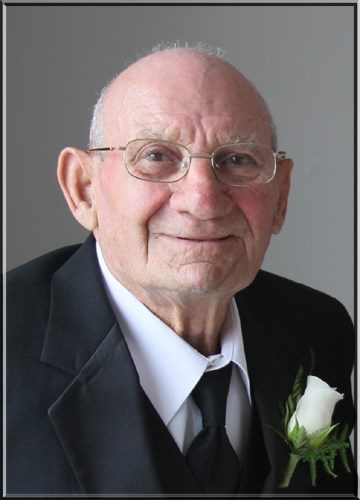
Giovanni Mannello was a warm-hearted and well-liked individual, and these wonderful traits came easily to him because he was such a sociable and amiable person. Being a man with a curious nature, Giovanni always sought out the scene of where the action was. He was a talkative person who typically said what he meant. He was someone who was always making certain that those around him had whatever they needed.
Giovanni was born on San Vito sullo Ionio in the province of Catanzaro, Calabria, Italy to Giuseppe Mannello and Francesca Bertè. Giuseppe and Francesca were born in the town of Milazzo Sicily, province of Messina, January 17, 1880 and February 13, 1885 respectively. On Dec. 28, 1908, the Messina earthquake and subsequent tsunami devastated southern Italy . Giuseppe and Francesca relocated to San Vito sullo Ionio, Calabria. They left their parents Gaetano Mannello and Caterina Andaloro, Francesco Bertè and Concetta Amato along with many aunts, uncles and siblings to start their married life together. Giuseppe was the fourth born with seven sisters; Caterina (Antonio Andaloro) Pasqua (Giuseppe Piccolo), Grazia (Salvatore Giorgianni), Maria (Matteo Russo), Giuseppa (Salvatore DiPasquale, Natali Vincenzo Visalli). Francesca Bertè was the second born of sixteen children; Giuseppe & Rocco (died young), Giovanna, Giuseppa (died in infancy), Salvatore (Rosa Foti), Giuseppa (Agostino Cambria), Angela (Letterio Iannello), Santa (Arturo Malesci), Giuseppe (Febronia Pizzurro), Rocco Lucio (died in infancy), Concetta, Francesco, Stefana (died in infancy), Stefana (Ernesto Formica) and Pietro (Rosa Scolaro, Giuseppa Genovese). Back in San Vito, Francesca gave birth to 11 children, one died at birth. The Mannello children were born in the following order;
1) Gaetano married Maria Grazia Leone had 6 children: Ada, Giuseppe (Pino), Maria, Franco, Silvio and Achille.
2) Francesco wife Checchina Barbuto had 4 children: Fernando, Elsa, Peppino and Franco.
3) Giuseppe (Peppino) married Bettina Ciccone had 2 children: Luciana and Mauro.
4) Gino (Eugenio) married to Lalla (Adelaide) Bongarzone had 2 children: Luzzo and Maria.
5) Ernesto (Nino) married Celesta Palmieri had 4 children: twin girls Rosetta and Maria, Vito and Frank.
6) Romilda married Giuseppe Doria had 3 children: Marisa, Alberto, and Ciccio.
7) Esterina married Matteo Faga had 4 daughters: Renata, Maria, Olga and Silvana.
8) Adelina married Salvatore Cavallaro had children: Renato and Anna.
9) Salvatore died an infant at 6 months.
10) Giovanni married Caterina Iezzi had 4 children: Mario, Joyce, Robert and Lori.
11) Guido 1st wife Giovanna Purcaro, had 2 children, married 2nd wife Raffaela Esposito and had 2 children: Alessandro
and Francesca.
Giovanni and his siblings had the typical rivalries while growing up, but they cared deeply for one another. In adulthood they lived miles apart and his brother Ernesto who lived in Toronto would be his closest relative. During his childhood, he learned to be reliable and respectful. Giovanni was an obedient child who wanted to win the favor of others. The family business was a group effort and although Giovanni was quite young, he put in his share of the work. He found it easy to show sympathy and to perform kind acts for others. These admirable qualities would become a part of Giovanni's personality throughout his life.
Giovanni was frequently the one to initiate activities with his family, like an outing to the beach or catching a movie downtown. Artistic and romantic, he was moved by the opera and had dreams of playing the clarinet as a child. He would often sit outside the opera house in Italy and take in the music that filtered out through the walls. Giovanni was peace-loving and worked conscientiously to keep typical family spats at bay. Though sports was not of particular interest to him, he was an excellent dancer and loved long walks. His walks would bring him to Bellevue Park where he could visit the animals in the zoo and admire the new growth at the greenhouses. On one occasion, he was working on some alterations on a pair of men’s pants when he ran out of thread. He told his wife he would walk downtown to Woolco for the thread and be right back. Four hours later he would return saying, well it was on the way so I walked to Bellevue Park. The walk to Woolco was 1.6 km or 20 minutes. The walk to the park was 6.2 km or a one hour walk.
There was one thing that all of Giovanni's friends knew and will still remember, and that he had a curious nature. He loved to socialize and talk to anybody about anything. This quality is one of the primary reasons that Giovanni was such a popular person throughout his life. Back around 1962 while on one of his adventures, Giovanni stopped in at the passenger train station to see the new arrivals. He noticed a young man in tears so he approached him and asked what was wrong. The young man told him he missed his stop in Toronto and was lost, but had a brother in the Sault. When Giovanni asked to his brother was, he replied Gennaro Martella, and to Giovanni’s delight Gennaro was his neighbour. Giovanni cheerfully brought the young man, Domenico Martella to his brother who lived on St. Andrews Terrace. Giovanni was also dependable, loyal and trustworthy. He was the kind of person who simply radiated good fellowship. While he maintained personal standards and his own personal values, Giovanni was very accepting of others. When Giovanni made friends, he made true and lasting friendships. While growing up in Italy, some of his best friends were his closest siblings and neighbourhood kids. Later in life after immigrating to Canada, he became friends with his neighbour and best friend Domenico Panico, Vittorio Fata and Frank Reda who was also a colleague at the veneer mill where many friendships were made. His neighbours Gennaro and Giovannina (Marta) Martella were good friends and became ‘compare’ and ‘comare’, son Robert’s godparents. His friends (Paesani) from his home town area who also moved to Sault Ste. Marie were Annunziata and Vincenzo Vavala, the Pitaro, Iozzo, Fabiano, Gulli and Ritrovato families. Many a night was spent enjoying wine food and talking about life in the old country, World War II and the sacrifices they made. In the bonding of Baptism, his extended family became comare Eugenia and compare Franco Coccimiglio (who worked with Giovanni at Roddis Lumber), Joyce’s godparents whom he rented the second-floor apartment from on 397 John Street. In 1958 Caterina and Giovanni’s bought the house at 323 North Street, located on the corner of St. Andrews Terrace. Giovanni would spend many pleasant days or evening sitting on his front or side stairs and watch the passers-by. It was close to many spots where he could adventure out on a quick stroll be it the Soo Locks, the boardwalk along St. Marys River or simply touring the neighbourhood.
Giovanni took pride in the art of wine-making. His father Giuseppe had successfully created a method of master grafting rare grape vines (vitigni rari) in which the family had much success. Giuseppe worked with import export, with products for the cultivation of grapes, where he was one of the leading experts of that period. In those years the grape plant in Italy was not thriving and did not produce more grapes. Giuseppe took the plant from America and then grafted it with the Italian, so the plants resumed producing good quality grapes. Both the Giuseppe and his older sons were among the best to do this job. They travelled throughout Italy providing select vines to winemakers. The client chose what type of grapes they wanted to grow, the contract was per plant. The process started with a cutting from the selected grapes, deeply planted at 3 feet, then dug back up and the vines were grafted (innesto). The business was lucrative but they didn’t invest in property. Against Giuseppe’s wishes, he accepted his wife’s request to live in the largest house in San Vito but it was a rental. Later, when the Italian lira became devalued, the savings were diminished as well. They did, however, have gatherings where some of the money was spent on entertaining friends. Unfortunately, Giuseppe’s life came to an untimely end during the second world war, at age 62. He contracted the infection known as Typhus to which there was no remedy as antibiotics where in the early stages of research and unavailable to the general public.
Mealtime was important to Giovanni. He did not snack in between meals and when it was time to dine he savoured every bite of his wife's extraordinary cooking. This went along perfectly with the wine he made following his family tradition. As a young boy Giovanni worked the vineyard on his parent’s successful farm. When Giovanni came to Canada he made wine following the tradition he learned as a child. Starting with grapes, he skillfully crushed, pressed and filled his barrels in anticipation of the beverage he was soon to enjoy. According to his family and friends, his wine was ranked the finest.
Giovanni was an honest and loving person. Some would even call him sentimental and a romantic at heart. When he courted Caterina, he would stand under the balcony of her home and serenade her. One of his favourite songs was by the famous Carlo Buti who sang about a woman Olandesina (from Holland) “Olandesina, mia fanciulla divina, Olandesina, t’appartiene il mio cuor, tu sarai sempre la più dolce bambina di questo cuor, Olandesina.” He was known to purposely forget something during his visits to the Iezzi family house so he had a reason to return to the house. However, on one occasion this tactic failed. After Caterina’s mother left to tend to the vineyard, and Giovanni was to leave while she was gone, he left his tailoring scissors and the house, so he went back. Not minutes after he returned, so did Grazia and she wasn’t happy to see him. She had forgotten her umbrella and went back to get it and the fun ended there. The nearby train station would be as close as he could get some days. His friend who was a door to door salesman would be his go-between, a messenger who frequently solicited the Iezzi residence and reported back to Giovanni.
His kindness and consideration radiated an aura of warmth to those around him. Giovanni cared for what others thought and carried that into his marriage. On August 16, 1952 Giovanni was legally married at the City Hall due to the time frame of immigrating to Canada. Giovanni exchanged wedding vows with Caterina Iezzi in February of 1953 where they were married in a Catholic church called Chiesa Matrice in Chiaravalle Centrale. The suit he wore on his wedding day was carefully cut and fitted by himself using the skills he learned in tailoring school. Compassionate and devoted, Giovanni worked hard to make his new life partner happy.
Harmony was important to Giovanni and he made every effort to maintain it with his family. Giovanni was blessed with four children, two sons, Mario and Robert and two daughters, Joyce and Lori. They were also blessed with five grandchildren, Rick, Jay, Brandon, Nicholas and Jason. Giovanni was always conscious of the feelings others had. He was reasonable and understanding. As a result, Giovanni was quick to solve disputes and did so without much fuss. He liked to keep things simple.
Taking his work seriously came naturally to Giovanni, and he expected the same from those around him. Giovanni was a good team player, someone who was born to cooperate with others. He was what some would call a ‘people person’. Giovanni was a steady worker, one who was realistic about schedules. When there was somewhere to be Giovanni would be always ready at least fifteen minutes ahead of time.
His primary occupation when immigrating to Canada was tailoring, thus denoted as Mastro Giovanni. He began the art of suit making from a master tailor in Italy by the name of Trentino Macri. His first employment in Sault Ste. Marie was working part-time with master tailor Andrea Ianni. Soon he got a full-time position as clipperman at the veneer mill originally known as Roddis Lumber, then Weyerhaeuser, Domtar and G. W. Martin Veneer. He brought harmony to his work environment, doing what was necessary in order to get the job done, while always maintaining respect for his colleagues. He kept up his tailoring from his home along with his wife and occasionally at O. Perri Tailoring, for his friend Orlando Perri. In the early years, the language barrier would bring confusion. A favourite story was when a gentleman came to the house asking if Giovanni would make him a vest. In sounded like the Italian word vesta, meaning dress. They were astonished and finally, the man drew a picture of a vest. The looked at each laughing and said ‘il gilè’… the Italian word for vest, and they learned a new English word.
Blessed with a practical nature, Giovanni was a person who appreciated the routine of the military. He was enlisted in the Italian Armed Forces although he never went to battle. He was especially proud of his older brother Giuseppe (Peppino) who was in the Italian Army and fought in the war in Ethiopia and Addis Ababa. Later on Peppino would become Maresciallo Maggiore (Marshall) in his home town. His nephew Mauro was also in Beirut with the UN during the Lebanese Civil War. His brother Ernesto (Nino) held the rank of Corporal in the army where as a military cook he prepared meals for officers and enlisted soldiers.
A methodical man, Giovanni enjoyed growing and spending time tending his garden. He weeded and watered his plants daily and was proud of the fact that he could have something to show for his efforts. The outdoors was where he felt his best although he enjoyed indoor activities as well. In the early days in the Sault, Giovanni and Caterina would tune in the Italian Radio Hour featuring ‘Sforza’, a news broadcaster beloved by the local Italians. The Orpheum Theatre on Queen Street showing Italian language movies, and the Sault Symphony Orchestra in the Band Shell at Bellevue Park were events rarely missed by Giovanni. He enjoyed watching his shows on TV such as the music of Don Messer’s Jubilee, Juliette, Lawrence Welk, Tommy Hunter and the variety of the Ed Sullivan Show. Dramas such as Bonanza and McIver had his utmost attention. In the early years, he had the privilege of seeing Stompin’ Tom Connors live at the Royal Hotel on the corner of Queen Street and Gore.
Giovanni enjoyed taking trips and family vacations. He was ready to take in of all of the things to do and see. He rarely tired of going back and revisiting his favorite places. Favorite vacations included trips back to Italy to see her beloved family. Since his closest brother was in Toronto, they would make frequent trips by Greyhound bus to catch up with their lives. Closer to home he liked going to the U.S. side of the border for the annual cherry festival held in Traverse City Michigan or a trip to Sherman Park. In the Canadian Sault, he enjoyed trips to the beach, namely Pointe Des Chenes with family and friends where they could engage in good conversation and share their food and drink. On hot summer days, after his day shift at the veneer mill, he would pick up his children and their friends and make a quick trip to Hiawatha Park before dinner. He cared for his children deeply. After his shift at the mill, a surprise treat from the vending machine would be discovered in his lunchbox. Giovanni had a soft spot for animals as well. He cherished his pet Mutley, the family dog of 17 years who would accompany Giovanni on his walks to the Soo Locks or join him for a car ride.
Since it was easy for Giovanni to meet and get to know new people, he quickly made friends, even in retirement. He found new pleasure in walking around the neighbourhood and seeing who was out and about. Once he met those new friends, he loved sharing stories and talking about the good old days. Since he was a practical guy, Giovanni was ready when that day to retire finally came in 1990. Even in retirement, Giovanni stayed in touch with his old friends and made plenty of new acquaintances. Not a day went by when he wasn’t spotted on his ritual walk to the Station Mall. Now with the wine-making years behind him, his walks to the mall included the purchase of a bottle of red, which he always paid for with the exact change.
Giovanni’s walking days came to an end when he was disabled by Spinal Cord Stenosis at the age of 87. This disease left him wheelchair bound and living in a nursing home two years later. After almost three years at the home, he contracted an infection which he was unable to recover from. Giovanni passed away on October 21, 2017 at F. J. Davey Home. He was survived by his wife Caterina who passed away four months later February 27, 2018, and is now survived by his four children and five grandchildren. Services were held at Arthur Funeral Home. Giovanni was laid to rest in Holy Sepulchre Mausoleum. He had been the Patriarch of his family and his surviving sister Adelina, the Matriarch passed away in Italy September 19 of 2018.
Giovanni was a down to earth, outgoing and gregarious person who could engage just about anyone in a discussion. And whenever he said something, he meant it. Being loving, caring and enjoying life is what this free-spirited gentleman taught his family. He was practical and sensible, but what friends and family will remember him for most is the fact that he was so understanding and kind.
* * * * * * * * * *
MANNELLO, Giovanni (Johnny) - With much sadness we said goodbye to our sweet father, grandfather and husband Saturday, October 21, 2017. He was born March 14, 1925 in San Vito, Italy. He leaves behind the love of his life Caterina (nee Iezzi) whom he married in 1952. They immigrated to Canada in 1953 and became parents to Mario (Wendy), Joyce Uhl (Robert), Robert (Karen Bourgeois) and Lori. A loving and proud nonno to Rick, Jay (Ashley), Nicholas, Brandon and Jason. He was brother to nine siblings and has numerous family members in Italy, Australia and nearby in Toronto. Brother-in-law to the late Tony Iezzi (Janet), late Anna Marson (Sergio), uncle Johnny to their children from Sault Ste. Marie as well as his extended family overseas. After walking countless miles throughout the years, rarely missing a step regardless of the weather, he spent the last three years wheeling around the nursing home and found a new way to be social. Memorial donations may be made to the F. J. Davey Home or the charity of your choice. Friends may visit at the Arthur Funeral Home – Barton & Kiteley Chapel (492 Wellington Street East 705-759-2522) on Thursday, October 26, 2017 from 5 until 8 pm. Funeral service to be held in the chapel on Friday, October 27, 2017 at 11 am. Rev. Hamish Currie officiating. Entombment Holy Sepulchre Mausoleum. A sincere thank you to the F. J. Davey Home staff and Birch Lane 2 for their compassionate care of ‘Gio’.
Show your support
Add a Memory
Share Obituary
Get Reminders
Services
SHARE OBITUARYSHARE
- GET REMINDERS
v.1.18.0