
OBITUARY
John William Robins
22 August, 1927 – 2 September, 2013
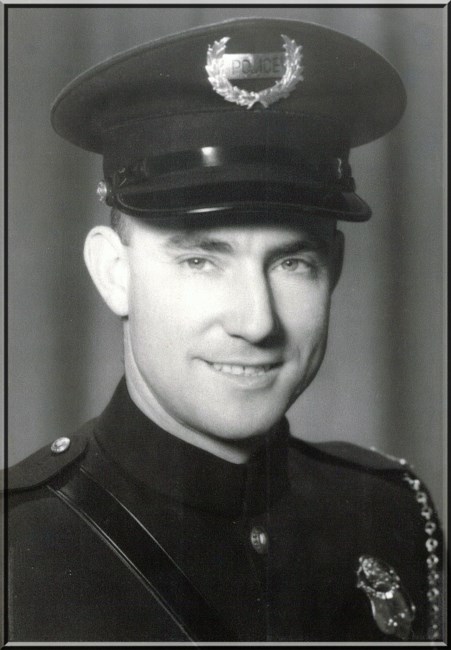
John William Robins was known as many things to many people. He was a loved one, a friend, and someone special. To family and friends who knew him best, John will be remembered as a very exceptional person.
Born in Sidney, Australia, John was the son of William and Anne Robins. William was a baker, but everything else about him remains a mystery. John and his older sister Joan spent their early childhood there, but, again, little is known of this period. When they were still young, John and Joan's mom left her husband and she returned to England with the two children. This was very unusual in those days. The reason for the separation and ultimate divorce are unknown and the event was never spoken of. Anne and the children settled in Southampton, England where John's maternal grandparents lived.
John was an active boy involved in all sorts of activities and he had many interests. These were mostly outdoor and without cost as money was scarce. His mother supported her family by taking in laundry. Like most children, he enjoyed playing and making up games. Football, or what we would call soccer, was a favourite, even if the ball was an old sock stuffed with rags. Another was to run down the street rolling a bicycle tire rim beside him. John was curious about the world around him and was often eager to explore it.
As many poor children did in those years, John left school when he was thirteen and worked to help support his mother. He helped in a bicycle shop and raised rabbits which he sold. One of his best customers was a doctor whose favourite part of the rabbit was its brains. When the war came, John like most boys his age was desperate to join the fighting but he was much too young for the armed services. Instead he made his contribution to Britain's defence by looking out over the English Channel, watching for signs of Hitler's invasion. Should he have seen any threat, he was to blow the bugle he carried with him. Otherwise, he took great delight in watching Royal Air Force Spitfires engage in dogfights with the Luftwaffe in the skies over Southampton.
If, before the war, there hadn't been enough food due to his poverty, there was less during the war once rationing was in place. One egg a week and one cup of sugar a week were his family's allotment. With the addition of some currents and flour though, this made a good loaf. If a kid at school had an apple, there would always be a crowd of other poorer kids asking if they could have the core. Animal fat was scarce and so it was carefully conserved. This had a lasting affect on John who in later years ensured his own children ate all the fat on the meat because, "fat is good for you." All this until he was evacuated from Southampton due to the air raids.
Many children from the large British cities were evacuated to rural areas where they were assessed to be safer. They were taken to train stations where pre-addressed, postage-paid post cards were hung around their little necks. When they got to their destinations they were to write their parents a message saying they'd arrived safely and put the post card in the mail box. Poor children went to rich people, rich children went to poor people; there was no telling where your child would end up. Some of the poor children had never seen a bed and could not adapt. They slept under it. They had no manners and ate with their fingers. Rich city kids worked on farms and adapted to rural life. Some children were well treated and some were not. John was not.
John was billeted with a man and wife who as John recalled appeared to be in their thirties. They didn't really want John and they didn't feed him properly. On one occasion John was afflicted with chill blains which went untreated. Again, not much of this period of John's life is known. This may have been intentional.
In the meantime, John's mother, Anne, was still living in Southampton. One night during an air raid, as she was talking with a friend in the darkness of the air-raid shelter, she heard a male voice ask "Annie, is that you?" It was an old family friend, Private Leonard Burgess of the 48th Highlanders of Canada. He was on leave and visiting his relatives. They immediately struck up a conversation and romance bloomed. They were married in England and emigrated to Sault Ste. Marie after the war.
By 1945, the last year of the war, John was still too young for the Royal Navy. He was, however, old enough for the Merchant Navy. He joined the Training Ship Vindicatrix.
Service in the Merchant Navy made a lasting impression on John. His arrival at Vindicatrix was an eye opener. As a New Entry, he was not allowed to board the ship by means of the gangway. The young trainees had to climb aboard by means of a rope hanging over the ship's side. This served three purposes: it kept the young sailors fit, it reminded them of their station in life (not good enough to use the gangway) and it reduced the amount of luggage on ship since much of it fell into the sea. These were hard lessons, and hard lessons remained John's preferred method of teaching.
Training included navigation, first aid, bends and hitches (knot tying) ship's routine, and seamanship. John did well in his training, excelling in seamanship. When he graduated he went immediately to sea. By this time, the war in Europe was over, but was still going strong in the east. John sailed the North Atlantic, the South Atlantic, the Pacific and the Indian Oceans, submitting to King Neptune's commands when he crossed the equator.
Life at sea was tough - hard work, little sleep, little leave, primitive sanitation, and bad food. John often spoke about the weevils in the hard bread. These were knocked out by pounding the bread on the table. Breakfast was porridge with salt and pepper. There was dessert once a week on Sundays. It was usually a jam or raisin pie and was much anticipated. Often there were maggots in the meal. On one ship commanded by a First World War vintage captain, John was elected to bring the matter of maggots in the food to the captain's attention. John went to the bridge with his plate of supper. The captain said, "What do you want." "There's maggots in the food cap'n," replied John. The captain took John's fork off the plate, and helping himself to a mouthful of John's supper, said, "It tastes alright to me. Get off my bridge!"
John sailed on a number of ships but the only one he talked about was the MV Henry Dundas, a tanker. There was still danger in sailing on tankers because one well-aimed Japanese torpedo would mean the end of the ship. John had many stories about his days at sea and, especially in his later years, loved to recount them. One day they were in far east somewhere cleaning out the oil holds. Since the holds were made of ferrous metal, one had to wear wooden shoes so as not to cause a spark and thus blow up the ship. The task was proceeding nicely when, for some reason the chap who was doing the job was hit on the head by a piece of equipment being swung by the ship's derrick (crane). The man was knocked senseless and blood poured from the laceration on the top of his head. The man was retrieved from the hold, and laid out on the deck. Because there was no ship's doctor, John was either told to, or elected to, or volunteered to stitch the man up. Putting his first aid and seamanship training to practical use, John stitched the man up using his best sail maker's stitches. When the casualty regained consciousness he was not pleased to discover how the two sides of his wound had been stitched together. He never forgave John for prominent ridge of skin he had - like a rooster' s comb.
At some ports in the far east, the crew had to be inoculated before they could go ashore. A doctor was transported to the ship and the crew lined up to get their shots. It was the same needle for every man and who knows if it was sterilized each time. In any event, after being plunged into a number of arms, the needle would get dull. The arm of the unfortunate sailor would later swell like a balloon. Undefeated though, the doctor would pull out his files and sharpen the needle for the next man.
On one cold foggy night John found himself at anchor in the harbour at New York City. The fog was extremely thick and one could hear the whistles (horns) of those ships underway, and the bells of those ships at anchor. Remember, radar was still very primitive and there would not have been many, if any, merchant ships equipped with it. Ships' bells and whistles were the only means of telling where a ship was when you couldn't see it. John's station that night was at the ships bell, ringing it slowly and steadily. Suddenly he heard and felt a dull thump. He wondered at the time what it was, but it wasn't until the next morning that he learned a US Army Air Corp bomber had flown into the side of the Empire State Building. This story was told many times immediately after 9/11.
There was little refrigeration on the ship and in the tropics, the crew longed for something cool to drink. John kept a clay urn of water wrapped in a damp cloth by his bunk. As the water evaporated it drew the heat from the water in the container, thus providing cool refreshment at the end of a hard day's work.
There were many other stories; like the time John and other crew members were arrested for mutiny when they didn't return to their ship on time; or the beautiful Maori girl he left on the jetty in New Zealand. But sadly, no recordings were made and the details are lost forever.
John left the Merchant Navy in 1948 and sailed from Southampton to New York. From New York he took the train to Toronto, and in his new blue suit, was welcomed to Canada by a seagull who with accuracy John would later come to admire, left John somewhat soiled and smelling of fish. From Toronto John made his way to Windsor, Ontario where he spent some time with his aunt, Gertrude Cross, his dad's sister. From there he proceeded due north to Sault Ste. Marie where his mother had settled with her husband, Len. Len was by now discharged from the Army and was employed at Algoma Steel in the Sault. Once he had settled in, John got a job at the Post Office, then located at the corner of Queen and East Streets in what is now a museum. Unfortunately this didn't last long because, if a veteran of the Canadian Armed Forces wanted a job in the federal government, he had priority over someone who did not. John lost the job. He was there long enough though to make an impression at least on some people. In those years you had to obtain your income tax form from the Post Office and people must have wondered why they kept running out. The reason: the Bell Telephone office was located next door to the Post Office and the operators would come in over and over on the pretext of getting a form, but really just to get a look at the very handsome John. After he left the Post Office, John began sweeping floors at Eatons. It is not known how long he stayed at these places or, indeed if he was employed elsewhere as well. Eventually though he found employment at Algoma Steel as an electrician's apprentice. He had a natural talent for this work and stayed there for some years.
One day, John met Roberta Gayle Hope who John always called "Bid." The two dated and were soon engaged to be married. On 24 August 1951, with Roberta's brother Jack acting as best man, and her cousin Betty Burns as maid of honour, they exchanged vows at Central United Church in the Sault.
Shortly after their marriage, John needed abdominal surgery. Not only was there was no medicare in those days, there was no such thing as paid sick leave. John took the time off work and had the surgery. After some days of convalescence, money was short. After all, he had to pay for the surgery. So John took a job pounding tent stakes for the circus that had come to town. At the end of the day with $2.00 in his pocket, he walked home stopping to buy a loaf of bread, and a pound of baloney. With the change burning a hole in his pocket, he blew the wad and bought an apple pie. Soon he returned to work at the steel plant and life carried on. On Father's Day 1952, the whistle sounded on the plant floor, signalling there was a message for someone. The foreman responded and returned with instructions for John to report to the office. John did so and received the news that his son had been born. He took the rest of the day off, without pay of course, and went to visit his wife and John Ashley.
The addition of a son meant their apartment was now too small so they moved into larger accommodations in the Express Building on Queen Street between Simpson and Brock Streets. One night in the small hours, their infant son started crying. John and Roberta awoke to find their apartment full of smoke. There was no time to do anything but throw on some clothes, gather up the baby and get out. Once his family was safe though, John, in an act that would portend future actions, ran back into the building to save a woman who was unable to walk. Nine distraught families then watched helplessly as their apartment building burnt to the ground. The cause...a short in the wiring. John and Roberta lost everything including clothes, photographs, brand new furniture, wedding gifts, baby gifts, and irreplaceable mementos from Merchant Navy days in far-off seas. There was no insurance because there was no money to buy insurance. This was not uncommon. But it meant that John had to continue making payments on his furniture now turned to ashes. To add insult to injury, it was only mid-month and since John had paid his rent up to the end of the month, he asked his landlord, Dr. Sinclair if he could have a partial refund. He learned another hard lesson when the doctor responded, "Ah, that's not how business is done, Laddie." So John, Roberta and young John started over with a donated mattress and some other small items people, community groups and churches gave them.
John was committed to providing for his family and striving to improve his station in life. He left the steel plant and in 1955 he was hired by the Sault Ste. Marie Police Force where he remained for 35 years. Though there was little pay, no pension and no holidays in those years, it was a step up. John, in his red one-piece long underwear was proud to put on his dark blue trousers with the narrow light blue stripe and the high collar dark blue tunic and go to work. His boots, brass badge and buttons and his Sam Browne belt with holster and handcuff pouch all glistened. And when he wasn't wearing this uniform he was wearing the khaki of the Canadian Army. He had joined 49th Field Regiment, Royal Canadian Artillery. As a part-time soldier in the Canadian Militia John could fulfill his military ambitions and earn a little extra money.
At 438 North Street, Deborah Lynn, Kevin William and Heather Gayle joined the family in the two bedroom home. To improve their lodgings John, led by a skilled family friend, built his wife a new kitchen. John, during cold weather, and before work every day, diligently cleaned the clinkers out of the furnace, shovelled in more coal and got a fire going. Sometimes in the mornings, he would show up in the police paddy wagon, put John and Debbie in the back and take them to Cody School. It was on North Street that John bought their first television set. It was a large brown metal box that arrived from the neighbour's house Christmas morning with a big red bow on the top. It played many episodes of Howdie Doodie, Death Valley Days, Roy Rogers, Zorro, Disneyland, and Mighty Mouse and provided hundreds of hours of black and white entertainment for Roberta.
As the kids grew bigger, the house grew smaller and so John and Robert bought a wartime three-bedroom house at 67 Weldon Avenue. Before the family moved in, John rented a floor sander and refinished all the hardwood floors. He had the coal furnace converted to fuel oil. Bedrooms were wallpapered and a second-hand double bed was bought for John and Kevin. The family settled into their new home across the street from the school the kids would attend, Francis H. Clergue. The neighbourhood was full of children and it was here that two more were added to the Robins brood - Belinda Anne and Roberta Hope.
It was while the family lived on Weldon that John started taking the kids to church on Sundays. The church was All Saints Anglican on McNabb St. After church, John usually took the kids to his mum's for lunch and then for a ride in the car. This gave Roberta a bit of a break. Nana usually gave John ten cents for each of the kids to buy a Drum Stick to be enjoyed after supper while watching My Favourite Martian, or Mister Ed, or the Ed Sullivan Show.
It was also during the Weldon Avenue years that John took everyone on two real vacations. John Hook, who lived down the street, worked for the Ontario Department of Lands and Forests. In the summer months he would be posted to different locations in the province. One summer the Robins visited the Hooks in Perth, Ontario. The John and Mildred Hook were generous hosts in spite of John's arguments with their daughter Mary over the issue of a new flag for Canada. After several days in the Perth environs, the Robins went to Kingston to visit the Burmasters, family friends from John's days in the Army. And from there it was up to Ottawa to see the Parliament Buildings and the Changing of the Guard. What a spectacle!
The next summer the family visited the Hooks in Fort Francis. Boat rides on the lake, eating fresh honey combs, feeding fish by the dock, and a drive to the provincial border from where everyone could see Manitoba were the highlights.
Family activities in these years also included going to Roberta's parents' camp at McCarroll Lake. It was a beautiful location and sometimes the uncles and aunts would be there as well. These were fun days for the kids and they provided lasting memories. As one summer weekend was drawing to a close the family gathered at a large table for Sunday supper. Roberta's mother was a good cook and amongst other things, she had made a meatloaf. John, had a healthy appetite and ate a healthy helping. After dinner, those who had eaten the meatloaf started feeling ill. Since there was no road access to the camp, they were transported by boat to the car-park. The sight of John lying on his back on the hood of a car was frightening to the children. From car-park, John was rushed to the hospital as were the others who had partaken. John nearly died and would later say, perhaps only half joking, that his mother-in-law had tried to kill him. It was big news as the family was nearly wiped out. With the parents in the hospital, the kids were all farmed out to police friends and relatives. But we all lived to tell the tale.
Having attained the rank of sergeant in the Militia, John took his release from the Army. It is not know why, but it was probably pressure from Roberta that resulted in his leaving. In those days, there was a strong and vibrant mess life that resulted in much drinking. That, combined with weekends away on exercise, shift work and at least five young children would be enough to convince most wives that something had to go. Still, John needed additional income and so he worked at special events for the police and, as a number of policemen did, he pumped gas.
After Roberta Hope was born in February 1964, bringing the number of kids to six, John concluded that their three bedroom home on Weldon Avenue no longer met their needs. A bigger house was necessary and in May of the same year, John found one at 184 Meadow Park Crescent. This was a real advance! It was a fairly new two storey, four bedroom home with a carport, a dining room and in a good neighbourhood in the east end. How could he afford it? Well, it had been re-possessed by the bank after being abandoned by its previous owner, and there was water damage. John saw it as a good deal, and stretching himself, made the purchase. Now, he definitely needed part-time work for it was here that the Centennial project, Pamela Dawn, took her place in the family.
John's marriage to Roberta was not a particularly happy one. The two were very different and their life together presented challenges that took their toll on both of them but especially Roberta who was overwhelmed and ill equipped to manage a household with seven children and a mostly absent husband. To exacerbate the situation, Roberta's mother, an unkind woman about whom John often said, "You couldn't kill her with an axe" interfered and gave her daughter much bad advice. Fortunately though, John persevered. While many men would have been long gone, John's sense of responsibility, at least to the children, precluded that option.
Fortunately, he enjoyed his job. Showing a strong work ethic, John worked diligently and did his best to succeed. John always sought to be a team player, and, typical of most policemen in those years, doing what was necessary in order to get the job done. He practiced life long learning and took many courses. He was promoted first to rank of corporal and ultimately sergeant. He did much of his career in General Patrol, moving into Traffic Division and a brief stint in plain clothes. The part of his occupation he enjoyed the most though was when he was put in charge of training.
Like most young constables, he started his career walking the beat. He made many friends and knew most of the restaurant owners on Queen Street. Some, like the Pullente family, he remained friends with all his life. There was also Cleto, who, while his wife slaved over the pizzas, played the generous host in the front. They weren't all restaurateurs though. There was "Uncle Nick" the shoe salesman at Eatons, and Mr. Slattery, the pharmacist at the long gone drug store at Albert and Gore. As with his service in the Merchant Navy, John's police career was a rich source of stories. Sunday mornings are not well loved by young beat constables looking for action, but what was this? A crowd of church people had gathered in front of the Court House on Queen Street. John immediately strode up to the scene to ascertain the cause of the gathering. There was a moose right in front of the court house. What to do? Beat-men had no radios in those days and there were no call boxes like the big cities had. With all the activity the moose was becoming agitated and lunging at cars. Fearful that someone was going to get hurt, John made a split second decision. With all the courage and judgement of a young inexperienced constable, he drew his revolver, ran up to the moose and quickly fired several rounds into the side of its head. Fortunately, the beast dropped and died, providing some good meals for the children at Chief Shingwauk School.
One midnight shift, John was on patrol in a police car when he and his partner, Rollie McEwan received a call on the radio. A woman had been seen floating on the water in tail race. Abitibi Paper Mill, was a large stone edifice located on the St. Mary's River. It was a major employer in Sault Ste. Marie. Roberta's father, Bob and brother, Wayne, both worked there. The mill was powered by the water from Lake Superior rapidly flowing under the mill turning the generators, thence down into the St. Mary's River and into Lake Huron. The water coming out from under the mill was fast moving and full of eddies. John and his partner arrived in the pitch black but managed to see a the woman splashing in the water trying to save herself. There being no boat or any other life saving device nearby, John quickly removed his Sam Browne, his hat and his boots and dove into the water. Moments later he was joined by his partner. Between the two of them, they managed to get the woman to shore from where she was taken to hospital. John had not removed his wallet and so it was ruined. But for his heroism, John and Rollie received their well deserved recognition from the Police Commission. It came in the form of a nice letter informing them they had been awarded five cents a days for the rest of their service. John said it was insulting even by the standards of the day and he blamed the then Chief of Police, I.L. Robertson. But he took delight in bragging that he was the highest paid constable on the police force. Months later, the lady he had rescued wrote John saying she had been trying to kill herself but had changed her mind. She thanked him for saving her life.
Reports of cars being driven erratically are fairly common in police work, but reports of Volkswagen Beatles being driven into the St. Mary's River are not. John raced to the foot of Pine Street where the vehicle was last seen and arrived to see the vehicle bobbing on the surface. He managed to locate a row boat and pulling ferociously on the oars, made his way to the vehicle where he pulled the drunk driver out of the car and into the boat. The driver, in a serious state of intoxication, was taken to the hospital and after suffering the DTs he recovered and eventually dried out. Many months later, John, again on patrol received a call to attend the station. There were the man's parent's on their way through the Sault from Thunder Bay and they gave John their heartfelt thanks. The rescued man joined AA, stayed sober and as a testament of his gratitude to John, put the story of his rescue in an AA booklet. John kept the booklet with his other treasures for the rest of his life.
As we have seen, John performed a variety of duties in his police career. The Chief must have detected some latent teaching skill in him though, and in the late sixties John was appointed to the position of Training Officer. This position included responsibilities as range officer, self defence instructor, and driving instructor. To qualify him for these duties John was sent on a number of courses. First was the Canadian Police College Instructional Techniques Course where he received many compliments from the mostly RCMP instructors and students for his lecture on how to walk a beat.
John took to his new position like a duck to water - especially his range officer duties. He was now responsible for teaching recruits and seasoned officers firearm safety and how to shoot. He maintain the range and reloaded all the training ammunition. He loved it and competitive shooting became a large part of his life. He was a crack shot and won innumerable competitions in Ontario and the State of Michigan. When he wasn't doing range work, John taught driving techniques and with this came responsibility for acquisition of police vehicles and their equipment and the management of the entire police vehicle fleet. Then, he was appointed officer in charge of the riot squad. In this role, John found himself researching and teaching crowd control tactics. Don't forget, this was in the days before police forces outside those in major cities had much experience in dealing with crowd situations and there was considerable civil unrest in North American cities. He attended courses and learned about tear gas and its use.
The Chief must have thought John didn't have enough to do because he sent him to the Smith & Wesson Course in Springfield, Massachusetts and appointed him armourer for the Sault Police Force. Now he was responsible for the maintenance and repair of the entire Sault Police arsenal. Through courses, experience and personal study, John developed an in-depth knowledge of firearms and shooting. This was reflected in his being declared an expert witness in court. And if this wasn't enough, John was appointed bomb disposal officer. One wonders why the guy with seven kids would be the one chosen to dismantle bombs, but John was enthusiastic about the job. He was proud of his successful completion of the ordinance disposal course at Canadian Forces Base, Borden and his licence to handle and use explosives. As we shall see, John put these new skills to good use.
It was tough to feed a wife and seven kids on a policeman's salary so John was always keen to work at special events where a police presence was required. This might be a football game, a concert, or a parade. Eventually though, in the late sixties he got the perfect part time job with Superior Ambulance. This was later taken over by the Province of Ontario to become Sault-Algoma Ambulance Service. John was one of the older personnel and with his wartime and police experience he assumed the role of informal leader. His advice was sought by both management and peers. He was strong and took pride handling the heaviest patients.
In the early seventies, the family at home started to shrink, first Debbie left and then John Ashley. John, the elder, had little tolerance for teenagers and had a difficult time relating to their problems. Debbie, Kevin and Heather bore the brunt of this. As far as John was concerned teenagers shouldn't be treated as some distinct group. In fact, he liked to say, the term "teenager" was a new invention having only been coined a decade or so earlier. Hitherto, they'd been called young adults and they should be treated as such. As far as John was concerned, teenagers didn't have a problem that couldn't be sorted out with strong discipline and a year on the North Atlantic. Unquestioning obedience to direction was John's unwritten rule and the sixties vintage of teenager just didn't buy it. These were tough years for the kids at home, and they gradually left. Soon there were marriages and as the family at home shrunk, the extended family grew and John was blessed with grandchildren. Ultimately he had eleven: Tamarah, Trevor, John, Christian, David, Kailyn, Catherine, Elizabeth, Rebecca, Stephanie, and Noah. In the end he had four great grandchildren,Trevor-John, Mackenzie, Emily, and Dylan.
After the last child left, John and Roberta moved into a smaller home at 86 Railroad Ave. John loved this place. It was small, but he often said it was all he needed. He had a rec room built in the basement where he like to read. John and Roberta didn't host many parties, but Boxing Day was held in their rec room for years. Providing lasting memories, these were wonderful celebrations full of music, good food, wine and cheer.
In addition to competitive shooting, and reloading ammunition, John's favourite off-duty pursuits included buying and selling hand-guns, boating, reading and being at his camp. In the late sixties John scraped together sufficient funds to make a down payment on a lot on the south end of St. Joseph Island. Although it was water-front property on Tenby Bay, it was solid bush and you could not see the water from the narrow gravel road. The first job then was to clear spot to get the car out of the way. That done, the next job was to take steps to ensure the little girls didn't get lost in the bush. A trail from the road to the water was marked by spraying fluorescent orange paint on the trees. No one got lost and John had to continue to feed seven kids until they left home of their own volition.
John loved being at camp. Roberta was not so enamoured. Packing up a bunch of kids, cooking on a camp stove, clouds of black-flies and mosquitoes, sleeping on the ground and worst of all, no TV were just not Roberta's idea of fun. Undaunted though, John pressed on with his project. After clearing a spot for the car, he next cleared an area by the water where tents could be set up and meals could be made. This was all done by hand. Next he cleared a larger area further back from the water, and built the foundation and floor for a camp. In the short term this provided a place off the ground to pitch the tents. Meanwhile the girls were kept occupied in fun activities such as fetching water and picking an endless supply of stones from the lake bed. If he ever wondered why everyone didn't love it as much as he did, he never said. But after the camp was built, there was more time for leisure and memories were being made. As with most activities in John's life, the place provided much fodder for stories.
In building the camp, John was assisted by Gary Nicholson, Roberta's cousin. Gary, was huge man whose physical size was matched only by the size of his tales and dreams. It is doubtful either he or John had ever built much before. Nevertheless, they hurled themselves into the task with all of the enthusiasm of two guys who have no clue of what they're in for. And they did it with nothing but hand tools, daughters and dynamite. About half the lot had to be cleared of bush and huge rocks. The rocks were the challenge, because, like icebergs, they are usually about three quarters below the surface. John had three ways of removing them. One was to dig the soil from around the rock and build a large fire. Let the fire burn long enough to heat the rock thoroughly, and then throw cold water on it. The rock would then shatter. Another method was quite primitive - the Spanish windlass. (It's too hard to explain. Google it!) The most effective method though was to wait until no one was around and put a stick of dynamite under the rock. Anyway whatever the task, the days generally finished with a large fire, and for the girls, roasted marshmallows. For the adults, beer and conversation.
One day, while manoeuvring a truss for the roof, John hit a wasp nest. As they stung John, he, outraged, fought them with a two by four. The girls and Roberta ran for their lives, but it was Belinda who was the smartest of all, running right into the lake with all her clothes on.
Buying a motorboat allowed John to get back on the water. This meant chasing freighters down the shipping channel, but more importantly, it enabled John to go to Detour, Michigan to have a drink and buy cheap beer.
There were misadventures too. When John was alone at the camp, for reasons unexplained, he fell into the fire, burning himself quite badly. He drove himself to the hospital where his wounds were dressed. Of course, the moral of this story was not don't be clumsy, or don't fall into fires, or don't be at camp alone; it was: persevere even when you're under tremendous stress and pain.
After John Ashley settled in Winnipeg, there was a new vacation destination and nearly every year John would take Roberta and the kids there for a visit. The journey drove Roberta crazy to have to "bound around" so early in the morning and not to be able to stop and shop along the way, but there was a limited amount of holiday time and John wanted to get to his destination. It was a fifteen hour drive non-stop and John had no intention of spending any more time than necessary on the highway. When they arrived in Winnipeg, it was glad times, touring the big city and plenty of treats for the kids. One year though in 1982, disaster struck when the car in which John, Roberta, Nana and Roberta Hope were travelling west through Michigan, struck a car driven by an off duty deputy sheriff. The American had worked all night and was on his way to a National Guard exercise when he fell asleep veering into John's lane. John, trying to avoid the vehicle swerved into the oncoming lane. The deputy sheriff woke up, wrenched his car back into his own lane, and they collided. Roberta, who would not wear a seat belt, suffered life threatening injuries and after weeks on life support, spent months in hospital. Nana received severe cuts and bruises and Roberta Hope sustained a serious cut to her forehead. John suffered a debilitating injury to his lower back which took a number of surgeries to correct. Subsequent visits were better though and provided happy memories for everyone.
On October 24, 1996 Roberta died leaving John alone with his dog Sarge. John was grief stricken but soon recovered to make a happy life for himself and Sarge, a mixed breed dog and after Sarge died, Billie, a bouvier. For twenty-four years John was devoted to the dogs, probably because they didn't give him any lip, they were grateful for his affection and they were always happy to see him. He and the dogs were seldom apart and through them, John got his exercise taking the dogs out for their walks either at the locks, or by Hiawatha Park, or maybe by the Fort Creek Dam. These walks created opportunities for John to meet other dog lovers like himself and form lasting friendships. John's love for his dogs was reflected in the numerous photos, sketches and paintings of the animals on the walls and nearly every horizontal surface of his house.
John was a doer, a busy guy who didn't spend too much time at home. When their children were young, he and Roberta regularly attended many police social events including the annual Policemen's Ball and when he was in the 49th, the Military Ball. John was a member of Branch 25 Royal Canadian Legion for over fifty years and was a stalwart in the Legion Band, playing bass drum and for a brief period, drum major. He was also a proud Mason.
It was through the Legion that John met Ann Robichaud a lovely, twice widowed, hard working woman who was John's loyal companion for nearly fifteen years. John and Ann shared many of the same values, especially patriotism and conservatism and they enjoyed so much together: Legion activities, the dogs, camp, band trips and family gatherings that always welcomed Ann with open arms.
Though not a political animal, John supported the Conservative Party of Canada both ideologically and financially. And while he was vocal about his political views, he was private about his faith. Nevertheless, he ensured his children got a Christian education. After the family moved from Weldon Avenue to Meadow Park Crescent, he and the kids attended St. Matthews Anglican Church where he was a sidesman and, for a brief time, Sunday School superintendent. He supported the church financially for years, even after he stopped attending.
After his retirement from the Police Force in April 1989, John enjoyed travelling and time away on vacations. He took several trips to England and one to Europe where he made new friends, saw old friends and relations and had new adventures. At home, he found new pleasure in acting as a deck hand on the Chief Shingwauk, a tour boat on the St. Mary's River. John remained active throughout his retirement until his diabetes made it impossible.
John was given accolades for his many and varied accomplishments throughout his life including the prize for having the most kids at the Bon Soo Winter Carnival. But seriously, he was extremely proud of his Legion service awards, and his countless shooting awards. Early in his police career he was named the Best Turned Out Policeman of the Year. He wore with dignity, as befits an old veteran, his well deserved Victory Medal and the Canadian Police Exemplary Service Medal when dressed in his Merchant Navy blazer, grey flannels and Legion beret.
John died on September 2, 2013 at Sault Area Hospital. In the last years of his life, John suffered much pain from the effects of his diabetes, his gout and finally the cancer that claimed him. He is survived by six of his seven children, ten of his eleven grandchildren and his four great grandchildren. Services were held at Arthur Funeral Home and were conducted by the Reverend Bruce McLeish who welcomed all to the gravesite playing hymns on his bagpipes in the pouring rain. John would have been impressed. He was cremated and laid to rest with Roberta in the Greenwood Cemetery.
Simply stated, John was a man who will for all time be remembered by his family and friends as being a vital part of their lives. He was a man strong of body, strong of character and strong of opinions, a man reluctant to change with the times. He bettered himself and leaves behind him a legacy of life-long friendships and many cherished memories. Everyone whose life he touched will always remember John William Robins.
* * * * * * * * * *
ROBINS, John William – On September 2, 2013 at the Sault Area Hospital at the age of 86. Beloved husband of the late Roberta Gayle. Dearly loved companion of Ann Robichaud. Father of John (Gloria), Deborah Colautti (Luciano), late Kevin (Elizabeth), Heather Cartmill (Dave), Belinda Boskovitch (Rodney), Roberta Beith (Jack) and Pamela. Proud grandfather of 11 and great grandfather of 4. Predeceased by his sister Joan Bampton. Brother-in-law of the late Jack (Zella), late Wayne (Nancy) and late Blayne (Arlene) Hope. John will also be remembered by his nieces, nephew and loyal friend Pete Nevin. Friends may call at the Arthur Funeral Home & Cremation Centre on Monday, September 9, 2013 from 10 until 12:30. Memorial service from the chapel at 1 pm. Rev. Bruce McLeish officiating. Memorial contributions to the Algoma Residential Community Hospice (ARCH), Sault Ste. Marie Humane Society, and the Royal Canadian Legion Branch 25 would be appreciated. Expressions of sympathy may be offered at www.arthurfuneralhome.com
At the going down of the sun
And in the morning
We will remember them.
Members of the Royal Canadian Legion are requested to assemble at the Arthur Funeral Home & Cremation Centre on Monday, September 9, 2013 at 1 pm for a memorial service for the late John William Robins.
Show your support
Add a Memory
Share Obituary
Get Reminders
Services
SHARE OBITUARYSHARE
- GET REMINDERS
v.1.18.0