
OBITUARY
Peta E. Tancred
30 July, 1937 – 15 August, 2017
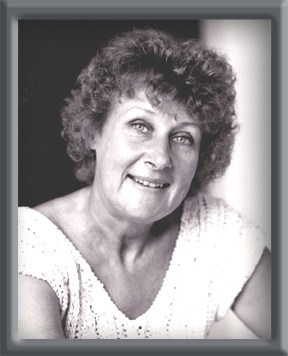
As most of you know my name is Becky Mihell, and I am Peta’s niece.
First of all, thank you all for coming.
I also wanted to thank all those who have provided support, encouragement, direction, meals, emails, cards, phone calls, and hospitality over the past few years, and especially these past few months. You have been a blessing to Peta and to me more than you realize.
As her friends and colleagues, all of you are quite aware of Peta's academic achievements- I wanted to provide you with an insight in to Peta “the aunt.”
As a child, there was always an air of mystique and awe about Peta. Family talk was always about her studying or travelling- usually abroad- and living in big cities: London (England), France, Ottawa, Toronto, Hamilton, Montreal. She was always in vogue in her dress and manner; constantly entertaining or being entertained; fluent in French and living what seemed to be an amazingly busy and full life. Her academic achievements seemed unattainable to the rest of us...a university prof with tenure, and one who had authored numerous books. She loved cooking, fine wine, and classical music. She also loved tea and biscuits- especially if the biscuits had some sort of chocolate in them .She kept fit playing tennis and hiking. And it was no surprise when she bought a place in France and spent 6 months of the year, for several years, there.
She had very high expectations, a strong will and was a force to be reckoned with, both inside and outside the family. And yet she had a soft spot for young children and dogs. How was a young niece to talk or relate to an aunt like that?
My Dad had a home movie of Peta patiently playing badminton with me at approx. 3 years of age. It involved a lot of running around on my part and not a lot of hitting. Many smiles, and much eagerness. Each year if she was in the country, she and her Dad and I all shared a birthday, since the dates were so close together. This usually involved a picnic somewhere with homemade Indian food- our favourite. As I got older, and showed an interest and aptitude for tennis, she would take me to her club when I visited, and we would play for a few hours. Peta would then take me shopping or out for lunch in the big city- her way of introducing me to different places and perhaps awaken an interest in travel (or at least an awareness) of a bigger world to explore. I would return home full of stories of things we had seen and done.
I believe Peta was also determined to influence both her nieces to reach their fullest intellectual potential; and perhaps to be followers in her feminist cause. A strong believer in higher education, she financially supported my sister and me in our university educations. However, with regards to any strong feminist traits, I may have disappointed her in that respect- for I pursued a career in a predominantly female field (nursing), I changed my name when I got married, and I put my family ahead of my career. Certainly not the traits of an intellectual leader. Not to be daunted, Peta then looked to my sister Pam as a person who could fulfill her hopes as a strong female with a successful career. My sister Pam had such promise: she was single, educated as a family physician, spoke French and German, and loved to travel. So when Pam died at the age of 31, it was a tremendous blow to Peta……it was as if her own daughter had died.
Some time passed, and as luck would have it, Peta was presented with another opportunity of “passing the torch” in the form of 2 great nieces: my daughters Wendy and Erika. Even though we didn’t see her much, Peta was keenly interested in all their activities and academic achievements. She attended both of their grade 8 graduations, and was very pleased with the extra awards they received. Unfortunately, her health prevented her from attending their grade 12 graduations, but she still continued financial support of their university educations.
The distance from Sault Ste Marie to Montreal is 2 plane rides, so we didn’t see Peta often. However, she kept in touch through letters and by phone. She was always most concerned that I was being treated fairly and not overworked, by my employer, or by my role as a mother. Over the last few years, as Peta’s health declined and as her independence decreased she challenged me often, but at the same time provided me with invaluable insight.
I like to think that in the end, Peta still got what she strived for: a strong, independent niece, raising another generation of strong and independent daughters.
Thank you for coming.
WORDS FOR PETA
I first met Peta in Ottawa in late 1962. I had just returned from working with the UN in Beirut and she was then Executive Director of World University Service or WUSC. It was a heady time in Ottawa in those days. The city was filled with idealistic young people heading off on assignments with the newly-formed CUSO and on international seminars with WUSC. We were all intent on saving the world.
The WUSC seminars were annual events designed to take university students on study tours abroad. As Director of WUSC, Peta was responsible for all the arrangements for these tours. In 1962, she actually led one of these seminars, this one to Poland. The seminar was headed up by Professor John Deutch who was teaching at Queens but it was Peta who was responsible for all the logistics. And they were complicated. There were 40 participants, mostly students around the age of 20, many of whom were away from home for the first time. A friend I met recently, Fran Cutler, was on that seminar and said of Peta “She was our anchor,” Fran recalled. “She was very understanding and supportive, was a terrific listener, was so caring and resourceful, and managed to sort out so many problems which arose in the country which was still then under " Soviet shackles.”
Soon after, Peta left Ottawa and I did too. Except for sporadic meetings, we didn’t link up again until my husband and I made a couple of visits to Limoux in the early 90’s. I think that was a very happy time for Peta. On one occasion, we all walked part of the French Camino to Santiago de Compostela, walked long and hard and ate well. They were happy times for us all.
Finally, on behalf of all of Peta’s friends, I want to thank Becky and Susan as well for all the help they gave her during the past few years. It was a comfort to know you were here, especially for those of us who were not living in Montreal.
I was of course very sorry to hear of Peta’s death.
She was chair of sociology at McMaster in 1978 when I had my first temporary teaching job away from York, where I was still finishing my PhD. That’s how we met. She instantly became a role model. I left McMaster for Brock after one year, but we stayed in touch, and became friends about two years later. We ‘fell out’ for bit when Peta first moved to Montreal in 1987, but resumed contact a couple of years later. Our partners were both francophones (my husband is Swiss from Geneva), and the four of us got along well and visited quite often, despite never living in the same place. I took a job at UNB in 1995, and Walter and I moved to Fredericton for 12 years. Peta and I were in pretty regular contact from 1981 till 2008, and after that to some extent too. Peta always created cozy living and dining areas, both in Hamilton and at the house she owned with Guy in Montreal. I always felt comfortable and at home, wherever she lived.
There was a 12-year age difference between us, and Peta played the mentor role. On one occasion her input was crucial. It was 1982; I had applied for tenure, and everyone in my all-male department had voted against my application – claiming that it was too soon. It was the University committee that would decide, though. One morning the Dean called me in and said that the committee was leaning in a negative direction, that I should wait a year and did not want to develop a reputation for being pushy, did I? That afternoon I was scheduled to appear before the committee and make my case. I felt demoralized and thought of not bothering to show up. Peta happened to be at Brock doing interviews with faculty for a research project, and we were going to have lunch. I told her what was happening, and she, outraged, insisted that I keep my appointment with the committee, and that I be forceful. I did, I was, and I got tenure. Peta was a big sister and mentor for many younger women in Canadian sociology.
Peta was a loyal and humorous friend who was always game for a new adventure. She and Guy came to our house on Grand Manan Island for Christmas in 1995, the first Christmas that I was employed in Fredericton. I remember that it was cold and snowy, and the 4 of us walked some trails. My mother, who had dementia, was along on the trip, and Peta was very patient, sitting on the sofa discussing recipes with her. My mother died in 1999, and Peta offered to come for Christmas that year too. We watched DVDs at our house outside of Fredericton and ate fabulous food. Those Christmases were important events in our friendship. When I retired from UNB in 2007, I had a lot of Air Canada points, and I organized an all-women retirement weekend at our Fredericton house; my favourite women came from all sorts of places – they were all friends, who had also worked with me at some point. Peta came a day early, and helped organize the masses of flowers someone had sent from Toronto. We had a good visit before the other women showed up, and the whole weekend was fun.
During one of Peta and Guy’s summer Grand Manan visits, Walter (my husband) was getting organized to cook lobster for us. The same afternoon on a walk, the four of us had found five kittens that some family had left at a garbage dump, and at the kittens’ insistence we had brought them home (our two already-resident cats were not amused). Anyway, I walked out on the deck and said to Guy ‘Walter always feels terrible when he throws them in the boiling water.’ Guy looked horrified, and he replied ‘Walter is boiling the KITTENS?”
Peta loved her nieces, you and Pam, beyond measure. She was devastated when Pam died, and she admired you so much for the quiet, uncomplaining, and magnificent way in which you took care of your kids and your mom, and later on Peta herself.
We were good friends for many years, and never really lost touch until the last year. I always enjoyed our conversations, up until the very last one we had. I did not always understand everything Peta was trying to communicate, but felt that she understood everything I was trying to say, at the same level as before. She was always very good at picking up nuances from people’s voices, and at understanding what they were feeling. I am thinking back to the years we were friends, and missing her very much. She had her issues, and we did not always agree, but she was the most intelligent and interesting friend I ever had, and she had a wonderful heart. Who can ask for more from someone who was part of their life?
It was a privilege to be Peta’s friend, and I send you my sympathy for the loss of a wonderful aunt.
Deborah
Deborah Harrison, PhD
Professor (retired) & Adjunct Professor
Department of Sociology
University of New Brunswick
Fredericton, NB
Canada
Well, it is not the best of news:
Peta died last evening at Chateau Westmount where she has been residing since February. As you all know, her illness took her mind first and after many years has only just got round to her physical system.
I like to think that after seeing her niece Becky who came from Sault-Ste-Marie last Thursday for a visit, she decided that the moment had come.
All done very quietly.
Becky, who lost her mother Jennifer (Peta's sister) last fall, is arranging a memorial "gathering" for perhaps the mid-weekend in September at, we hope, the MCRTW (aka, now, IGSF) at McGill. When confirmed, I will let you know.
In meantime, watch for Obit in Globe and Gazette (date for gathering may appear there) and please pass this note on to anyone you know who knows Peta.
Susan Mann
Remembering Peta Tancred
Annmarie Adams
September 3rd, 2017
Professor Peta Tancred died on 15 August 2017 after an engaged and active life in academia and in retirement, including a significant contribution to understanding the careers of women in architecture. Professor Annmarie Adams remembers her former colleague, co-author and friend.
Peta and I co-wrote Designing Women: Gender and the Architectural Profession in the 1990s, a national study of women architects in Canada. It was published in 2000 in English and two years later, as L’architecture au feminin, in French. Peta was an expert in the sociology of organisations, women and work, and state bureaucracies. She taught me much about ways to reframe the study of women architects.
Co-writing a book is a unique experience. I have co-authored dozens of academic papers and newspaper articles with colleagues, but only one book. In what I remember as a sort of trial-by-fire, Peta and I found a way to write together. We each took the lead on particular chapters, and then passed the rough text to the other, who massaged it and enhanced it, often to the delight of its first author. I loved the constant feedback loop of co-writing with Peta. We taught each other our disciplines through battles over vocabulary and the use of evidence. And as Peta broadcast with great pride for years after the book came out – as if such a thing was nearly impossible – ‘we wrote a book together and we remained friends!’
Part of my pleasure in working with Peta was that we came from different worlds, separated by disciplinary training, age and experience. Peta was a sociologist and I’m an architectural historian. She was educated in England, while I did graduate school in the United States. I had never even taken a course in sociology when we decided to produce an interdisciplinary book together. Peta was also a generation older than me. She got her first university degree before I was born and her PhD, from the London School of Economics, as I negotiated third grade in another London (Ontario). When we met in the early 1990s we were both newcomers to McGill University in Montreal. I was a 30-year old Assistant Professor, the first woman hired in the venerable School of Architecture, a unit in a very male-dominated Faculty of Engineering, where feminism was not a popular subject. By contrast, Peta was an experienced administrator and Full Professor, with what seemed like a full orchestra of feminist friends and colleagues supporting her. By 1993 she had already written seven books. She had just moved from McMaster University in Hamilton, Ontario, to take the helm at McGill’s two-year-old McGill Centre for Research and Teaching on Women, or MCRTW as it came to be called. Before McMaster, Peta had worked at the Université de Montréal, followed by short stints at Imperial College and the Civil Service College, both in London. When she asked me to join her grant proposal on women architects, I thanked my lucky stars.
Peta had grand plans for MCRTW, which occupied a gorgeous Victorian row house on Peel Street, the western edge of McGill’s campus. The MCRTW had been founded in 1988 and had a ‘rocky start’, until Peta was hired from outside.1 She worked hard to establish links with the community, but mostly she focused on international outreach. MCRTW was an incredible place of support for a cohort of women professors hired in the 1990s. It was in MCRTW seminars and on committees that I got to know the generation of feminists who shaped Women’s Studies at McGill. Lynn Butler-Kisber, Kyra Emo, Margaret Gillett, Patricia Kirkpatrick, Audrey Kobayashi, Andrée Lévesque, Abby Lippman, Claudia Mitchell, Shree Mulay, Prue Rains, Jacqui Reid-Walsh, Sarah Westphal, Sue Whitesides and others were all outspoken, smart academic women who never gave up their dream of a dedicated centre for the study of women. The MCRTW was also the place where I met young feminist faculty members just starting out on exciting careers, many of whom became close friends and future co-authors. Needless to say, Peta’s vision of the Centre at the hub of a campus-wide feminist network really worked.
What did Peta contribute to the study of women and design? Because of her deep knowledge of other professions and organisations, she brought a fresh perspective to architecture. While previous books emphasised the barriers to women architects, she took a different tack, insisting that we critique the very definition of ‘the architect’ to understand the ways women trained as architects who never registered still contributed to the profession. This meant trying to interview nearly every woman who obtained an architecture degree, at least before 1970. Additionally, Peta was unusually interested in how women exited professions – sociologists call it ‘de-registration’ – and that became a strong focus in our study. I must say, I still think the best part of our book is Peta’s Chapter 6, on women architects in Quebec. It was here she argued that Quebec saw a ‘late start followed by take-off’, illustrating the point that Quebec women architects follow a trajectory closer to Quebec engineers, lawyers, dentists and physicians, rather than women architects from other provinces.2 No architectural historian was equipped to make such an assertion.
After the book came out, Peta and I saw each other less frequently. She retired from McGill in 1999. She and her partner Guy Paquette bought a house in Langeudoc, in the south of France, and they enjoyed a two-continent lifestyle. Even in retirement she couldn’t resist writing one more book on women’s experiences. This time it was on women in Languedoc, which she hoped to publish in French and English. It appeared as La voix des femmes en Languedoc in 2011. As Guy became more and more constrained by Alzheimer’s disease, subsequently dying in 2010, Peta’s time in France was cut short and then ended.
I’ve only realised how little I know of her early life since hearing about Peta’s death. Her faintly British accent makes more sense given she was born in London, England, and then lived in India until age nine. She lived in Rio de Janeiro from age 13 to 15, and then moved to Ottawa. No wonder she was so cosmopolitan! Also, although Peta had no children, she took a deep interest in my two children, both of whom were born during the years leading up to the publication of the book. For example, for at least 15 years, she would contact me at the end of July so we could jointly celebrate my son Charlie’s birthday as well as her own. And I was pleased to join a group of her close friends last year to celebrate her 79th birthday. Peta had two ex-husbands, and it is interesting to see that their names appear joined with hyphens to hers on various publications. Her 1988 book Feminist Research: Prospect and Retrospect, for example, was published under Peta Tancred-Sheriff.
Peta’s contribution to the study of women architects, and to the study of woman at work in general, is impressive and important. Her mentorship of a generation of feminist scholars at McGill is impossible to measure, although it is visible in the continuing excellent work of the Institute for Gender, Sexuality and Feminist Studies (IGSF), which MCRTW became in 2009. And her name lives on in the Peta Tancred Award, which goes to the student with the highest grade point average in Women’s Studies. A feminist scholar and esteemed sociologist intent on studying the workplace, Peta has left a profound legacy that enriches all our work.
Dr Annmarie Adams holds the Stevenson Chair in the Philosophy and History of Science, including Medicine, at McGill University, Montreal, Canada. Jointly appointed in the School of Architecture and Department of Social Studies of Medicine (SSoM), where she also serves as department chair, she is the author of Architecture in the Family Way: Doctors, Houses, and Women, 1870–1900 (McGill-Queens University Press, 1996) and Medicine by Design: The Architect and the Modern Hospital, 1893–1943 (University of Minnesota Press, 2008), and co-author with sociologist Peta Tancred of Designing Women: Gender and the Architectural Profession (University of Toronto Press, 2000).
Peta Tancred: Woman of Distinction
Peta Tancred, who served many years as director of the McGill Centre for Research and Teaching on Women, was selected as Woman of Distinction in the Public Service category at the gala of the Women's Y Foundation on May 12.
A retired professor in the Department of Sociology, Tancred has concentrated her research efforts on the relationship women have with their work environment. She has participated actively in women's organizations for more than 30 years and has been a role model for her colleagues and an inspiration for her students.
Several other members of the McGill community were finalists in the annual competition, including Rhonda Amsel (Education), Esha Bhandari (Young Woman of Distinction), Ghyslaine McClure (Science and Technology), Kim St. Pierre (Sports and Well-Being) and Christina Wolfson (Health). Donna Nebenzahl, a McGill graduate and member of the McGill News advisory board, was a finalist for the Y's Highest Distinction, Advancement of Women
TRIBUTE TO PETA
I will try to be brief as I am sure many others would like to say something about Peta. After reading the article “Remembering Peta Tancred by Annemarie Adams”, it is hard to think what I might have to add that would be of interest. I was always aware of Peta’s great success as an academic and of her many friends in the academic world.
However, her success was not something that she talked about with me unless I asked, or if it was to mention how she was struggling with a certain book or article. She was very modest in relation to her many accomplishments. I was not aware of the awards she received until I read about them in her obituary, and yet we were very close friends.
When we were together we talked about family- her family and mine, about world events, and lots about politics. We were always on the same side in those chats. I worked as a reference librarian in two universities so was well aware of the difficulties and frustrations of university politics and we had many an interesting discussion about that. As was stated in the wonderful obituary, Peta loved getting together with friends to discuss “issues of substance.” I loved the wording. It was so appropriate in describing Peta.
My relationship with Peta was simply as a friend. A friendship that weathered some difficult times, and that lasted 62 years. Peta and I met in 1955 (62 years ago) in our first year at McGill. We lived on the same floor in residence at Royal Victoria College, RVC. At that time all out of town female students had to live in residence at RVC. Since Peta’s death, I have spent considerable time thinking about the early days and how our friendship progressed and what lasting effect she had on my life. As I look back on it now, I see that even in our first year at McGill, she unknowingly took on the role of mentor.
I had grown up in a small Ontario town and neither parent had attended university. I had a very naïve understanding of what was required and what it meant to enroll in a Bachelor of Arts. I took it quite literally and assumed that it would require being able to write or paint or compose something of some merit. I don’t know where I got that idea, but in 1954 it was the only idea I had about what studying for a BA entailed. I had no one with whom to discuss university. I had always done well at school but felt that being that creative was not within my capability. I had no one to discuss it with and so I decided to enroll in Physiotherapy. How hard could it be to learn about anatomy and exercise. I mention this, because it was in that first year at McGill in my many conversations with Peta, that I became aware how interesting and accessible most of the courses she was taking for her BA were.
She was so welcoming of my interest in her courses and took me off to many of her lectures when I had a free hour. The one that stands out was Prof. Judkins art history class that was scheduled late in the afternoon. She made me feel that I would have been able to handle any of these courses. This was part of what was memorable for me from the start of our friendship. She made me feel capable and confident in a way I had never felt before.
In 1957, the summer of our second year at McGill we planned and carried out a 7 week hitchhiking trip to Europe, where we stayed in youth hostels, but did Le Grand Tour as we saw it. It was an amazing trip. We both survived and loved the experience, despite having to fight our way out of the occasional truck now and then. I don’t remember whose idea it was, but between the 2 of us, we managed to make it work well for both of us.
During our years at McGill I would spend weekends with her family in Ottawa, and she would come to stay with my family at other times. I loved visiting her family. I can still remember all her family very well as they were extremely warm and welcoming, just like Peta. Her Gran who was a favourite with everyone, did much of the cooking and it had an Indian flavour. A result of the years the family spent in India. Everyone including her Gran, called me Fifi which was a nickname that Peta had come up with. Something to do with Fifi the Paris dancer, as I remember, probably best forgotten.
Peta was very playful, and didn’t hesitate to attach nicknames to her friends which stuck with some of us for years. “Spoffles” was another nickname for a friend Judy who now lives in the States. I think Peta took after her father whom I remember as a very strong, talented, kind person with big dreams. Peta had the same sparkle and confidence that I saw in her father. Peta had an intrinsic loyalty to and love for her family. When her sister Jen married Burke and had 2 daughters, Becky and Pam, Peta would always talk about them and bring me up to date with their accomplishments. Peta’s same strong love of family continued when Becky married Jim and had her 2 daughters. I remember a great lunch we had at the McMaster faculty club with Peta, Jen and Burke and Pam and Becky. Becky probably doesn’t remember it, but she and Pam took my daughter Joanna out for a “little walk.” Joanna was 2 years old at the time, so I think Pam and Becky had their hands full.
On to something quite different. I wonder if everyone knows that Peta played the piano beautifully. She loved to play Mozart. I remember sitting and listening to her play in the practice rooms at RVC. As I remember it, I came across her playing by accident. It was not something she talked about. Following on, I remember in 1962/63 I think it was, being at Astrid Richardson’s for dinner with Peta, who had come from Ottawa, where I think she was working for the B and B (I may be wrong on these timelines). After dinner Peta started to talk about her plans for the future. Almost immediately, both Astrid and I said something such as “are you going to take up the piano?”
We both felt that it was a distinct possibility knowing what an excellent pianist she was and how much she had seemed to love it. She looked at us as if that was something she never would have considered and said that she was going to do an MA in sociology at the Universite de Montreal. I think both Astrid and I said something such as “you are going to do what?” For my sparkly friend Peta, I could not imagine anything more dreary than studying sociology. Apologies to all the sociologists in the room. However, there was no doubt in her mind, that this was where she was headed.
Looking back on the years I knew Peta, I now find it strange that at no time do I remember her having a piano. Perhaps I am wrong and that she may have had one in the house in Westmount, but I don’t ever remember her playing or talking about it.
I have to admit that we did have some difficult times as happens with most relationships. There was one point in our friendship where I now feel the theory of her studies relating to women and the workplace compared with practice or reality of my life did not mix well and made it difficult to continue our relationship as usual. I had 2 young children and I was having difficulties in my marriage. I had previously given up my job as a reference librarian at McGill to stay home. This was in the early 1970’s and there was no daycare on the west island where I lived or that I could find, and good babysitters were almost impossible to find. Peta became quite adamant that I should simply leave my home, take my 2 children and move into an apartment and get back into the workplace. I think she felt that this would solve my problems. I was not willing to do this. This was a point at which our friendship was very strained, and as a result, we weren’t in contact for over a year, possibly two. Fortunately, we met up again at dinner at a mutual friend’s, and were able to get back together as if nothing had happened. I would love to have been able to discuss with her what had happened and why, but in the end, felt that it was best to leave well enough alone.
Over several years, Peta and Guy would come to visit me for several days at my cottage on the St. Lawrence River in Brockville. Peta would bring treats from her favourite deli in Outremont and we would sit on the deck enjoying the river and the food and always interesting conversation. As Guy’s life started to become difficult due to Alzheimer’s, they would still make the trip, though it was much more difficult, and I saw how kind and caring Peta was with him. Later, when Guy was moved in to a nursing home, Peta mentioned many times about how helpful Susan Mann was.
Over the 62 years of our friendship, Peta was a wonderful correspondent. I had a great number of long letters and later emails from her time in London, at McMaster, and at McGill after I moved to Kingston.
I think I should sum up- as I look back…..Peta was fun; she was always interesting; she was loyal and generous in her concern for everyone she cared about including everyone’s children. Who could ask for more than that in a friend.
Nancy Lemon
Saturday August 19, 2017
Peta Tancred, B.A., M.A., PhD July 30, 1937 - August 15, 2017
With sadness, we announce the passing of Peta Tancred, at the Chateau Westmount in Montréal. Peta is predeceased by her partner Guy Paquette, her parents, Paul and Elma Tancred (nee Osborne), her sister, Jennifer Williams, and her niece, Pamela Williams. She is survived by her niece, Becky Mihell (Jim) of Sault Ste. Marie, ON. Peta will be greatly missed by her numerous friends and past colleagues from the department of Sociology at the University of McGill, and internationally. Peta was born in London, England, and was raised in India until she reached 9 years of age, at which point she lived in England until the age of 13. Her family then moved to Rio de Janeiro, Brazil, where she lived until the age of 15, whereupon they moved to Ottawa Canada. At the age of 5, Peta, accompanied by her 8-year-old sister, was sent to boarding school in Simla, India - a four-day's train journey away from her parents. From then on, the two sisters would visit their parents only on an annual basis. Peta was a strong, independent and capable woman of great intellect and a desire for learning. She obtained her Bachelor of Arts in Sociology and English from McGill University, her Master of Arts (with distinction) in Sociology at the University of Montréal, and her PhD in Sociology from the London School of Economics. She was a professor of Sociology at McMaster University and at McGill where she directed the McGill Centre for Research and Teaching on Women. Since the 1980s, Peta was involved in feminist work of all kinds, focusing particularly on women's work in organizational settings, where she was considered a leader in the field of 'Gendering Organizational Analysis'. Through the course of her professional career, Peta published 10 books and more than 50 other publications in both French and English, pertaining to the role of women in society. In 1999, Peta was awarded the Outstanding Contributions Award by the Canadian Sociology and Anthropology Association for her efforts in advancing the discipline of Sociology in Canada. She was also selected for a Women of Distinction Award in 2004 for her work in the public sector generally. Peta took great interest in the lives and endeavours of her nieces and grand-nieces, and she helped support their education. Known for her love of conversation, music, tennis and travel, as well as her joie-de vie, Peta loved getting together with friends over meals to discuss issues of substance. The family would like to acknowledge and express its gratitude for the help and support of Peta's friends in Montreal: in particular, Susan, Astrid, Ona, Christine and Andrée, as well as the staff (in particular, Helen) at Le Waldorf and at Chateau Westmount, over the last few years of declining health. A come-and-go celebration of Peta's life has been scheduled at IGSF, 3487 Peel St., 2nd Floor on Sunday, September 17 at 2:00 - 4:00 PM. In lieu of flowers, donations can be made to the OSU Children's Library Fund (www.osuchildrenslibraryfund.ca), or 60 Million Girls (60millionsdefilles.org).
* * * * * * * * * *
Saturday August 19, 2017
Peta Tancred, B.A., M.A., PhD July 30, 1937 - August 15, 2017
With sadness, we announce the passing of Peta Tancred, at the Chateau Westmount in Montréal. Peta is predeceased by her partner Guy Paquette, her parents, Paul and Elma Tancred (nee Osborne), her sister, Jennifer Williams, and her niece, Pamela Williams. She is survived by her niece, Becky Mihell (Jim) of Sault Ste. Marie, ON. Peta will be greatly missed by her numerous friends and past colleagues from the department of Sociology at the University of McGill, and internationally. Peta was born in London, England, and was raised in India until she reached 9 years of age, at which point she lived in England until the age of 13. Her family then moved to Rio de Janeiro, Brazil, where she lived until the age of 15, whereupon they moved to Ottawa Canada. At the age of 5, Peta, accompanied by her 8-year-old sister, was sent to boarding school in Simla, India - a four-day's train journey away from her parents. From then on, the two sisters would visit their parents only on an annual basis. Peta was a strong, independent and capable woman of great intellect and a desire for learning. She obtained her Bachelor of Arts in Sociology and English from McGill University, her Master of Arts (with distinction) in Sociology at the University of Montréal, and her PhD in Sociology from the London School of Economics. She was a professor of Sociology at McMaster University and at McGill where she directed the McGill Centre for Research and Teaching on Women. Since the 1980s, Peta was involved in feminist work of all kinds, focusing particularly on women's work in organizational settings, where she was considered a leader in the field of 'Gendering Organizational Analysis'. Through the course of her professional career, Peta published 10 books and more than 50 other publications in both French and English, pertaining to the role of women in society. In 1999, Peta was awarded the Outstanding Contributions Award by the Canadian Sociology and Anthropology Association for her efforts in advancing the discipline of Sociology in Canada. She was also selected for a Women of Distinction Award in 2004 for her work in the public sector generally. Peta took great interest in the lives and endeavours of her nieces and grand-nieces, and she helped support their education. Known for her love of conversation, music, tennis and travel, as well as her joie-de vie, Peta loved getting together with friends over meals to discuss issues of substance. The family would like to acknowledge and express its gratitude for the help and support of Peta's friends in Montreal: in particular, Susan, Astrid, Ona, Christine and Andrée, as well as the staff (in particular, Helen) at Le Waldorf and at Chateau Westmount, over the last few years of declining health. A come-and-go celebration of Peta's life has been scheduled at IGSF, 3487 Peel St., 2nd Floor on Sunday, September 17 at 2:00 - 4:00 PM. In lieu of flowers, donations can be made to the OSU Children's Library Fund (www.osuchildrenslibraryfund.ca), or 60 Million Girls (60millionsdefilles.org).
Show your support
Add a Memory
Share Obituary
Get Reminders
Services
SHARE OBITUARYSHARE
- GET REMINDERS
v.1.18.0