
OBITUARY
Larry Wallace Hyman
12 May, 1932 – 8 October, 2025
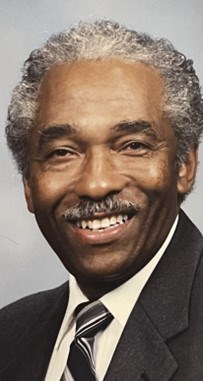
Larry Wallace Hyman was born in Oak City, North Carolina on May 12, 1932, to Mackie (Mack) and Narine Hyman. Of their nine children, Larry was the second oldest, born two years after his sister Hazel. As the oldest boy, he was a little spoiled and knew how to push boundaries without being too aggressive. He was aware that he held a special place in his mother's heart and often tested her devotion. He sometimes faked being ill in order to stay at home with her, as his siblings were preparing to leave for school; and he often announced his dislike of a food item that was prepared for the family meal, only to have her make a separate, substitute dish just for him. Overall, he had a fairly happy childhood. Most of the younger children looked up to him. They continued to do so even after everyone became adults.
Although his family had very little money, they were fortunate enough, as a black family, to own their own small farm. That ownership was a source of pride for all the black farmers.
In the 40s and 50s, reciting poems and singing songs were a major part of the curriculum for black school children. Larry and his peers could still recite some of those poems 50 and 60 years later. For Larry, singing became part of his identity, wherever he happened to be. He sang while doing ordinary things around the house or while driving or making teeth. In the 50s and 60s, when musicals were very popular on Broadway (as well as in the movies), Larry often composed songs to say good morning, to pay a compliment, or even to refuse a request.
Larry attended W.C. Chance High School in Parmalee, NC. The school was named after its founder and principal, William Claudius Chance, Sr. During Larry's time at the school, Mr. Chance became a legend for his defiance of a ridiculous Jim Crow policy. As he was returning home from a meeting in Philadelphia, PA, riding on the Atlantic Coastline Railroad, he refused to adhere to a discriminatory policy of the railroad. As a result, he was ejected from the train, then arrested and imprisoned -- all because of his race. He challenged the policy as well as his treatment; and after four years (1948-1952), the U.S Court of Appeals (4th Circuit) ruled in his favor and outlawed the Jim Crow policy for interstate travel. Members of his community were very proud of Mr. Chance. Larry and the other students kept this story alive over the years.
Following high school, Larry had no plans for further education, due to his lack of funds. As his friends were preparing to leave for college, one friend asked him to ride with him to North Carolina Agricultural & Technical State University (A&T), in Greensboro, NC. After Larry agreed, he began to imagine himself becoming a student as well. His mother gave him her last five dollars. He was unsure of his chances, but he applied and was admitted. He chose as his major, Agricultural Technology -- a decision based solely on his familiarity with the subject (farming). Larry loved being at A&T. He met many other students who were just like him, poor and “country”; and he made many life-long friends. J.C. Israel was his roommate throughout his college years. They had a part-time job working on a poultry farm, which belonged to the owner of a dental laboratory. The owner was impressed by their interest in his work and began training them in dental technology during their spare time. Larry was so proud of his new pursuit that he brought home some of his cases to show them off to the family. Later, when he graduated from A&T, he felt more certain about his future career -- not in Agriculture, but in Dental Technology.
At A&T, Larry enrolled in the Reserve Officers’ Training Corps (ROTC). He also became an enthusiastic member of Omega Psi Phi Fraternity. He was accepted into the college choir where he learned the vocal techniques that later enabled him to become a valued member of the American Church Choir in Nuremberg, Germany. The choir's performances were sometimes held away from the church, in various halls with good acoustics. Some of the members were classically trained. Every Christmas, they performed the opera: "Amahl and the Night Visitor;" and for every Easter, they performed the opera: "The Seven Last Words of Christ."
While Larry was in his second year at A&T, he and his family experienced two devastating blows: the sudden death of his mother, Narine -- followed by the loss of the family farm. Both events forced him to become more involved with family matters. Suddenly, he had to think not just of his own welfare, but also that of his younger siblings. Not long out of college, Larry was faced with having to make life-altering decisions on behalf of his siblings.
Upon graduation, Larry was drafted into the US Army and sent. to Ft. Jackson, SC for Basic Training. Following Basic Training, he was sent to Texas for further training in Dental Technology. Later, he was assigned to the Dental Laboratory at Walter Reed in Washington, DC.
Around the time of Larry's graduation, his father married Dessie Smith (Miss Dessie), a widow with four small boys. Over the next few years, they added three little girls to the family. Mack and Dessie had merged households and moved to a very suitable sharecropping farm; but the owner suddenly broke the agreement, forcing the family off the farm. Miss Dessie reluctantly moved with her children back to her family home, while Mack found an old, abandoned house and relocated (with his children) there.
During a weekend visit home, Larry found his four youngest siblings at home alone. They were living in poverty and chaos. He made a snap decision and approached relatives who had no children living in their homes. He placed two of his young brothers, Jerry and Mackie, Jr., in the home of childless Cousin Robert Hyman. He then placed his sister, Sheila, the younger of Narine's two daughters, in the home of Aunt Margaret, who was quite elderly. These placements were intended to be temporary -- until he or his father could create a better situation. (Alvin, the youngest, stayed with Mack. They rejoined Miss Dessie and her children.)
A few months prior to placing the three children in the homes of relatives, Larry learned that Mack, having no money for a doctor, had set Alvin's broken arm himself. Larry returned home to have the arm reset properly. These were the kinds of situations that established Larry as the person to call when the family was in trouble. He grew in stature in those early days – 22 or 23 years old. The family respected his wisdom and deferred to him for major decisions. For example, in 1962, when his brother Jimmy developed Leukemia, Larry arranged for Jimmy to receive treatment at the National Institute of Health (NIH). It was like a theme, when faced with challenges, they would say “Wait ‘til Larry gets here; he’ll know what to do.”
In 1957, Larry met Alice Rosalee Brown on a double date. At the beginning of the evening, they both were with other people. The evening ended with Larry driving Alice home. The next day he showed up at her door and invited her to go out for a Banana Split at Hot Shoppes. She accepted. A mutual attraction soon developed.
They had a whirlwind romance; and in less than a year, they were married. Before the wedding, Alice introduced Larry to Rev. Joseph Miles, the founder and pastor of Brookland Union Baptist Church.
They had a small wedding, officiated by Rev. Miles, in the home of Alice’s Uncle Preston, with whom Alice had lived since she arrived from her small town in Charleroi, Pennsylvania, about two years earlier. Larry was welcomed to live in the home following the wedding. He started attending Brookland Union and joined the choir in 1958. His only interruption was while stationed in Germany. Larry worshipped at that church and served as a Trustee throughout the decades.
From the beginning, Alice knew that Larry felt obligated to help his family. She too was providing a little financial support to her own family, helping her father and two teenage siblings.
Only months after their wedding, Larry brought his sister (Sheila) from North Carolina to be raised in their home, where she lived until she became an adult. Sheila was only four years old when their biological mother, Narine, passed away. Over the years, many more out-of-state relatives and friends (and even the children of friends) arrived at the home of Larry and Alice. They came to seek employment or to attend college in the area; or for various other and reasons. No one simply roomed in the Hyman home. Everyone became an active member of the household. Their stints were as brief as a few days or as long as six years. Larry not only opened his home to family and friends, he also opened his wallet. In fact, he regularly sent money to some of his elderly family members until they passed away.
Throughout their marriage, Larry was the primary cook. He usually prepared the main dishes and the green vegetables, such as collards and green beans. Alice often contributed as best she could with extra canned side dishes, such as corn and sweet peas, tuna casseroles, and desserts like Watergate salads and cakes. Larry loved cooking Sunday and holiday meals. He also enjoyed outdoor grilling and barbecuing. Their home welcomed many guests for dinner (and sometimes breakfast the next day). The young nieces and nephews, especially, requested Uncle Larry’s famous pancakes.
In January 1960, Larry and Alice became the proud parents of Donna Lynette Hyman. Larry was ecstatic when Alice gave birth to a baby girl. He insisted on the name "Donna." He was so proud that he drove, through heavy snow, to visit his favorite aunt in Greensboro -- just to show off his three-week old baby.
Shortly after Donna‘s birth, Larry received Military Orders transferring him to Nuremberg, Germany.
By that time, he was already the proud owner of a 1953 Fleetwood Cadillac (mint-green with a white hard top), which he took to Germany. His car attracted a great deal of attention. There were only two Cadillacs in the Nuremberg area, and Larry’s was the prettier. On weekends, the family often took day trips to other parts of the country. They toured an endless number of Medieval castles and other attractions. Also, there were always festivals that included live music and folk dancing (polka), along with delicious food. Whenever Larry boldly navigated his yacht-sized vehicle through the tiny streets of the German villages, the citizens stopped whatever they were doing and stared in amazement.
The year 1962 was an eventful year. During the spring of ‘62, David Wayne Hyman became the newest member of the family, through adoption. He was four years old and living in a German orphanage. He knew what it meant to be adopted, and let his prospective parents know that he wanted to be their son. Outside the orphanage, everything was new to him. It took a couple of years for him to calm down.
In March of 1962, around the time of David's arrival, Larry received a Red Cross telegram announcing the passing of his father, Mack. Larry made arrangements for himself and Sheila to take a leave of absence; and after withdrawing extra funds for the funeral, they traveled to North Carolina to help bury his father (literally).
Unlike most black people at the time, Larry and Alice wanted to take advantage of opportunities that living in Europe offered. That summer, Larry took the family camping. They spent several straight weeks traveling to countries throughout Europe. He left his precious Cadillac with a trusted friend in exchange for the friend’s smaller Renault. Even without the Cadillac, the family attracted a lot of attention. Most Europeans had never seen black people in person before, as TVs were not in many European homes in 1962. The family used military camping equipment and traveled from country to country, staying at different campsites almost every day. Larry cooked delicious meals just like he was at home.
Also, while in Germany, Larry took up wine-making (German style). He enjoyed inviting his friends to his home to sample his wines. Although, in the military, officers and enlisted men did not usually mingle, Larry hosted both officers and enlisted men. Some of his guests had their wives with them. He would also often invite fellow soldiers, whose families were back in the States, over for dinner or to play cards and listen to music on the stereo. Some of them spent weekends with the family and even attended church services with them. Many became life-long friends, visiting Larry's home in DC, as well as in Silver Spring, MD (sometimes with their families).
When Larry returned to the States in 1963, he was assigned to a Dental Laboratory in Northern Virginia. His brother Jimmy was in the final stage of his battle with Leukemia. Months earlier, Larry had received word that Jimmy was very ill and he took emergency leave to return to the States to do what he had always done for his family -- take charge. He arranged for Jimmy to get treatment at NIH. In 1962, most Americans had never heard of Leukemia nor of NIH. Unfortunately, Jimmy passed away soon after Larry’s return. Again, Larry took charge and arranged for Jimmy’s funeral.
With the exception of his tour in Germany, Larry’s entire military career (over 20 years) was spent in the Washington, DC area. As he was approaching retirement, Larry built his own swimming pool. He worked evenings and weekends until the pool was finished in late summer. After the pool was completed, Larry soon realized that he needed to be able to swim well enough to save a life. This thought occurred only after one of his brothers almost drowned in the pool during its grand opening. Larry enrolled in swim classes during the fall and winter months so that he would be fit by the next summer. His own children were on their way to moving out. David was about to leave for the military; and Donna was graduating high school and would soon move into her dorm at "Trinity College" in Washington, DC. Donna, however, came home often, and invited old and new friends to her pool parties. Also, Nicole and Jonathon (Sheila's children) spent most of their summer weekends at Uncle Larry’s, where they perfected their swimming and diving skills. And later, Kyle -- like his mother, Donna -- often hosted his friends for sleepovers and pool parties at his “Papa’s“ house.
Around 1978, about a year after his retirement, Larry converted his back porch into a professional dental laboratory. He then started to introduce himself and offer his services to dental offices. It didn’t take long to start building his client base and to earn a good reputation for quality work. Because he was skilled at getting a “good fit” for the patient, some dental offices occasionally asked him to assist with the impressions in difficult cases.
When his sister, Hazel, moved from New York and lived with Larry, he made her his assistant for about two or three years, until she moved out. When David returned from the military, Larry trained him and they worked together for several years, until David became a Dental Technician for the Veteran Administration. Larry continued to operate his lab until around 2007. Before Hazel and David came along to cramp Larry’s work style, it was common for visitors to drop by his lab, where they enjoyed a bowl of beans or one of his other specialties that he had been simmering on the stove.
In retirement, Larry enjoyed being outside mowing his lawn and tinkering around in his garage and his shed. Over the years, Larry grew very fond of collecting and driving his old cars. He also enjoyed maintaining them. His collection included old Cadillacs, old Mercedes Benzes, and an old BMW. He built a large carport in the rear of his two-car garage in order to accommodate all of his old cars.
As he grew older, Larry's humor often reflected his age. He kept in his wallet a picture of his younger self. And sometimes, after waiting in a long line, he would pull out the picture and say to the teller/clerk that the picture was how he looked when he first arrived in their line, and what they now see is what happened to him during the long wait.
Larry’s very favorite thing to do was keeping in touch with the people in his life. As he aged, those conversations became more and more important to his well-being. He loved talking to almost every person he knew. Larry spoke to some people weekly or every two or three weeks. He even made friends with people he had met through services they had provided to him over the years. His favorite conversation included reminiscing with old friends and relatives, especially when they both recalled the same events, or people from the past, and when they both began to remember more and more of the details. That kind of conversation made his day.
Larry enjoyed people. He enjoyed family. He enjoyed his life. He’ll be sorely missed!
*****************
Larry leaves behind his wife of 67 years, Alice Brown Hyman, who is in the care of a nursing facility.
Preceding Larry in death: his mother (Narine) and father (Mack); followed by his brothers, Jimmy, Jerry, and Major; his sister Hazel; his brother Mackie, Jr.; his sister Darlene; and his stepmother (Dessie Hyman).
He also leaves to cherish his memory: son David W. Hyman (Noemi); daughter Donna L. Hyman (Tyrone Mimms); grandsons Kyle D. Mimms (Ary), Andre D. Greene (Jenna), and Jorel A. Greene (Ashley); great granddaughter Kai Mimms; sisters: Sheila Hyman Agee, Hortense H. Swepson (Charles), Marilyn H. Belin (Phil); brothers Samuel R. Hyman, Council C. Smith (Fannie), William B. Smith (Helen), Jay O. Smith, Dennis L. Smith (Bernice), and Alvin H. Hyman (Lorice).
Additionally, Larry leaves to cherish his memory a host of nieces, nephews, cousins, and his church family.
Show your support
Add a Memory
Share Obituary
Get Reminders
Services
SHARE OBITUARYSHARE
- GET REMINDERS
v.1.18.0