
OBITUARY
Donald Howard Crosby
April 3, 1927 – May 16, 2015
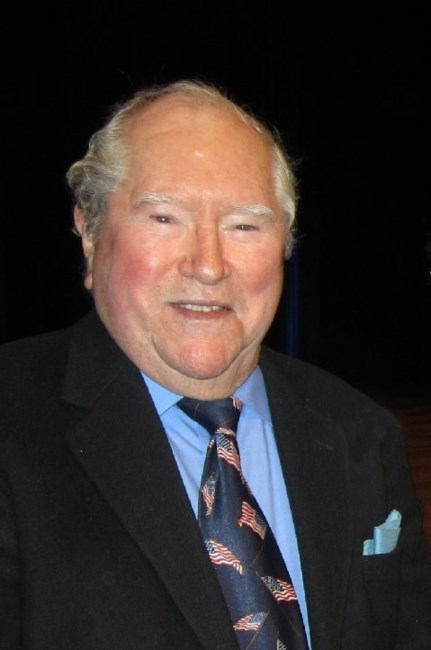
Donald Crosby, who died on May 16, 2015, reveled in the genuine, but often amusing contradictions in his life. A precocious child who dropped out of his New York City high school, he earned a Ph.D. with highest honors from Princeton University. He became Professor of German Literature at seven universities, with hundreds of scholarly articles and lectures to his credit, yet probably the most widely remembered was a reminiscence of his misspent youth: “Playing Hooky in the Bronx.” He had an astounding ability to memorize and recite hundreds of lines of German poetry, yet when given paymaster duties in his Army unit, he got the amounts so mixed up that everyone was paid twice. He liked the formality of suit and tie or tuxedo but was equally eager to wear improvised costumes and take funny photos. Donald felt strongly tied to the history of his favorite baseball team, the New York Yankees. He was there in Yankee Stadium when Lou Gehrig gave his farewell speech, Joe DiMaggio hit home runs , and Babe Ruth made his last appearance at the stadium.
Born April 3, 1927 in Bronx, New York, Donald was drafted into the World War II Army that was preparing to assault the Japanese home islands, a strategy grimly expected to produce horrific numbers of U.S. casualties. Two weeks after he began boot camp, the atomic bombs ended the war, and he always credited the mission of the Enola Gay with saving his life. The military had a program that shipped millions of books to servicemen overseas. Passed over by all the other G.I.s was one academic level book, “The Gift of Tongues”, that awakened Donald’s mind to possibilities beyond what he had known in his Depression-era, blue collar family background. This single book plus the massive G.I. Bill that provided veterans access to a college education gave him his future.
Discovering a natural talent and affinity for German, Donald accelerated through a B.A. with honors from New York University and the graduate program at Princeton, specializing in Kleist and Goethe with the goal of teaching on the university level. He received two Woodrow Wilson Fellowships and was in the first class of Fulbright Fellows sent to Germany. But, before his academic career could get under way, he detoured into the National Security Agency. His remarkable memory for passages of German literature brought success in breaking codes used by East Germany during the Cold War.
Back in academe, Donald was Professor of German Literature at Princeton University, Indiana University, Dartmouth College, Queen’s College, University of Kansas, and University of Munich, Germany, retiring in 1990 from University of Connecticut. He found new audiences after moving to the Washington D.C. area as a popular lecturer at the Smithsonian, German Embassy, Swiss Embassy, Kennedy Center, and Goethe Society. He gave the first lecture to the newly founded Wagner Society of Washington D.C., later receiving their Wagner Award for presentations such as “Tristan and Isolde: Debt to German Romanticism” and “Wagner and the German Tradition”. He felt a sense of mission to promote understanding that the twelve years of Nazi horrors should not erase from the world’s cultural memory hundreds of years of German accomplishments in literature, philosophy, poetry, and music.
Music…the biggest contradiction of all. Donald was passionate about classical music. He himself could not perform or compose but he developed the appreciation of music to an art form itself. As a 10 year old, he listened avidly to the Metropolitan Opera on his tinny little radio, never dreaming that he would eventually hear Wagner’s “Ring” in Bayreuth. With no music lessons as a child, he began the most basic piano instruction at age 33 and continued to play on his own for the rest of his life. He eagerly bought the first LP records and lived into the iPod era when he could have the entire canon of classical music in his pocket.
Donald met his “grosse Liebe” (great love) Bonnie Becker when she was a freshman at Indiana University and he was a first year faculty member assigned to teach German 101. He was her favorite teacher and she, his favorite student. Each went on in different directions over the years but met again a quarter century later. They loved being in love and together had a zest for finding fun. Each was the other’s best audience.
A frequent traveler to Germany, Donald just happened to be there the week when the Berlin Wall came down. He triumphantly chopped his own piece out of that hated symbol of the Communist regime. On other travels, he paraglided in the Alps, chased a solar eclipse across the Caribbean and went scuba diving in his beloved Kauai. On the return flight home from a cruise on the Danube River, just after a champagne toast, Donald had a heart attack and died before the plane landed.
Family members grieving his departure from their lives are Bonnie Becker, Stefan Crosby, Walter Crosby, Catriona Crosby, Olga Dutka, Deidre Lally, Geoffrey Polk, Crystal Polk, John Robinette, Lori Hill, Bradley Polk, Adam Robinette, Bryan Robinette, Leo Lally, Jack Lally and the spirit of Amy Polk.
In tribute to Donald’s concern about the future of classical music, donations can be sent to “From the Top”, 295 Huntington Ave Suite 201, Boston MA 02115. Donors may also give online at http://www.fromthetop.org and note that the gift is in memory of Donald Crosby.
Cremation services were provided by Demaine Funeral Home in Springfield, Virginia, www.demainefunerals.com. A Celebration of life will be held in the near future.
Show your support
Add a Memory
Share Obituary
Get Reminders
Services
SHARE OBITUARYSHARE
- GET REMINDERS
v.1.18.0