
OBITUARY
Audrey Helen Watson
4 March, 1921 – 21 January, 2011
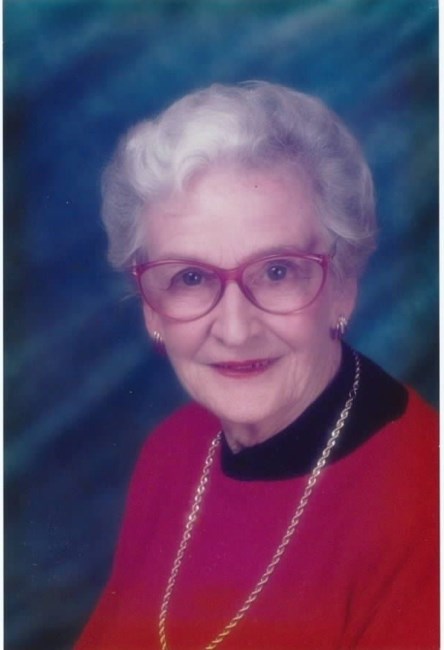
Audrey Helen Kimberley was born on March 4th, 1919 in Blackpool, Lancashire, England – at the seaside. Her father Thomas Edward Kimberley was a tailor by profession, which probably accounted for the fact that Mum sewed ALL my clothes for me when I was young – and they were beautifully made. I remember dresses with hand smocked yolks and one particularly fabulous party dress made out of red velvet and glittery tweed. My grandfather was a singer in the Blackpool Light Opera Association and a dedicated mason – Mum still had his mystical Masonic gold fob. Her Mother, Helen ----- Wardleworth Kimberley was apparently a wonderful business woman so at some point in my mother’s childhood her parents bought a private hotel on the Promenade of this seaside resort, my grandfather quite his job as a tailor and set to work with her to make the business a success. She grew up helping in the hotel when she had time, living in this interesting environment surrounded by loving parents, a hotel staff that doted on her and guests who came and went. A lot of my childhood memories involve time spent in the commercial kitchen of this small hotel watching my grandfather peel potatoes and my Aunt Mearrha and Uncle Stan bustle about the hotel managing their small staff and making the whole thing go. I didn’t know my maternal grandmother, she died when I was 11 months old from complications after surgery, but she was always very much alive to both my parents. They both talked about her often. My father used to say that she was a magnificent woman, handsome, smart and of great character - and – of course, the main reason that he married my Mother!
Mum’s only sibling Myrrah was seven years older than she and she often said she grew up just like an only child. By all accounts Mum had an incredibly happy childhood with a great deal of respect and support from her parents, very few rules and the freedom to do pretty well whatever she liked. She was a “good girl” who didn’t like school much but loved to dance and spent most of her youth doing just that – studying ballet and dancing in recitals and pantomimes. I have a book about the famous Blackpool pantomimes and Mum’s name shows up there several times.
When she was four years old she was taken to a birthday party and there was 6 year old Alan Parkinson Watson. Although she obviously didn’t know it then - her fate was sealed. He must have liked her because she told me he gave her a penny that she treasured all her life. From that moment on, through thick and thin, tragedy and comedy, she was his girl. As they grew older he carried her books to the girls’ school that she attended then raced back to the boys’ school in time for class. After school if he would often be waiting for her to walk het to her ballet classes. Dad told me many times that Mum was a very snappy dresser – loved to be in the latest, greatest and often (to his way of thinking anyway) outrageous styles. To quote him “Your Mother used to “get herself up” in the most ridiculous outfits when she was a girl!” There are photos of her then – she was magnificent. Tall and willowy and elegant and always smiling – no wonder he was smitten. Her love of fashion has certainly made its way down to me, and to Wendy and Deborah! Growing up it seemed to me that people who knew Mum always said she was an essentially uncomplicated and very happy person.
Then came the war and everything changed.
Mum’s sister Myrrah, who at that time would have been 25, her husband Stan and their two very young children were living in Shanghai when the Japanese attacked. He was the controller there for Jardine Matheson, a large international import export company. My Aunt and cousins were placed in an Internment camp while he was kept working to keep commerce going for the benefit of the invading forces. The Thornley family spent the war interned in China and the family really didn’t know much about what had happened to them.
In the meantime Mum’s boyfriend, my Father, then 20 years old, decided to quit his accounting studies and “join up”. As many of you know, he was shipped out to Singapore and in 1941, when Singapore fell, he and his battalion were captured, marched up the Malay peninsula into the jungle between Rangoon and Bangkok and forced to work hard labour building what became known as the “death railway”. There were ____ who went out and only ____ who came back in 1945. My Mother often told the very moving story of standing on the side of the dock watching his ship return to Liverpool the ship was almost travelling on its side – all “the boys” were on the dock side of the boat looking for their families.
While her family was scattered over the globe and she had little idea whether she would ever see any of them again, she decided she’s better do something to help. At 17 ballet was over for her– there was no time for such frivolity in her world, so she joined the Land Army and was billeted out to a dairy farm some miles from home. She didn’t talk much about her experiences in those years except to say that it was very hard work hefting the huge milk cans about and driving a very large lorry. She prided herself all her life on being a wonderful driver having driven such a huge vehicle for those years – when Wayne and I had to tell her she couldn’t drive anymore because of the Altzheimer’s disease (and that was a scary meeting!) she was absolutely furious – she couldn’t understand that someone could prevent her from doing something she had been doing very well for 65 years. She must have had a social life in the war years and I often wonder what she got up to during that time, but whatever it might have been she clearly was determined to wait for my Father to come home. I asked her once why she waited when she had no idea if he was alive or dead and she said ‘I knew he was alive. I would have felt it if he wasn’t”. Her determination and loyalty never wavered
So - my Father was one of the “lucky” ones who returned. No one back then understood post traumatic stress and the incredible toll prisoner of war experiences took of its victims. There was no counselling for the men were returned – they just went back to their families with all the issues that such a horrific experience left behind and only each other to turn to. Mum and Dad were married within a few months of his return, on March 4, 1946 and I was born the following December. To say that Mum had her hands full is an understatement. She had on her hands a brilliant, tortured soul with a huge drive to make the world a better place and no concept of normalcy. I remember as a child that our home was filled every night with his army buddies who arrived at dinner time and ate and drank and talked until they were able to sleep . Mum cooked and cleaned and worked at the local library and tried to manage the hugely emotional environment in which she found herself. O say that it was difficult for her is an understatement – it was constant turmoil. It is a testament to the passion she had for my Father that she hung in there with him right to the very end and always believed that he was the most wonderful man in the world.
Show your support
Add a Memory
Share Obituary
Get Reminders
Services
SHARE OBITUARYSHARE
- GET REMINDERS
v.1.18.0