OBITUARY
John Forman Howes
19 June, 1924 – 4 February, 2017
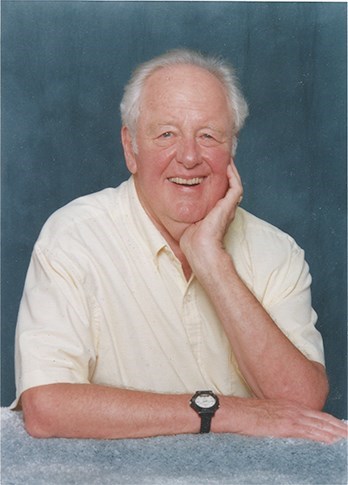
June 19, 1924 – Feb. 4, 2017
John F. Howes traveled far and wide, spreading light and warmth wherever he went. We remember him as a remarkable teacher, scholar, paterfamilias… and enthusiast, in equal measure for trains and church music.
During 30 years at the University of British Columbia, for thousands of students Prof. Howes brought the history of Japan and China to life with exceptional insight and compassion that was recognized in 2005 by the American Historical Association’s prestigious Roelker Award for teaching excellence.
As a scholar of Japan’s intellectual history, John was the leading biographer of Meiji Era Christian thinkers, notably UchimuraKanzo and Nitobe Inazo, who were instrumental in the greatestreordering of Japanese thought in millennia, a process brought on by sudden exposure to Western influence. This value of this scholarship, combined with his personal efforts to aid Hiroshima survivors in the war’s aftermath, was recognized in 2003 with the award of the Order of the Rising Sun, one of Japan’s highest civilian honors.
As paterfamilias, John was the devoted husband of Lynn for 46 years from 1958 until her death in 2004, and beloved father and grandfather of sons Christian and Forman and their five offspring.
As railway enthusiast par excellence, over the course of nine decades, John took every significant passenger train journey imaginable, across every continent. His knowledge of the world’s rails was encyclopedic.
An accomplished organist and chorister, few things delighted John more than a Bach cantata.
His three great passions – Asia, trains and sacred music – were bred in the bone.
John was born June 19, 1924 in Chicago, where his father, Harold Howes, worked as a civil engineer for the Burlington Northern Railroad. His mother, Florence Forman, was a nurse born and raised in India to a family of missionaries who had been working there since 50 years before her birth.
Growing up in suburban Hinsdale, Illinois, the family home was frequently visited by American missionaries raised in India who spoke at least one Indian language. And even during the depths of the Depression when his father was reduced to half-pay, free employee rail passes allowed the family to travel widely across the U.S. A typical summer vacation involved camping beside narrow-gauge railroads in Colorado.
A diligent student but not a sportsman John studied piano and later the organ. Graduating from high school in 1942, he was offered a singing scholarship to the Westminster College of Church Music but turned it down in favor of Kalamazoo College and the U.S. Navy Reserve Officer Training Corps. With the war effort ramping up, though, he was soon called for active service. As a budding naval officer, however, he soon realized that navigation was not his strength. This led him to apply to the Naval School of Japanese and Oriental Languages in Boulder, Colorado, where he began an intensive program in 1944.
Although the war ended before his language training was complete, the U.S. Occupation Forces were so short of Japanese-speaking staff that John was dispatched in 1946 to work in Tokyo with the Allied Translation and Interpretation Service as part of the Allied Occupation of Japan. Arriving in Japan on Jan.1st, 1947 he worked at General MacArthur’s GHQ until Aug.1948. Surrounded by intense deprivation in the war’s aftermath, John’s missionary instincts led him to devote his free time to helping distribute relief supplies to those in need.
The end of John’s hitch with GHQ in the summer of ’48 coincided with his brother Harry’s journey to Chengdu, China, to take up a teaching post at a missionary school. Reuniting in Yokohama, the two brothers sailed to Shanghai on the eve of the Chinese Communist victory. After side-trips to visit missionary relatives in Peking and Tsinan, they sailed up the Yangtze to Chungking and on to Chengdu by truck. Harry – later interned by the Communists – stayed there to teach while John embarked on a round-the-world odyssey. Flying “over the hump” to Rangoon and on to Calcutta, he saw newly independent India and Pakistan through the eyes of missionary relatives who had lived half-a-century in both parts of what had suddenly become two different nations. Then on by train through Iraq, Turkey and Europe en route back to Chicago.
After completing his war-delayed BA at Oberlin, John was back in Japan barely two years after leaving in ’48. From 1950 he was the first postwar, non-Japanese graduate student at the prestigious University of Tokyo. There, he quickly became fascinated by the interplay between Japan’s late-19th-Century intellectuals and the radically new Western belief systems that confronted them, particularly Christianity and pacifism.
Unusually for the time, John did not seek the company of the numerous American occupiers, preferring to immerse himself in attaining the language skill needed to directly grasp the thoughts of Japan’s most sophisticated intellectuals. And to rededicate himself to his earlier humanitarian work. Although much of this effort was ad hoc, helping out wherever he saw a need, John worked closely with a group of young women disfigured by the atom bomb, known as the “Hiroshima Maidens.” He helped recruit a support group that connected these women to severalcosmetic surgeons in New York who helped them return to(relatively) normal lives.
Even by spending Christmas of 1954 with Japanese friends, though, John wasn’t able to avoid meeting one young American woman who lived within the Occupation bubble, an attractive teacher named Lyn Lapp. Intrigued to hear of her desperate desire to escape the claustrophobic confines of Washington Heights (the segregated Occupation compound in what is now Yoyogi Park) and her need for someone who spoke Japanese to help her break out, John took the cue, worked up his courage, and asked her out.
He didn't have the confidence to ask her to marry him so Lyn moved on to teach at Army schools in Germany. She was determined not to be forgotten, and sent John a blizzard of letters and postcards. As a result, they were married in Jan. 1958.
The newlyweds soon moved back to Tokyo, where John took onan important role as the executive director of the newly established International House of Japan. From then on, for the rest of their lives, John and Lyn shuttled back and forth between Japan and North America.
To finish his PhD at Columbia they returned to New York in 1960. Then, in Sept. 1961, with newborn son Christian in tow, they moved to Vancouver where John took on his lifelong role as professor of Japanese history in the newly formed Asian Studies department at UBC.
Although John Howes was never head of UBC Asian Studies, few would dispute the contention that he was its heart and soul for three decades – especially for undergrads. No matter that the freshman East Asia history class had 100+ students, Prof. Howes had a sympathetic ear for each one. That he was an exceptional teacher was recognized in 2005 by the American Historical Association with its Nancy Lyman Roelker Mentorship Award for excellence in teaching history. And not to be forgotten is his pivotal role in the building of UBC’s Asia Centre, topped by the roof of the Sanyo pavilion at Osaka’s Expo ’70. John persuaded Sanyo to donate the roof to UBC.
All the while, his scholarship progressed at a more measured pace. Prior to retirement, in addition to numerous monographs on Nitobe and Uchimura, his major books included Pacifism in Japan: The Christian and Socialist Tradition (Vancouver: UBC Press and Kyoto: Minerva Press,1978), Tradition in Transition, The Modernization of Japan (New York: Macmillan, 1975), and Japanese Religion in the Meiji Era (Tokyo: Ministry of Education, 1956). But his magnum opus, a biography of Uchimura, remained to be finished when he retired in 1988.
While Vancouver was always home from 1961 till he drew his last breath, comings and goings to Japan were the rhythm of life for John and Lyn. In 1966, with younger son Forman still a babe-in-arms, they returned to Japan for a sabbatical year in Japan, setting a pattern repeated in 1975 and 1985. After retiring from UBC in 1988 they both took teaching positions at Obirin University near Tokyo, where they remained until 1995. In 2003, the year John received the Order of the Rising Sun, they made one final trip to Japan together. The next year, with Lyn’s passing, they were parted after 46 years.
After Lyn’s passing, and fighting the tide of advancing age, John’s preoccupation was to complete his 445-page magnum opus: Japan's Modern Prophet (Vancouver: UBC Press, 2006) – a biography of Uchimura Kanzo (1861-1930). After the English manuscript was published in 2005, herculean effort was required to back-translate Uchimura’s citations and all the footnotes for the all-important Japanese edition. As part of that effort, John made his final pilgrimage to Japan in 2013. With the Dec. 2015 publication of the Japanese edition, his life’s work was complete.
Not long after his return from Japan in 2013, John moved into Cavell Gardens, a Senior living facility in Vancouver, where – as was his wont – he spent his final years warming the hearts of fellow residents and staff.
The family asks those who wish to honor John Howes to contribute to the annual John Howes Lecture in Japan Studies at UBC.
Please click to access the donation site:
Arrangements under the direction of First Memorial Funeral Services, Vancouver, BC.
Show your support
Add a Memory
Share Obituary
Get Reminders
Services
SHARE OBITUARYSHARE
- GET REMINDERS
v.1.18.0