OBITUARY
Dr. John R. Taylor MB, ChB, MRCPEd, FRCPC
26 July, 1932 – 27 October, 2010
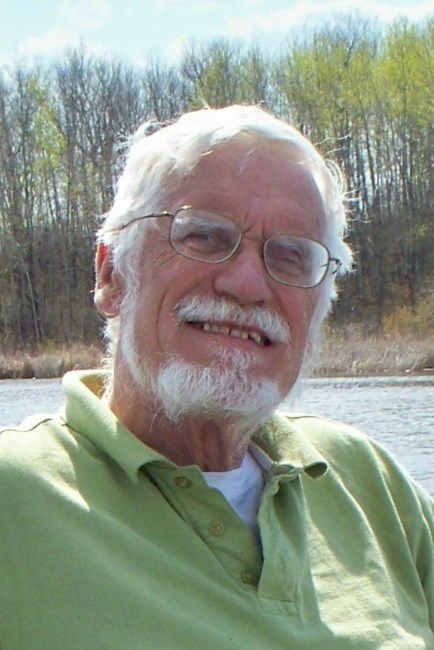
July 26, 1932 – October 27, 2010
John Rippon Taylor has left us a legacy of so many qualities that matter in life. He was kind, gentle, supportive, blessed with humour, wit and curiosity. I have been honored to call him my friend. John was one of my professors during my first year in medicine. I feel fortunate to have known him first as a teacher and then as a mentor and close friend for the next 40 years. He was a constant source of support and encouragement, not only to his family, but to mine as well.
Let’s look back to the beginning.
John was the second of five children of William and Constance Taylor. He was born in 1932 in Bradford, Yorkshire, England and that identity was a part of who he was. But he was much more than that. John showed an early curiosity about the world around him, which later found a home in the natural sciences and the arts. He met the love of his life Margaret when he was 18 and they married in December 1956 when John was 24. After qualifying as a physician, John was diagnosed with pulmonary TB for which he was hospitalized for 8 months. This is how John learned what it meant to receive medical care as a patient and the importance of empathy in work and family life. He resumed his medical practice at the age of 26 and by 1962, became a Member of the Royal College of Physicians of Edinburgh. Around this time, their older daughters, Allison and Jenny, were born.
Then, John and Margaret made a life altering decision. They chose to move their family to Ibadan, Nigeria, where John worked as a Pathologist at University College Hospital. Pathology appealed to John’s curiosity about the world. To do it well, you need the mind of a detective at times……an inquisitive mind, just like John’s.
During those years in Nigeria, John developed and experienced great affection for the people of Nigeria and their art. His medical research interests started there with his work on the thyroid. About this time, their third daughter, Sara, was born in Ibadan. John’s research in Nigeria made a foundation for further studies in Kenya where he and his family lived for two years. In Kenya, they made memorable family safaris to many districts of Kenya. And there he expanded his research on thyroid disease. In addition, John was asked to help young people in Nairobi suffering from the joint pain of hemophilia and he set-up the first cryoprecipitate treatment laboratory and clinic in Kenya.
And then another life changing decision. John answered a request to look at a staff position at Health Sciences Centre in Winnipeg and so from the gentle mist of the Kenya Highlands, John and his family moved to Winnipeg. Soon they experienced our -40 degree cold in January, but they quickly adapted and became busy in their new land. I met John by chance as we both read a poster for an exhibition of African art at our Medical College. We soon realized we both had some of Africa in our veins. From that point on, John and Margaret became close friends and that friendship grew and spanned over four decades.
Let me mention a few special memories. John’s carpentry skills were tested by a project at their Oak Street home when he built his own garage in the cold autumn weather. John and I finished the siding and the shingling as snow and darkness arrived. And Margaret kept us warm with lots of hot chocolate and great meals of chicken and chips.
John knew that children need to be encouraged to explore the world and he built a wonderful play structure full of magical parts for my four children. And he built another one for his grandchildren. His love for my 4 sons was one of the guiding lights in our lives.
John was always a gentleman and considerate of the experience of others.
There is one sad memory. He phoned me on a Sunday afternoon in 1980 and said, “I just wanted to tell you so you didn’t hear it on the news. Sara was killed by a drunk driver yesterday.” Those words still ring in my ears. That tragedy had lasting effects for many years, but John and Margaret later transformed their tears into a zeal for action by starting CAID in Manitoba.
CAID was Citizens Against Impaired Driving which was the first Canadian organization of its kind. They worked on the project together and Margaret was awarded a Queen Elizabeth Jubilee Medal for their efforts. Later, CAID joined the group, MADD Canada, Mothers Against Drunk Driving. In time, John returned to his work where he guided new residents in Surgery and Pathology at the Health Sciences Centre. One of these is Dr. John Momoh who will speak today.
John’s research included studies on the cardiac electrical conduction system and the anatomy of the male reproductive tissue. The latter study reported on the now well-known phrase, “the ridged band,” which described a key finding of major importance. This article is now frequently quoted by authors around the world.
John overcame a major challenge in his later years. Glaucoma affected both of his eyes, particularly the left. He faced the challenge and adapted to use the microscope with his right eye and retired later as a distinguished professor and pathologist.
It felt good to be around John. He took great pleasure in his growing family of grandchildren, by now numbering 6, with Tracy, Steven, Kevin, Ryan, David and Laura; his great-grandson, Kai Charles; and his godson, Jon. His zest and curiosity were shared with all of them as he had done with his own children. As my son Lars wrote in an
e-mail: “He always made the people around him feel so good about things and his influence on our family will never be forgotten.”
John gave the next generation the tools and qualities to have a better life. He said that the struggles in life will always be with us and making life easier for the next generation was not as important as to prepare them with the right tools for the challenges in life.
I think I can hear some of Charles Darwin in John’s voice!
John and Margaret were students of the world. They traveled extensively to the United Kingdom, Europe and Australia, New Zealand and much of Canada and the United States. These trips gave them opportunities to visit family and friends and enjoy the wide range of cultural and historical experiences in music, art and theatre. And they proudly obtained their Canadian citizenship and some years later they joined us at the rally at the Forks in 1995 to say “No” to our country falling apart by separation.
John was a fan of Charles Darwin. In fact, Darwin’s image was his computer screen saver! John was an eloquent speaker and especially so when speaking of the importance of Darwin, and John’s eloquence was often cited when he gave evidence at murder trials in the Court of Queen’s Bench.
John could cut a braggart down to size by one quick witty understatement, such as “he needs to get his hat resized.”
John’s love and devotion to Margaret is a lasting legacy for us all. In later years, they delighted in their searches on eBay to find hidden antique treasures. I was inspired by their enthusiasm, and became an avid student of their interest in these antiques.
John was also a keen gardener at his beloved cottage at Lee River where he built and remodeled extensively. One of his favorite questions was, “When are you coming to see us at the cottage? Another would be, “When are you coming over for dinner?” These questions were always asked with John’s warmth and genuine interest in you as a person.
John faced his last year with dignity and calm determination. As my son Leif wrote when John was at St. Boniface Hospital, “Dad, please pass this on to John….you have been a pillar in my life and a role model as a family man, husband and doctor. We will say a prayer for you and your family tonight.”
Let’s recall the qualities of John in his life journey. He was friend, mentor, professor, physician, detective, humorist, carpenter, art critic, Yorkshireman, African, and Canadian. He was kind, considerate, and brave in adversity. Family focused, brilliant in his work, and always a gentleman.
The following quote from the Icelandic Consulate I think would apply today:
Kinsmen and thyself,
Too soon must die;
But the good name never dies
of one who has done well."
Good night our sweet prince.
You have shown us the way and made our journey better.
Your spirit transcends time and place.
Your memory will be with us forever.
* * * * * * * * * *
JOHN RIPPON TAYLOR
MB, CH B, MRCPED, FRCPC
With deep sadness we announce the passing of Dr. John Taylor, at home peacefully on 27th of October, surrounded by his family.
John was born on the 26th of July, 1932 in Bradford, Yorkshire, England.
The loving husband of Margaret, beloved father of Alison (Andrew), Jenny (Greg) and Sara, and an exceptional (eccentric!) grandfather to Tracy (Jens), Steven and Kevin Taylor and Ryan, David and Laura McGinn. He was thrilled by the recent birth of his great grandson, Kai. John also leaves behind his devoted dog, Daisy, who never left his side.
John is also survived by three brothers and their families in England, and his sister’s family in Australia.
He was predeceased by his precious youngest daughter, Sara in September 1980, his parents and his dear sister Judith.
John spent his school days in the city of York, England at Archbishop Holgate’s Grammar School. In his last year of school he met Margaret, at the bus stop outside York station in 1950, which was the beginning of a life time together.
In 1956, John qualified in medicine at the University of Birmingham Medical School, England followed by junior hospital positions in Birmingham, Sheffield and Liverpool, culminating in his acceptance as a member of the Royal College of Physicians of Edinburgh in 1962 and his decision to specialize in Pathology.
Always interested in a new experience John accepted a position as a Pathologist at University College Hospital, Ibadan, Nigeria in 1963, supported by the British Overseas Development Corporation. The combination of hospital duties, research and teaching occupied much of John’s time but the introduction to West African sculpture ignited a passion that equaled his devotion to medicine. His study and love of Yoruba sculpture was undiminished over forty years, leading to an understanding of the artistic value, ethnic variety and expertise of the Yoruba carvers that was phenomenal.
When John was offered a position as Pathologist at the Medical Research Laboratory, Kenyatta National Hospital, Nairobi, Kenya in 1967, he accepted a new challenge and an opportunity to experience East Africa. He took his family camping in game parks, boating up the Nile, driving into Ngongoro crater and exploring Olduvai gorge.
John’s special contribution in Kenya was his medical treatment of hemophilia. He was the only doctor at the time making cryoprecipitate that would halt the bleeding episodes in his young patients. The effect was so stunning the nurses referred to it as “ Dr. Taylor’s magic stuff”.
There always comes a time to dig roots and in 1969 the Taylor family emigrated to Canada.
John spent 27 years at the HSC as a forensic pathologist, teacher and researcher and was an Associate Professor of Pathology at the University of Manitoba. His heart research, which included a special interest in the development of the human heart from embryo to adult, was published in the Canadian Journal of Cardiology.
However, the research that gave John international recognition was the work he did to support a growing opposition to routine infant circumcision. His publication in the British Journal of Urology was a courageous and creative effort to secure the genital integrity of infant boys born today and in the future.
Dr. John Taylor was the ultimate scientist, always meticulously thorough in his work. His interests were many and varied. He found joy in music, art, antiques, photography, history, all a result of an instinctive curiosity.
Since his retirement in 1996, John has enjoyed summers at the cottage on the Pinawa Channel, gardening, boating, building and relaxing with dear friends and neighbours.
In his life John put his family above all things. His love and pride in his children, grandchildren and great grandson was profound.
He loved the simple things in life: walking his dog, a cold beer on the cottage balcony and long talks with Margaret. He lived a good life, full of honesty and integrity, always upholding the Hippocratic oath he signed more than 50 years ago, “First do no harm”.
He will be sorely missed by all who knew, loved and respected him. In the words from Shakespeare’s Hamlet.
“Now cracks a noble heart,
Goodnight, sweet prince.
And flights of angels sing thee
to thy rest”
The family would like to express their profound gratitude to the doctors and staff of St. Boniface Hospital, CancerCare Manitoba, Palliative Care and especially all the Home Care workers who enabled us to grant John’s wish to come home. Thank you from the bottom of our hearts.
In lieu of flowers a donation to CancerCare, Manitoba or the Winnipeg Humane Society would be appreciated.
A memorial service to celebrate John`s life will be held at Thomson “In the Park”, 1291 McGillivray Blvd. at 2 p.m. Tuesday November 2nd.
Show your support
Add a Memory
Share Obituary
Get Reminders
Services
SHARE OBITUARYSHARE
- GET REMINDERS
v.1.18.0