
OBITUARIO
Howard M. Anderson
2 septiembre, 1925 – 12 mayo, 2016
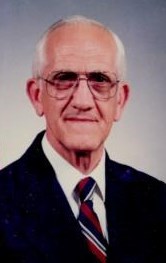
Howard Martin Anderson, 90, passed away on May 12, 2016 in Apopka, Florida. Howard was born to his late parents Peter and Lilly Anderson on September 2, 1925 in Greeneville, TN. He worked for Amtrak as a telegrapher for 42 years, retiring at age 61. In his retirement Howard was heavily involved with the Seventh Day Adventist Church. Howard is survived by his wife of 45 years, Marjorie Anderson; his two children, Kenneth Anderson (Judi) and Nancy Lawhorn; As well as his two step children, Wesley M. Hall (Jann) and Reba H. Crawford (George); his six grandchildren, Gus, Aron, Michael, Mark, Tim, and Georgia; and his three great-grandchildren, Fiona, Emma, and Levi. Services will be held for Howard on Wednesday, May 18, 2016 from 5-7pm and on Thursday, May 19, 2016 at 11am at Baldwin Fairchild Funeral Home, 90 Weathersfield Avenue, Altamonte Springs, FL 32714. In lieu of flowers memorial contributions can be made to the Alzheimer’s Association. Where Did It All Begin? Howard Martin Anderson Birth: Sept. 2, 1925 Retirement: Sept. 2, 1986 61 Years Where did it all begin? Life began for me on September 2, 1925 in a small country home on a road known as Jones Bridge Road, Greene County, five miles from the town of Greeneville, Tennessee. My parents were Peter and Lily Anderson. My dad was employed by the U.S. Post Office until his retirement in about 1936 due to disability. Before were plentiful, my dad walked the five miles to town to work, come rain, sleet, snow, heat or cold. My mother always stayed at home and cared for the house, her sons and daughters. She also did a lot of gardening, canning many of the foods that grew in the garden. My sisters and brother were Florence, Lillian, Edith, and Curtis. We lived in the country until I was about nine or ten years old, and then we moved to 1026 W. Main Street, Greeneville, Tennessee. Our house was located only a few blocks from the Takoma S.D.A. Hospital and only about a block from the Southern Railroad. Trains began to fascinate me, and my dad and I enjoyed walking; so we spent many hours over the few years, walking up and down the railroad tracks. I just loved to lay at night and listen to the sound of the steam engines as the whistle would blow close by and then fade off in the distance, echoing through the hills. I can almost hear the sounds still echoing. It was about 1936 that my dad decides to move to Florida on the recommendation of his doctor, because of health reasons. The doctor stated that if he would make the move, he could live another ten years. This he did, and passed away in 1946. For the first few years in Plant City, Florida my parents rented homes or apartments. Plant City was a nice quiet little town known as the Strawberry Capital of the world. Oh, were strawberries plentiful! Many times priced as low as five cents a quart, a far cry from what they are today. I finished my high school education at Plant City High School in Jne, 1943. In my last year I took what was known as the Manual Training course. I went to school half a day and took wood-working. My dad became acquainted with the Ticket Agent-Telegraphers at the Atlantic Coast Line Railroad depot, he was able to help me get a student-porter job at night that was part of the Manual Training course. So for the last nine months of school I went to school half a day and worked at night. It was rough but I was young and could take it. I learned the Morse Code and learned to use the telegraph system, which was the only communication that the railroads had at the time. Plant City was a busy farming and railroad center for such a little town. At that time, Seaboard Airline Railroad crossed the Atlantic Coast Line right at the depot. Seaboard had a very popular train called the “Orange Blossom Special” from Florida to New York. When I graduated from high school in June 1943 I immediately went to work as a telegraph operator for the Atlantic Coast Line Railroad. My first assignment was in the town called Avon Park, Florida. The army had a military base there during the war, and most of the work at the depot was handling freight. I had never lived away from home before and that meant a lot of adjusting for me. I began to realize that there was a big world out there to tangle with. Railroading was fascinating work. Starting out with the railroad, a person went out on what was called the “Extra Board,” working wherever work was available until such time as he built up seniority and could hold a regular assignment and settle in one spot. My Extra Board work took me to many locations in Florida: Winter Park, Haines City, Lake Alfred, Lakeland Yard, Bradenton, Sarasota, and Kissimmee. I worked at Haines City for several years – a very busy railroad junction point. Besides Orlando, I guess I worked at Haines City more than any other of the towns mentioned. During the time I worked at Haines City I was asked by the railroad to be extra-seasonal train dispatcher in Lakeland, from 12 midnight until 8:00 A.M. Dispatching trains was an extremely important job, because it involves many lives. Just one mistake and you could be responsible for running two trains head-on. I enjoyed dispatching very much and the company wanted me to be a regular assigned dispatcher. However, I preferred to return to Haines City and just be a Ticket Agent-Morse Telegraph operator, and thus able to be with my family more. In 1953 my family and I moved to Martin Street in Orlando; and in 1955 we moved to 218 E. Harding Street. I worked at the Orlando Passenger station until my retirement September 2, 1986. Since 1955 I have seen many operators and clerks come and go on the different assignments. In 1973 Amtrak took over the passenger business from the railroad. I took of leave of absence from Seaboard Coast Line for six years to go with Amtrak; and when the time period was up, I just stayed on with Amtrak. Over these many years I have seen many changes. When I started out in 1943 all trains were operated with steam engines, and the famous “Champion” passenger trains received Diesel engines to pull the trains. Then, one by one over the next few years, the freights and switch engines received Diesels. This was a great milestones in railroad history. Morse telegraph gave way to teletype printers, to radios and now modern-day computers. But, somehow, to all the old-timers, the Morse telegraph and steam engines made the railroad. If it had not been for the railroads back during World War II we would have lost the war. Tremendous amounts of war materials and men were moved by train. How vividly I remember this, because I was a part of this great system. Troop trains and war materials were common daily movements on the railroads across the country. As I have now come to my retirement, I look back over almost 42 years. It seems like almost yesterday that I started. I am looking and hoping for a number of good retirement years to come. I have collected over the years many railroad items and hope to spend some time seeing what I can put them to. I want to spend some time working in my yard and garden, and hope to do some traveling by train – maybe a trip up through Washington D.C. – Chicago – Seattle – Los Angeles – New Orleans – Washington – and home. I enjoyed photography and also enjoyed making cassette recordings on various things.
Muestre su apoyo
Comparta Un Recuerdo
Comparta
Un Obituario
Obtenga actualizaciones
Servicios
COMPARTA UN OBITUARIOCOMPARTA
- RECIBIR RECORDATORIOS
v.1.18.0