
OBITUARIO
Stanley Sanders Bedlington
4 noviembre, 1928 – 22 agosto, 2012
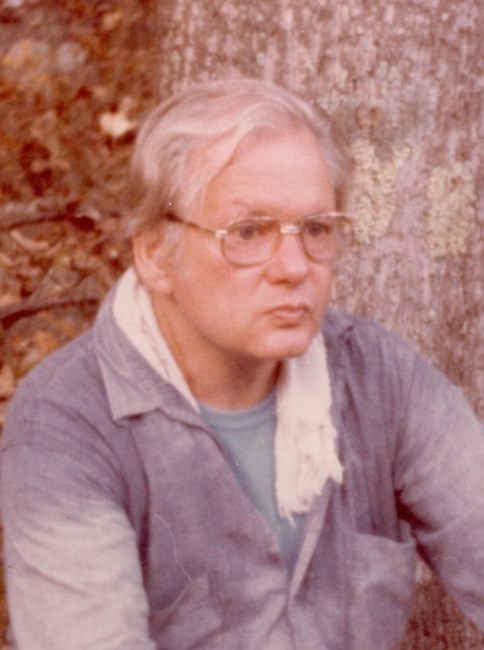
STANLEY SANDERS BEDLINGTON He died peacefully and painlessly in Arlington VA on August 22, 2012, the same day that his lungs and heart began to fail. He was born on November 4, 1928 in Stockton-on-Tees, County Durham, England, the son of the late Eustace Claude Bedlington and Edith Sanders Bedlington and brother of the late Reginald Bedlington. He received an excellent education in primary and secondary school and earned medals in sports competitions. In 1946, at the age of 18, Stan chose to fulfill his two-year obligatory military service by becoming a member of the Palestine Police. He served in Bethlehem and Jerusalem. He demonstrated his skill with languages by being certified as fluent in Arabic. Within a few months after returning home and working as industrial-accountant trainee, he had an inquiry from the British government wondering if he, as an already-trained policeman, would like to join the police force in the colony of Malaya. Armed members of the Malayan Communist Party, who had harassed the Japanese army of occupation during World War II, began an insurgency attack to drive the British from the colony. Stan was delighted to respond to the invitation. He arrived in Malaya in 1948 and was assigned to Kelantan, a state in the far northeastern part of the colony. He participated in para-military jungle squads, waiting in ambush positions for days covered in leeches to attack small companies of Malayan Communist Party soldiers (known as "Communist Terrorists" or "CTs").
Several years after his arrival in Kelantan, he was transferred to the island of Penang, off the west coast. He performed usual police duties. The highlight of his time in Penang was the aftermath of an auto accident in which Stan was a passenger. His left femur was badly fractured,and for nine months, in a non-air-conditioned hospital, he was in a full-body cast with his similarly sheathed left leg raised in traction. His buddies, claiming that Guinness stout helped bones to heal more quickly, brought him so much of the stuff that a surgeon had to cut a large expansion hole in the front of his body cast His leg mostly mended, Stan was sent to Kuala Lumpur, the colony's capital. His full-time job for two years was to master one of the Chinese language's dialects. (The CTs were overwhelmingly of Chinese origin.) Stan chose Cantonese. His spoken language was so good that native Cantonese-speakers often exchanged half-a-dozen sentences with him before moving back and saying, "But you are a round-eyes, a red-headed devil." His characters were highly regarded. Stan was then stationed for two years across the border in southeastern Thailand, near Songkhla, with an orderly for company. He recorded the movement of CT troops and supplies. He was fortunate to see a tiger in the jungle, twice.
In 1956 he transferred to the police force of the British colony of North Borneo. During his seven years there, as one of the 24 "European officers" (British, Irish, or Australian), he served in varied posts. Some like the capital, Jesselton, were populated; some were so remote that Stan and the administrative officer were the only representatives of the British crown. In his final posting, as Deputy Superintendent of Police with jurisdiction over the eastern third of North Borneo, he lived in Tawau, a port for the export of rubber and timber. In addition to normal police duties he led a jungle squad of police from the east coast of the colony to the west, looking for signs of incursions by the armed forces of Indonesia from the province of Kalimantan which occupies the southern four-fifths of the island of Borneo. Stan was one of the few people known to have made this arduous trek. Stan then travelled to the United States, to enroll as an undergraduate student in the Department of Oriental Languages at the University of California - Berkeley. His intent was to formalize his studies of Chinese and Malay-Indonesian, e.g., to move from Cantonese to Mandarin and increase the number of characters he knew, and to move from "bazaar Malay" to "rajah or court Malay."
He loved living in the San Francisco Bay area. By taking summer school courses to complete the requirements for the B.A. degree, he was finished in three years. He was awarded with a membership in Phi Beta Kappa. He decided against continuing as a graduate student in the Oriental Languages department, because he was not interested in the study of linguistics. Stan moved to Cornell University in upstate New York in 1967 and enrolled in the Government Department (political science) and the multidisciplinary Southeast Asia Program. His study was financed by a Woodrow Wilson fellowship. He met and married his wife, Anne H. Bedlington, who was a fellow student. They spent 1970-1971 in Singapore with a Ford Foundation fellowship where Stan did the research for his dissertation. He interviewed Malay citizens concerning their attitudes about their socio-economic and political position in a country where three-quarters of the citizens were of Chinese origin. He completed his dissertation and was awarded the Ph.D. degree. Unable to find a position in the central Connecticut River valley where his wife was teaching at Smith College, he wrote a book about the government and politics of Malaysia and Singapore.
In 1976 he was offered and accepted a position as an analyst in the U. S. Department of State's Bureau of Intelligence and Research. In 1979 he was detailed to the Central Intelligence Agency for a temporary assignment. In 1980 he formally joined the Agency as an analyst in the Directorate of Intelligence. In the early years Stan concentrated on East and Southeast Asia. He made several trips to the region. Two, to the Peoples' Republic of China, were the most personally satisfying, the culmination of his years immersed in Chinese language, literature, and history. Stan was a fellow for one year at the Atlantic Council of the U. S., where he wrote a long essay that attempted to define "terrorism" in the modern world. When he returned to the Agency, his focus gradually shifted to the Middle East and South Asia. For two years Stan was an Intelligence Officer in Residence at George Washington University's Elliott School of International Affairs. The purpose of the Intelligence Officer program was to expose students to CIA officers and to allow Stan to learn the latest analytic techniques used by his fellow faculty members. He taught courses and mentored students; he expanded into a new field and created a theoretical course that examined domestic terrorism.
During the last half-dozen years of his Agency career Stan also gave eight-to-ten classes a year on terrorism at the FBI Academy in Quantico. His final position with the Agency was as a Senior Analyst at the newly created Counter Terrorist Center, an apt ending to his careers since 1948. When he retired in 1994, he was given the Agency's prestigious Career Achievement Medal. The first decade of his retirement was a whirlwind. The most public was his role as CNN's terrorism contributor. He did consulting work and travelled to Europe, the Middle East, and Asia. He did thousands of hours of pro-bono interviews on the subject of terrorism for print- and electronic-media outlets around the world. In addition to his wife, Anne, he is also survived by two nephews and one niece – Ian Bedlington of St. Thomas, Ontario, David Tonn of Portland, OR, and Emily Tonn of Bridgewater, NJ.
A celebration of Stan’s life will be held on Sunday, November 4th, 2012, on the first floor of 1276 N Wayne St., Arlington, VA. It will begin at 2:00 to view pictures of his varied life; memories and roasts will begin at 2:30; refreshments will follow until 5:00.
Please indicate your intention by using the Guest Book, which will be an RSVP list. Along with your e-mail address and/or phone number say which of the following answers fits: will attend, will attend and bring memories of (e.g., hiking in the Blue Ridge) to share, cannot attend, or cannot attend but will get memories of (e.g., the five-member Robertson family visit) to Anne #407, at the Wayne St. address by 10/31.
There is free parking in the Courthouse Plaza four-story underground garage. Enter and follow your nose until you reach a large Public Parking sign. Take a ticket to make the barrier arm rise; keep the ticket to make the barrier arm at the exit rise.
If you wish to make a donation in Stan’s memory, please contribute to your favorite charity or to the Chesapeake Bay Environ-mental Center. (You may send a check in any currency to the non-profit Center, Discovery Lane, P.O. Box 519, Grasonville, MD 21638.) (Contributing on-line is a two-step process. Go to its website, www.bayrestoration.org. Click on “Donate.” Because the donate menu has no place to indicate your contribution is for Stan, you need to send an e-mail to [email protected] saying that is your intention.)
Muestre su apoyo
Comparta Un Recuerdo
Comparta
Un Obituario
Obtenga actualizaciones
Servicios
COMPARTA UN OBITUARIOCOMPARTA
- RECIBIR RECORDATORIOS
v.1.18.0