
OBITUARY
Carey Buchanan Boethel
September 24, 1941 – May 4, 2026
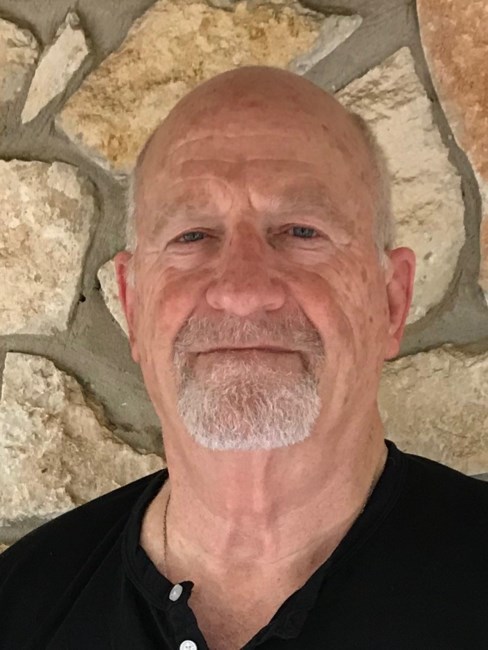
Carey Buchanan Boethel, lawyer, judge, advocate for county governments, reformed rebel without a cause, Renaissance man, and beloved husband, father, grandfather, brother and friend, died May 4, 2026 at the age of 84.
Named for his maternal grandfather, a cowboy and cotton trader from Elgin whom everyone called Daddy Buck, Carey was “Carey Buck” or “Bubba” to family and friends growing up, “Buck” to the state legislators he courted, and “Popeye” to his kids, grandkids and (massive) extended family. As one of his children noted, he was “a bold and powerful character, always full of interesting insights, pragmatic advice, and colorful stories.” He faced — and, as he himself readily admitted, too often helped to create — significant challenges through much of his life, but he managed not only to weather them but to use his experience to help others. In the end he could look back on a productive career, a thriving network of family and friends, and a rich inner life that he expressed in both art and story.
Although it was not his first ambition — asked what he’d be when he grew up, young Carey replied, “A scientist who invents things” — he followed his father’s footsteps into the law. After graduating as part of Texas Tech’s first-ever law school class in 1970, he moved to Giddings and hung out his shingle. He and then-wife Joan quickly became part of the community fabric; in 1971, for example, as part of Giddings’ centennial celebration, Carey served as narrator for the town’s “100th Geburstag Musicale,” a festive — and lengthy — affair based on events in early Giddings history, with scenes and songs focused on “the coming of the railroad,” “Annabelle Felders Hat Shop” and the “1951 champion football team.”
He was elected Lee County Judge in 1975. In addition to hearing misdemeanor, probate and juvenile court cases, he presided over the county commissioners court, helping guide decisions about infrastructure and policy, and overseeing the 1978 restoration of the historic Lee County courthouse. After retiring from the court in 1982 he continued to practice law in Giddings, specializing in oil and gas — a timely pursuit, given the area’s oil boom — and administrative law. In 1989 he and his family, now with wife Ruthie and a blended family of five children, moved to Austin. He joined the practice of Allison & Associates (now Allison, Bass & Magee), then became legislative/governmental relations director for the Texas Association of Counties (TAC), which provides training, resources and advocacy for county courts throughout the state. In addition to serving as a registered lobbyist, working to ensure that state policies empowered and supported effective county government, he taught classes on weighty topics like “The Constitutional Basis of County Government” and authored policy commentaries and columns for TAC’s statewide newsletter. He retired in 2010.
Carey was born in Hallettsville Texas, on September 24, 1941, the first surviving child of Paul C. and “Tonnye” (Frances Claire Christian) Boethel. He was delivered in Renger Memorial Hospital by his father’s first cousin, “Big” Harvey Renger, whose sons as well as other members of the Renger clan became cronies and — on occasion — partners in crime. He grew up in Hallettsville, except for a couple of brief sojourns: When he was still a toddler, he and his mother moved to Seattle, where his father was stationed before heading overseas to follow the first wave of ground troops after D Day. And he spent his sophomore year in high school at Allen Military Academy in Bryan, part of his parents’ losing battle to rein in his rebellious spirit. (Wife Ruthie notes that Carey’s one legacy from the Academy was a penchant for orderliness.)
Though he was inclined to disobedience and mischief, not violence, Carey’s escapades as a teenager occasionally went beyond cutting his hair in a forbidden “Mohawk” or smuggling a transistor radio into English class by carving a secret niche into his textbook. Thanks to a kindly, unsuspecting rancher, Carey and his friends were able to obtain small quantities of gunpowder and to experiment with bomb making. As a result, he accidentally blew a hole in his desk at home, and — though he and his friends buried their homemade pipe bomb deep in a mound of construction dirt — sent a small pipe fragment through the window of the (uninhabited) Ag building at school.
Not surprisingly, James Dean was Carey’s early role model. He took his younger sister Martha, then about 10 years old, to see “Rebel without a Cause” at Hallettsville’s Cole Theater, wanting her, he explained, to understand how he himself felt too much of the time. Luckily, he managed to survive his own high-speed car crash; the hackberry tree he nearly split in half his senior year of high school still grows at the edge of the Hallettsville-Moravia road. One of his last purchases (he was a constant shopper), made from his hospital bed in the weeks before he died, was a painting of Dean.
Carey was an athlete. The Hallettsville High School annual for his senior year names him “Top Senior Athlete” (along with “Most Handsome”) and a key member of the varsity football, basketball and track teams. He briefly enrolled in the University of Texas on a football scholarship, and later won medals throwing the discus and shot put for Victoria College. He played golf till his numerous old football and throwing injuries caught up with him, and he enjoyed traveling with friend and golfing buddy Jim Allison to play on courses across the Southwest. Coming from a hunting family, he also enjoyed deer hunting but preferred to improve his prey’s odds by using a crossbow or black powder rifle — a tamer continuation of his affinity for gunpowder.
He inherited and made good use of his family’s talents. From Daddy Buck, who’d entranced his grandchildren with tall tales about characters and critters living along the Colorado River, he learned the art of storytelling. He channeled his mother’s artistic talents into a love of art and artists, as well as into his own painting; he worked in acrylics and experimented with silk screen prints and digitized graphics. Like his father he was an effective wordsmith, though — also like his father — he occasionally lapsed into a legal syntax that required head-scratching and translation.
Carey also inherited both his parents’ affinity for shopping, especially via mail order. He was always trying out the newest gadgetry, and Christmas gifts from Carey and Ruthie always included a USB-rechargeable flashlight or solar powered emergency radio or Roomba. More than anything, he loved shopping for cars. Ruthie tells the story of taking a trip to visit her sister Hazel and coming home to find that Carey had traded in her sedan for a Ford F-150 pickup. (He also once bought her a motorcycle as a Valentine’s gift.) After he discovered MiniCoopers, no other cars existed (except, perhaps, for the vintage Mercedes convertible he bought at auction a few years ago, not realizing it was selling without a working roof). His first Mini was yellow, but he soon swapped it for a red one that he kept for a record ten years. His last Mini was “John Cooper green” (IYKYK). Driving to the hospital on the morning Carey died, daughter Stephanie pulled up at a red light next to a green Mini; when the light changed, she went one direction and the Mini in another — a sign to the family, she thought, that he was heading off to his next adventure.
Carey also loved dogs, perhaps none more than his beloved Lily Pearl. After he retired, Carey sank into the all-too-common post-retirement depression, until his doctor told him, “Stop feeling sorry for yourself — and get a dog.” So Lily Pearl joined the family and became his constant companion for the next decade and more.
More than anything, Carey loved his family. He met Ruth, his wife of almost 50 years, in Giddings in October, 1977. Their beginnings were less than auspicious; Carey had a history of failed marriages, and he proposed to Ruthie over the phone not long after they met, saying, “You are going to marry me, aren’t you?” Two months after meeting, they were wed. Together they raised their five children — Burton and Stephanie, from Ruthie’s first marriage; Carey Paul and Jim (James Blanton) from Carey’s marriage to Joan Garlichs; and their youngest, Teddi (Theresa Christian). Carey devoted his energy to becoming the best parent he could be, worrying about each of his kids, studying parenting guides, offering advice and support, and using his own early experience to help him navigate parenthood. His son Jim remembers Carey waking him up late on a school night back in Giddings, saying, “Jimbo, I had to pick your friends up from the Lee County jail. They’re down in the living room. Will you find them a bed so you guys can get to school in the morning?” He delighted and was delighted by his numerous grandchildren, who loved his “old man” jokes, his stories and his repertoire of card tricks. He never forgot how fortunate he was that he’d survived to see all his children happy and thriving, with productive lives and remarkable families of their own.
Carey was preceded in death by his parents and infant sister, Evelyn Ann.
He is survived by his wife of 48 years, Ruth Henderson Boethel; children Burton (and wife Tracey) and Stephanie Miller, Teddi Scott, and Carey Paul (and wife Tristan) and Jim (and wife Rachel) Boethel; grandchildren Elliott (and wife Yoko), Richard, and Beatrice Miller, and Niko and Sophia Bobrek, Caroline Hrncir (and fiancé Asher Austin), Cullen and Brenna Scott, and Eden, Vivian, Zachary and Jonah Boethel; his sister Martha Boethel; a host of extended family on both the Boethel and Henderson sides; and dear friends from every stage of his life.
A memorial service will be held in Austin, on June 27th; details to come. In lieu of flowers, donations may be made to the animal rescue provider of your choice.
Show your support
Add a Memory
Share Obituary
Get Reminders
Services
SHARE OBITUARYSHARE
- GET REMINDERS
v.1.18.0