
OBITUARIO
Thomas Francis Dunlavey
30 junio, 1914 – 18 diciembre, 2014
Thomas Dunlavey of Pocasset, died Thursday December 18, 2014 at the age of 100.
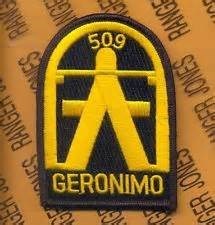
Thomas was preceded in death by his wife Mona. Tom and Mona were married for nearly 60 years and lived together in Pocasset from 1952-2010. Tom was born in Lawrence, MA. And raised in Lowell, MA. He first moved to Cape Cod in 1932 working for the Civilian Conservation Corps. In 1941 he enlisted in the Army. He joined the 509th Parachute Infantry Battalion and served the Allied war effort in Morocco, Tunisia, Italy, France, Belgium, and Germany.
Following the war Tom attended Stockbridge School of Agriculture (UMass Ag Dept.) and received an Associate’s Degree in 1947. He then returned to Cape Cod and worked for the U.S. Dept. of Agriculture. The prospect of a transfer away from the Cape did not appeal, so in 1950 he took a job in the cold storage and refrigeration plants at Otis A.F.B.. He worked at Otis for 25 years while raising his own family in Pocasset. Tom was a longtime member of the St. Vincent de Paul Society of St. John the Evangelist Church. Also, he and Mona were active members of the Pocasset Community and Traveler’s Clubs.
Thomas is survived by his sons, James T. Dunlavey and his wife Dora of Bakersfield, CA. and John M. Dunlavey and his wife Cynthia of Broken Arrow, Okla. and S. Korea; and also by his 4 grandchildren Lauren, Joseph, Theresa and Allyson, and a great grandson Noah James.
A Mass of Christian Burial will be celebrated at St. John the Evangelist Church, 841 Shore Road, Pocasset at 10:00 am on Tuesday December 30, 2014.Burial follows at 11:15 am at the Massachusetts National Cemetery in Bourne. There will also be a viewing from 4:00 – 6:00 pm on Monday December 29, 2014 at the Nickerson Bourne Funeral Home, 40 MacArthur Blvd. Bourne
History of the 509th: The 509th Parachute Infantry Regiment (509th PIR) was the first combat paratrooper unit of the United States Army formed during World War II.
With the advent of World War II, the United States Armed Forces foresaw a need for highly mobile units that the Allies could quickly insert into the theater of battle. The 509th was originally constituted on 14 March 1941 as the 504th Parachute Battalion and activated on 5 October 1941 at Fort Benning, GA. It was reorganized and redesignated on 24 February 1942 as the 2nd Battalion, 503rd Parachute Infantry Regiment at Fort Bragg, NC.
The 503rd and 504th Parachute Infantry Battalions were joined together to form the 503rd Parachute Infantry Regiment, with the Company C, 504th Parachute Battalion being renamed Company F, 503rd Parachute Infantry on 24 February 1942. In June 1942 under the command of Lieutenant Colonel Edson Raff the 503rd sailed to Scotland becoming the first American parachute unit to go overseas in World War II.
It was attached to the British 1st Airborne Division for training. The training included mass tactical jumps from C-47 aircraft at 350 feet, extensive night training, and speed marching for 10 miles to and from the training area daily; and on one occasion, 32 miles in 11 hours. In summer 1942, allied forces were completing the task of planning Operation Torch, the invasion of North Africa, with the 503rd Parachute Infantry Battalion scheduled to take the lead and make the first combat jump.
Operation Torch was the first joint military action undertaken by the Allies in World War II. This was the springboard for the Churchillian idea of attacking the “soft underbelly of Europe” before attempting a cross-channel attack from England onto mainland Europe. The main objective of Torch was to seize French Northwest Africa and for political reasons the Americans would lead operation. The airborne segment of the operation entailed flying 1500 miles from England to seize two French airfields near Oran.
Just prior to Operation Torch it was again redesignated, on 2 November 1942, as the 2nd Battalion 509th Parachute Infantry Regiment. On this momentous day, as C-47's flew over the English countryside, the 509th Paratrooper was born.
World War II History
The 509th carried out the first US combat drop during the invasion of North Africa. The transport planes flew all the way from English airfields to the African coast. This first operation was unsuccessful, with 7 of its 39 C-47s widely scattered. Only 10 aircraft actually dropped their troops, while the others unloaded after 28 troop carriers, nearly out of fuel, landed on the Sebkra d'Oran, a dry lake near their target. The 509th marched overland to occupy its objective, and on 15 November, 300 paratroopers successfully dropped on the Youks-les-Bains Airfield.
Forty-six Paratroopers from the 509th participated in the liberation of Ventotene, a small Italian island, on 9 September 1943. The German commander was tricked into surrendering to the weaker American force before realizing his mistake. An account of this is given in John Steinbeck's "Once There Was a War."
Later, the 509th saw two more combat jumps in Italy and Southern France. After landing, they were often used as elite mountain infantry in the Italian mountains and French Alps. Paul B. Huff, a member of the 509th, was the first American Paratrooper awarded the Medal of Honor on 29 February 1944 for action at Anzio, Italy.
During the Battle of the Bulge, the 509th fought in Belgium to blunt the German attack. An account of this battle is described in the book "Bloody Clash at Sadzot." The war ended for the 509th at the end of January 1945 near St. Vith, Belgium, with only about 50 remaining unwounded of the original 700 who entered the battle.At this time, the 509th was disbanded, and the men left were used as replacements for the U.S. 82d AirBorne. In mid-2004, after nearly 60 years, 1-509th deployed to Iraq. Alpha and Bravo companies were deployed to the areas surrounding Baghdad.
With the expansion of the airborne force from a single battalion (1-501st) at Fort Richardson, Alaska to a brigade (4th Brigade Combat Team, 25th Infantry Division), the lineage of 3-509th was reactivated on 16 September 2005 as 3-509th and assigned to Fort Richardson. The battalion deployed with the 4th BCT in support of Operation Iraqi Freedom in October 2006.
Muestre su apoyo
Comparta Un Recuerdo
Comparta
Un Obituario
Obtenga actualizaciones
Servicios
COMPARTA UN OBITUARIOCOMPARTA
- RECIBIR RECORDATORIOS
v.1.18.0