
OBITUARIO
George Herzlinger
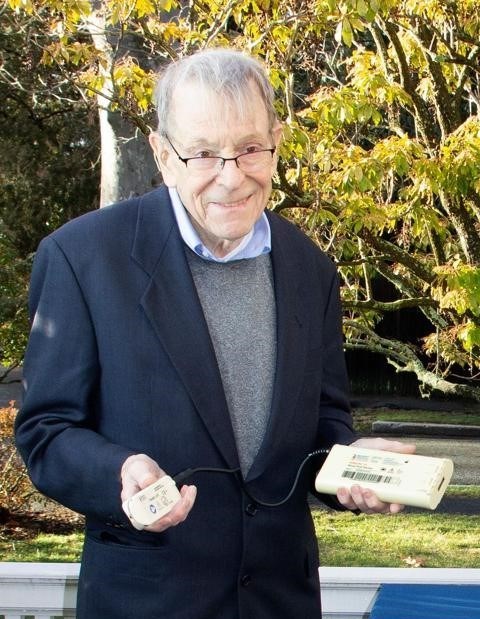
George Herzlinger developed medical devices that saved hundreds of thousands of lives. His Belmont Rapid Infuser device, for example, saved the lives of soldiers in Afghanistan, Iraq, Ukraine, and the Middle East, and victims of the Boston Marathon Bombing, gunshot wounds, and accidents, who might have otherwise bled to death. He died in Westwood, Mass on August 10, 2025, at the age of 82 after a lengthy illness.
A graduate of the Massachusetts Institute of Technology (B.S., Ph.D., physics), as an undergraduate he met his wife, Regina E. (Elbinger) Herzlinger, a fellow undergraduate and a Harvard Business School Professor. George and Regina had a devoted marriage for 60 years; two beloved children, Alexander (Brenda) and Susan (Matthew Botein); and four grandchildren, Jack and Ella Botein and Micah and Joshua Herzlinger. They also built three firms based on his life-saving inventions.
Prior to founding their businesses, George taught physics at MIT. In the 1970s, he became involved in the newly emerging field of biomechanical engineering. He was instrumental in building the intra-aortic balloon pump, a medical device that remains in use, which assists the heart in pumping blood.
“It’s pretty simple” was how George described his next major product, the Belmont Rapid Infuser. This widely used device solved a significant problem in massive blood transfusion-- how to replace a large blood supply quickly, while simultaneously preventing air bubbles from entering the patient's blood vessels and warming the incoming blood to approximate the temperature of the human body. What George described as simple became so only after developing many difficult technical innovations —sensors, pumps, and control interfaces— to accomplish what was once an arduous procedure.
George managed their firm, Belmont Instrument, on the basic principle of “do the right thing”. He and Regina self-financed their business ventures to avoid any pressure to do otherwise. Their approach also meant Belmont never had any layoffs and had lifelong employees. During economic downturns, the Herzlingers bore any financial loss rather than lose an employee. He employed immigrants brought to Massachusetts from Cambodia by the late Mass. Senator Paul Tsongas. “Elevate the team and work together” and “100%” were also principles that George put into practice. He loved hands-on work at Belmont, such as programming a device in machine language, and he also mentored others. Employees at Belmont often spoke of their pride in their work that saved lives and the company’s feeling like a family.
Outside of his work, George and Regina started a program for mentoring Israeli, Palestinian, Middle Eastern, and other health care entrepreneurs. They also established an Innovation in Education Award for tertiary schools with degree programs in health care management, among other charitable work.
George was dedicated to many things: to physics and medicine, to solving challenging technical problems, to his employees and his company, and to leaving the world a better place. He was most dedicated to his wife and two children, and later his grandchildren, who will always remain thankful for his love.
Services will be private.
Charitable donations in George’s memory may be sent to MIT’s Brain & Cognitive Sciences Research Innovation Fund at giving.mit.edu
Muestre su apoyo
Comparta Un Recuerdo
Comparta
Un Obituario
Obtenga actualizaciones
DONACIONES
MIT Brain & Cognitive Sciences Research Innovation FundSelect "Brain & Cognitive Sciences Research Innovation Fund" as Designation
COMPARTA UN OBITUARIOCOMPARTA
- RECIBIR RECORDATORIOS
v.1.18.0