OBITUARIO
Mr. Hing Wui Chang-Joa
19 diciembre, 1933 – 8 abril, 2025
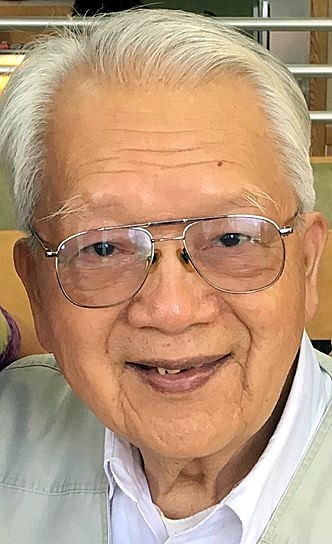
Hing Wui Chang (何思明), age 91, passed peacefully amongst loved ones on April 8th, 2025 at Vancouver General Hospital. He was predeceased by his loving wife (Mok Shui Lan) and son (Tony). He is survived by his children Loresa, Bill ( Theresa), Jimmy (Vion), Tom (Nadia), Isabel (Norman), Harry and many grandchildren: Emily (Preston), Stephanie (Raymond), Matthew, Tiffany, Jenna, Aidan, T.J., Natasha, Olivia, and great grandson (Jaime).
Hing Wui will be remembered, loved and dearly missed by his family and friends.
Celebrating the Life of Mr. Hing Wui Chang-Joa
(12-19-1933 to 04-08-2025)
Our father travelled a long, long road in life. That’s rather easy to acknowledge considering that he made it into his 93rd year. He had turned 93 in December. However, in the past couple of years, Dad’s compromised heart with leaky valves prompted a few trips to the hospital. He was resilient and recovered well each time, but this last one was complicated and it was the final trip.
25 years earlier, when our mother passed, our dad grieved immensely. He maintained ritual observance of her passing beyond what was ‘dutifully’ required. He prepared a special table atop of which he placed a portrait of Mom. He lit incense. And, he hit the Play Button on a small device. It was a dedicated speaker box that only played one thing: Buddhist chanting and music.
Dad mourned longer than what was normally expected. He prayed; he burnt incense; and he hit that Play Button every day, for over a year.
Years later, he eventually sold the old heritage at 2636 Cambridge Street, our home of over thirty years. He moved on. But, he never stopped grieving or remembering. He kept pictures of our Mom next to his bed. There, too, in his bedroom and of course on the fridge door, were pictures of all his children ( 5 sons- Tony, Bill, Jimmy, Tom, Harry and 1 daughter, Isabel) and their families, and all 9 grandchildren (Emily, Stephanie, Matthew, Tiffany, Jenna, Aidan, TJ, Natasha & Olivia) and great grandson Jaime. But, most touching was that he quietly kept a photo of his wife under his pillow.
It’s a contradiction because Dad was not very good at showing his love, or passion, or any emotion for that matter. He grew up in a traditional Chinese environment.
There was no mystery that Dad was not a Western style parent. He was not at all expressive with his emotions so it looked like he had no love to show. But, for us Chinese, we need to look at actions to find evidence of one’s love. We can see it in that bigger picture of his journey. That long road started out in China, in a small village near a somewhat small but significant town of Yanping in Guangdong, the Southern-most province of China. Yanping, now a small city of about half a million people, was the source of a great migration that sent its sons around the world. This Cantonese Chinese diaspora emanating from this seemingly humble township has accounted for over 420,000 overseas Chinese. Looking around, we would not be wrong to say that many of us here today have roots going back to Yanping.
And, so, it began in Yanping, on the 19th of December in 1933. Dad was born. It was still the Year of the Rooster. He was the oldest of two. He had a brother who was two years younger. It was a chaotic and difficult time. Here in the West, it was the period of depression and an eventual build-up to world war. In China, there was already a civil war taking place between nationalist and communist factions. Then, there was the invasion by the Japanese. It’s a miracle that we are here today. Our Grandma related stories about the bombs that dropped from the sky during the invasion. She recounted the fear and how she had to flee with her children to escape the Japanese.
Dad also remembered the war. But there were times when he was more ready to reminisce about a childhood growing up in his home village, especially climbing trees to harvest local fresh fruit. It’s no wonder why he would, decades later, plant pear and sweet plum trees in the front yard of the Cambridge Street home. The yearly harvest was used to make jams and preserves by our Grandma, who was also a talented gardener, growing crops of snow beans, bok choy, kale, sai yeung choi, chives and other produce. After Grandma passed, Dad continued to grow his favourite watercress. But we digress. Returning to his Yanping childhood, Dad also talked a lot about catching fish in the local streams and river. He also attended elementary school briefly and excelled at his studies. He boasted about moving up grades. He loved reading and writing and was good at math. This would explain his ability to later learn Spanish, and then English.
At the Cambridge Street house, our next door neighbour, the landlord of a majestic five-level heritage house that occupied a double lot, was a friendly Spaniard. His grand house sat on one half of the lot. The other half featured a mini orchard adjacent to our house. It featured trees that bore sweet plums. Thinking back about this, we now can guess where Dad got the plum pits to grow his trees in our front yard. They were from our neighbour, the gracious Senor Ortega. He would invite us to come over and pick up the fruit anytime. Of course, we reciprocated. Mr. Ortega especially liked the deep fried sweet potato and pork dumplings that our Grandma made. He devoured them with cold beer. Seated on the picnic bench under the trees, Dad and Senor Ortega enjoyed their conversations - conducted totally in Spanish. There is fondness for those trees that are still standing in the front yard, the trees that were planted by Dad.
As for climbing trees back in Yanping, that would end. In early 1949, Dad accompanied his maternal uncle to Hong Kong to finish his high school education. Dad also had to earn a living and there was opportunity in post-war Hong Kong, which became a significant stop, time and again, along the journey. By the end of 1949, Dad returned to Yanping to meet and marry our Mom. Both were young, and must have been around 18 or 19 years of age. Our Grandmother, through her own family and village connections, found a suitable companion for her son. Her name was, Shui Lan, a daughter of a family surnamed Mok.
Shortly after the wedding, Dad and Mom settled in Hong Hong, along with our grandma. This is where their first son, Tony was born in 1953. Bill came into the world in 1955. But, even before Bill was born, Dad had left on another leg of his journey, a much longer and more meaningful trip. He needed to find a better way to support his young family. Like his own father, our grandfather, so many others from Yanping before him, Dad departed for the New World.
In 1954, he landed in Curacao, Aruba in the South Caribbean. From there, he moved to Maracaibo and then settled in Caracas in Venezuela. This is where he adopted a new name. Dad, born as Ho Siu Ming became Hing Wui Chang-Joa, the name stated on his travel document. “Joa” was added as, perhaps, some sort of concession.
In Dad’s case, the authorities did acknowledge his real surname: Ho. But, in Spanish, the letter ‘J’ is used to enunciate the H-sound as in San Jose. In effect, there was a compromise as Dad gave up his birth name and assumed an alias with his family name ‘JOA’ affixed to it. With the new name, Dad and his brother embarked on a very long journey to look for opportunities in Venezuela.
But, like many other Yanping migrants who faced discrimination and turned away in their new surroundings, they had no choice but to start businesses in order to survive. Dad and his brother started a bakery which became somewhat successful. It should be noted that the brothers did not arrive penniless. Let’s just say that there was some seed money contributed by their paternal Grandfather who remained in Yanping. He must have been reasonably wealthy just based on the fact that he had two wives - at the same time - like the emperor would have concubines. This was official and legal in the old traditions. So, this patriarch who supported two families had the foresight to send his grandsons abroad. Plus, everyone in Yanping seemed to be leaving like it was the trendy thing to do.
In Venezuela, there was no starvation. Dad was now a baker. It sounded like many long hours at work, each day, 7 days a week: staying up late to prepare and knead the dough, and then getting up early the next morning to fire up the oven, oversee the baking and getting the bread cut and out for sale, delivering his goods to local shops and of course minding the storefront too.
A few years later, after the bakery ran its course and the brothers decided to resolve the business to pursue other ventures, Dad then decided to open his own grocery and convenience shop, something like a mini supermarket. It was called a Supermercado. He also bought a pickup truck for the business. Dad was a natural builder and fixed things like a capable handyman. He built a large canopy on the back of the pickup. Obviously, Dad had his priorities. He had to build something stable. He had to send money back to support his family. His ultimate plan was to bring his family to Venezuela and start a new life together. But, it took time to execute this plan. Precious time. Tony and Bill were growing up and experiencing life in Hong Kong! So, it must be said, that this course of action was premised on part duty and part love. There was also the sacrifice part. Dad was separated from his family for many years, and he had missed the childhood time of his two sons. He and Mom had to endure continuous years apart. It wasn’t until 1967 that the re-union happened when Mom, Tony, Bill and Grandma finally arrived in Venezuela.
Tony was in his teens already. He would only spend a short time in Venezuela, and wanted to immigrate to Vancouver, where there was a well-established Chinese community and a more hospitable environment. In Vancouver, Tony would continue his education. Staying back in Venezuela, Bill dutifully worked at the Supermercado, along side the family. Not long after, the family grew and Jimmy was born in 1968. Tom arrived in 1969. The only daughter, Isabel, was born in 1971.
The race would not end until Dad uprooted the entire family once again and move us to Canada to seek a safer political environment and better educational opportunities for his growing family. In December of 1972, we flew over to Canada and met up with Tony. The Captain of the Pan Am flight that carried us presented Jimmy with a pair of shoes. There were also gifts that included blue rectangular shoulder tote bags imprinted with the iconic Pan Am logo in white. Such was the welcome bestowed upon immigrants. We were lucky that Canada opened the doors at that time. Settling down in Vancouver at the Cambridge house, dad and mom added one more to the family; in May of 1973, Harry was born. Technically, he was on that flight, too, inside Mom’s tummy. Four babies in six years! Wow! Mom and Dad really made up for lost time.
Settled in Canada, Dad enjoyed a quiet, slower pace. In his free time, he simply liked reading the Chinese newspaper, watching the news on TV and taking naps. He enjoyed sleeping. Although mostly quiet, Dad was certainly loud in one way: his snoring shook the house!
Dad must have dreamt of becoming an engineer or electrician. As we’ve already said, he was good and building and fixing things. He pursued that dream by completing a remote program on “Refrigeration and Electrician Studies.” Remember, he was pretty good at math and picked up languages quickly. But, once again, he could not find work in Vancouver. He was quick to point out discrimination. He was told that since he did not have a ‘license’, he would not be hired. So, he had to set up his own shop. It was a gift store that first operated out of 2636 Hastings. He later moved Bestward Gift Centre to Gastown, where tourists visited from all over. And yes, we had to help out in minding the store just like Bill did in Venezuela. Thus, many of our summers and weekends were sacrificed because we had to tend the store. But, it was not hard work. We mostly sat behind the big glass showcase counter that Dad built by welding together steel bars into a frame that had precise 90 degree angles. The only pleasure was that the radio continuously played popular music of the late 70’s and 80’s. Otherwise, we would have become completely mindless. Meanwhile, Mom walked from Gastown to Chinatown every day to buy groceries. Back at the store, she would prepare our lunch and take care of the shop inventory. She knew where everything was. The younger ones at home were cared for by Granny and Grandpa.
The business appeared profitable up to the time before Expo 86. Eventually, after Expo ended and rent started to skyrocket, dad and mom decided to shut down in 1987.
Dad still had a lot of store inventory to get rid of. So, every weekend, he set up a table at the Flea Market, and together with mom they would set up shop once again for a few more years, enjoy each other’s company minding their stall together, and also enjoy the opportunity to make a few good friends at the markets.
Dad was close to retirement during this time. Being a year older, mom got there first, but unfortunately, she did not enjoy it for long. She had cancer and had survived 18 months afterwards. It was a difficult episode for Dad to bear. Mom departed too early, in the year 2000.
During this time, Dad became a grandfather too. Emily and Stephanie were the first two grandchildren to arrive, in 1986 and 1992. They were often dropped off at the Cambridge home and babysat by their Great Grandmother and their Uncle Jimmy and Gou Gou. Decades later, it was Em and Steph who visited their Grandfather at the Dogwood care home and whenever he entered the hospital. Dad, who was Emily and Steph’s Yeh-Yeh, was proud to watch Tony (and Loresa’s) two girls grow up and to see them get married. He became a Great Grandfather with when Emily (and Preston) gave birth to Jaime, who is now 8 years old. It was always a delight to see his playful great grandson, especially with a ball to play or wearing an Iron Man costume.
Isabel (and Norman’s) two daughters, Natasha and Olivia, addressed Dad as “Gong Gong” which is how we call our maternal grandfather. The girls lavished their Gong Gong with hugs and kisses whenever he visited. As with Emily and Steph, Gong Gong adored Natasha and Olivia, watching them grow up dancing and singing, and often getting into role to play dress up or tea time with them during their visits. There was one more, the exuberant Jenna, Tom (and Nadia’s oldest). Dad always remembered the way she took such good care of her younger siblings and cousins while playing together. As the saying goes, girls are made of sugar and spice, and everything nice.
Dad first met granddaughter, Tiffany, Jimmy (and Vion’s) daughter who was born in Hong Hong, for the first time at the airport. She was five years old and excited. When the family greeted her, she spontaneously ran around and around the YVR arrival, so excited she was even after the long flight. Dad was equally excited and simply wanted to pick her up. Tiffany sported naturally curly hair. The HO family resemblance was there. The most obvious feature were the full lips. Tiffany’s round face and slightly plump hands resembled our Mom, her Grandma, who unfortunately had passed away years earlier. But, we imagined that Mom’s spirit was there for this moment. After returning to Hong Kong, Jimmy made occasional phone calls to Dad who would be particularly delighted when Tiffany addressed him as “Yeh Yeh.” In reply, Dad beckoned Tiffany with heart-felt affection by calling her Chinese name, “my Ting Ting.”
Like any Chinese grandparent, Dad was proud to have grandsons. Matthew was the first, followed by Aidan and then Tom Jr. Dad always admired Matthew's skill at piano during family dinners, and Aidan’s and TJ’s lightning speed skating up and down the ice hockey rinks. As a grandfather, Dad mellowed out. Maybe he did not show much towards his children. But, the love really shone when it came to his grandchildren and to his great grandson Jaime.
Apart from family, there were no moments that particularly stood out in his life. There were the travels that were undertaken for migration purposes of course, and a couple of trade shows in Calgary where he was accompanied by Tony, but none about leisure or adventure. Calgary was the farthest he went in Canada. After our Grandma passed, Dad was living all alone in the Cambridge home and it was then that we convinced him to take a trip to enjoy life. Of all the places to go, Dad took a trip back to Hong Kong. An extended stay allowed him to walk familiar streets in Shek Kip Mei, Sham Shui Po and Mong Kok. His memory was sharp. He pointed out the primary school that Tony and Bill attended in Yau Yat Chuen. Dad also identified the building in Mong Kok where the family once occupied.
Of course, he got to see the glory of Victoria Harbour, walked up the stairs to the Big Buddha and tasted the cuisine, especially dim sum and noodle shops. He sought out classmates from his youth and spent long hours reminiscing with them. But, a big highlight of the trip was surely an unexpected detour. On a visit to the family of his late Uncle, the same Uncle that first accompanied him to Hong Kong decades earlier, it was spontaneously suggested that Dad make a trip back to Yanping. He was easily convinced to go when the family said that they would accompany him. And, so, it happened. Dad was back where it all started from in fortuitous fashion. Dad got to tour the family house that his Patriarch Grandfather left for him, the one he grew up in. His Grandfather wasn’t around anymore of course, but his second wife was still very much alive and actually ran down the path to greet us! It was quite the homecoming, as if the prodigal son had returned. The poignant moment for us was Dad’s visit to the grave of his Grandfather (his “Yeh Yeh”), Great-Great Grandfather and Great-Great-Great Grandfather – whom he called “super or super-super Yeh Yeh” and so forth. For us, it was going back to five previous generations of the family lineage. To honour our ancestors in this manner put things into grander perspective.
The other highlight was a tour of Beijing. The splendour and glory of The Forbidden City, Tiananmen Square and Summer Palace resonated with Dad. He felt proud to be Chinese. But, the moment that proved that he had love, was at the Great Wall. When Jimmy went off to take photos and did not return to the tour group on time, Dad became worried. He started climbing the steps of the Wall in search of his son, shouting out his name. Jimmy heard the cries and came back down, to Dad’s relief. Dad still had a strong enough heart back then to withstand a bout of fright.
This brings us to a saying that goes something like: “You are not a hero until you climb the Great Wall.”
In recent years, Dad continued to enjoy the simple things like lunch time gatherings at Congee Noodle King on Kingsway with Isabel, Norman and the girls. He tended to his plants, read the newspaper, watched TV and, of course, he took his naps. Living alone, he prepared his own meals, in particular beef brisket stew and daikon, with his favourite star anise spice. But after a car accident in 2013, Dad stopped driving. Isabel greatly assisted in the shopping and routinely checked in on him, along with Harry who would take him out every Sunday for walks in the park and visits to nearby farmer’s markets in search of sweet juicy plums and fruit of season.
Eventually, after recovering from his last surgery in 2022, Dad needed more assistance and had moved into Dogwood Care Home. There, he enjoyed singing his favourite Chinese songs by Teresa Tang, singing the Canadian and Chinese national anthem, and listening to music with his friends Irene, Grace, Anna and Danny. They all broke out in verse at the dining table, where they also shared snacks and laughs everyday.
To the dedicated staff who supported Dad at Dogwood, we are truly thankful for the care and attention and effort in getting Dad to enjoy the little things in life. At Dogwood, he played his harmonica in the hallways, took garden strolls and checked out the Rosemary herbs - probably wondering about how it could be added to a Chinese recipe. He enjoyed bowling, ball games, and many arts and crafts. And, just like he did as a boy in Yanping village, he continued to read, write and do some math.
Maybe, we tend to look for the good things and gloss over the bad. But, what makes us human, or what makes us become better human beings, is how we take the bad. It’s great if we can find a way to overcome obstacles. But, there are times that we can’t or maybe we shouldn’t even overly try. We just have to go with the flow and make detours along the way. Dad’s life certainly had some detours. But, it worked out. He made it. The evidence to that is simply what he left behind. For the Chinese, legacy is the children, grandchildren and great-grandchildren and the generations to come. We might have preconceived notions of what parents should be, what they should do. But, our Dad did not fit the conventional mold. He did not have a roadmap or pre-programmed rules to go by. Dad had to find out along the way. There were some instinct and cultural values involved. By in large, he went with the flow. In turn, he may not have been very hands-on in our upbringing. But, that allowed us to figure things out, independently, in our own way.
There is a saying by Lao Tsu:
Life is a series of natural and spontaneous changes. Don’t resist them. That only creates sorrow. Let reality be reality. Let things flow naturally forward in whatever way they like.
To our dear Dad, Grandfather, Great Grandfather, for everything you’ve gone through so that we can be here, and have a chance to ride along in that flow of life, thank you for everything! We will always remember and love you!
Muestre su apoyo
Comparta Un Recuerdo
Comparta
Un Obituario
Obtenga actualizaciones
Servicios
COMPARTA UN OBITUARIOCOMPARTA
- RECIBIR RECORDATORIOS
v.1.18.0