
OBITUARIO
Marshall B. "Blackie" Kinghorn
3 febrero, 1923 – 1 marzo, 2012
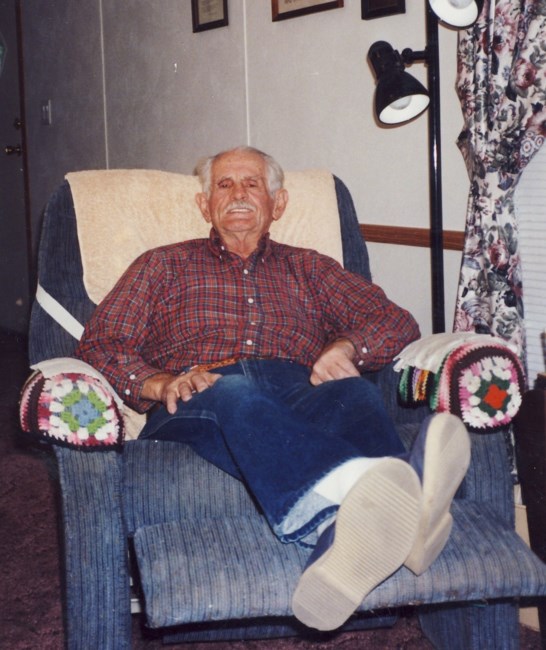
Marshall Kinghorn was born on February 3, 1923, in Metz, Missouri. At an early age, his parents moved the family to Oregon. He and his sister, Roberta (Bert), learned hard work on their parent's mink farm, where they also had a large garden area.
Marshall left home at the age of sixteen and made his own way in life, working at many different jobs throughout his life. Since he had experience raising mink, his first jobs were working on mink farms. One summer he and a friend tore up an abandoned railroad track. He worked a couple years as a bellhop at the Astoria Hotel in Oregon. Then he wandered over to the coast where he soon got a job painting the bridge over the highway 101 at Depoe Bay, which led to a job on a commercial fishing boat. That is where he got his nickname “Blackie”. When he came in from fishing the guys headed for a little bar and café and he always ordered a cup of black coffee. It wasn’t long until the waitress would see him come in the door and say “There’s Blackie”, and immediately bring him a cup of black coffee and everyone around there started calling him “Blackie”.
Since he had very little money and no transportation, he hitch hiked or walked everywhere he went. In those days that was very common.
Eventually, he left the coast and made his way to Kansas to visit his grandparents and got a job there, and that was where he met his wife Helen. During World War II he was classified as 4-F because he had a hernia so was not drafted. He wanted to join the Coast Guard, so he had surgery to repair the hernia and was soon required to join the service and he chose the Navy. If he had met Helen before he did this he might not have been so anxious to have the surgery!
After he and Helen had several dates, Helen said to her friends at work “He’s a lot of fun to be with but he’s not one that I would want to marry”. She also had difficulty calling him Blackie but finally relented when he wouldn’t answer to Marshall. Six months later they were married and Helen became a Navy wife. She followed him to Newport, Rhode Island, then to Philadelphia, where he was assigned to the newly christened aircraft carrier The Valley Forge. The ship went to Guantanamo Bay for its shakedown cruise, back to Philly for a short time, then to Hawaii. Helen went back to Kansas. The Valley Forge was scheduled to leave for another port weeks before Blackie was scheduled to be discharged so they discharged him two weeks early. He went back to Kansas to Helen and their two week old baby boy, Steve.
They moved to Colorado. He had some difficulty finding work as the employers were giving preference to Colorado Veterans that were returning from the war. After a couple minor jobs, he got work on the Cherry Creek Dam project and worked there until it was finished. From there he got into construction and then worked at Economy Lumber Company for 25 years. During his first 10 years in Colorado, he and Helen were blessed with 4 more children: Jim, Cheryl, Don and Barb.
The family loved to go camping and Blackie was an avid fly fisherman. He taught his children the love and beauty of nature and to respect the land. He was also involved in the Boy Scouts and Webalows as the boys were growing up.
When he and Helen semi-retired, they bought a travel trailer and metal detectors. They made their way to Yuma, Arizona, stopping along the way to try out their detectors then spent the winter camped in the desert. They came back during the summer where Blackie went back to work for Economy. They even saved jobs for him to do, like redoing kitchen or bathroom displays or whatever else was needed. They repeated this process for 5 years before they completely retired.
They bought a mobile home in Yuma and spent the winters there and the summers in the travel trailer visiting friends and family. They had the support of their kids but they did miss not being with them during the holidays. One of the things that they learned during their travels was how many wonderful people there are in this country. Blackie was a person that was always willing to help someone whether it was something small like driving a person somewhere or a hard job like pouring a cement driveway. If he saw a car stopped on the highway, he would stop to see if he could help. It’s not safe to do that today. For all of his kindness, he felt that he was repaid many times over by all the kindnesses that he and Helen received during their travels.
He was diagnosed with Alzheimer’s disease in 2000 which ended their travels. They moved back to Colorado to be near 3 of their kids in 2004 and he was moved to Sunrise at Orchard in the fall of 2008.
He is survived by his wife of 65 years, Helen, their 5 children, 11 Grandchildren and 5 Great Grandchildren.
Helen wishes to show her appreciation and thanks to their children, friends and neighbors and all the wonderful people that touched their lives and supported them during this long journey.
Arrangements under the direction of Olinger Chapel Hill Mortuary & Cemetery, Centennial, Colorado.
Muestre su apoyo
Comparta Un Recuerdo
Comparta
Un Obituario
Obtenga actualizaciones
Servicios
COMPARTA UN OBITUARIOCOMPARTA
- RECIBIR RECORDATORIOS
v.1.18.0