
OBITUARY
Martin Lawrence Reite
May 22, 1936 – August 21, 2025
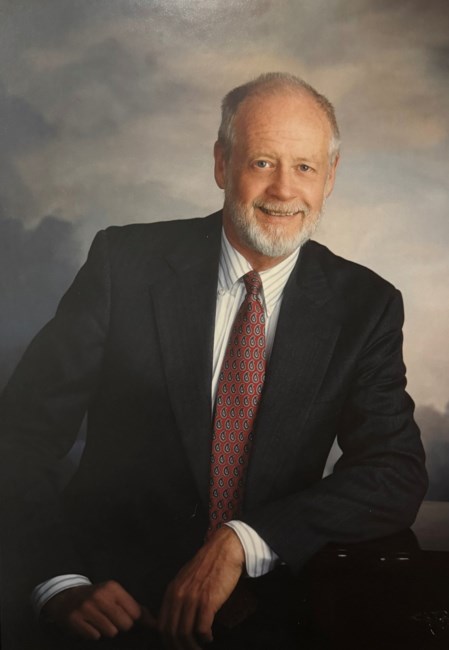
Born in California, Marty began college at the University of California, Berkeley at age 17 and went on to graduate cum laude from Yale University School of Medicine, where he was awarded the Parker Prize—given annually to the graduating student judged most qualified for a successful career as a physician. He trained in psychiatry at UCLA before serving as a U.S. Air Force flight surgeon during the formative years of the space program, caring for the chimpanzees involved in spaceflight research.
Marty enjoyed a distinguished career at the University of Colorado School of Medicine, where he served for decades as Professor of Psychiatry, directed pioneering laboratories in brain imaging and sleep medicine, and authored hundreds of scientific papers as well as several books. He was instrumental in the development of the electrophysiological study of the brain, co-authoring in 1976 some of the first recordings of human brain activity using magnetoencephalography (MEG). Over the next decades he pioneered the application of MEG to psychiatry, using it to illuminate disorders such as schizophrenia, bipolar disorder, and autism. He also served as Chief of Psychiatry at the Denver VA Medical Center. A Distinguished Life Fellow of the American Psychiatric Association, he mentored generations of physicians and scientists who went on to become national leaders in clinical neuroscience.
Known for his unmatched intellect and curiosity, his scholarly work spanned neuroscience and psychiatry, and he maintained a lifelong fascination with topics as far-reaching as quantum mechanics. He saw no contradiction between science and faith, finding deep harmony between scientific discovery and his belief in the Bible. For several years, he led a Bible study devoted to exploring how modern science enriches and illuminates Biblical history and teachings.
His career was supported for more than two decades by NIMH Research Scientist Awards, one of the most selective and enduring honors in academic psychiatry. He was also a fellow at the Center for Advanced Study in the Behavioral Sciences at Stanford, and the Martin Reite Award for students and postdoctoral fellows in developmental psychobiology was later established in his name by the Developmental Psychobiology Research Group at the University of Colorado. He served on editorial boards of leading journals, on national review committees at the NIH, and as president of the American Psychiatric Electrophysiology Association.
Marty’s life outside medicine was equally rich. In the 1970s and 1980s, he summited all of Colorado’s fourteeners. He embraced ultralight backpacking and skied both in resorts and the backcountry. He introduced his family to many wilderness adventures, including two self-supported rafting trips through the Grand Canyon. He was also a licensed pilot with instructor certifications and the proud captain of a 49-foot trawler that he navigated along the East Coast and through the Bahamas.
He found deep joy in music, playing classical piano throughout his life, and in the companionship of animals, especially German Shepherds. Above all, Marty cherished his family. He is survived by his wife of 53 years, Carolyn; their three children, Jennifer, Erik, and Aaron; eight grandchildren; and five great-grandchildren, all of whom will miss him deeply.
A memorial service will be held at Olinger Chapel Hill, 6601 S Colorado Blvd, Centennial, CO, on September 12 at 10 a.m. Interment will follow at Fort Logan National Cemetery at 2 p.m. In lieu of flowers, the family requests that donations be made to Reasons to Believe, a nonprofit ministry founded in 1986 by a Caltech astrophysicist, dedicated to revealing God through scientific inquiry and affirming the reliability of both Scripture and scientific discovery (https://support.reasons.org).
Show your support
Add a Memory
Share Obituary
Get Reminders
DONATIONS
Services
SHARE OBITUARYSHARE
- GET REMINDERS
v.1.18.0