OBITUARIO
Donald Frank Crump
12 marzo, 1941 – 21 julio, 2020
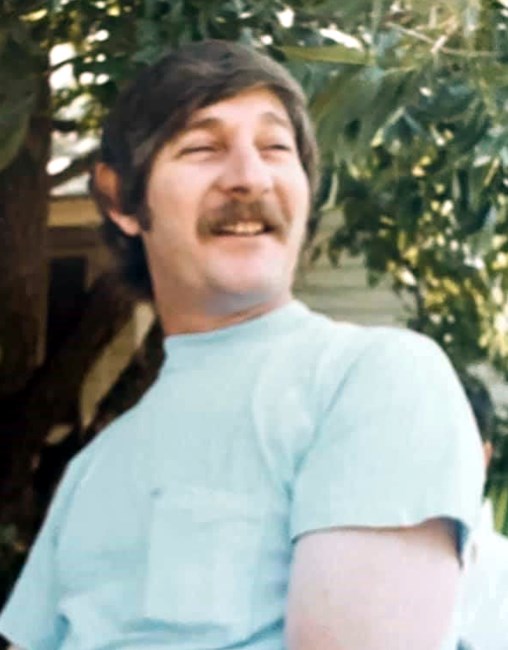
Donald Frank Crump, age 79, of Henderson, Nevada died Tuesday, July 21, 2020 at his daughter Rita’s home in Chandler, Arizona. Donald was surrounded by his loving family. Donald was born in Estelline, Texas on March 12, 1941 to Arless and Lois Crump, and was the youngest son of three boys. After high school he married Kathy Rascoe of Childress, Texas in June 1962. They later moved to Altus, Oklahoma and had a daughter, Rita, in 1963. Donald worked for National Cash Register and the family later relocated in May 1971 to Cheyenne Wyoming to further his career with NCR. Donald and Kathy divorced January 1973.
He married Carol Drake from Cheyenne, Wyoming on March 2, 1974. Don began work with the State of Wyoming In 1982 as an IT Manager. He retired April of 2003. He and Carol later settled in Henderson, Nevada in 2010 where they enjoyed retirement.
He is preceded in death by his wife Carol Crump (Drake), his father Arless Crump, his mother Lois Crump, his brother Ronald Crump, his brother Kenneth Crump, and his niece Elesa Crump. Memorial can be made in the Elesa Crump Memorial Scholarship through Amarillo Area Foundation. He is survived by his daughter Rita Lewis and her husband Gary of Chandler, Arizona, his Granddaughter Rachel Taylor and husband Brian of Chandler, Arizona, His Granddaughter Samantha Leeseberg and Husband Ryan of San Tan Valley, Arizona, his Granddaughter Carly Lewis of Chandler, Arizona, his sister-in-law Peggy Crump of Amarillo,Texas, his niece Cindy Allen and husband Kelvin of Canyon, Texas and his nephew Dean Crump and wife Nikki of Amarillo, Texas. He leaves a great legacy of 4 Great Grandchildren; Brody, Aspen, Cullen and Tristan, many Great nieces and nephews, Great Great nieces and nephews, Great Great Great niece and nephew, and friends who all love him. Donald will be greatly missed, and his memory will live on through all who loved and knew him.
In lieu of services, Donald will be returned to his childhood home on the banks of the Red River in Estelline, Texas at a later date (to be announced).
The family encourages all to read the following short story Donald wrote to his granddaughter, Rachel, about his childhood.
Dear Rachel,
I’ll tell you a little about what it was like growing up in West Texas around Estelline. It was a town with a population of about 300 and was located in the middle of a big cotton patch. There were cotton farms everywhere and because of the farms we had a lot of sand storms. They would be so bad that the sky would be black at noon. A few times when the storms were so bad we would be sent home from school.
Summers were the best and seemed to last forever. I was free to do what I liked and had time to hike and explore in any direction from Estelline. School just interfered with my freedom. All the kids in Estelline were friends and we all participated in the following narrative. My brothers, cousins and friends all did these things and had basically the same experience.
The following describes some of the most favorite places where we spent our time.
About a mile to the south was Mountain Creek, how it got that name I don’t know there were no real mountains anywhere. The creek was full of trees mainly mesquite and some cottonwoods and even in the heat of the day we could find a cool spot to rest. Sometimes we would get a quart jar of water and a few biscuits and head to the creek and spend the day exploring. We explored along about a five mile stretch of the creek where we discovered, if you are exploring you have to make discoveries, a spring coming out of a bluff with good clear water. Once we found this spring we didn’t need to carry water after that. We found several mounds of chipped flint left by Indians that probably accumulated over thousands of years. You could find pieces of arrow points that were discarded because they broke before they were finished. These mounds were about 3 feet high and 8 feet long. That was a lot of flint. I suspect the mounds of flint are still there. We found some good arrow points and a few spear points along the creek and made arrows. When we shot them the point would usually break. Looking back what we did was a real shame, we had no idea what we were doing when we broke these points.
To the north about 2 miles was Red River which was at least 1 mile wide and generally only had a small flowing stream except during spring runoff. We spent a lot of time there just prowling the riverbanks and playing in the stream. I remember one time after the spring runoff a pool had formed along the edge of the bank. It was hot and the pool was just too inviting. There were several of us and we raced to see who got in the pool first. As we got closer to the pool the mud got deeper. We didn’t think much about the mud knowing it would wash off in the water so we just kept running. One guy got to the pool first and jumped in and immediately went waist deep in water that was about a foot deep and the rest sloppy mud. The rest of us stopped short of the water but by this time we had all settled in the deep mud. Here we are with mud up to our behinds and can’t get to the water to wash off and don’t dare put our clothes back on with all the mud. There was no place to wash since the river was so muddy after the run off. I think we spent half the day carrying our clothes around waiting for the mud to wear off.
There was an abandoned gravel pit just across the river that stayed filled with water year around and would warm up earlier in the spring than other pools. The pool was about 5 feet deep and was surrounded by high bluffs on three sides and had a slope on the south side where we could get in the water. Me and a few friends would go swimming there every year about the first of march, this just to brag that we were the first to go swimming that year. It was tuff being macho in my day. It was one of those march days when we were swimming. I was in the middle of the pool and could just barely touch the bottom when two older boys showed up on the high bank holding a chicken snake. Yep, you guessed it, they threw the snake at me right there in the middle of the pool. I don’t know if you know it or not but snakes float and can move in water fairly quick, however so can I. The snakes first instinct is to climb on anything to get out of the water and since my head was above water it headed directly for me and I headed directly for shore. Probably walking on water. I beat the snake to shore and he made it into the bushes. Needless to say, that was the end of our swimming that day. Every year after that we always checked the bushes for that snake before we would go swimming.
Following along the river to the east we had a good place to go swimming called “The Salt Hole”. This was spring about 50 feet across that had a large stream flowing from it. The water was very cold and salty and was as clear as any swimming pool. I was told the water was 7 times saltier than the ocean. To get to the Salt Hole we had to walk about a mile, usually in the heat of the day when it was about 100 degrees. When we got there we would be hot from the walk and wanting to get in the water, but at the same time, dreading the jump in the pool because the water was so cold. To insure that everyone got in the pool we would hold hands and run into the pool together. Where one goes everyone goes. Kinda like in the movie Butch Cassidy and the Sundance Kid where they held hands when they jumped from the cliff into the river. The water was so cold it would take your breath away. I was skinny and could not float in a regular pool, but in the Salt Hole I could float all day. When we got out the hot wind would dry us and would feel so good. When we dried we would turn white from all the dried salt. The Salt Hole was always kinda mysterious and scary to me, I can’t say why but I was always a little afraid of it. I think most of my friends thought the same but we all were too tuff to admit it. Its not useable anymore because The Army Corp of Engineers sealed it, said the salt was polluting Red River and Lake Texoma.
On the southwest side of Estelline was a place we called “The Woods”. This was a clump of trees about a quarter of a mile across. This was a fun place, the trees grew so close together that you had to crawl to get in. No adults ever came into our woods. We took hatchets and built forts in order to fight off Indians. Had escape routes planned since we never knew when we would need to abandon the fort and run. We imagined that we were lost and always breaking new trails to find a way out. Lewis and Clark had nothing on us.
Our house was on the northwest side of town and directly north from us across an 80 acre cotton patch was a shelterbelt. This shelterbelt was about a mile long with several rows of trees that were planted during the depression. Inside the shelterbelt was a canyon washed out over the years. We called this canyon “Secret Canyon” because we didn’t give the adults credit of having enough intelligence to know it was there. Secret Canyon was probably no more than 20 feed deep and 30 feet across at its widest point and about 200 yards long but sure was fun to play in. We dug tunnels in the sides, made handholds so we could climb out almost anywhere and make a fast escape. Never knew when the enemy would attack.
About three miles further north and a little bit west from Secret Canyon was a string of sand hills where we would go about twice in the summer. The best way to get there was following an abandoned railroad track. Every time I see the movie “Stand By Me” I think of these times. At the beginning of the sand hills was a windmill where we always set up camp. Camp was a campfire and nothing else. There was a large cement stock tank that was always full of water so we never needed water, the windmill seemed to always be pumping. We would play in the sand then swim in the tank to clean off. Part of the problem here was grass burrs, they stuck to everything and hurt to pull them out. They got in our bedding and hair and clothes. You had to watch your back because a person could lightly toss these grass burrs on your behind and you would not know it until you sat down.
There were a lot of rattle snakes in the hills around Estelline and one of the last things mom would say anytime we started out on a hike was “y’all watch out for snakes”. This had a way of putting a damper on our trip. We very seldom saw one but we would find their tracks all over the sand. This is where I finally understood the term for a sidewinder rattler. In order to manipulate the sand they had to crawl sideways.
This is a good idea you have, I now wish my Grand Parents had written some of their stories. However, the more I write the more I remember. I’m going to stop now or I’ll write a book.
With Love,
Grandpa Don
February 16, 2001
Born: Estelline Texas, March 12, 1941
I finished high school at Childress, Texas
Met Katherine Rascoe in Childress. It was a small town. Married in June 1962.
Divorced January 1973
Moved to Cheyenne, Wy in May 1971
Met and married Carol Jean Drake March 2, 1974
The romantic things we do now is we like to go to a nice restaurant for wine and dinner about once a month.
Probably the most romantic thing I can do for Carol is not walk through the house in my underwear.
Muestre su apoyo
Comparta Un Recuerdo
Comparta
Un Obituario
Obtenga actualizaciones
Servicios
COMPARTA UN OBITUARIOCOMPARTA
- RECIBIR RECORDATORIOS
v.1.18.0