
OBITUARY
Mary Margaret Cleveland
April 12, 1926 – January 30, 2014
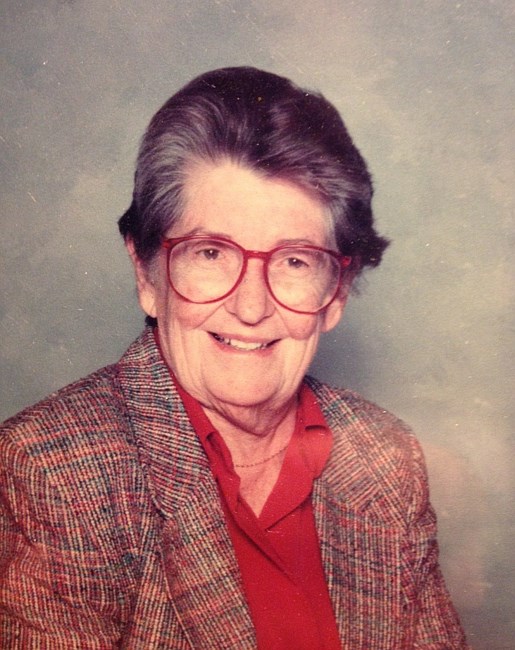
Mary Margaret (“Peggy”) Harris Cleveland, who had lived at Sharon Towers in Charlotte since 2007, died on Thursday, January 30, 2014 after a period of declining health. She was 87 years old, and had lived a full life that positively impacted many people across the globe.
Born in Cabarrus County on April 12, 1926, Peggy was the second daughter of Allen Howell Harris and LaNelle Gudger Harris. She grew up on the family farm near the Rocky River, where her ancestors helped to establish a Presbyterian church in 1780. The lessons she learned there formed the foundation for the values and the strong faith that guided her throughout her life. Growing up during the Great Depression, the family made the most of what they had, and Peggy learned to respect and care for those who were less fortunate. Her father, an ardent supporter of Roosevelt’s New Deal, was always concerned for “the little man”, one of whom he considered himself to be.
Peggy held a B.A. and an honorary doctorate from St. Andrews College in Laurinburg, NC. She also earned simultaneously a Master of Education degree from the University of Texas, and a Certificate in Theology from the Austin Presbyterian Theological Seminary in Austin, Texas. From 1953 to ’55 she served as a campus minister for three campuses in Columbia, MO.
Peggy’s life changed dramatically in 1955 when she travelled to the Belgian Congo to marry Tom Cleveland, who had preceded her there to work with the Presbyterian Church in the Kasai region. Peggy was faced with learning two new languages, Tshiluba and French, and adjusting to a new culture, while Tom, who had been born and raised in the Congo, the son of missionary parents, was essentially returning home after completing his education in the U.S. But she took the new challenges in stride, and was assigned to be the principal of a 300-student primary school, and a teacher of English and religion in a teacher training program. During their first term at the mission station, Peggy and Tom lived in a small house along-side their Congolese colleagues, which was unusual in that final decade of Belgian colonial rule and racial segregation. She wrote later that this experience gave her an awareness of the values and beliefs of her Congolese neighbors as they went about their daily routines. This awareness caused her to examine her own values and deeply rooted prejudices that had developed as she grew up in the American South. “On balance,” she reflected, “I learned a great deal more than I taught in Africa. I had to change, and in changing I became more fully human, more able to be open to people who were different from me…”
The Clevelands’ second term in the Congo began in 1959 but it was short lived, due to the turmoil that followed Congo’s independence a year later. In 1961 they were sent by the Presbyterian Board of World Missions to begin a ministry in Washington, DC that would address the needs of the African and other international students who were coming to study in the U.S. in increasing numbers. Together over the next thirteen years they developed and operated a cross-cultural educational center called “The Bridge” for students, diplomats and international civil servants in Washington. In addition to providing daily help and counseling on practical matters for the many people who came through their doors, Peggy and Tom encouraged dialogue and cultural and political interaction among “Third World” and “First World” peoples. The Bridge was a catalyst for many people who were trying to make sense of a world torn apart by war and racial strife during the 1960’s and ‘70’s. Peggy wrote that through the experiences she had at The Bridge, “my perspective on the world was fundamentally changed…from that of a liberal Southern woman to a citizen of the world who also has to bear responsibility for holding U.S. citizenship.”
Deeply committed to the biblical entreaty to “do justice, to love mercy and to walk humbly with God”, Peggy sometimes made choices that brought her into conflict with the church she loved. On August 28, 1963, the Cleveland's joined about a hundred other members of the Presbyterian Church U.S. (the former Southern Presbyterian Church) in the March on Washington for Jobs and Freedom. This was a direct challenge to some of the church’s leaders, who had publically condemned the march. In a letter published the following month in the Presbyterian Outlook, they wrote, ”We marched…because we believe that the freedom we are given as Christians brings with it an imperative to serve others and to seek justice in their behalf, to seek with them and for them the fullest expression of freedom”. On March 25, 1965, they joined 25,000 other marchers in Montgomery for the culmination of the infamous Selma to Montgomery March, which had been preceded by extreme violence on the part of the police and local vigilantes. During the years in Washington, not only did they actively support the Civil Rights Movement, but they also contributed to the struggles to end white minority rule in Southern Africa.
Another major change in Peggy’s life came in the early 1970’s as she was serving on the General Council of the Presbyterian Church, U.S. At that time the church was dealing with the role of women in society and in the church. There was also a growing plea among gay men and lesbians for acceptance as full human beings. As a member of the General Council, her responsibilities required her to participate in discussions about sexuality and gender differences. Once again, she was forced to examine her own deep-seated prejudices, and eventually to understand that she herself was a lesbian. She experienced this new self-awareness as profoundly liberating and as “a gift I know as God’s gracious dealing with me,” she said. This new understanding, however, led to painful confrontations with the Presbyterian Church, which continues to struggle with the notion that LGBT people should be fully accepted and allowed to hold leadership positions in the church.
Peggy and Tom moved to San Francisco in 1974 to make a new beginning. While they formally ended their marriage, they remained committed to each other as friends. In California, Peggy taught courses at several educational institutions and became deeply involved in the sustainable agricultural movement, with a view to understanding the root causes of global hunger. Describing herself as a “global feminist”, she was particularly concerned with the role of women in the production and distribution of food. Always purpose-driven, she developed a small-scale organic farm, and researched the links between hunger and the methods used in large-scale agriculture. “Global hunger is not an accident;” she wrote, “its causes and therefore its solutions lie both in the developed and the developing world.”
In 1992 Peggy returned to the farm where she had grown up, built a house and of course, planted a garden. She served for four years as the Executive Director of the Cabarrus Cooperative Christian Ministry in Concord. She moved to Sharon Towers in Charlotte in 2007, as she began to face serious health problems. Peggy had begun to write the story of her life, but her deteriorating health made it impossible to complete the work.
Peggy is survived by her two sisters, Jeanne Allen and Patricia Rankin and her husband Jack Rankin, both of Concord; as well as eight nieces and nephews; thirteen grand nieces and nephews; and four great-grand nieces and nephews. She was pre-deceased by her parents; her brother, Allen Howell (Buck) Harris; her brother-in-law, Blake Allen and his son, Philip Allen. A dearly-loved member of the Harris family, as well as the family of Tom Cleveland, she is remembered for her hearty laugh, her excellent cooking and her warm and generous spirit.
A memorial service and celebration of Peggy’s life will be held on Sunday, February 9, 2014 at 2:00 p.m. at Sharon Presbyterian Church, 5201 Sharon Road, Charlotte, NC. The family will receive friends following the service at the church.
In lieu of flowers, the family requests that memorial donations be sent to one of the following: Heifer International, a charity organization working to end hunger and poverty around the world (www.heiferinternational.org); the Presbyterian Church (USA)’s Congo Education Project, which supports the more than 800 primary and secondary schools sponsored by the PCUSA’s partner churches in the Democratic Republic of the Congo. Checks can be made out to the Church of the Covenant (“for Congo Education”), 67 Newbury Street, Boston, MA 02116; or any charity of one’s own choosing.
Show your support
Add a Memory
Share Obituary
Get Reminders
Services
SHARE OBITUARYSHARE
- GET REMINDERS
v.1.18.0