
OBITUARIO
Mary Ann Fritsch
10 enero, 1932 – 15 agosto, 2024
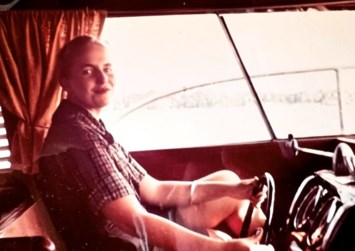
Born Mary Ann Ball in Glen Ridge, N.J. on Jan. 10, 1932, she was predeceased in 2021 by her husband of six decades, the Rev. Theodore P. Fritsch.
An only child, Mary Ann embodied the blend of Dutch and English bloodlines that typified the region around Manhattan in the 17th century. Her father Roome Van Buren Ball descended from New Amsterdam settler Peter Roome and the Ball family of England. A separate branch of the Ball family would settle in Virginia where an earlier Mary Ball would give birth to George Washington.
Mary Ann’s mother Anna Helmke descended from the German wave of immigrants that came to the U.S. after the pan-European political upheavals of 1848.
Mary Ann grew up in Pompton Plains, N.J. during the Depression and pre-war years. Times were hard and the Balls had to take in boarders to make ends meet. In spite of such want, Roome was a natty dresser who instilled in his daughter a taste for fine things. Anna was a schoolteacher, the practical one in the family.
From a young age, Mary Ann displayed a gift for art and design. She loved to paint, sculpt and make her own clothes. That led her to pursue a career in fashion. In 1950, she enrolled at the Traphagen School of Fashion at Broadway and 53rd street. Now long-forgotten, Traphagen would train thousands of 7th Avenue’s cadres – and pioneers like Geoffrey Beene, James Galanos and Anne Klein.
“Design-by-adaptation” was Traphagen’s philosophy, blending color and diverse cultural and historical references to appeal to American tastes. That eclecticism, paired with an impeccable eye and a DIY mentality, would inform her artistic approach until the last.
After graduation, Mary Ann joined the commuter class, living in New Jersey and riding the bus each day to design department store windows on 5th Avenue. She later landed a job closer to home dressing the front windows at Bamberger’s in Passaic, a move driven in part by the illness and sudden death of her father in 1960.
Comfortable in her routine and having recently broken off an engagement to a British professor from Cambridge, Mary Ann reluctantly accepted an invitation from a Traphagen friend to go on a blind double date with a couple students from Yale Divinity School. She and Theodore Fritsch would marry in 1962.
Once ordained, Ted accepted a small mission church in the middle of California’s Mojave desert. Lancaster, Calif. – Mary Ann called it “Landscatter” – was a place where high fashion meant britches and frocks. Their first son, Peter Roome, was born there in Dec. 1963.
Only months later, Ted was called to the State Street Church in Portland, Maine. Mary Ann and Peter flew across the country. Dad drove the Fairlane 500 with cats Barney and Carlyle. Second son Andrew Morrill was born there in Feb., 1966.
Mom’s artistic energy never flagged during her years in these relative outposts. If a choir needed new robes, she’d design and make them. Many of the boys’ toys weren’t bought; she made those too. Her clothes were often her own creations. Christmas ornaments were pressed from antique Danish cookie molds. Barney won Most Personality and Fluffiest Tail in the Maine Cat Show of 1971 thanks in large part to stylish wooden carrier designed and decorated for “Barnabus the Benign” by his favorite keeper.
Summer vacations during these years were often spent in North Chatham, where Anna Ball built a retirement home in 1964. Camping in the Maine woods wasn’t really Mary Ann’s thing, but she did it – precisely twice -- for her boys, chased home by a hurricane and forest fire, respectively.
In late 1974, the Fritsch family made another move, this time to the Dutch Reformed Church in Bronxville, N.Y., a suburban enclave just north of NYC. The museums and storefronts of Mary Ann’s youth were suddenly back in reach -- and reach them she did, dragging her now grateful boys through the cavernous Met and the masterpieces of MOMA.
Opera lovers both, Mary Ann and Ted would cadge prime seats at the New York Metropolitan Opera thanks to a pair of parishioners who also happened to play first violin. Service was as much a part of Mary Ann’s life as anything. She loved tutoring kids on Wednesday afternoons at the Elmendorf Reformed Church in Harlem and helped Ted care for a beloved family of Vietnamese refugees.
Ted longed for a parish of his own, having served as an associate pastor in large churches in both Maine and New York. That opportunity came in 1981 and the family moved, again, to First Parish in Westwood, Mass.
As in previous postings, the family took up residence in a church parsonage. But First Parish’s was special, a clapboard farmhouse built in 1815. The place was poorly decorated and Mary Ann set out to remedy that, executing one of her most lasting works of art. She painted the hallways with landscape murals in the style of Rufus Porter, a 19th century artist from Maine known as the “Yankee Da Vinci.” Rolling farmlands and forests still carry you from room to room. Look closely outside the master bedroom and you may still see Mary Ann’s cat Madeline in miniature mousing on a dry rock wall.
Her boys grown and gone by the early 80’s, Mary Ann returned to full-time work counseling the developmentally disabled in Norfolk County. That experience was among her life’s most fulfilling.
Mary Ann and Ted retired to her mother’s home in North Chatham in 1995. More cats – always cats -- came and went. Grandchildren were born. Mary Ann became addicted to tomes on Russian history many graduate students would struggle to finish. Day trips to the Boston Symphony Orchestra and summer trips to Tanglewood marked these years.
Nothing, however, defined her retirement as profoundly as did Mary Ann’s years with the Chatham Historical Society as a volunteer in charge of galleries, displays and special exhibits at the Atwood House Museum. Her keen eye, deft touch and respect for history helped preserve for countless visitors Chatham’s salty past as a seafaring community.
Mary Ann will be remembered for her unfailing kindness, gentle nature, wry sense of humor, flawless taste, deep belly laughs and humility. She’ll also be remembered for moving slower than molasses in January, favoring a good book over a long walk, cutting her own hair, never paying a mortgage and enjoying the occasional sundowner well before sundown. She truly put the gold in the Golden Rule.
Mary Ann is survived by sons Peter (Lynn) and Andrew (Enid) and grandchildren Sara, Anya, Chase and Lanie. She also leaves her dear friend Ricardo Vasconcellos, a pillar of patience and good cheer. She wouldn’t have made it to the end of the book without him.
Donations in lieu of flowers can be made in Mary Ann’s name to The Children’s Center of Harwich. https://www.childrenscenterharwich.org/
Muestre su apoyo
Comparta Un Recuerdo
Comparta
Un Obituario
Obtenga actualizaciones
DONACIONES
The Children’s Center of Harwich115 Sisson Rd, Harwich Port, Massachusetts 02646
COMPARTA UN OBITUARIOCOMPARTA
- RECIBIR RECORDATORIOS
v.1.18.0